


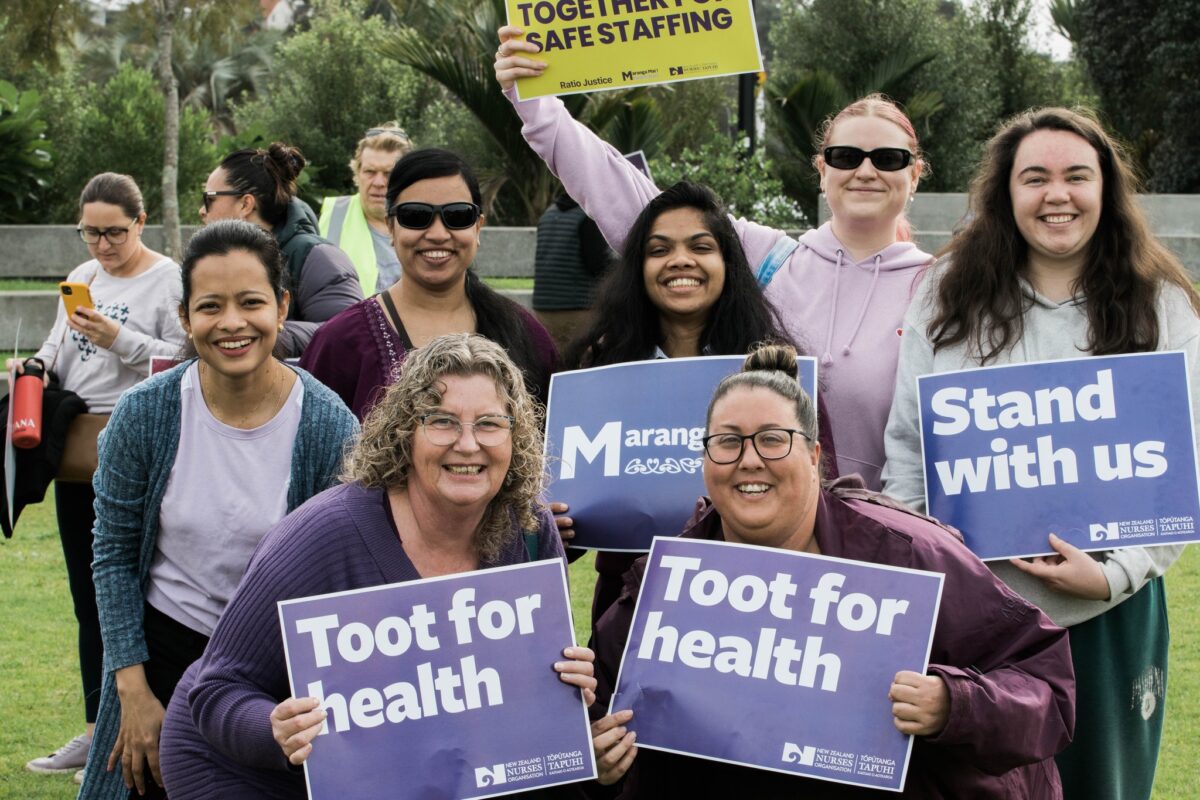
After a ballot this week closed at noon today, the result was decisive — let’s strike!
NZNO’s 36,000 Te Whatu Ora nurses, health-care assistants and midwives will now be standing alongside tens of thousands of teachers and mental health and social workers who have so far voted to walk off the job that day.
For NZNO members, the strike will run from 11am to 3pm. Details of events will be shared in coming days.
Auckland NZNO delegate Liandra Conradie said nurses were fed up and determined to do right by their patients.
“We are going to stand strong because the safe staffing is such a big issue, we’re not going to back down,” she told Kaitiaki.
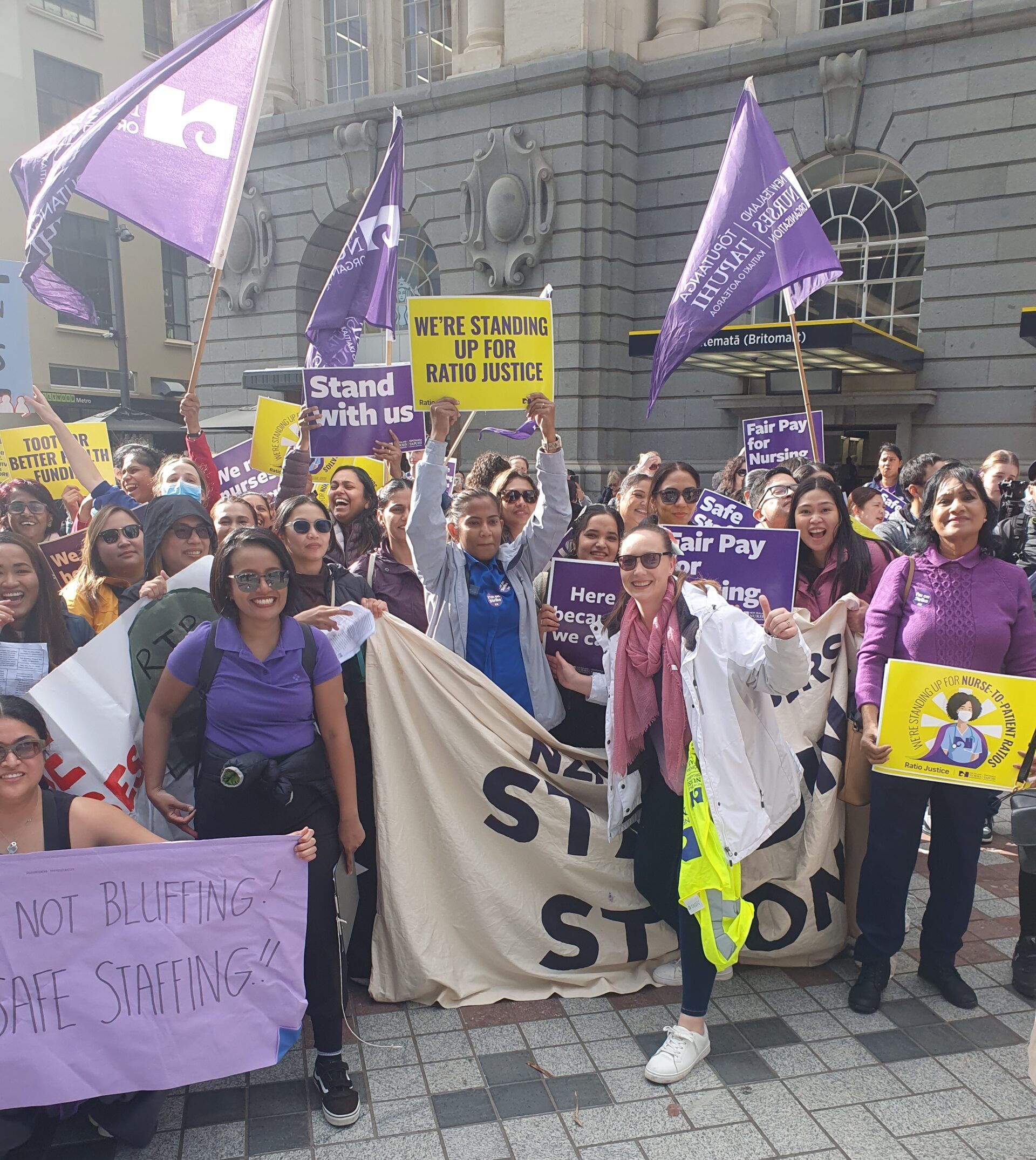
“It’s been going on for such a long time too, and previous negotiations have raised this and we’re just not getting anywhere, so we’re thinking with the cross-union action hopefully we might get somewhere,” she said
“It will be massive!”
Wellington NZNO delegate Mel Anderson said she hoped the strike would be an amazing show of kotahitanga — unity, in the face of Government deafness.
‘They’re not listening to us — we’re showing that we’re powerful.’
“We’re just going backwards — they’re not listening to us. We’re showing that we are powerful and we are joining together and it’s just going to be an amazing show of power and support,” she said.
“This Government needs to sit down and listen to us and give us what we want — safe staffing!”
‘Biggest in decades’
Council of Trade Unions (NZCTU) president Richard Wagstaff has said October 23 is shaping up to be the biggest strike action in decades.

About 11,500 Public Service Association (PSA) mental health and public health nurses and allied health workers have voted to strike on October 23, along with about 40,000 primary school teachers, principals and support staff.
Both the senior doctor and secondary school teacher unions are balloting members to strike, with results due next week. The secondary teachers’ union, the PPTA, has more than 25,000 members, while the senior doctors’ union, ASMS, more than 6000 members.
Firefighters have so far voted to strike on October 17 for an hour.
NZNO chief executive Paul Goulter said today’s result showed members were “committed” to safe staffing and patients, cost-of-living pay rises and pay relativity for senior nurses, as well as supporting Māori members with tīkanga allowances.
“Te Whatu Ora nurses, midwives, health-care assistants and kaimahi hauora will stand proudly alongside primary school teachers, allied health and mental health workers on 23 October.”
Politicking?
Minister of Health Simeon Brown has slammed the strikes as “deliberate politicking by our unions”.
“The fact that they’re all doing this on same date . . . this is politics ahead of actual public service which is what they should be about,” he told RNZ this week.
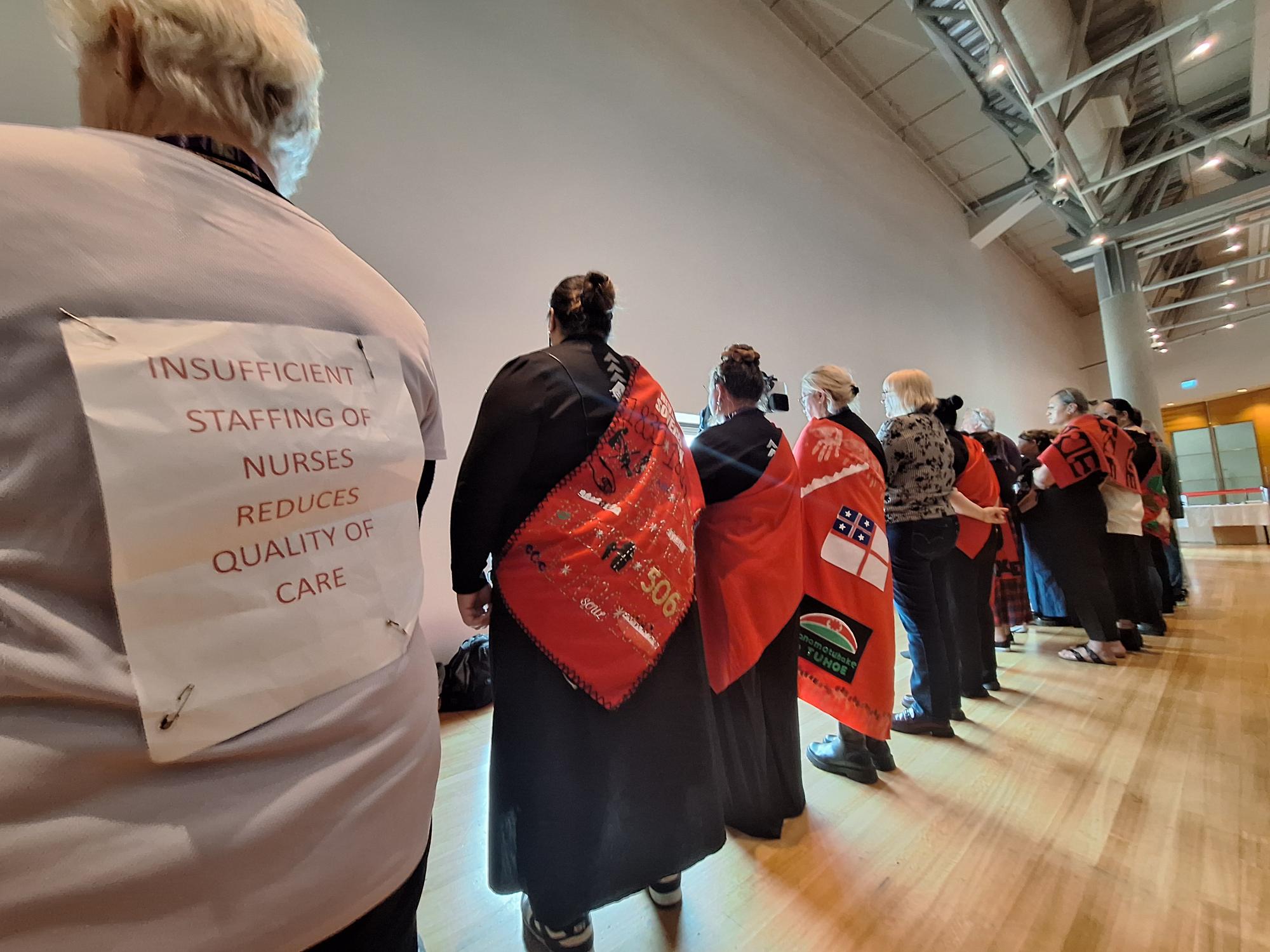
His comments came after nurses turned their backs on Brown as he addressed NZNO’s AGM recently — admonishing them for strike action which he complained affected thousands of patients.
But the same day, it was revealed hospitals were short by hundreds of nurses.
Brown later acknowledged there was “work to do” on nurse recruitment.
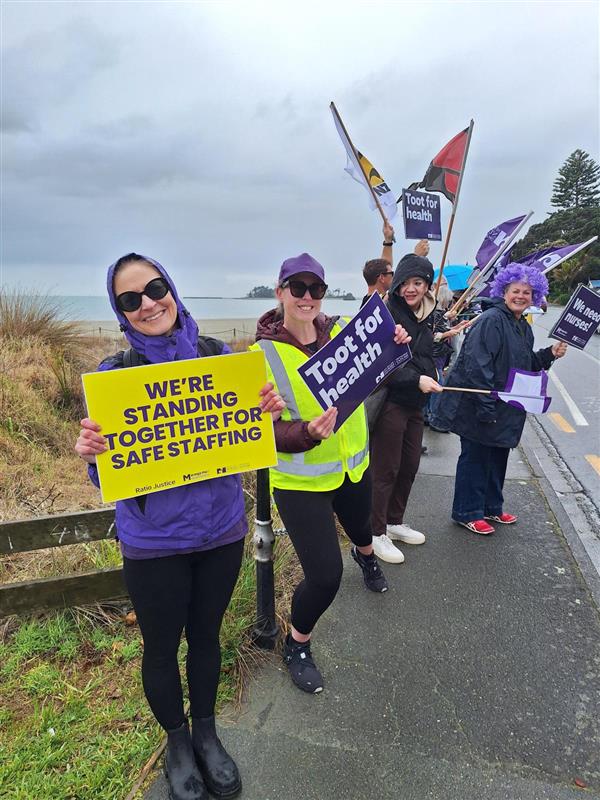
Te Whatu Ora was also forced to apologise to NZNO for refusing to release damning figures which showed hospital shifts were understaffed 51 per cent of the time last year.
Only unions with expired collective agreements, who have been negotiating for more than 40 days can legally take strike action.
NZNO has been in negotiations with Te Whatu Ora for more than a year, with 31 days of meetings and several strike actions including two 24-hour strikes last month.
Sticking points are safer staffing levels, pay and jobs for new graduates — only 45 per cent of whom secured Te Whatu Ora entry roles this year.