


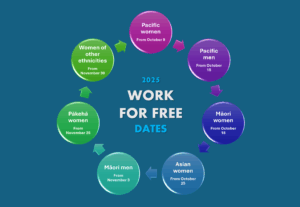
The council has just released its 2025 Work for Free campaign calendar which highlights the mean wage gap between women and Pākehā men to give a picture of inequality.

“The calendar shines a harsh light on pay inequity for women and marginalised communities across Aotearoa. Each year, these dates symbolise when women and many ethnic groups effectively stop being paid compared to Pākehā men, reflecting how pay gaps strip weeks of income from families nationwide,” said NZCTU secretary Melissa Ansell-Bridges.
Among the women affected are thousands of kaiāwhina (care and support workers) and nurses working in aged care, primary health and private hospitals.
A Pākehā woman’s experience
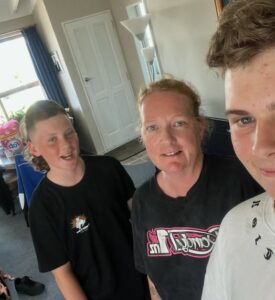
Natasha Greig has been working as a kaiāwhina in aged care for three decades in the Hawke’s Bay. She is a single mother of two boys aged 13 and 16.
“Every Christmas is getting tougher and tougher because the cost of living is going up but our wages aren’t.

“I dream of taking my kids to the Gold Coast, but all we can really afford is a day trip to Taupō,” Greig said.
“What I can give my kids this Christmas is time – quality time as it is will be the first in many Christmases that I have chosen not to work through.
“I am finding that even when I do extra hours, over the festive season, it still doesn’t pay me enough to make a real difference for my kids.”
A Māori grandmother’s experience
Tiaho Whakamarurangi has been caring for the elderly for more than three decades, currently working at a facility in Porirua. Whakamarurangi has nine grandchildren.
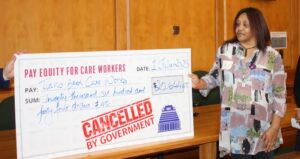
“My dream was to start building on our whenua by our awa – the Waikato River. Nothing flash, just basic. But that’s not going to happen now.
“That’s something I would have liked to leave under the Christmas tree for my mokopuna,” she said.
Like thousands of other women workers, her pay equity claim was cancelled by the Government in May this year. If it had been honoured, she believes she would have had enough to make her “dream come true quicker.”
A Pacific son’s experience
While women make up the vast majority of workers affected by pay inequity, Pacific men are high up on the income injustice ladder too.

Samoan caregiver Sapini Unoi is one of them.
“None of us do this work for the money but it would be nice to get a bit more pay, to be valued more more.”
Among the people Unoi cares for is his mother who has dementia.
“I think I am still in this work because I get the privilege of caring for mum.
“There are many caregivers worse off than me, I am very fortunate that I come from a large Pacific family, who ensure no one in our village misses out, but I am still feeling it – the cost-of-living crisis.”
‘Structural misogyny’ to blame, says nursing leader
NZNO kaiwhakahaere Kerri Nuku blamed “structural misogyny” as the cause of so many women being undervalued.
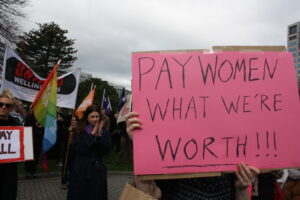

“This is not just a wage issue. Pay equity is a justice issue. It is about dismantling the structures—colonial and patriarchal—that have normalised the devaluation of women’s work.
“When women’s labour is underpaid or unpaid, it signals whose contributions society respects and whose it chooses to overlook. The impact is felt in bank accounts and in wairua—in confidence, dignity, and the ability to plan for the future,” Nuku said.