



Jacquie’s respiratory nursing journey
I started my respiratory nursing journey working for the Nelson Asthma Society about 28 years ago. After I had children, I worked as a practice nurse for a few years before returning to respiratory nursing in the community, at primary health provider Nelson Bays.
Even when working in primary health, I would see a lot of people coming in with asthma or COPD needing a nebuliser or other urgent treatment. As a nurse, I’d often be the first person to see them and became really interested in respiratory illness.
I would run nurse-led clinics, doing assessments, spirometry (lung checks) and education around respiratory health. There are a lot of diseases that can affect the lungs — it’s quite complex and always interesting.
The other thing about respiratory health, is that you’re working with people of all ages. I work with children right through to our older members of the community.
So, it’s the diversity — and I really love that. I like working across the whole age span.
 Poor respiratory health is a massive problem in New Zealand and — closely linked to poverty, deprivation and poor housing — it has a huge impact on our communities.
And it’s we nurses who often work the most closely with people who have respiratory disease — we see what’s happening out there in the real world. So it’s really crucial our voice is heard and we have the chance to influence funding priorities and national strategies.
We actually need to give respiratory health enough funding and resources.
So, we’re thrilled to have two of our respiratory nurses involved in a new Government-backed steering group tasked with coming up with a national strategy for asthma and respiratory health.
I could wave my magic wand, the first thing I would conjure up is warmer, healthier homes.
We are also scheduled to meet Minister of Health Simeon Brown in March to discuss a few things, including workforce shortages. We simply don’t have enough specialist respiratory nurses out there — nor is there enough support and funding in primary health to train practice nurses to specialise in respiratory health.
Also on the agenda is the disproportionate impact of respiratory illness on Māori and Pacific communities and how to tackle smoking and vaping.
Wishes for a healthier Aotearoa
But if I could wave my magic wand, the first thing I would conjure up is warmer, healthier homes — cold damp houses are one of our biggest problems.
The next would be access to primary health care and GPs. So many people go without seeing their GP, or leaving it too late — and there just aren’t enough GPs or nurse practitioners (NPs). We’d love to see more primary health nurses being supported to specialise in respiratory health care.
Thirdly would be funding more vaccinations, such as pneumococcal, RSV (respiratory syncytial virus). For us, prevention is always the most effective approach — we can save so much money in the long run if we fund vaccines and people have timely access to health care.
We also believe everyone, no matter where they live, should have good access to respiratory services such as pulmonary rehabilitation and specialist services.
Those are the biggies for us.
Membership boost
In May last year, we had just three of us on the committee. But by the end of 2025 we had doubled in size with Sharon Phillips, Sascha Noble and Raquel Jordan joining Katherine Waters, Mikayla Neil and myself. How did we do it?
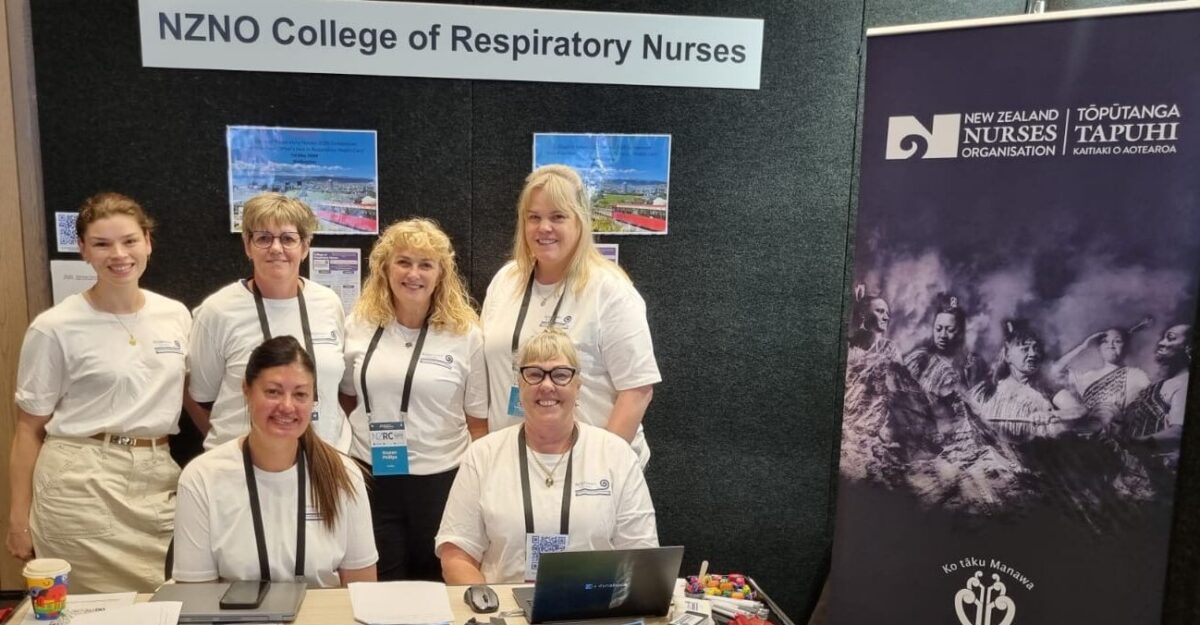
We set up a stand at the two-day Asthma and Respiratory Foundation NZ conference late last year and that really worked. We got so much interest in our mahi, which was incredible, and we were fortunate to meet many similarly-passionate people working in respiratory health.
It was a fun time and we were fortunate to have some more nurses join us but we definitely would love more. So please email us: [email protected] if you’re interested in joining, either the college or committee. All you need is a desire to advocate for better respiratory health for all New Zealanders.
We now have a really diverse and supportive committee of six respiratory nurses and NPs who work across large cities and small provinces; and in hospitals as well as iwi/Māori providers, community and primary health.
We all work really hard to make it worthwhile for our members and contribute to their professional development. Right now, we’re working up a new respiratory knowledge and skills framework for respiratory nurses.
As a college, we endorsed the Asthma & Respiratory Foundation’s train the trainer course to help people educate rangatahi on the risks of vaping. And we signed an open letter to the Government calling for more border vigilance to prevent building materials with asbestos being used in our homes, schools and workplaces.
It’s really crucial our voice is heard and we have the chance to influence funding priorities and any national strategies.
We are also busily preparing for our symposium New, New, New and AGM in Wellington on May 1, which — like the name suggests! — will be focusing on what’s new in respiratory health. That includes the latest updates to COPD (chronic obstructive pulmonary disease) guidelines in NZ, new inhalers and new research on the best inhalers for children and young people. We do such good research on lung health in Aotearoa — we punch well above our weight internationally in this space.
Respiratory nurses guide new national strategy
Despite being one of the country’s most serious health issues, asthma and respiratory disease have not been a national priority since the 1980s. We know the scale of the problem and its cost — financial and personal — but until now we have lacked a unified plan to solve it.
A meeting between the Thoracic Society of Australia & New Zealand (TSANZ) and Asthma NZ with Minister of Health Simeon Brown and Te Whatu Ora-Health New Zealand last year led to a new steering group and three key projects:
- BREATHE (building respiratory excellence across the health ecosystem): Tackling asthma and respiratory disease with a new national strategy.
- A clinical network of respiratory experts.
- The development of standardised respiratory services nationwide.
Outside TSANZ and Asthma NZ, the Asthma and Respiratory Foundation and Māori, Pacific, paediatric and primary health networks are also involved alongside us nurses.
At a glance:
The respiratory health burden is significant and growing:
- Over a million New Zealanders are living with asthma or a respiratory condition.
- 82,500-plus hospital admissions annually are due to respiratory illness — that’s one in every 11 hospital stays.
- 615,000-plus Kiwis are prescribed asthma medication — one in every eight people
- 1023 preventable deaths were recorded between 2008–2021, with 96 deaths per year still occurring today.
- 41,000-plus people with a respiratory illness are not enrolled with a GP (6 per cent).
- Every 2.5 minutes, someone in New Zealand has an asthma attack.
- The economic impact is vast — $1.2 billion per year for asthma alone, and over $8 billion across all respiratory illnesses.
- Diseases such as COPD, lung cancer and influenza list as top 10 avoidable contributors to lower life expectancy rates for Māori compared to other New Zealanders across all four of New Zealand’s health regions.
- Māori, Pasifika, and children are especially vulnerable to respiratory disease, and New Zealanders living outside of urban centres often receive inadequate access to specialist respiratory care.
- Cure Kids’ 2023 state of child health report lists respiratory illness as one of the five most urgent health priorities for New Zealand children.
— Source Project Breathe overview.