


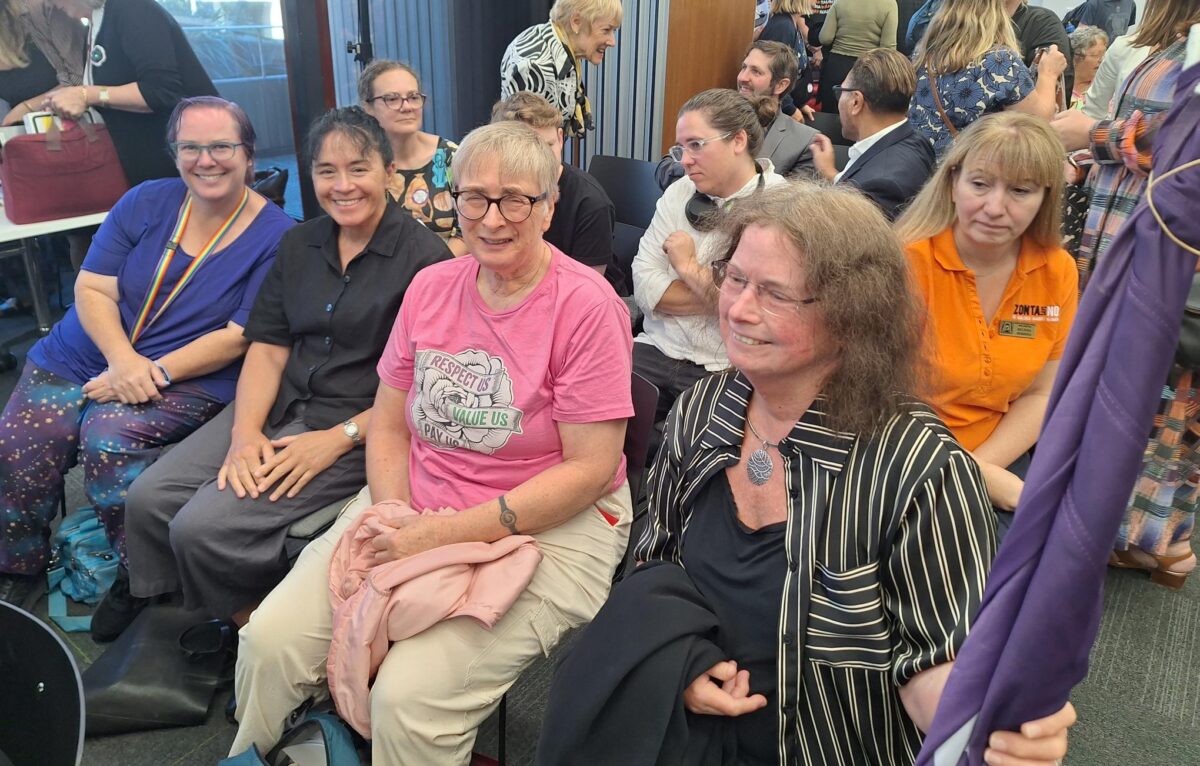
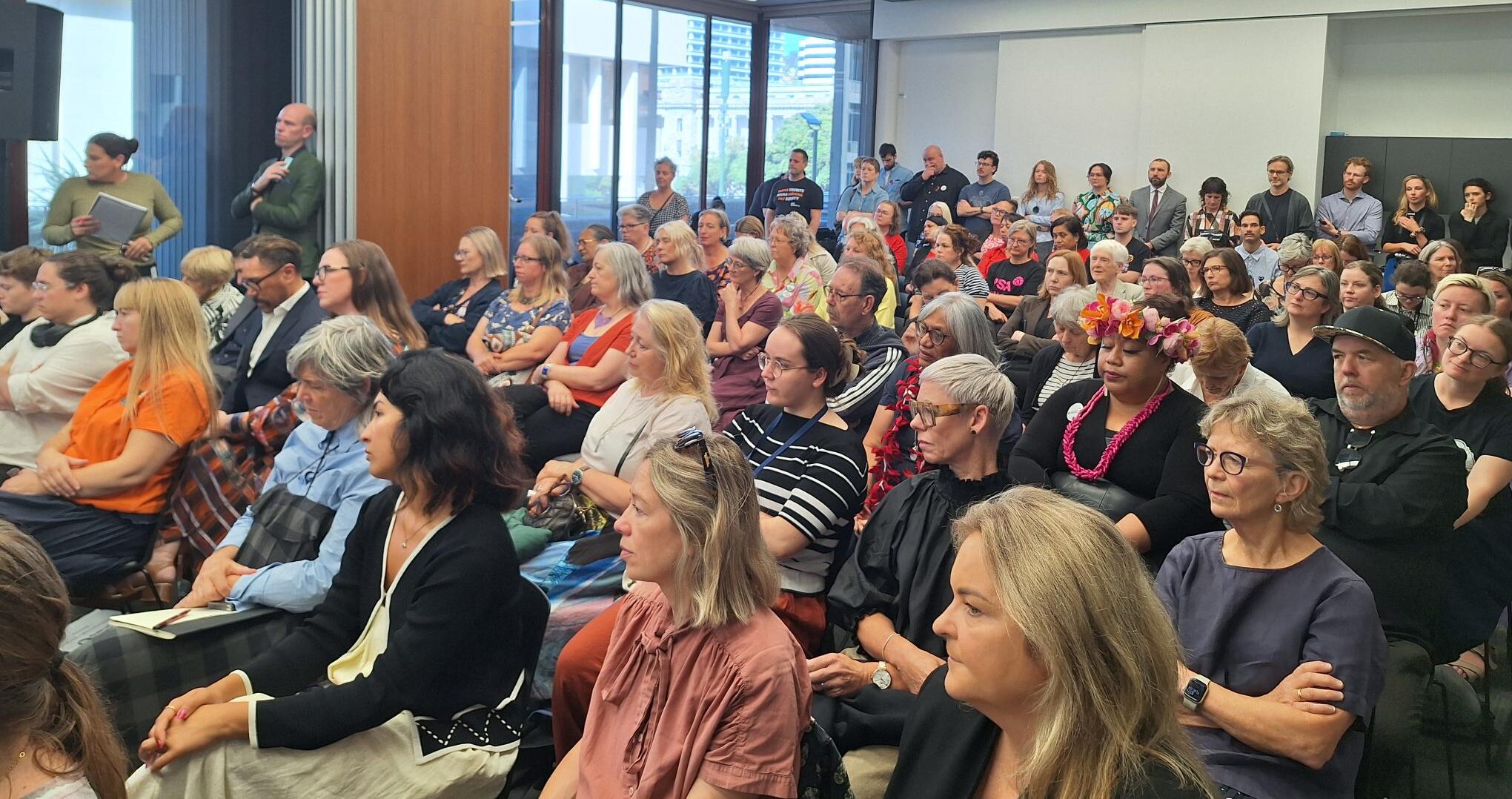
Sitting in the packed room in the National Library in Wellington, however, she was feeling a little hope.
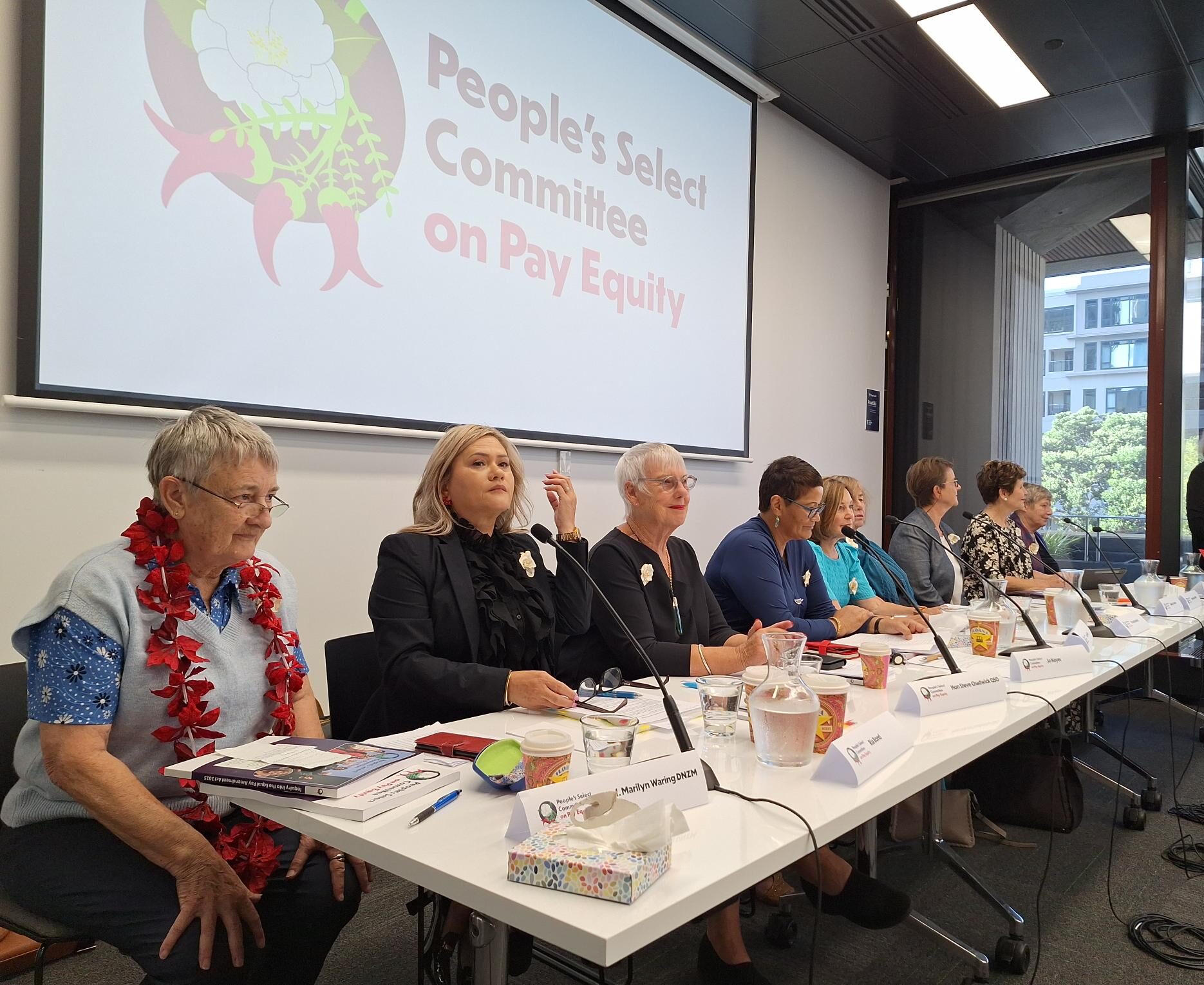
McDougal spoke ahead of the launch of a damning report by the People’s Select Committee on the Government’s axing of 33 pay equity claims — including hospice and care and support workers.
“I was really distressed by it, I thought it was very unfair. And especially the fact that it done without any notification or discussion.”
The committee, a “group of fabulous women”, had taken that on board, and given women a chance to have their say, said McDougal. “I have high hopes that the next government, if not this one, will implement its findings.”
On May 6, 2025, the Government announced it was introducing and passing the law gutting pay equity the same day. At that point, 14 claims had been settled, and 33 were still underway. The changes reportedly saved the Government $12.8 billion for Budget 2025.

NZNO was involved in 12 of these live claims — including two that were only weeks from completion.
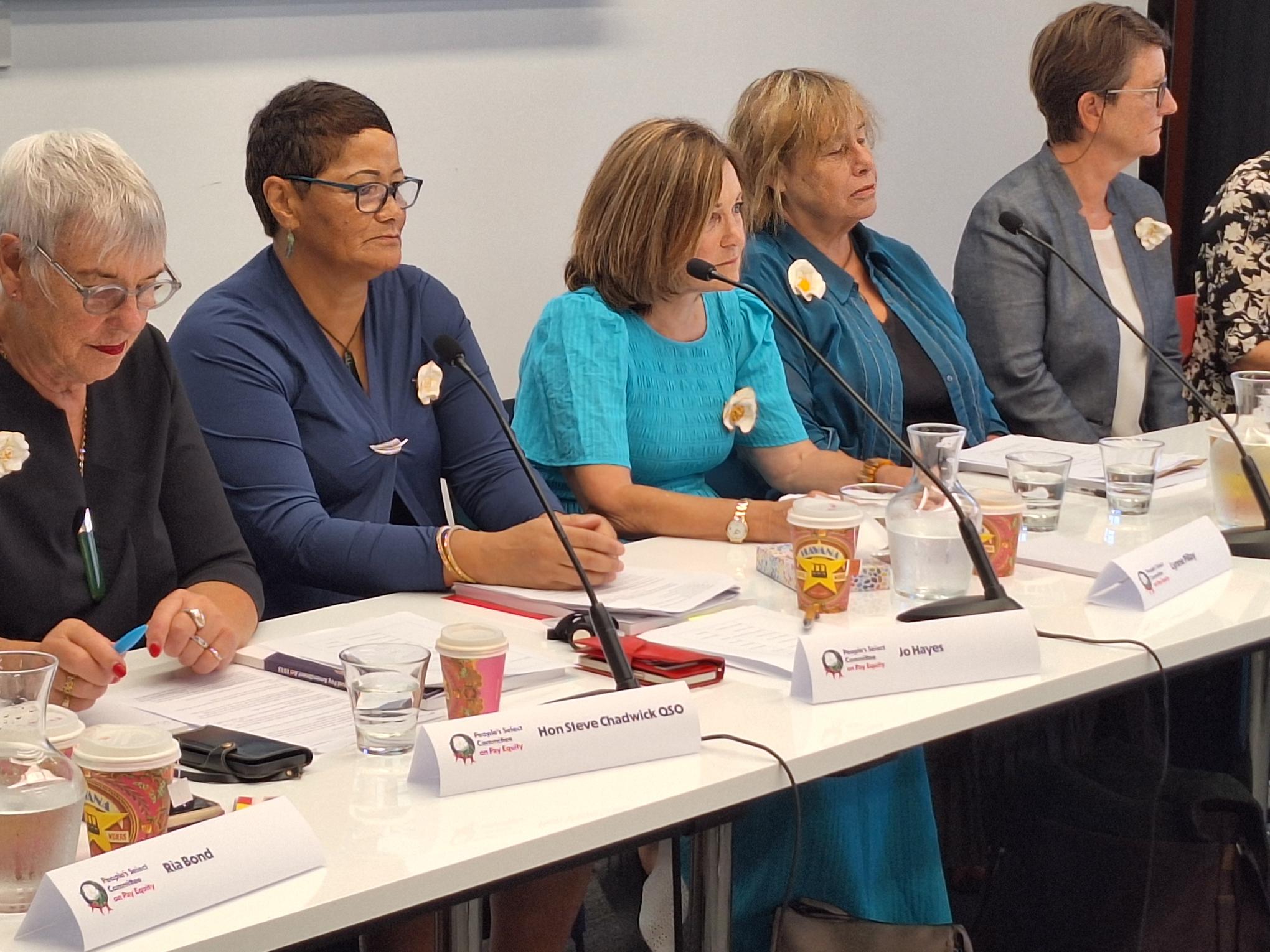
The committee, comprising former MPs from across the political landscape, held hearings from August to October last year. The aim was to give a voice to communities denied in the actual law-making.
Palliative care facilitator for primary care at Te Omanga Hospice, Anna Garton said the report left her feeling excited and optimistic. “I feel like it’s validated some of our concerns and I feel like as a workforce we’ve been heard.”
The report called for the law to be repealed — but also outlined how the Government had covertly planned to gut pay equity while stringing industry groups and unions along. Health Minister Simeon Brown was part of the planning — meeting oblivious employer groups preparing claims only days before they were dumped.
The Government’s secrecy was simply “horrendous”, Garton said. “It’s absolutely not part of a democratic society, and it was devastating for the workforces that had already put claims forward and were really hopeful of a quick resolution.”
That speedy resolution, however, hadn’t panned out, she said. In fact conditions had already deteriorated since the law change last year.
Porirua caregiver Lisa Marriner said care and support workers were valuable, skilled and had great experience. It was unfair they were paid less than similar male-dominated sectors simply because someone decided a job with lots of men was worth more, she said.
Caregivers were facing more high-needs patients in an aging nation. The work demanded planning, critical thinking and “amazing people skills” on a daily basis, Marriner said.
“Actually coming into a room today and listening to other women who are very acutely aware that we really are undervalued compared to our men . . . it was great to have that reinforced.”
‘Orchestrated subterfuge’
The committee members delivered a scathing rebuke to the Government during their presentation.
Former Labour minister Lianne Dalziel said the retrospective application to live claims was a “breach of the rule of law”. “But the way ministers also covered up what they were doing while letting work on pay equity claims proceed was a breach of good faith.”
The Government’s approach was described by one submitter as “orchestrated subterfuge”, said Dalziel. “We agree.” Even the Ministry for Women was left out of the loop, she said — “extraordinary”, given its expertise.
Former National MP Marilyn Waring said the Government had destroyed a world-leading pay equity process.
“It is full of checks and balances, it is highly sophisticated, a rigorous and meticulous system that placed New Zealand as the world leader.”
Her message to workers was simple: “Don’t be defeated, that’s what they want. That’s their most important thing: to make you feel powerless . . . defy them.”
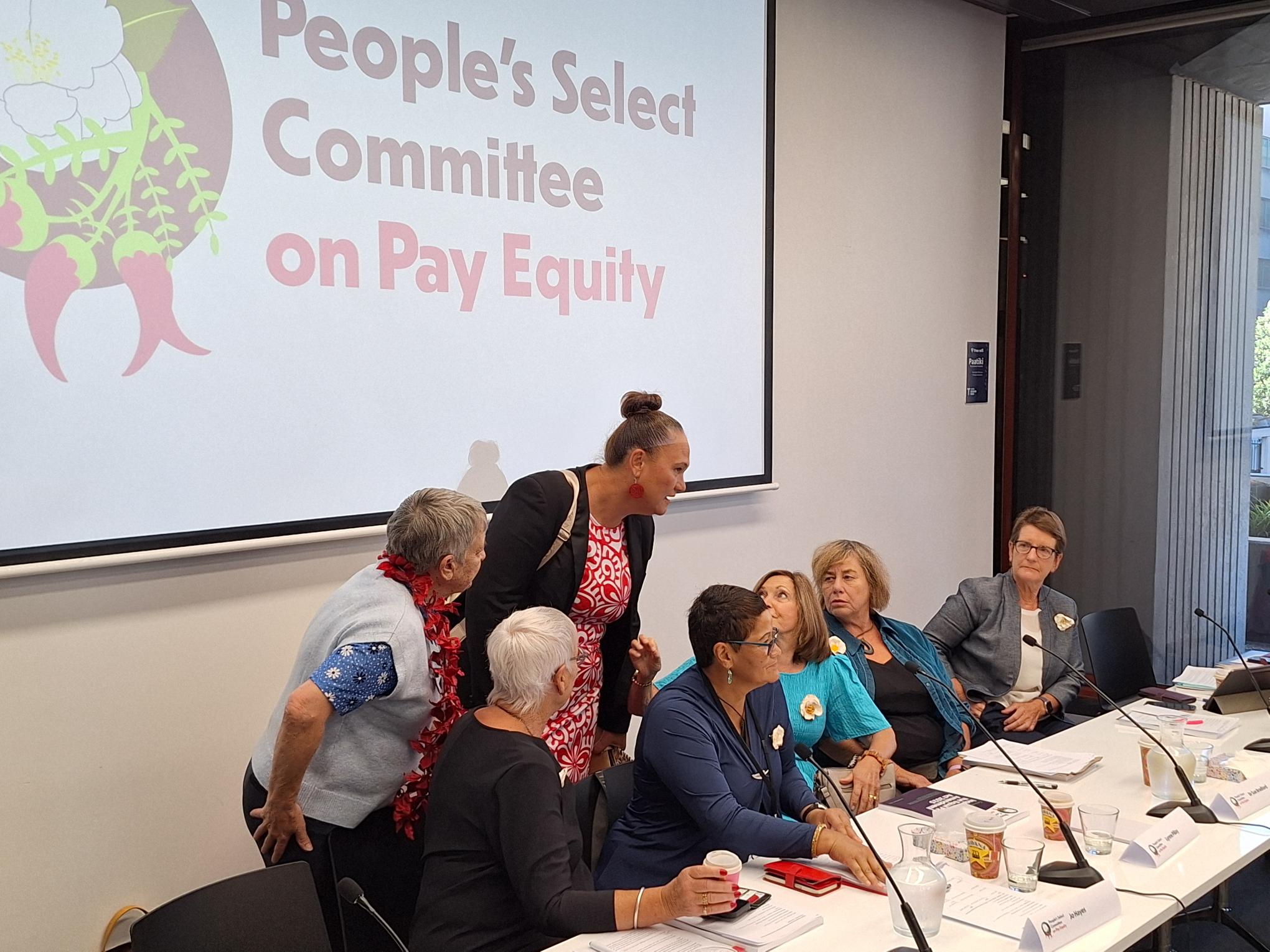
Labour leader Chris Hipkins, also at the launch, told the audience that on the day the law changed his party had committed to reversing it.
What is needed?
The committee made a raft of recommendations including:
- Repeal the 2025 law, then introduce simple changes to cut time frames for claims; The government should then establish and resource an independent pay equity unit.
- Provide financial support to unions bringing pay equity claims.
- Prevent laws affecting fundamental rights to be passed under urgency (aside from times of emergency).
- Recognise pay equity as a constitutional principle, protected from political interference.
- Government agencies should improve funding for health, social and education services to support future pay equity settlements.
Watch Lisa Marriner speak here in our video section.