


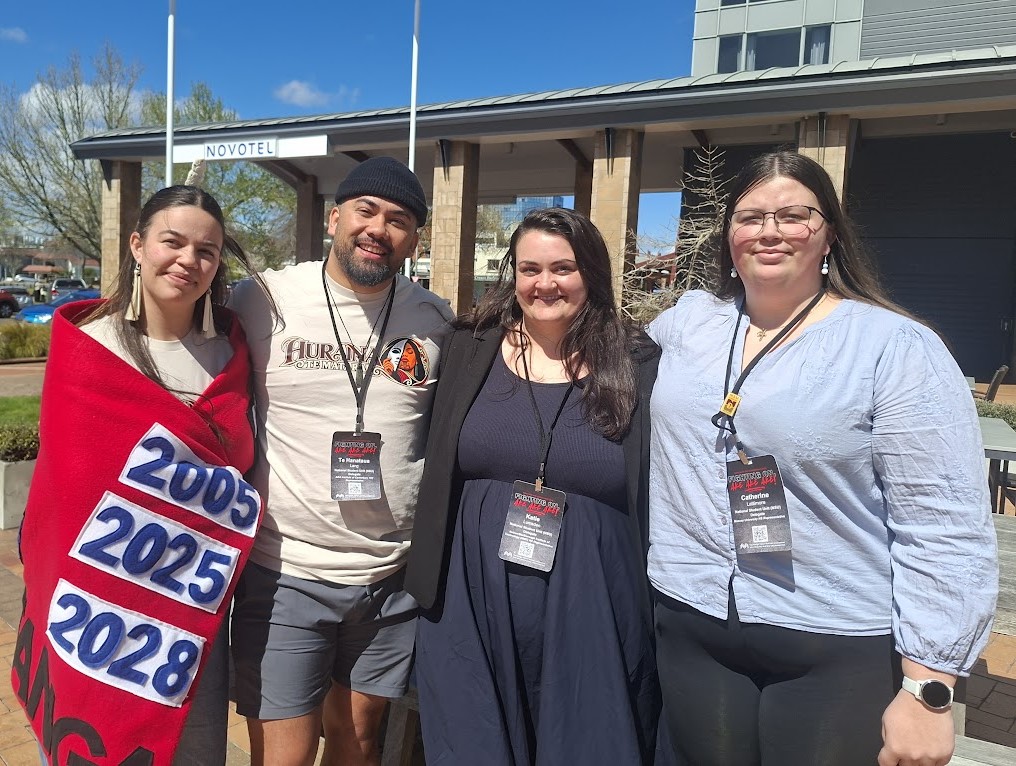
Katie Lumsden is national student chair (and co-leader with Te Rūnanga Tauira chair under NZNO’s bicultural leadership model).
A first-year student at Nelson/Marlborough Institute of Technology, Lumsden worked in primary health for 10 years, as a health-care assistant and health coach before taking the leap into nursing.
‘I feel like nursing has always been a part of me but it was a long time coming.’
Lumsden had always wanted to be a nurse, and colleagues, friends and family all encouraged her. But it was the sharp rise in mental health issues after the COVID pandemic that gave her the final push, so she could do more to help people experiencing distress.
“I’d always been drawn to health care — I love people and I love caring for people,” Lumsden said. “I feel like nursing has always been a part of me but it was a long time coming.”

And on stepping into leadership as a first-year student?
“During my time in health care, I have seen a lot of people not having their voices heard and feeling like they’re fighting an endless battle to be heard and understood,” Lumsden said. “I want to help be that voice for student nurses.”
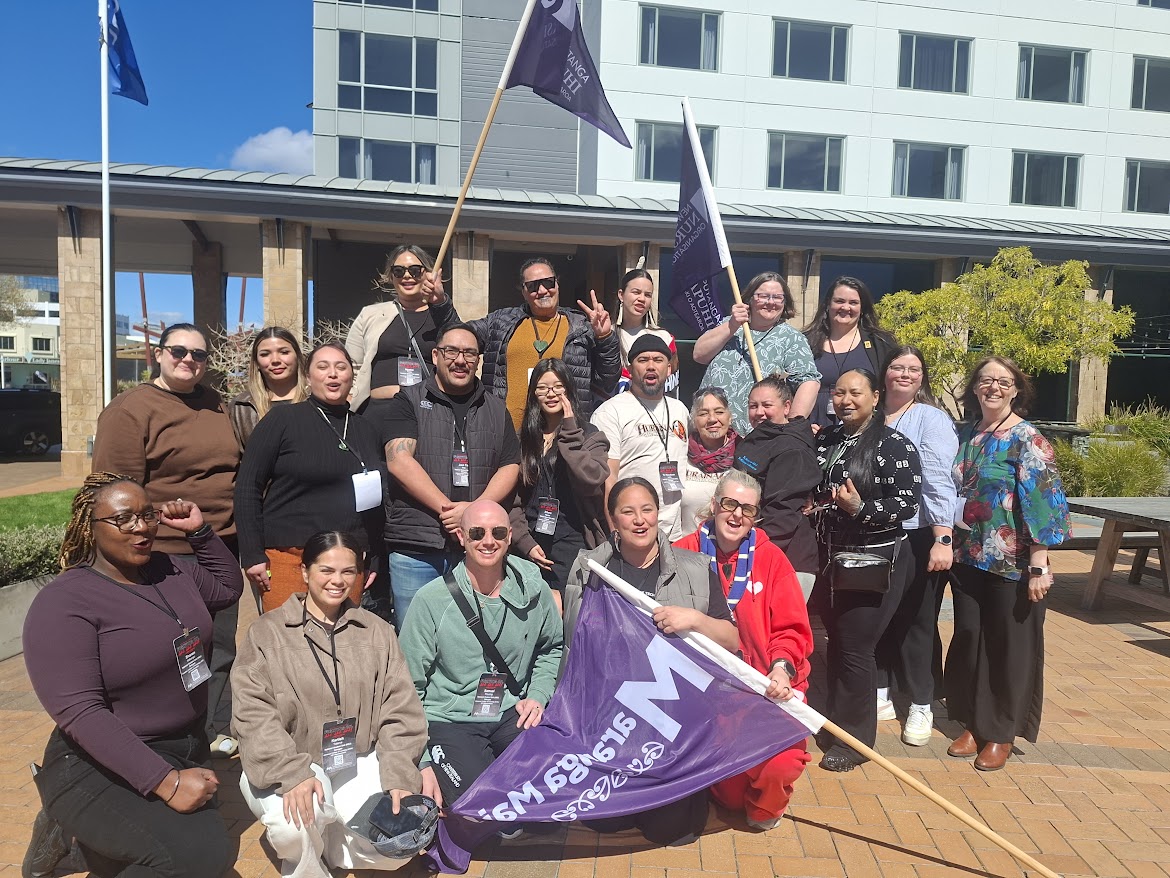
Josh Lang (Tapuika, Te Arawa) is chair of Te Rūnanga Tauira, which represents Māori students, and national student co-leader.
A second-year student at Ara Institute of Technology in Ōtautahi — Christchurch, Lang turned his back on the business world for nursing.
In his 20s, Lang was working in a “demanding” corporate space in Tauranga before taking time off to care for his mother after she was diagnosed with lung cancer, on top of diabetes and heart problems.
‘I didn’t know anything about palliative care or nursing — but it just became a lightbulb moment.’
“It felt more purposeful than what I was doing at the time, which was all about KPIs and deadlines,” said Lang who was working in the kiwifruit industry.
His mum recovered but in 2022 the cancer returned and end-of-life care was needed.
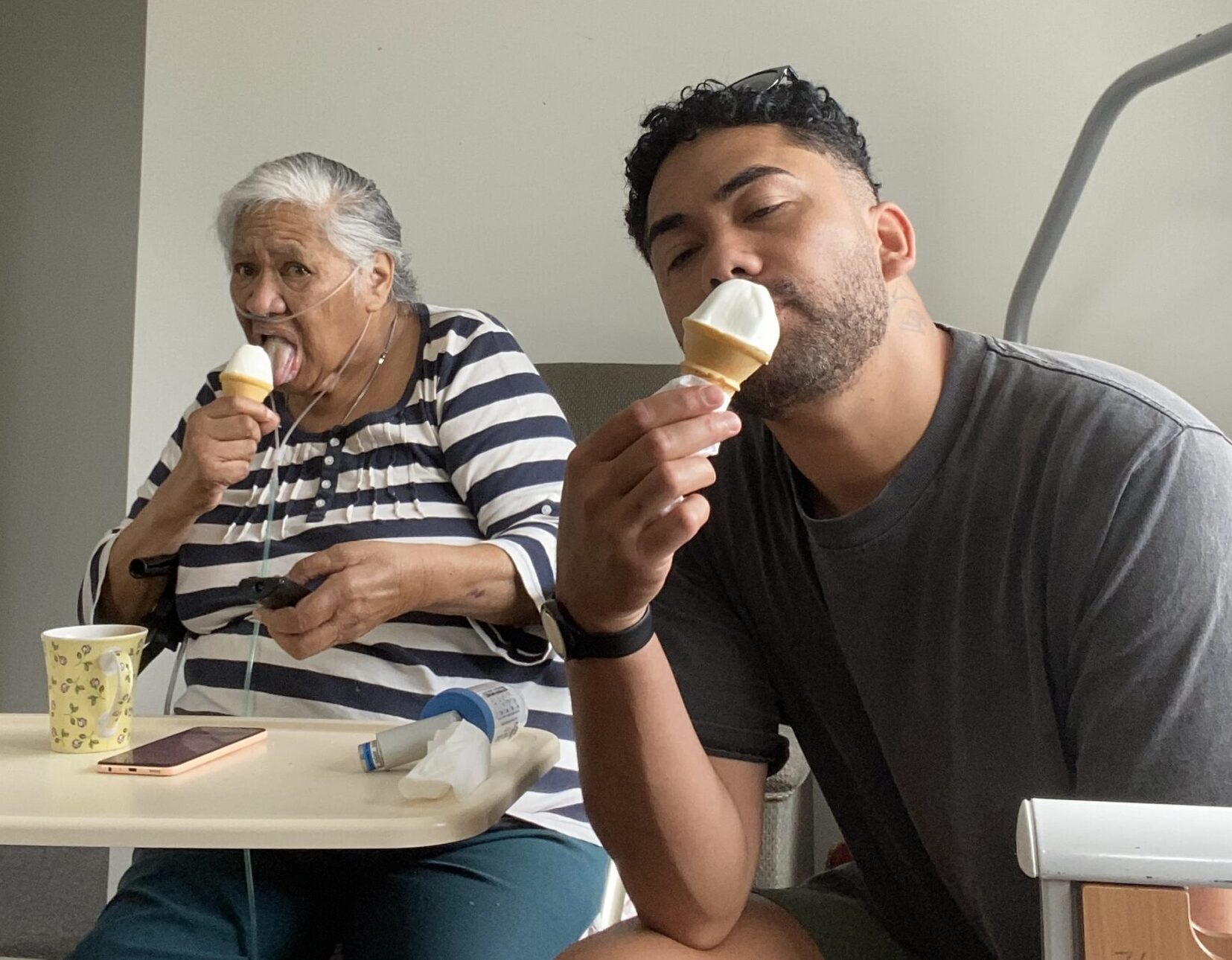
“I just was keeping her comfortable and giving her the best life she could have,” said Lang, the youngest of 16 siblings.
“I didn’t know anything about palliative care or nursing — but it just became a lightbulb moment and I wanted to switch my career.”
After she died in early 2024, Lang met his current partner and ended up moving to Ōtautahi to be with him. With his encouragement, and trusting his instincts, he enrolled on Ara’s bachelor of nursing — while also putting up his hand up to become a NZNO student representative on campus.
In his new student co-leadership role, Lang is driven by a passion to improve Māori health inequities: “I think nurses can be role models in that space.”
He will be also be advocating for ākonga Māori and growing the Māori nursing workforce beyond the seven per cent it’s been stuck on for more than a decade. “In my lifetime, I want to see it surpass 18 per cent.”
And within the NZNO student rōpū, Lang wants to grow kotahitanga — unity — to support a truly bicultural national student unit.
Kamaea Morris (Ngati Porou) is Te Rūnanga Tauira vice-chair.
Morris is a second-year nursing and health sciences student at Eastern Institute of Technology in Te Matau a Māui — Hawke’s Bay, where she mostly grew up.
Just a toddler when both her parents passed away, Morris was raised by whānau in the Hawke’s Bay area, attending kohanga reo.

She was just four years old when her kuia, with whom she was living, got Alzheimer’s disease and Morris began helping look after her until she had to go into care.
At seven, she had moved to Australia with whānau before coming back to live in Tāmaki Makaurau — Auckland, before heading back to Hawke’s Bay.
‘There isn’t that much kawa whakaruruhau — I would like that to change.’
Nursing beckoned as she “wanted to do something with people”. But it was it was only thanks to the support and encouragement of previous Te Rūnanga Tauira leaders and members in her region, that Morris felt able to step into her new vice-chair role. “I would never have gone for leadership, otherwise.”
As well as bringing NZNO’s national student unit closer together, Morris wants to see Te Tiriti-led approach to cultural safety, kawa whakaruruhau, properly brought to life across nursing schools and on clinical placement.
“There isn’t that much of it — I would like that to change.”
Catie Lattimore is national student vice chair.
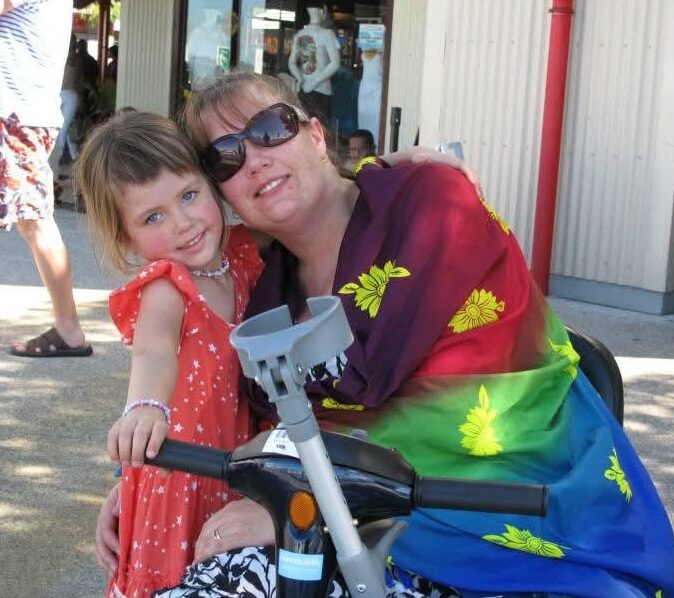
A second-year nursing student at Massey University in Palmerston North, Lattimore was drawn to nursing after seeing her mother experience several health issues.
The support both she and Lattimore got from nurses sealed her own desire to change lives.
“I have seen first-hand how nurses changed how she lived — they were so impactful, it changed all our lives and it’s really grown from that.”
Later, during her own mental health struggles, Lattimore said nurses stepped up again, “getting me to where I am today”.
She hopes to eventually work in community nursing, where she can build relationships and provide continuity of care.
Lattimore said she had seen what former leaders, Poihaere Whare, Siarra Marsh, Dawn Blyth and Floyd Watson, had achieved speaking out for students — and wanted to keep up the momentum.

“I want to continue what they started and make sure our voices are still heard,” she said. “They might try to silence us — but I hate being silenced.”
Both Lattimore and Lumsden would love to see more financial support for nursing students, about a third of whom drop out, especially while on clinical placement.
‘I have seen first-hand how nurses changed how she lived . . . it changed all our lives.’
A wider range of placements was also needed, so students didn’t have to travel so far. Current fuel costs meant some were paying hundreds of dollars each week, travelling long distances to placements — forcing some to sleep in their cars.
“We want to hold the Government, and our university and polytechs accountable — If they’re offering this degree, why aren’t they supporting us through it?”
See also: Back to the future — ‘terrible’ order to cap nursing student numbers comes under fire