


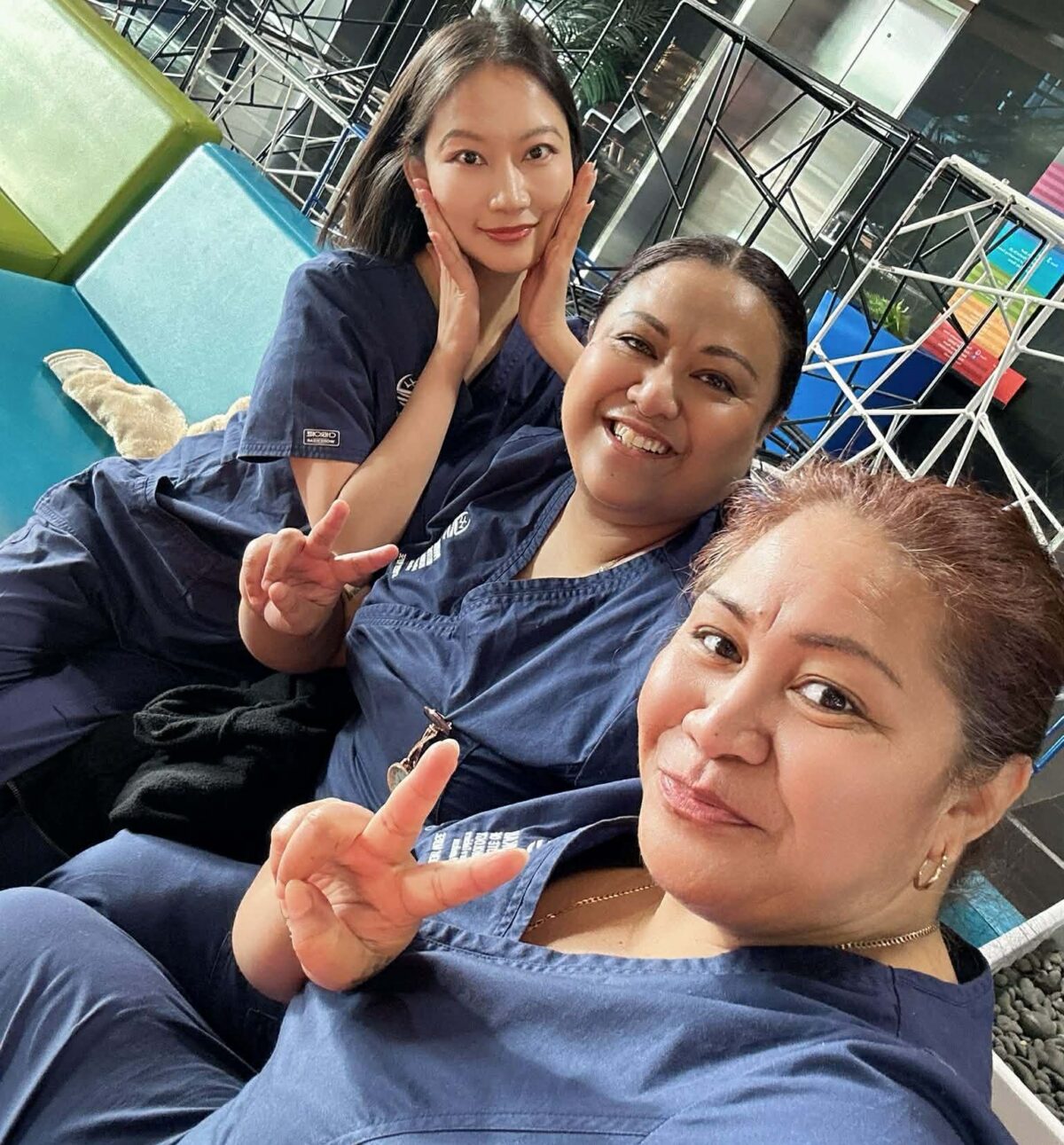
At Middlemore Hospital, where the pace is fast and the work is deeply human, Mele Penu walks into the stroke rehabilitation ward as an enrolled nurse (EN) who understands caregiving in more ways than one.
Her nursing journey was not straightforward. For more than a decade, Mele worked as a health-care assistant (HCA), dedicating herself to caring for others. Before that, she had started a nursing pathway but chose not to continue at the time.
“I heard about the HCA course and thought that was close enough,” she recalls.
Years passed, and like many HCAs, she built experience, skill, and resilience. Encouraged by family and friends to take the next step, the idea of becoming a nurse stayed with her. It was not until the birth of her daughter that everything changed.
“When my daughter turned two, I decided to study to become an enrolled nurse. I wanted to step up and be a role model for her.”

What followed was a journey shaped by determination, sacrifice, and purpose.
Training to become an EN while working and raising a child was one of the most challenging periods of Mele’s life.
“Being physically and mentally drained, working as a single mum and having to sacrifice time away from my daughter was the hardest time of my training.”
Her days were full on, and her responsibilities were constant. Like many in the nursing workforce, she had to manage financial pressure, study demands, and the emotional load of motherhood.
“I thank God for blessing me with a supportive family. My mum and my daughter’s father supported me during my studies.”
She reduced her working hours so she could spend time with her daughter and keep up with her studies.
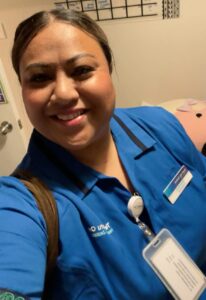
“There have been ups and downs, but the ups will always overcome the lows.”
During her training, Mele also experienced a separation from her husband. This added another layer of emotional strain during an already demanding time.
“My faith in God kept me going. I had to put aside my feelings and keep going.”
She stayed focused on her purpose.
“I had to remind myself why I was doing what I was doing and whom I was doing it for. My purpose and drive were my daughter.”
Her story reflects a reality many nurses face. Resilience is often built through continuing, even when life is difficult.
Her identity as a Samoan woman deeply influences her nursing practice — fostering cultural safety and trust.
“My Samoan heritage has profoundly impacted my nursing path by forming my values, outlook on care, and bond with patients.”
Raised with values like fa’aaloalo (respect) and tautua (service), she sees nursing as an extension of her cultural identity, inspiring pride in her cultural roots.

“In my culture, looking after others, particularly the elderly and the ill, is a collective duty.”
These values guide how she cares for patients.
“I make sure patients feel recognised, appreciated, and supported not only physically but also emotionally and spiritually.”
Her experience also strengthens her ability to provide culturally safe care, especially for Pacific communities.
“I understand how cultural values, language, and family participation influence a patient’s health journey.”
Now working as an EN in stroke rehabilitation, Mele brings empathy, insight, and lived experience into her role.
“Being an EN means being a steady, caring presence for others, even on days when you’re still trying to steady yourself.”
It reflects what nursing often requires—showing up for others while managing your own challenges.
A message to others
Mele’s journey will resonate with many HCAs who are considering further study but feel held back.
Her message encourages others to pursue their passion with confidence, fostering a sense of empowerment and belief in their potential.

Mele’s journey reflects the experiences of many in the health-care workforce, especially Pacific women balancing caregiving roles, cultural expectations, and personal challenges while pursuing professional growth.
Her pathway from HCA to being a nurse highlights both the potential within the workforce and the importance of support systems that help make that progression possible.
Today, as she cares for patients in stroke rehabilitation, Mele carries not only clinical skills but also a story of perseverance, faith, and purpose. It is a story that will continue to inspire others.
‘I had to remind myself why I was doing what I was doing and whom I was doing it for. My purpose and drive were my daughter.’
Author reflection
As a clinical coach working in adult rehabilitation, I have the privilege of supporting nurses at different stages of their journey. Stories like Mele’s are a reminder that behind every qualification is a deeper story of sacrifice, identity, and purpose.
Mele’s journey reflects the strength within our HCAs, many of whom already demonstrate the values and capabilities needed in nursing. What they often need is the right opportunity, support, and belief in their potential.
Her story also highlights the importance of culturally-grounded care in Aotearoa. As our workforce continues to grow and diversify, it is nurses like Mele who help bridge the gap between clinical care and cultural understanding.
For me, this is why we invest in growing our own workforce. Because when we support people like Mele, we are not only developing nurses. We are strengthening the care we provide to our communities.
Ceasar Jr. Beltran, RN, MN, is a nursing clinical coach — adult rehabilitation and health of older people, at Middlemore Hospital.