


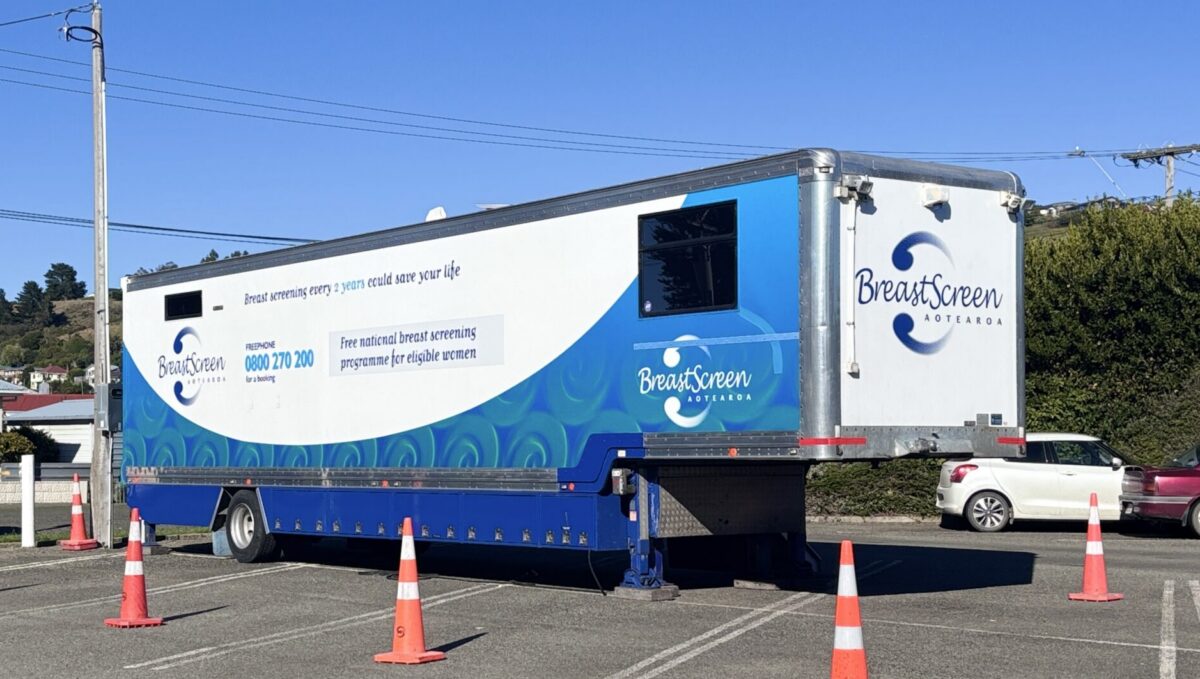
BreastScreen Aotearoa’s mobile screening bus is currently in Oamaru and will travel to Clyde, Balclutha, Gore and Otautau over the year, before returning to Oamaru. It is currently parked up at 4 Frome Street, Oamaru.
WellSouth equity programme lead Jen Lowrey welcomed the bus’s return, saying the organisation would be working hard to promote breast screening across the region, particularly in Māori, Pacific and rural communities.
Māori and Pasifika women experience the highest rates of breast cancer in Aotearoa, according to the Ministry of Health. Each year, about 3600 people are diagnosed with breast cancer.
Breast screening is free to women aged 45 to 69. A recent expansion means it will increase year-by-year, becoming available to women up to age 74 by 2029.

Lowrey said while 68.5 per cent of eligible Māori and 60.5 per cent of eligible Pasifika women in Otago and Southland had been screened, more work was needed.

Lowrey, a registered nurse (RN), said Māori and Pacific people experienced poorer health and treatment outcomes due to lower participation rates, access to screening services and follow-up treatment.
“This means there are higher rates of cancer and, as a result, higher death rates in those communities. This is made worse with barriers, including living rurally and in many cases the stigma associated with mammography screening.”
WellSouth planned to break down those barriers by enrolling as many people as possible onto the screening programme, she said.
This would be done through education, information-sharing and a dedicated call centre, “talking with and supporting women to get to clinics or the bus and get these important checks”.
Māori and Pacific health provider partnerships
Another focus has been growing partnerships with local hauora Māori and Pacific providers to support people to access their mammogram screening, Lowery said.
“Early detection, diagnosis and treatment can save lives and change communities who are losing loved ones.”
The extended breast screening programme will make around 130,000 more women eligible every two years and is expected to improve early detection.
WellSouth has a contract with ScreenSouth Ltd, who administer the national breast screening programmes for Te Waipounamu (South Island).
Details of the mobile screening bus schedule can be found here.
At a glance
- Māori and Pacific Island people have a significantly higher breast cancer incidence compared to non-Māori and non-Pacific and are almost twice as likely to die from breast cancer.
- The aim of breast screening is to find very small cancers before a lump can be felt in the breast. Early treatment has the best chance of success.
- Breast cancer is the most common cancer in New Zealand women.
- While screening mammography cannot prevent breast cancer, international evidence shows that mammography, when delivered through an organised screening programme, can reduce mortality from breast cancer.
- The risk of breast cancer increases as you get older. Three-quarters of women who get it are over 50.
Source — BreastScreen Otago