



Justifying the plan to dump fees-free final year of tertiary study, leaked ahead of Budget 2026, Ministers said the money would be better spent elsewhere.

However, Kaitiaki has discovered it would make life about $10,000 tougher for affected nursing students and funnel savings to male-dominated trades instead.
Adding insult to injury it comes alongside a nursing shortage and a tradie glut.
After hearing news of the scheme’s demise, Whangārei NZNO delegate and district nurse Jenni Mansell had the idea to use savings to help nursing students beat placement poverty.

There might be a potential shortage of builders and electricians in the future, she said, but New Zealand was desperately short of nurses now.
Figures in a report on health funding by Kaitiaki Hauora show Te Whatu Ora-Health NZ (HNZ) alone is short-staffed by 2250 nurses. It has an 87 per cent female nursing workforce.
“So why not jump on it now with those extra funds and just say ‘let’s support an area that’s struggling like health’?”
Mansell said it was about equity — “the fact that we are a female-dominated workforce and we never get a fair go at things”.
Predominately-male trades had been paid for years for training, she said, “it’s just the way the whole thing was set up”.
“So where’s our female professions that are getting supported into their ‘trade’?”
It did not need to be paid on an hourly basis but could be be a lump-sum payment to acknowledge the work students do on clinical placement, Mansell said.
“Because they do get put to work when they’re on the wards. We’re so short staffed they are out there doing hands-on, doing it all.”
Meanwhile in May 2025 the Government gutted the pay equity scheme for female-dominated workforces, announcing and passing a law on the same day. At that point, 14 claims had been settled, and 33 were still underway.
Trades demand?
In the announcement of the $69m extra Trades Academy funding in Budget 2026, Regional Development Minister Shane Jones said fees-free had no real impact.
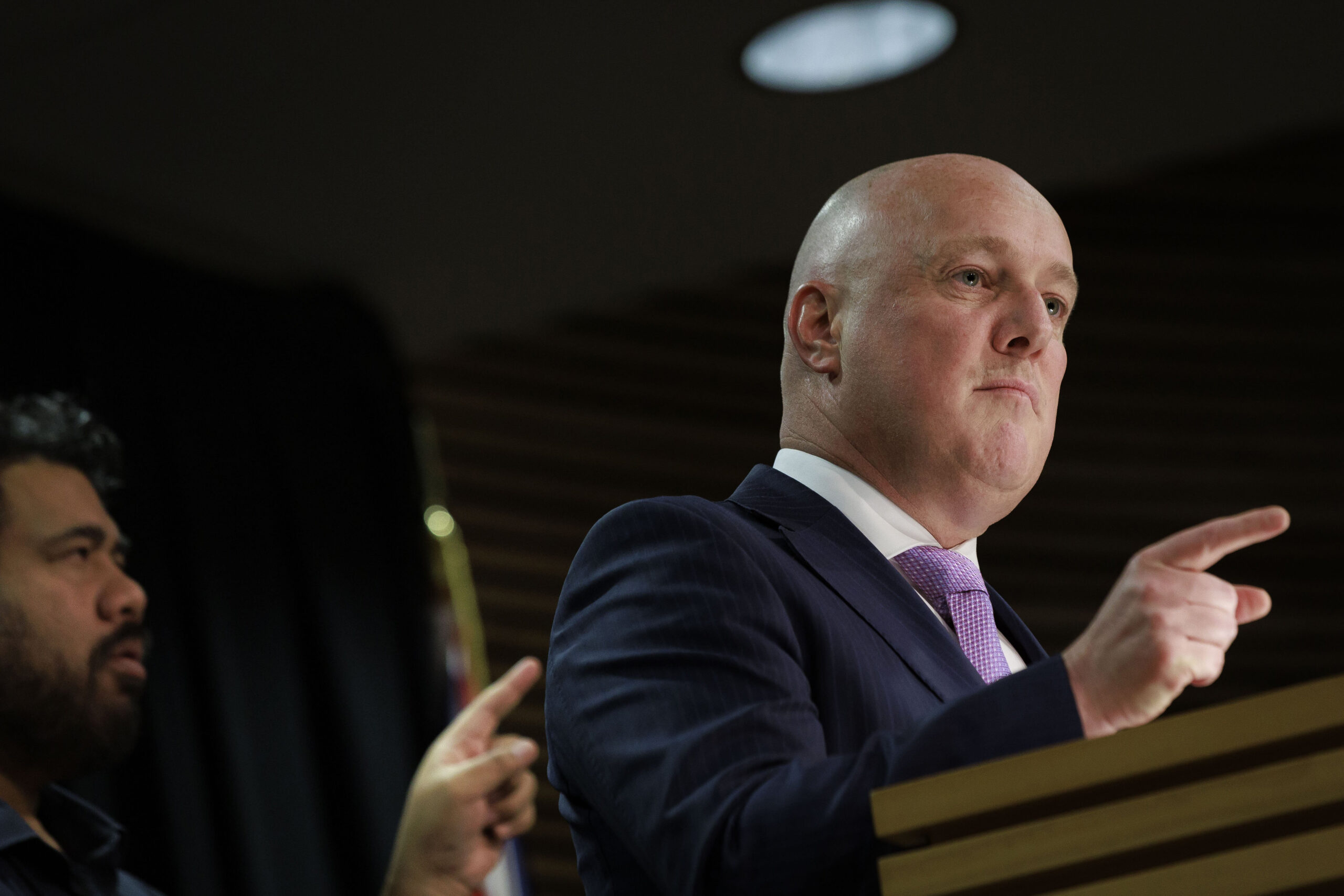
The Government was making “better use of the funding” and making sure young people were not stuck because of a lack of opportunity, he said.
When contacted by Kaitiaki, Jones would not comment on whether money saved should help nursing students on placement, and whether the decision ignored a female-dominated workforce. He would not comment on how this would impact the health-care shortage in regions such as Northland.
A spokesperson referred Kaitiaki to Education Minister Erica Stanford and Tertiary Education Minister Penny Simmonds.
Stanford had no comment to make either — a spokesperson bumping queries to the tertiary minister.
New Zealand’s construction industry experienced a savage downturn in the last 12 months with mass lay-offs and lowered staff demand. It has an 83 per cent male workforce.
No real impact
Before she started her course, second year nursing student Siarra Marsh was told her first year would be fees-free. Then when she started the course she was told her final year would be free instead.

“Now that I’m half-way through my study I’m told no year is free,” she told Kaitiaki.
She nearly cried, she said, when she got the news.
For her it would add another about-$9000 to her debt, which would take many additional years to pay off. To date her studies had left her about $35,000-plus in debt.
“We’re already entering a job that’s challenging enough and now we’re facing the abolishment of fees-free.”
Nursing was important to the Taranaki student — speaking while on clinical placement — and more than just work.
“Although I’m stressed out, although I’m exhausted, although I have time pressures, I have work, I have whānau, I have study, I know that in a day I can make a difference.”
Nurses were already begging to get some kind of financial support from the Government for clinical placement, “and then they’re just trying to take more away from us”.
Marsh was asked “on the daily” whether she would head overseas to the likes of Australia for work when she’d completed her study.
But she would stay, she said, despite the lack of support from the Government.
‘We’re already entering a job that’s challenging enough and now we’re facing the abolishment of fees-free.’
“My massive reason for getting into nursing was that . . . I couldn’t sit back and see my whānau be mistreated because of short-staffing, and not enough nurses because they’re all moving away. A big part of doing nursing for me was for my community.”
While leaking news of the axing to media in May, New Zealand First leader Winston Peters said funding would be used for trades and industries “where we can get a far better payback”.
Finance minister Nicola Willis confirmed the change — and Prime Minister Christopher Luxon said some of the money would go to trades. Fees-free “didn’t achieve any goals”, he said.
NZNO national student union co-chair Poihaere Whare said nursing students now faced an-about $10,000 extra cost for that final year.

It added stress and uncertainty for nursing students — many already juggling the cost of living, travel, and dealing with “placement poverty”.
People were getting into more debt to cover everyday expenses like rent or power. They were dipping into their food budget, which meant they ate lower-quality food, she said.
“All of those things that people don’t think about, the essentials that we need to survive, we’re starting to have to dip into those just to be able to continue our education, go to placement, pay for uniforms, make sure we have proper shoes.”
Some people were heading to placement with no lunch. “They just have the coffee provided on a ward, or milo — milo is a best friend to them.”
Whare had taken to bringing sandwiches for a fellow student who simply couldn’t afford kai while working, she said.
About 61 per cent of students in an NZNO survey planned to go overseas if they couldn’t secure a job in Aotearoa, she said. One in three people don’t finish their nursing degree, and those that did had better incentives to work overseas than stay at home.
‘So where’s our female professions that are getting supported into their ‘trade’?’
Tertiary response

Simmonds said funding decisions were based on evidence and advice about where investment “would achieve the greatest benefit”. “The Government remains committed to supporting students across all fields of study.”
She said the Government currently spends about $4 billion annually on tertiary student funding.
The Government’s priority was “a strong and sustainable student support system” that reduced financial barriers to tertiary education, she said.