



A new NZNO survey of 720 primary health-care members has taken the pulse of the sector covering pay, job satisfaction and workload.

The results showed that 80 per cent of those nurses had thought about leaving their jobs in the last six months.
Meanwhile 78 per cent said their workload increased in the same period. About 1.5 percent said it had gone down.

The number of primary health nurses who had considered leaving Aotearoa to work elsewhere was approaching half of the workforce — 42 percent.
Read this story in te reo Māori here.

Clues to why nurses were thinking of exiting the sector could be found in their pay — 639 of members sharing their hourly rate.
The gap between median primary care nurse rates and Te Whatu Ora nurses, currently negotiating their pay up, ranged between 8.13 per cent (step 6 nurses) to more than 11 per cent for nurses in leadership roles.
The gap favoured Te Whatu Ora nurses.
By the numbers
Primary health (PH) versus Health NZ (HNZ) rates. The survey used the median hourly rate for PH.
- Step 1, PH — $32.78. HNZ $36.32. Difference: 10.8 percent
- Step 3, PH — $37.71. HNZ $41.48. Difference: 10.00 percent
- Step 5, PH — $44.27. HNZ $48.35. Difference: 9.22 percent
- Step 7, PH — $46.96. HNZ $51.17. Difference: 8.97 percent
- Coordinator/lead nurse/ nurse team lead or similar. PH — $48.97. HNZ $54.66. Difference: 11.63 percent.
The full table including all steps can be found here.
‘I was one of the 80 percent’
NZNO primary health-care spokesperson Tracey Morgan told Kaitiaki she herself was one of those nurses who’d thought about leaving the sector.
“The thing that stops me is that if I was to go that’s one less skilled nurse here in Aotearoa, and that’s not going to fix the problem for our patients.”
The primary health workload had gone up — especially in the likes of rural services and iwi providers, Morgan said.
“Primary health is in crisis, our funding model’s broken, we’ve got chronic staff shortages. It’s not fair for our patients, they’re having to wait up to three weeks to get into a GP.”
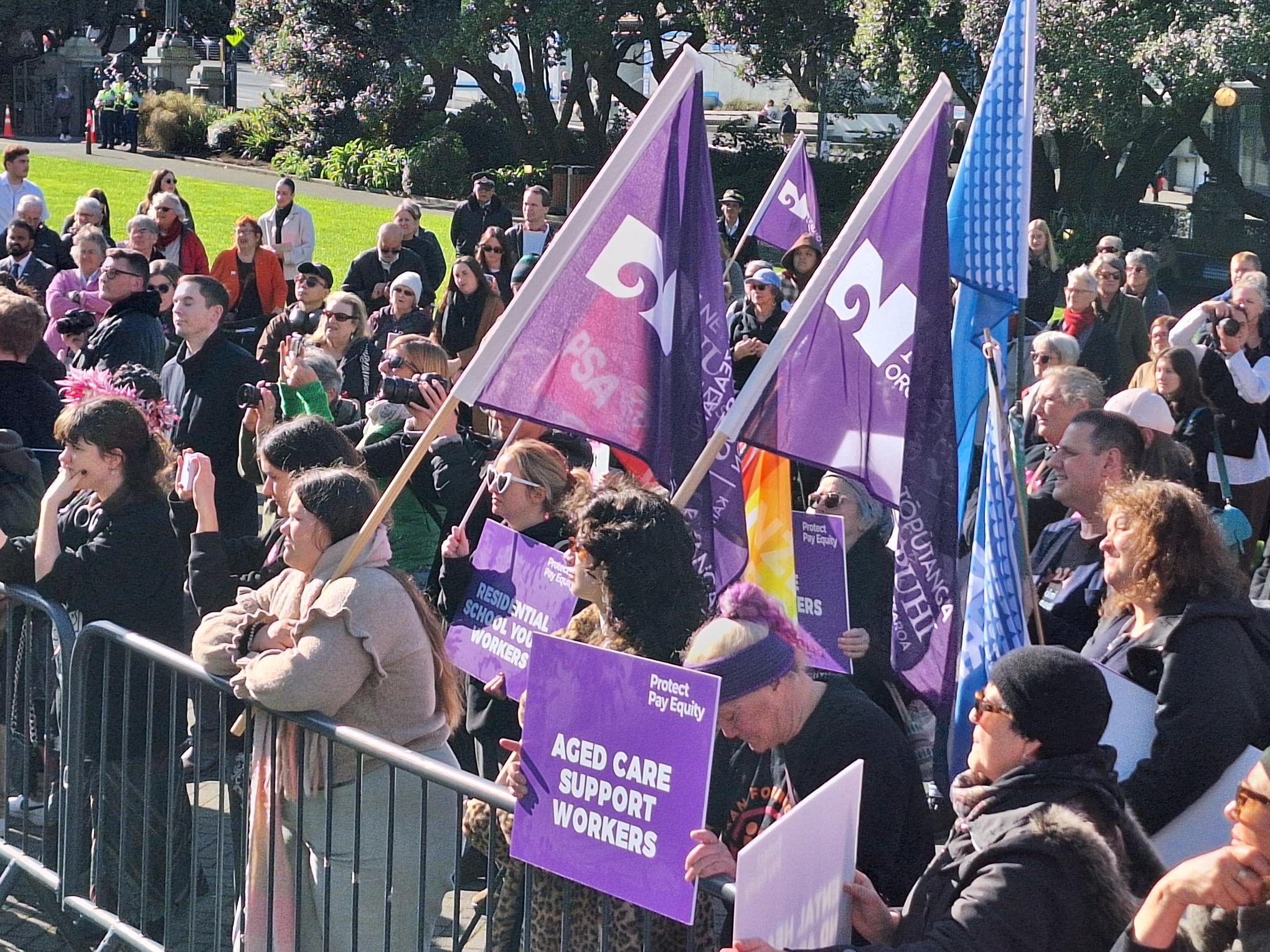
In May, the Coalition Government passed legislation, without consultation, ahead of Budget 2025: axing 33 pay equity claims including NZNO primary health members.
Pay equity would have corrected undervaluing of primary health nurses’ work, she said. “Now our wages in primary health are going to be lower for longer.”
Health Minister Simeon Brown might have said the Government was pouring money into the sector, but “it doesn’t trickle down to the nurses”.
“Primary health is in crisis, our funding model’s broken, we’ve got chronic staff shortages.”
GPs were having to use extra funding to cover other expenses, she said. “The nurses are burnt out, they’re tired.”
Practice nurses were their own multidisciplinary team (professionals from different fields), said Morgan. “You’re the one that has to go and source all of those people, on top of you nine to five job, on top of your phone calls, on top of the walk-ins.”

She said there had to be a commitment across political parties to create a sustainable funding model.
NZNO is part of a multi-union challenge in The High Court in Wellington against the Government’s pay equity changes.