


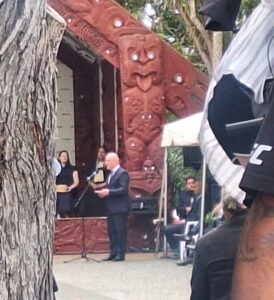
It wasn’t the warmest of farewells to the upper Treaty ground for David Seymour, ACT leader and recent speaker at Te Whare Rūnanga.
“You’ll pay for what you did to women and Māori,” shouted a bystander behind the ropes on the path out of the grounds.
It was the annual Waitangi pōhiri for politicians at the Treaty Grounds, and it had been a tense few hours as Māori and non-Māori alike worked through their angst.
Seymour was heckled exiting the grounds, after final political speaker Prime Minister Christopher Luxon wrapped a wide-ranging speech including the claim that health outcomes had improved under the Government.
The articles of the Treaty didn’t mean there should be separatism in the public service, he said — a potential jab at the likes of the now-defunct Te Aka Whai Ora.

| https://youtube.com/shorts/rT6SJODmfQg?feature=share | He then doubled down with a crack at equality of treatment in the health system. “When a New Zealander arrives at hospital and is in distress or in need of an operation, the system shouldn’t ask about their family tree, it should ask about their clinical need.”NZNO kaiwhakahaere Kerri Nuku slammed the comments — saying that the Government “absolutely hadn’t” raised health outcomes, especially for Māori.
“Our people seem to be still obstructed from free access to service-delivery in hospitals and primary health because of costs.” Nuku said the likes of Te Aka Whai Ora weren’t a separatist system — it was still run by the Crown, but aimed to bridge the gap for Māori. “At the moment we’ve got a homogenised view that treats people equally even though we’re not addressing the inequities . . . that have been perpetuated by the Government.” Luxon’s family-tree comments were an insult to the work of nurse Irihapeti Ramsden that talked about how nurses were socialised and its impact on patient treatment, said Nuku. “That’s an ignorant statement to make, and really offensive.” ‘It’s been a tough year’Longtime Te Taitokerau primary health nurse Marie Noa, speaking at Waitangi after the politicians’ pōhiri, said working at an iwi provider was always challenging and more resourcing was needed to address Māori health inequities. Another Whangārei community nurse, Jenni Moore, said she had seen first-hand the damage wrought by the Government, particularly from the loss of Te Aka Whai Ora, and attempts to roll back equitable policies through the Treaty Principles Bill |
“It’s been a very tough year for people up here. I think the Treaty Principles Bill has really unsettled a lot of people and I think that also the loss of Te Aka Whai Ora was a devastating blow for Māori who really had that little jewel of hope that finally they would be able to be in control of their own destiny.”
Moore said she has seen the harm caused in her own community.
“In Whangārei it’s taken quite a lot of cuts to the housing area and health isn’t just clinical bedside stuff – there’s all the determinants of health – housing and education, so there are many things the Government is quite surreptitiously [doing],” she said.
On the politician’s kōrero, Moore said she was impressed by Labour’s Chris Hipkins who talked about coming together and not being divisive – and that Te Tiriti was about two sides working together in partnership, not just one side saying ‘this is the way it’s going to be’.
“I’m always hopeful but it’s going to be a tough election year’
Te Poari making connections
Meanwhile, Te Poari members said they had been busy networking with politicians during Waitangi, discussing the impact of current policies and funding decisions on their whānau, communities and patients– and hopes for a different direction after the election this year.
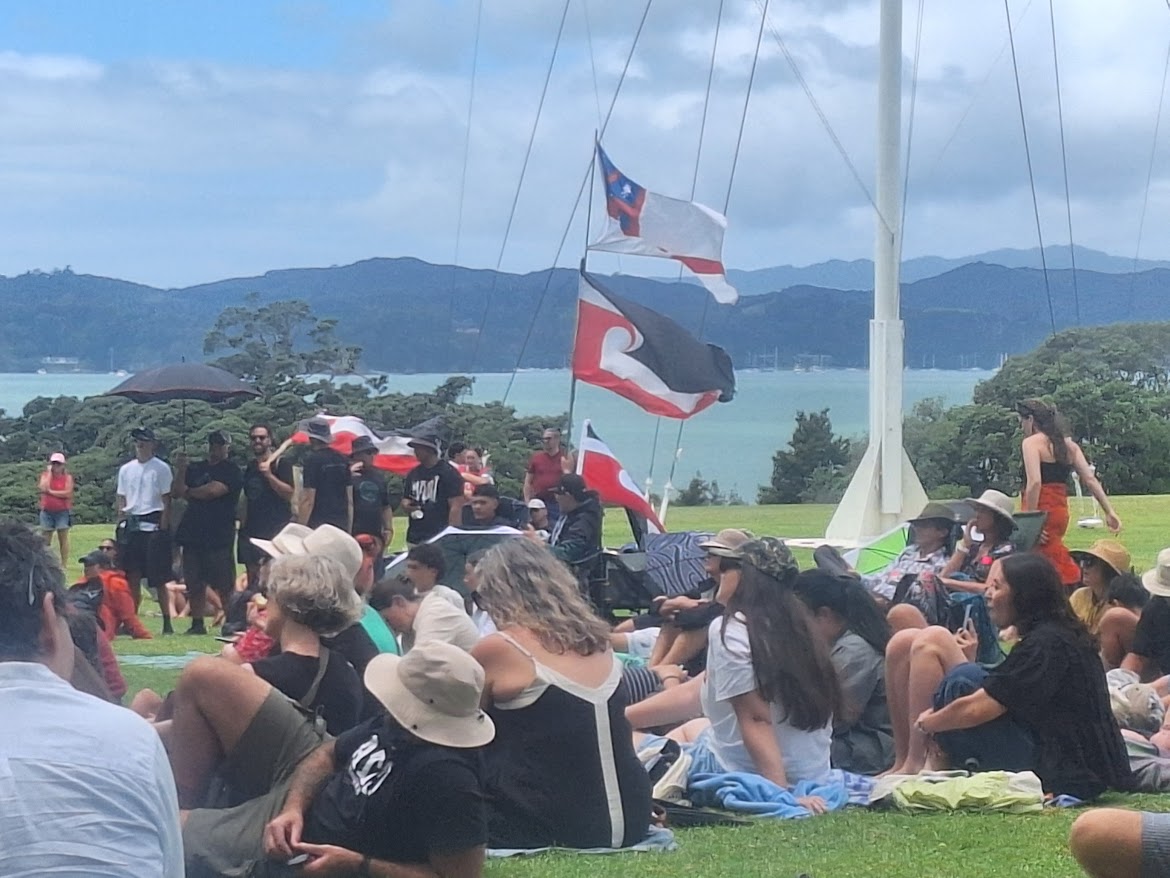
“We don’t want promises, we want action,” said South Island nurse and Te Poari rep Charleen Waddell.
Whanganui nurse and Te Poari member Michelle Fairburn said pressing issues included building the Māori nursing workforce – stuck at seven per cent for more than a decade — and resourcing iwi providers.
“We are a resource – we hold the answers but we are often overlooked because of the way the system works.”
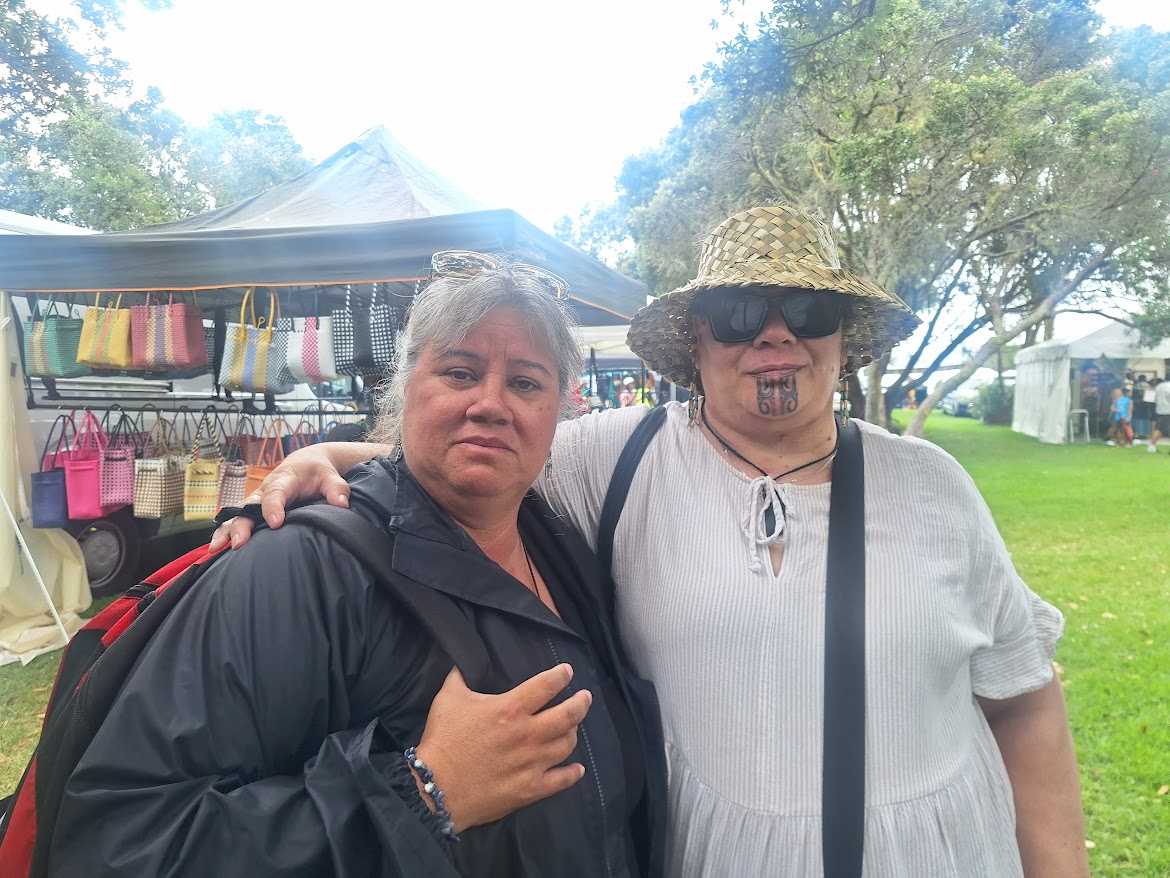
It was often local Māori communities who responded during emergencies and natural disasters – yet Government funding and resources were often directed elsewhere, Fairburn said.
Kotahitanga – unity – was key. Unions, health workers and progressive political parties needed to work together to support Māori and whānau health and ensure the damaging policies of the current Government could not continue beyond a term, she said.
“Economics for us is building up the Māori workforce – it’s about investing in people,” they said.