


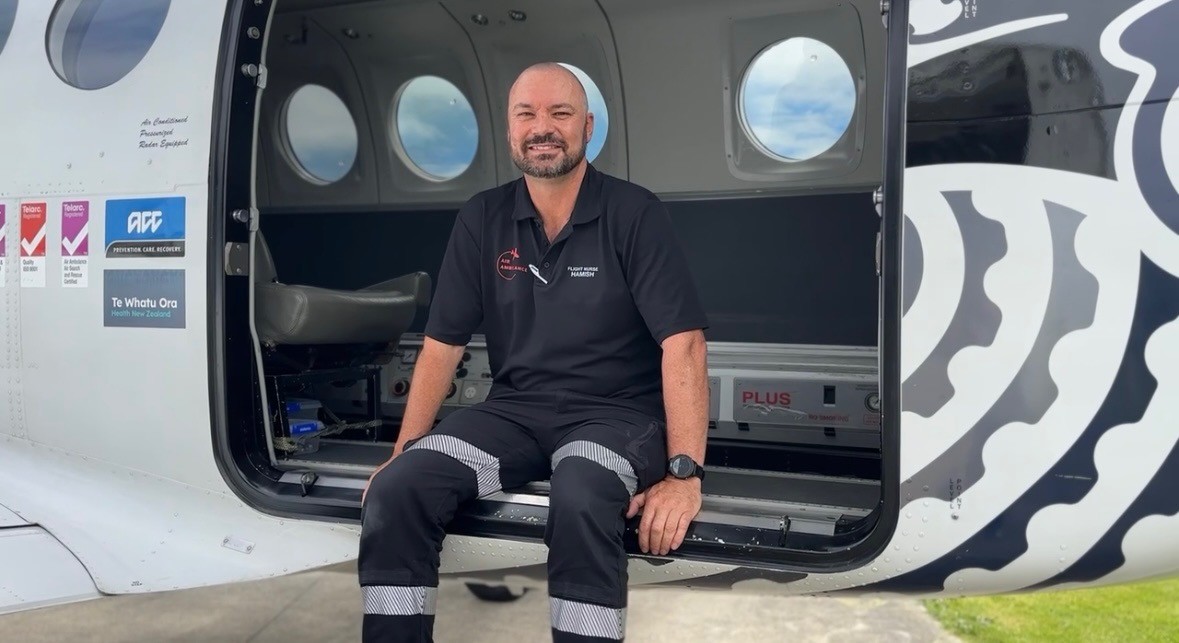
Flight nurses Hamish Hardy and Patrice Rosengrave have work stories others can only make up.

They have switched out their office desks and 360-degree turning chairs for fixed-wing planes and helicopters.
Their daily view is not a photograph of their family pets, but the peaks of the country’s highest mountains, and the many veins of water running from them to the sea.
Their breaks are not taken in a hospital cafe. Sitting in a paddock in the middle of nowhere among hundreds of sheep, eating home-made sandwiches, is a regular thing for them.
Training for flight nurses isn’t sitting in a classroom reading papers. Every three years they are required to “drown themselves” as part of the HUWET (helicopter underwater emergency training) course to give them and their patients the best chance of surviving if their plane goes down in water, Rosengrave says.

And when the skies wreak havoc, they are always prepared with “an extra pair of clean undies” because when storms hit, or a sudden life and death situation arises, they don’t get to go home, Hardy says.
Laughs aside, flight nursing is serious work.
Patrice Rosengrave
Rosengrave began nursing back in the 1990s after gaining a Diploma in Nursing.
“Back when I trained, it’s like how it is now – hard to get a job. So, I went overseas for 10 years, working as a nurse in Cairns, the UK and Bermuda – and along the way I got a PhD in zoology, just so I had a backup option.
“I love animals, that’s what led me into zoology, but I love people even more so nursing is where I will stay.”

Christchurch Hospital’s intensive care unit has been her home since returning to Aotearoa in 2000.
“I start my day at the hangar at Christchurch Airport, checking our aeromedical equipment, waiting for jobs to come through. If there aren’t any jobs then I’ll head over to the ICU at the hospital to see where I can help.”
One job the Rangiora born-and-bred mother of two says she will never forget was the eruption at Whakaari Island, near Whakatāne, in 2019 that killed 22 people and left 25 others severely burnt.
“The call went out to flight nurses throughout the country – patients needed to be picked up from Whakatāne Hospital urgently and transported to other hospitals around the country that had more capacity to deal with such serious injuries, so we answered the call.
“The whanaungatanga and manaakitanga we got from hospital staff and the people of Whakatāne was amazing. Its so good landing in a place where people are so relieved and happy to see you.
“We brought back two of the patients to Christchurch Hospital – one survived the journey but sadly the other did not. Their injuries were horrific.”
Hamish Hardy
Hardy has been nursing for almost 13 years and just last week he tallied up 2600 flights.
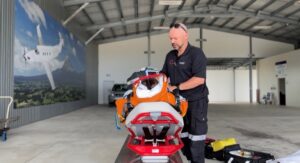
The Stratford born-and-bred RN is employed at Taranaki Base Hospital where his mum Robyn and wife Jacqui also work as nurses.
“Mum raised me by herself, and it’s because of her why I fell in love with nursing and my beautiful wife who I share two daughters with,” Hardy says.
Hardy does not have one particular flight that has left a permanent mark on him.
“In this line of work, you have to remember the positives – the good outcomes where patients have survived and are living healthier and happier lives today.
“One patient I will never forget was a man who was on the brink of death. He needed a liver transplant. A storm hit while we were transporting him to Auckland, so we had to do an emergency landing. We almost lost him. Then the sky cleared long enough for us to get him to the theatre.
“He’s one of my best friends today.”
Hardy said the air ambulance service he worked in owed a lot of thanks to two nurses who 20 years ago, turned it from an ad hoc service that was not getting proper investment to one of the best air ambulance services in the country.
“Sue Deakin and Carolyn Jackson are Taranaki’s OGs [original flight nurses]. They are legends here for making this service more professional. And they are still flying today. I have so much respect for them.”
Turbulence: Flight nurses’ worst enemy
“Most of the time, our pilots are amazing and can predict when we’re going to get turbulence, but sometimes they can’t predict,” Rosengrave says.
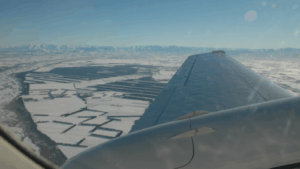
“If you’re not careful, you can get knocked out. So strapping yourself and the patients down is critical. Sometimes though, you need to unstrap yourself and that’s where you have to be careful.”
While not an enemy, the “physiological effects of altitude” was also a matter nurses in the air needed to be mindful of.
“There are a few differences between flying in a fixed-wing aircraft and a helicopter, which are unpressurised aircraft so this does change the type of care you can give your patients.”
The ABC of flight nursing
Rosengrave is also the secretary for NZNO’s college of air and surface transport nurses committee, which offers specialist training, national forums and a strong voice in healthcare policy to ensure transport nurses are equipped, connected and recognised for their vital contributions in this specialised field.
“Flight nurses need to have a lot of ICU experience under their belt. They need to be able to think outside the square and be reasonably fit. They also need to have not just good communication skills, but excellent communication skills as they need to deal with patients, pilots and others all at the same time in spaces where resources are limited.
“In this line of work, you very much are working between heaven, earth and hell. But there’s no other job I would love to do.”