


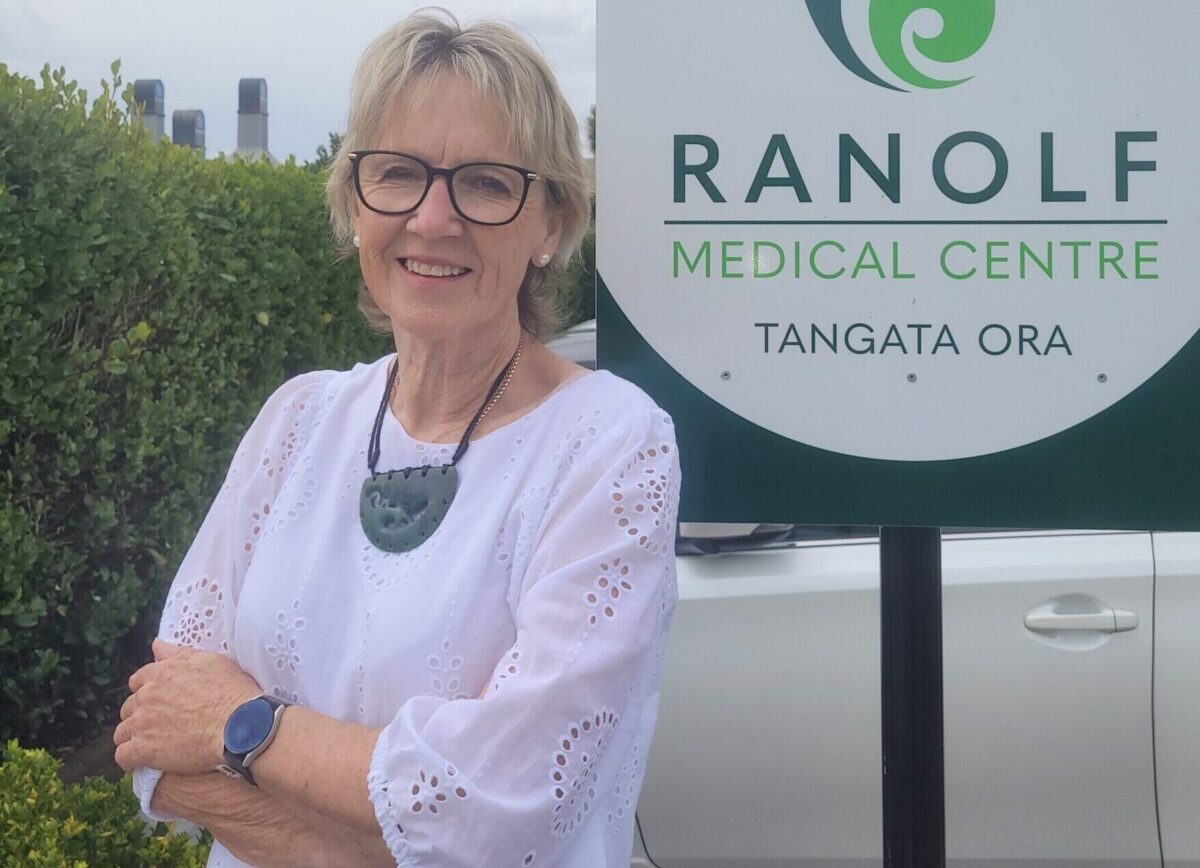
Everywhere there are reminders of Ros Rowarth’s work in primary health care.

Currently, however, she might be doing a spot of gardening.
Rowarth a nurse practitioner (NP) in primary health spoke to Kaitiaki about a half-century spent in nursing, after retiring in February.
It was a career that spanned changes in training, practice — saw nurses pushing to the top of their scope — and one that offers every health-care professional, and every person, motivation to never stop growing.
There were 50 in her cohort when she started her three-year training in 1976 at Middlemore, which still had the nurses’ home on hospital grounds.
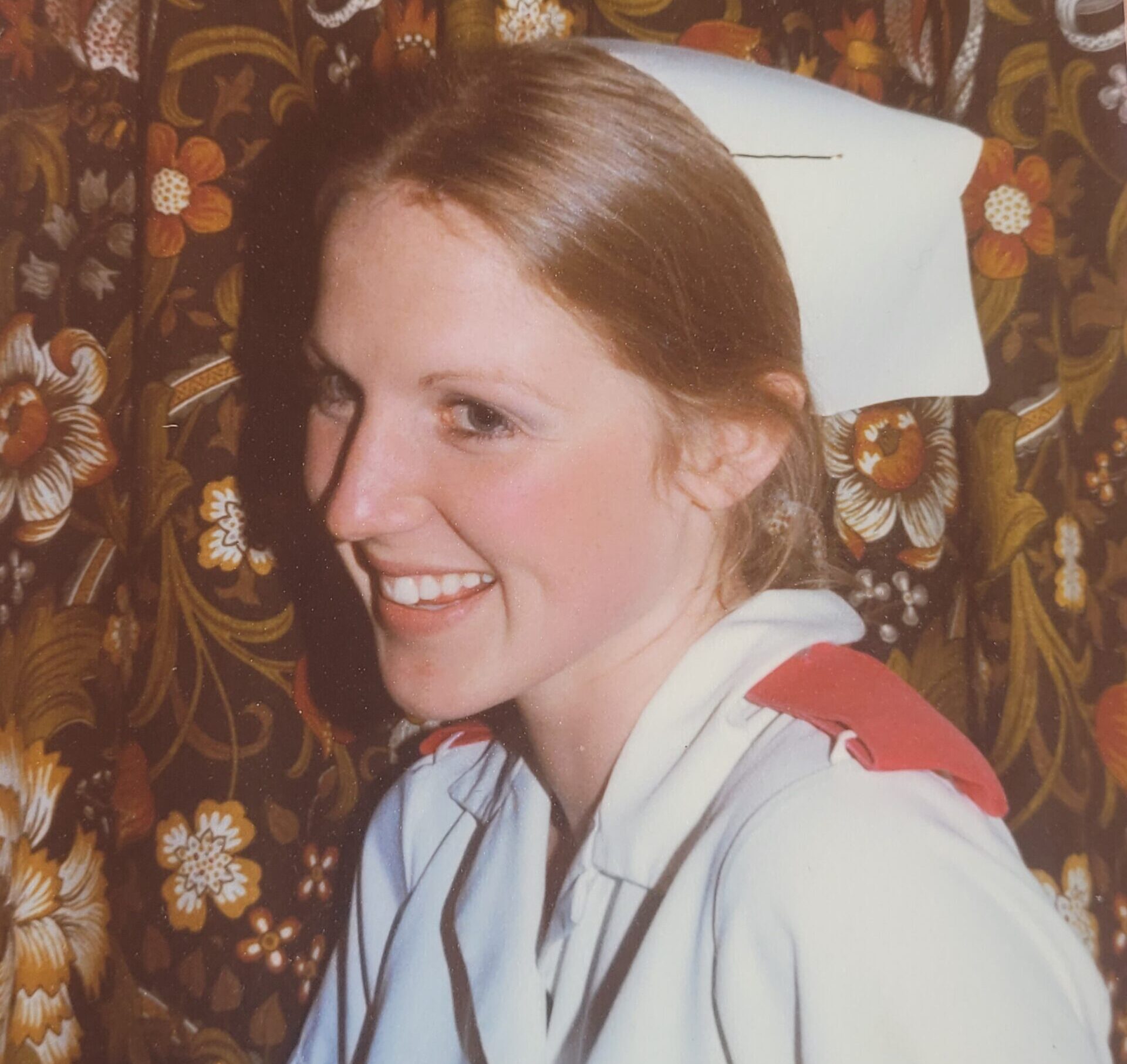
Her family had emigrated from England that same year, when she was 18. So now Rowarth was starting a new life across the world, as well as starting to learn the skills of a profession she’d wanted to join since childhood.
She still remembers her first intramuscular injection, on a “very skinny lady”. It was awful, she said: the moment she discovered there was no comparison between people and oranges.
The matron’s rounds were “quite an occasion”, nurses running around to get the ward in order, patients sat up straight, junior nurses kept out of sight, before the entourage with senior nurses and doctors arrived.
“I think it was May, three years later that I got my red epaulettes: a first-year staff nurse.”
‘And I never left’
Rowarth spent the next few years working at Middlemore in the neonatal unit before challenging herself again — heading back to the United Kingdom to train as a midwife.
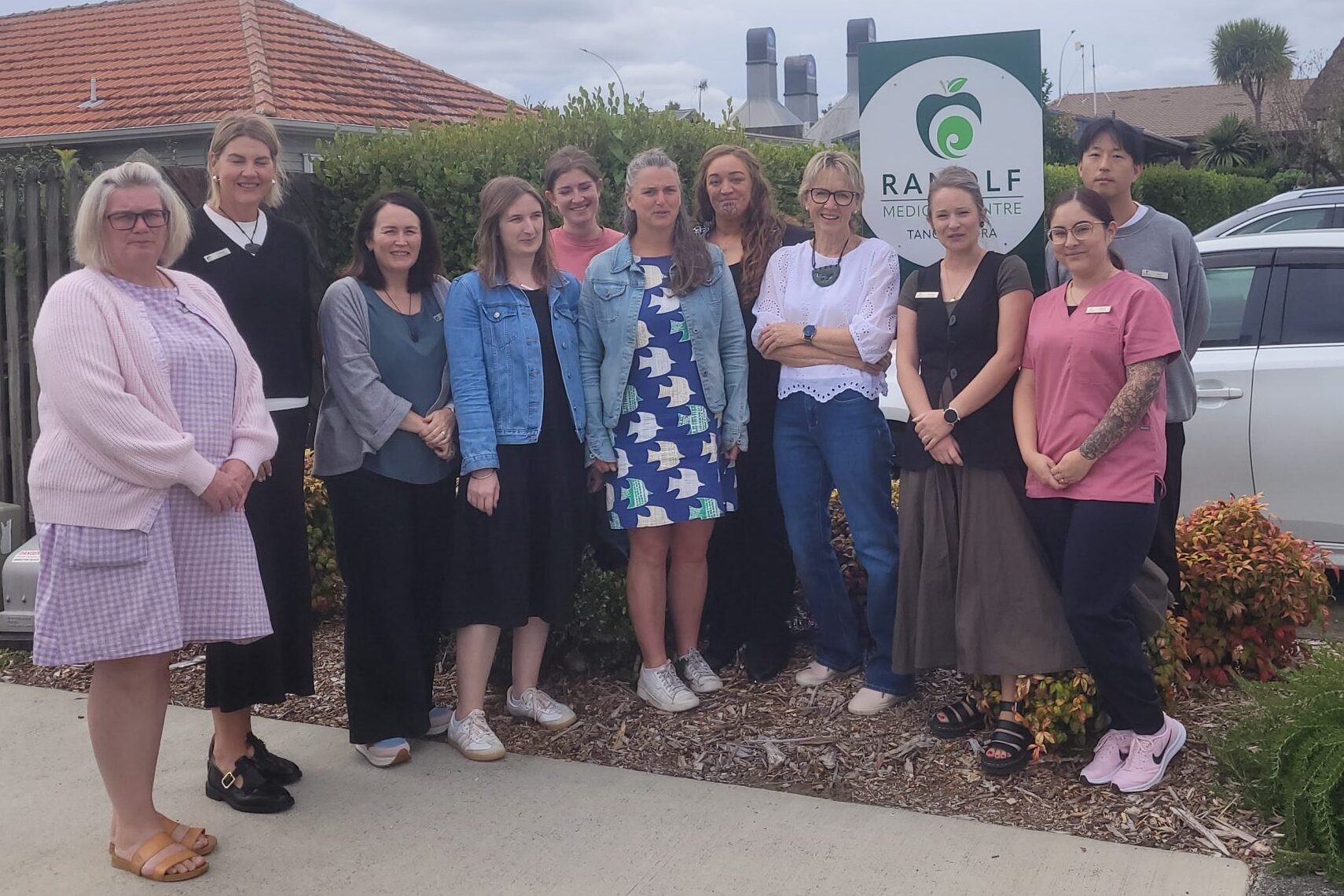
She returned to New Zealand and her mahi included spells in maternity and neonatal units at Middlemore, till 1989, when her life changed again on a visit to Ranolf Medical Centre in Rotorua.
Rowarth was about to fall into the next phase of her life — she just didn’t know it when she arrived with her own baby for an appointment with a doctor.
It was a strange set of circumstances, she said. Her doctor turned up late and apologetic — he’d been trying to help a young mother feed her baby.
“I just said ‘I’m a midwife with a young baby and would you like to give her my number and I’ll see if I can help her, just as one mum to another?’.”
“I think it was May, three years later that I got my red epaulettes: a first-year staff nurse.”
Before she knew it, she was a contracted midwife working through the clinic.
“That was not a planned move at all. I became one of the early independent midwives working in Rotorua only working through that one medical centre.”
One day, the practice nurse was away and one of the doctors asked if Rowarth could fill in, just for a day or two. “And I never left.”
Primary health would shape her career to the present day — but she would help shape primary health right back.
Primary health pioneer
Over the years, her contributions stacked up: she would join the local primary health organisation board, then serve as chairperson; she served on the board of the local independent practitioner association; she was part of the New Zealand College of General Practitioners cornerstone assessment team, its expert advisory group for primary care, and its quality committee. She chaired the general practice nursing alliance, worked with ACC, held roles with the NZNO college of practice nurses and amongst all that, found time to speak at conferences.
Rowarth wanted to make primary-health nursing a career that people were drawn to — not just an escape from somewhere else: Many nurses replying to job ads would say they’d had enough of night shifts, or stress, she said.
‘It’s knowing the stories of people’
Primary health nursing is about relationships, Rowarth said, with other health-care providers and patients.
“You end up caring for five generations of the same family — we do episodic care, but it’s the generations and it’s knowing the stories of people.”
Over the years the complexity of cases in people presenting at the clinic had increased. Patient expectations had grown too — influenced by consumer advertising for medications, and their own online research, which was sometimes “absolutely fabulous”, but other times, not so much.
“Your registration as an RN is only a start. And that’s what you build on.”
“Sometimes we’ve got people coming in and taking off their shirt and saying ‘I need a steroid injection’, before you’ve even done an exam.”
It’s never too late
A patient came in one day and Rowarth was doing minor surgery on her, offering options, and the patient said “‘you were a hospital-trained nurse weren’t you?”.
“Yes I was,” said Rowarth.
“Well you weren’t trained to think, just do what the doctor told you,” the patient said.
It felt like a slap in the face. But it just so happened that Auckland university was running a chronic-care condition paper in the area, so Rowarth decided to put her brain to the test.

“It turned out I could think, and having started it I thought ‘I’m not going to waste time’, and I just kept going. And I just loved it. I loved the study, putting the theory into practice and having been in nursing for so long, I had so much background knowledge that I didn’t know I had, and this was just formalising it really.”
Rowarth was 54 when she started training again in 2011 to be an NP.
Students had to produce a portfolio, with quotes heading each section — her overall quote came from writer George Eliot (the pen name for Mary Ann Evans), to acknowledge, said Rowarth, she was “doing this a bit later than most”:
It’s never too late to be what you might have been.
Despite her later start, she was still an NP for a full decade. That was 10 years of improving life for people.
“And 10 years of — I hate the word role-modelling, because it sounds awfully pompous — demonstrating advanced nursing care.”

Students came through the practice all the time, learning they have “so many options” and that brains just keep on absorbing stuff.
“Your registration as an RN is only a start. And that’s what you build on.”
A friend and a mentor
Colleague and fellow NP Caerlie Picken misses her friend at work.
She’s been at Ranolf for 12 years — but she actually met Rowarth at a presentation she gave in Auckland a couple of years before that.
In another case of the Rowarth effect, Picken kind of fell into work at the centre too.

“Her words sat with me, and I thought about her and her presentation and her practice, and it just so happened that we moved to Rotorua. And so I sought out her practice based on what she’d talked about.”
Rowarth told her the clinic focus was on nurses working at the top of their scope — “and she wasn’t wrong”. It was something that Rowarth had fostered, she said.
“I still don’t want to talk about the fact she’s retired, and we’re pretending it hasn’t happened, because I miss her.”
Caerlie’s message to Ros
“Ros is the kind of leader and person you feel incredibly lucky to have worked alongside — wise, generous, and quietly inspiring in everything she does. She left a lasting mark not only on the profession, but on all of us who have had the privilege to learn from and be supported by her. Working alongside Ros has been a true privilege.”
Meanwhile, the future of general-practice nursing and health care looks complicated, said Rowarth.
The introduction of physician associates and paramedics into practices risked confusing patients if roles expand beyond the core team. The average ages of nurses and doctors in general practices were now heading towards the 50s. And the sector paid less, making it less attractive.
She is staying on in a locum role, and continues as a professional supervisor.
In her own words
Two memories returned to Rowarth when she thought back over her career.
“In the first, I had the most delightful elderly couple they had a little house not far from the practice . . . they were well into their 80s and married as childhood sweethearts.
“One had to go into a rest home and his wife was so distraught at seeing him there that she spoke to his son, who rang me and asked me to go and sit with him.
“He was dying, and she didn’t want him to be by himself. Just that depth of relationship [with the patients] was lovely. That stays with me.
“And, another one: where I was a midwife and delivering a baby, and there were 17 people in the room. With the mother and the baby, it was five generations, plus I’m not sure who else. And that stayed with me, because it was amazing to be part of that enormously joyful time. And it all went well.
“And so that book-ends it nicely, doesn’t it? A birth and a death, and so many in-between.”