


The guy in the waiting room sat and waited to see Jacinda Childs, wondering the whole time what she could possibly do for him.
I a ia e wehe ana i tō Childs’ tari, ka taka te kapa mō te hira o te mātanga tapuhi.
By the time he walked out her office door, nurse practitioners made a lot more sense to him.
Ka kōrerotia e ngā mema NZNO, mātanga tapuhi (NP) noki, a Childs rāua ko Jayme Kitiona ki Kaitiaki nō mua atu i te whakarewa i tā rāua whare haumanu utu iti i Rotorua — he wāhanga anō o tētahi kukuwhatanga o te umanga hauora o mua nā ngā tākuta kē i ārahi.
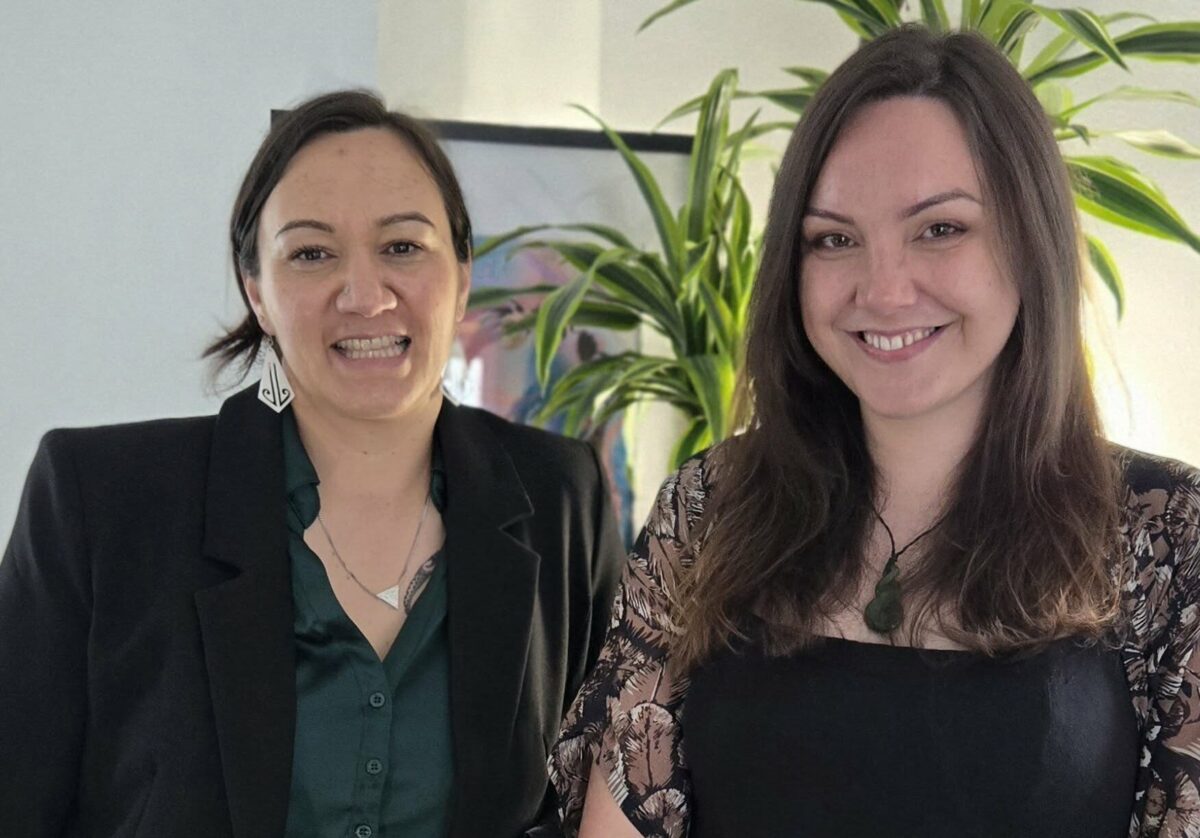
Childs and fellow NZNO member and nurse practitioner (NP) Jayme Kitiona spoke to Kaitiaki ahead of launching their new low-fees Rotorua practice — part of an evolution away from doctor-led healthcare.
Ka huakina Tau Oranga Health Care i te Hānuere 19, hei whakatutuki i ngā whakaritenga nui i ngā marama e whā i pahure.
Tau Oranga Health Care opens on January 19, capping off a busy four months of preparation for the pair.
E hiahiatia ana e te whare haumanu kaupapa Māori mā ngā mātanga tapuhi e ārahi kia whai i tētahi rata hei wāhanga o tētahi tīma mātanga take maha, ka kī a Kitiona. Ko tēnei “tētahi wāhanga whakaharahara” o tētahi rāngai hauora mātāmua e kukuwhatanga ana: Kua kore ko te āhuatanga o mua anake o te whare haumanu nā te rata i ārahi me he tapuhi i raro iho.
The NP-led, kaupapa Māori clinic planned to bring in a general practice doctor as well, as part of an eventual multidisciplinary team, said Kitiona. This was “what was great” about an evolving primary healthcare sector: no longer just the traditional model of a GP-led clinic and a nurse.

Kua rima pea ngā tau i hipa mai i te wā i tūtaki te takirua nei i a rāua e whakangungu ana hei NP, hei tā Kitiona. “Ko tērā tētahi rōpū o ngā mātanga tapuhi Māori ka tūhonoa i taua tau me te aha kua piri tonu mātou nō muri mai i taua wā, ā, ka mahitahi mātou i tā mātou arotake hoamahi ā-marama.”
The pair met about five years ago in their NP internship, Kitiona said. “There was a group of us Māori NPs that were put together in that year so we’ve stayed close over that time and done our monthly peer review together.”
Hei tā Childs he “tino whakamīharo” tā ngā tūroro whakahoki kōrero ki ngā NP i a rātou e kite ana i te pitomata o te umanga. “Anō te rahi o ngā tūroro ka kī mai ‘āe mārika kāhore ahau i te mōhio ki te nui o te mahi e tāea ana e te mātanga tapuhi, ‘e kore rawa ahau e hiahia kia kite i tētahi atu’, rānei.”
Childs said the feedback had been “amazingly positive” to NPs as people discovered their potential. “I’ve had so many patients say ‘wow, I didn’t even know you could do all this’, or ‘now that I’ve come to you I only want to come back to you’.”
Hei tā tētahi atu, kua noho ia ki te rūma tūroro me te kore mōhio ka pēhea te mātanga tapuhi i atawhai mai ki a ia — engari i a ia e wehe ana ka whakaponotia, ā, ināianei ka mutu tonu tōna hokinga mai.
One told her he’d sat in the waiting room with no idea what she could do for him — when he left he was a convert, and now a regular patient.

He panonitanga e haere ana/Changes underway for NPs
Ka para te huarahi tētahi huringa ture i tērā tau mō tā ngā NP tūtohu katoa i ngā rongoā pēnei ki ngā rata. Kua whakawātea ai tēnei i tā ngā NP tūtohu i ngā rongoā nā Pharmac i utu engari kāhore anō Medsafe ka whakaae — i te nuinga o te wā hei whakakapinga mō ngā rongoā e ngōuruuru ana i te ao katoa.
A law change last year opened the way for NPs to finally prescribe the same medications as doctors. This allowed NPs to prescribe medicines funded by Pharmac but yet to be approved by MedSafe — often brand substitutes when there were global shortages.
Ā, ka mutu ka tāea e ngā NP te tautohu me te tūtohu mō te mate aro pīkari (ADHD) mai i te Pēpuere 1– i runga anō i te whāinga o te āheitanga tere, tautika noki, ki te atawhai.
Meanwhile from February 1 NPs can diagnose and prescribe for ADHD — with the goal of timely and equitable access to care.
“For us, I guess it’s about bringing in te ao Māori into the clinical skills and all the clinical experience we have.”
Hei tā Kitiona he 60 ki te 80 te rahi o te hunga mātanga tapuhi Māori i Aotearoa. “Māringanui ka whakatūria te hui ā-tau tuatahi mō ngā mātanga tapuhi Māori i te 2023, nā Rhoena Davis i ārahi.”
Kitiona said there were about 60 to 80 Māori nurse practitioners in Aotearoa. “We were fortunate enough to have our first hui-ā-tau as all the Māori nurse practitioners in 2023, and that was led by Rhoena Davis.”
I mahi Childs neke atu i 10 tau i te rāngai hauora mātāmua i Rotorua, hei tāna. “Ka nui tōku aroha ki tēnei tūranga. I mahia ki te hohipera i Rotorua, i mahia hei tapuhi clinical respiratory specialist prescriber engari i te wā katoa ka hokia ki te hauora mātāmua anō.”
Childs had worked in primary care in Rotorua for more than a decade, she said. “This is where I really love to be. I have worked at Rotorua hospital, I’ve worked as a clinical respiratory nurse specialist prescriber but I’ve always found my way back to primary care.”
Kei te aroha a Kitiona ki te rāngai hoki — nō mua atu i tāna hoki mai ki Rotorua ka mahia e ia i te hauora mātāmua tuawhenua mō tata ki te 14 tau i te motu o Waiheke.
Kitiona loved the sector too — before returning home to Rotorua, she worked in rural primary care for about 14 years on Waiheke Island.
I whakangungu rāua hei NP, ka kī a Kitiona, nā te mea i hiahia rāua kia tautoko ake i ngā tūroro. Ahakoa ka mahia e te tapuhi rēhita i te tihi o te whānui o te āheinga umanga me tuku tonu ia i ngā tūroro ki te GP, NP rānei.
They trained to become NPs, Kitiona said, because they wanted to do more for patients. Registered nurses working at the top of their scope still faced the challenge of having to refer patients to GPs or NPs.
He tino hira te whai i te kaupapa Māori i tētahi tāone nui me te tata ki te 43 ōrau taupori Māori — neke atu i te huarua i te wāhanga ā-motu.
The kaupapa-Māori approach was especially important in a city with an about 43 per cent Māori population — more than double the national proportion.
“Mō māua pea, ki taku whakapae, ko te mea nui ko tā māua e kawe mai ai te ao Māori i roto i ō māua pukenga haumanu me ngā wheako haumanu katoa, ā, me tā māua mahitahi me te whānau i runga i tētahi ara e tae rā anō ana ki ngā aronga Māori hei whare haumaru ki te tangata i te ahurea e tika ana.”
“For us, I guess it’s about bringing in te ao Māori into the clinical skills and all the clinical experience we have, and working with whānau in a way that brings in ao-Māori views so that we are culturally safe and culturally appropriate.”
“Mō māua pea, ki taku whakapae, ko te mea nui ko tā māua e kawe mai ai te ao Māori i roto i ō māua pukenga haumanu me ngā wheako haumanu katoa.”
Heoi anō ka noho te whare haumanu i tō te Rōpū o te Ora whare Janet Fraser me tētahi hītori whakamīharo e tuhono ana ki te mana whenua Te Arawa, me te ao tapuhi hoki.
Meanwhile the clinic has found a home in the Janet Fraser building, owned by Te Rōpū o te Ora Women’s Health League, with remarkable historical links to regional iwi Te Arawa, and nursing.
I ngā tau 1930, ka whakahaua e te tapuhi Ruby Cameron te rōpū kia rapu putea hei hanga i tētahi whare manuhiri mō ngā tāngata Māori i aukatingia kia noho i ngā hōtēra i a rātou e peka ana i tō rātou whanāunga i te hōhipera. Ka huakina taua whare i te 1948.
In the 1930s, nurse Ruby Cameron rallied the rōpū to fundraise for a guest house for Māori often refused accommodation at hotels while visiting whānau in hospital. The building eventually opened in 1948.
Hei tā Kitiona, he roa te wā e tātari ana te tangata kia whakauru ki ngā rārangi tūroro a ngā whare haumanu i te tāone nui — kātahi, ka tātari roa anō rātou hei whai i tētahi wā ki te kite i te rata, ka kīia e ia.
Kitiona said people often had a long wait to enroll in clinics in the city — then with high demand there was a long wait to get into appointments, she said.
“I mua i tā mātou tāpiri i ngā mema tīma anō, ko tō mātou āheinga i tēnei wā ko te rārangi tūroro i waenganui i te 1300 ki te 3000. Ā, kātahi ka whakatupu i te tīma, kei a mātou ngā mahere maha kia whakatupu anō, kia whakanui noki.
“Before we have to add more team members on, our capacity’s probably somewhere between 1300 to 3000. And then we’ll grow our team, we’ve got lots of plans to grow and expand.”
- Nā Joel Maxwell tēnei pūrongo i whakamāori/translated by Joel Maxwell.