


It was the findings of her doctorate research that supported the establishment of NorthTec’s puawānanga tapuhi Māori (bachelor of nursing Māori) programme. The degree is one of only four Māori nursing programmes — and the only one to be based in a rural setting, in the Māori community of Ngāwha, near Kaikohe.
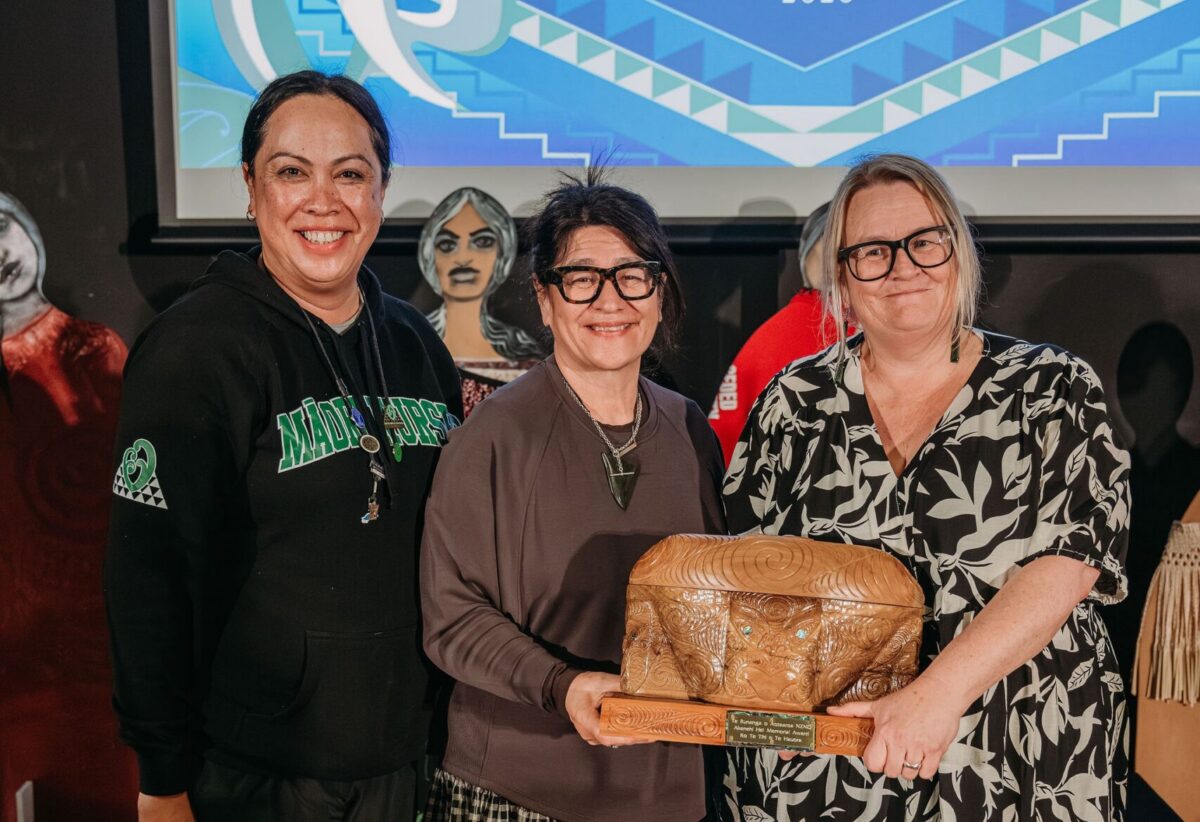
Barton (Ngāti Puhiawe, Ngāti Horotakere, Ngāti Hikairo ki Kāwhia) was presented with the taonga during the Huraina Te Matarau indigenous nursing Aotearoa conference, held at Māhurehure Marae in Tāmaki Makaurau earlier this month.
The award is the highest honour bestowed by Te Rūnanga o Aotearoa ki Tōpūtanga Tapuhi Kaitiaki o Aotearoa NZNO, recognising a Māori person whose leadership, service and contribution have significantly advanced Māori health and well-being.
It is presented biennially and acknowledges those whose work has strengthened Māori nursing, whānau, hapū, iwi and communities throughout Aotearoa.
‘I realised very quickly that nursing education was very mainstream and didn’t reflect who I was as a Māori.’
Barton said she was surprised and honoured, especially with the status of the some of the previous recipients who she has respected and admired, including Moe Milne and Maureen Allen among others.
Milne was also one of her nominators and one of her role models.
Barton grew up on Kaeo in the Far North and has spent most of her working life in Whangārei and Waikato since becoming a registered nurse in 1991.
Barton’s masters and doctorate research focused on Māori health and Māori nursing, and in particular examined how the Māori nursing workforce has remained static at seven per cent for the past 40 years despite Māori making up 17.5 per cent of the population.
“Our programme is a response to that to try and grow the Māori workforce and particularly the rural Māori nursing workforce.
“My research identified that Māori students and nurses really struggle in mainstream BN programmes and that there is a need for more Māori nursing programmes,” she said.
“I’m currently doing research to determine whether Māori programmes increase Māori retention and completion of BN programmes.”
Only BN in rural Māori community
NorthTec’s Puawānanga Tapuhi Māori was established in 2025 and the first cohort from this programme is due to graduate at the end of 2027.
Although there are three other Māori nursing programmes in New Zealand, in Porirua, Manukau and Whakatāne, this is the only one that is based in a rural setting in a Māori community.
‘Remember you are a Māori who happens to be a nurse not a nurse who happens to be Māori.’
It is also wānanga focused with classes taught all around Te Tai Tokerau marae, which is many of the students’ marae. Because of the vast area of Northland, a unique feature of the programme is its mode of delivery, with a blend of online and kanohi ki te kanohi teaching, taught in intensive blocks and wānanga.
When not in class tauira remain in their own communities and kaiako travel to the tauira.
Barton’s inspiration to get into nursing, like many Māori, came from friends and whānau. Her father and his two sisters were Māori nurses.
“They were my inspiration and living in Northland there were limited options to study and nursing was the most attractive,” she said.
“I realised very quickly that nursing education was very mainstream and didn’t reflect who I was as a Māori.”
‘We stand on the shoulders of those before us’
During Barton’s acceptance speech she acknowledged her tīpuna Māori and tapuhi Māori saying she stands for them.
“This award carries the ingoa of Akenehi Hei. As Māori nurses we stand on the shoulders of those who stood before us and I have spent much of my career advocating for Māori nurses.
“There have been many who have walked along beside me and supporting me along the way.”

She reminded attendees at the conference: “Remember you are a Māori who happens to be a nurse not a nurse who happens to be Māori.”
The previous recipient of Te Akenehi Hei Memorial Award was Dhyanne Hohepa in 2024.