


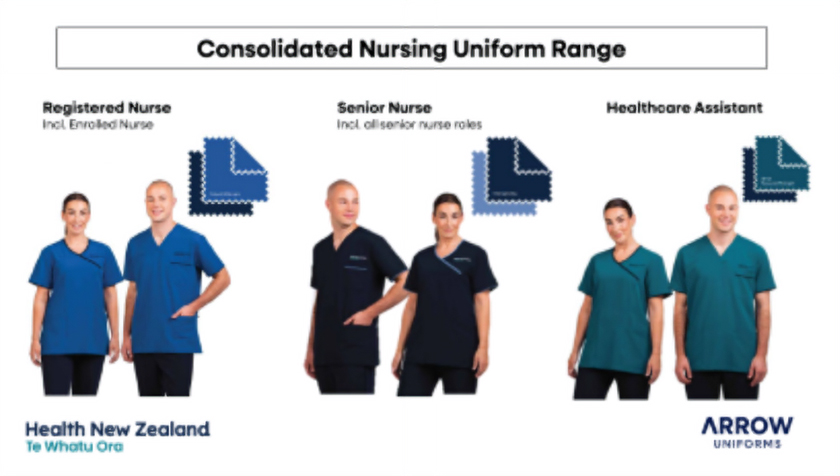
Information leaked to Tōpūtanga Tapuhi Kaitiaki o Aotearoa-NZNO recently revealed plans to provide 200,000-plus new uniforms for more than 60,000 staff around the country.
The changes were part of a wider effort to build a “more unified, modern health system” with nationally consistent standards, according to the leaked email.
But Waikato nurse Tracy Chisholm said safe staffing should be the priority, not “shiny new uniforms”.
“Every day, nurses and health-care assistants arrive at work to face short-staffed wards and old under-resourced systems in rundown and no longer fit-for-purpose buildings,” she said, in a statement released by NZNO.
Chisholm challenged HNZ to reveal the cost and “explain why they are being prioritised over employing more nurses and health-care assistants and fixing our crumbling hospitals”.

On top of that, Chisholm noted members had been unsuccessfully fighting for safe staffing and a cost of living wage rise for more than 18 months, through NZNO-HNZ bargaining.

But HNZ chief nurse Nadine Gray claimed the new uniforms would cost less than the current arrangement.
“The standardisation of uniforms will reduce management cost of uniforms for over 60,000 staff,” she told Kaitiaki.
Gray said they would be phased in gradually, from May, when existing uniforms needed replacing and costs “absorbed by existing operational provision for uniforms”.
A spokeperson clarified that meant they would fall within current uniform budgets.
Cost savings were a “benefit but not the main driver”, Gray said.
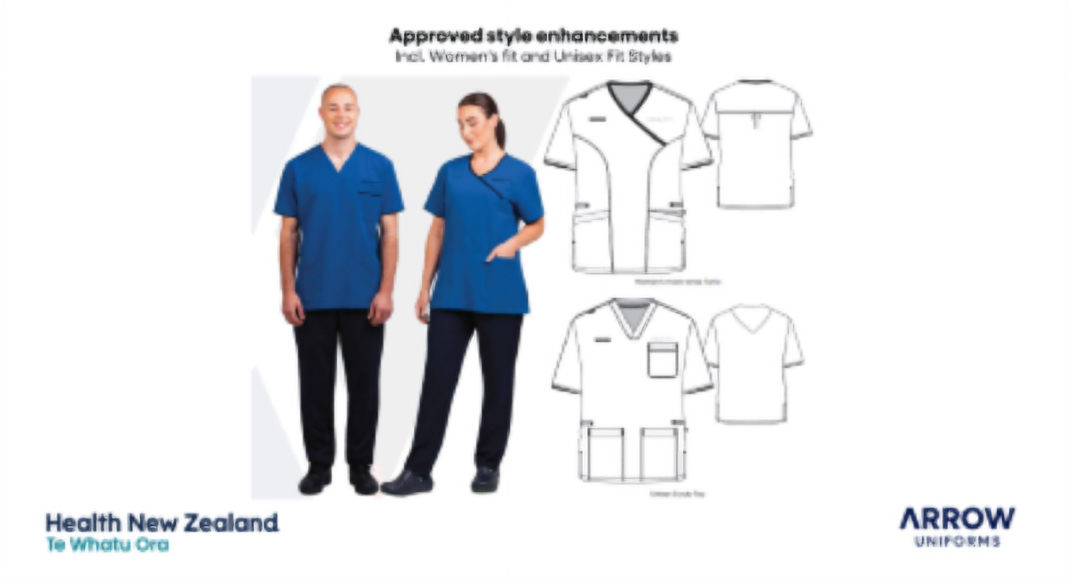
Those were “improving comfort for staff, simplifying uniform supply, strengthening professional identity and improving the patient experience”.
The fabric was “lighter, more comfortable and flexible” and did not need to be ironed. It had been tested by 200 nurses across seven districts with 93.5 per cent positive feedback, she said.
An internal email seen by Kaitiaki refer to a “national nurse uniform programme” with “three bold colours” replacing more than 40 currently being used by nurses and HCAs.
Staff have been told it would enhance their professional identity and help patients to better identify their roles.
“What nurses wear at work is incredibly important for them, and their patients and whānau,” the leaked email said.

It would also allow staff to move more easily between districts, it said.
Uniforms for other HNZ staff, such as midwifery and allied health, would be considered “over time”, Gray said.
- This article was amended on April 16 to include enrolled nurses and midwifery staff.