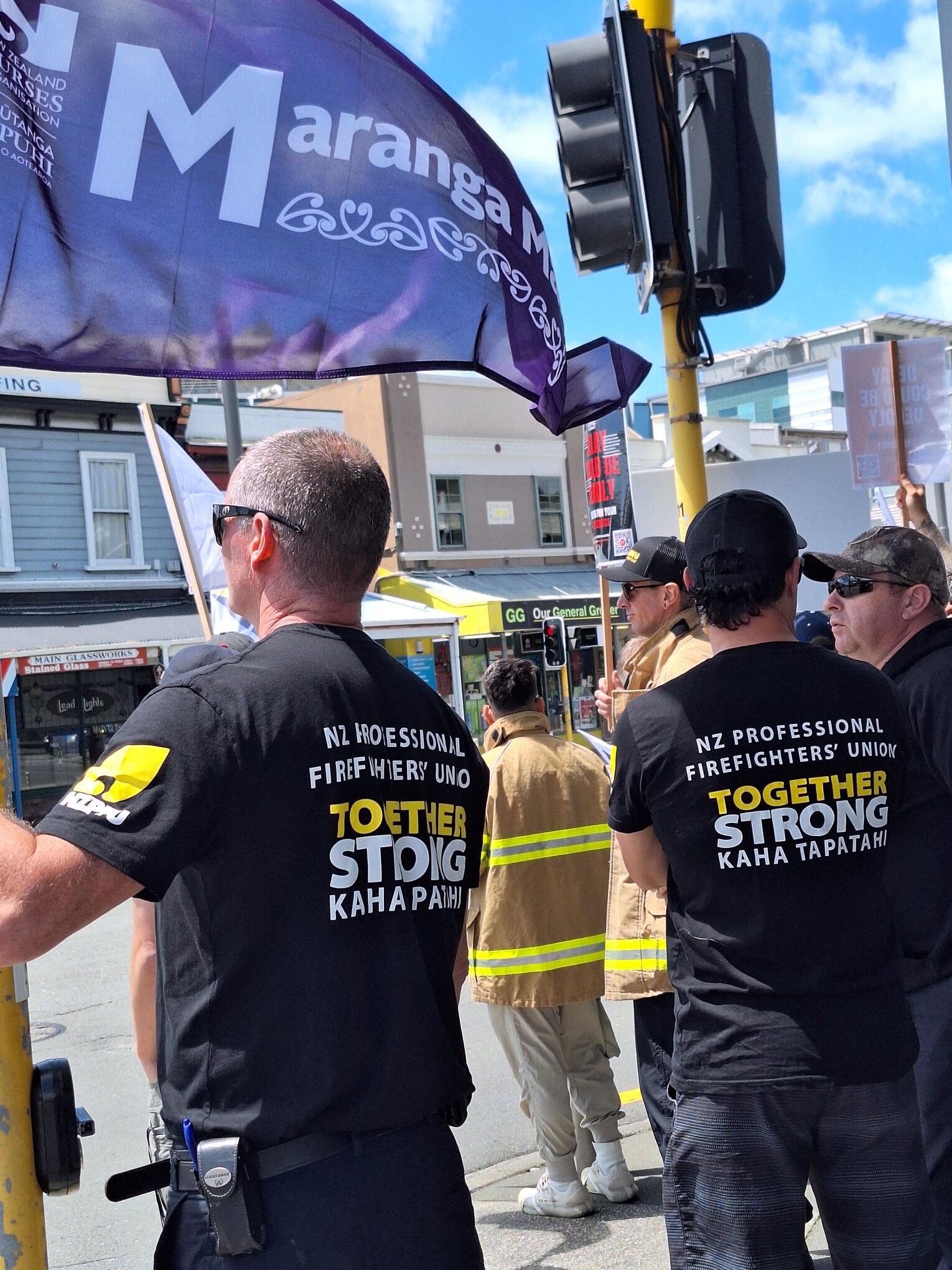


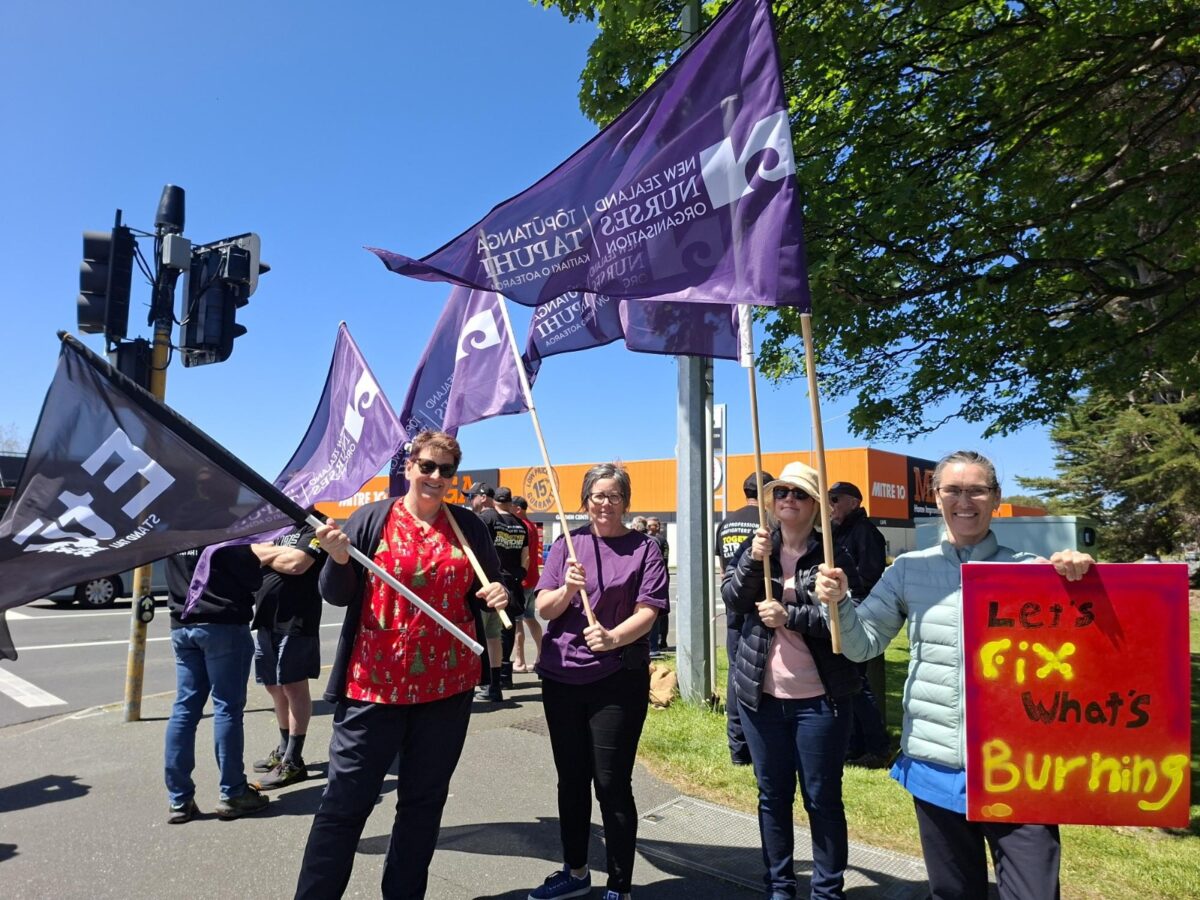
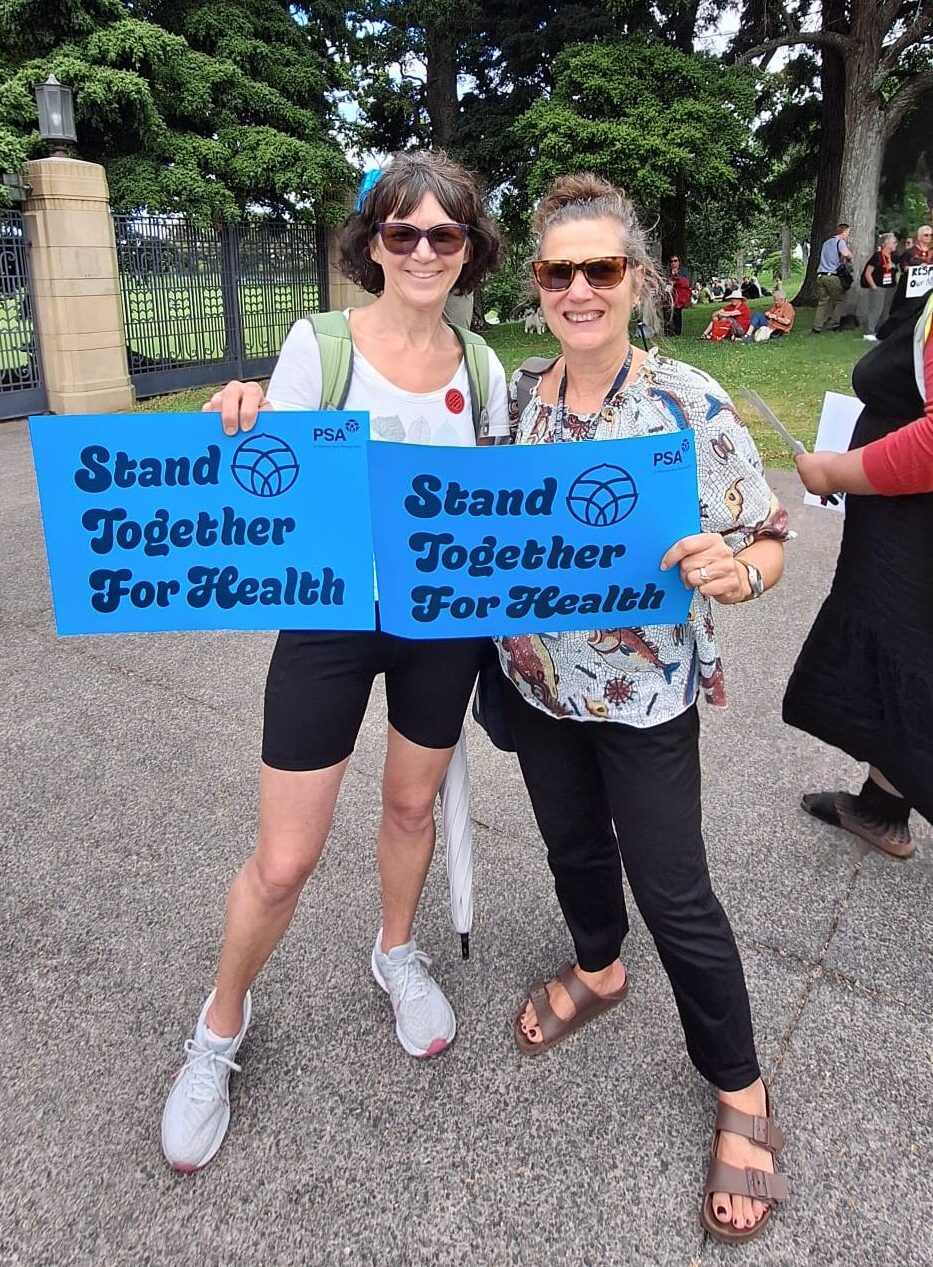
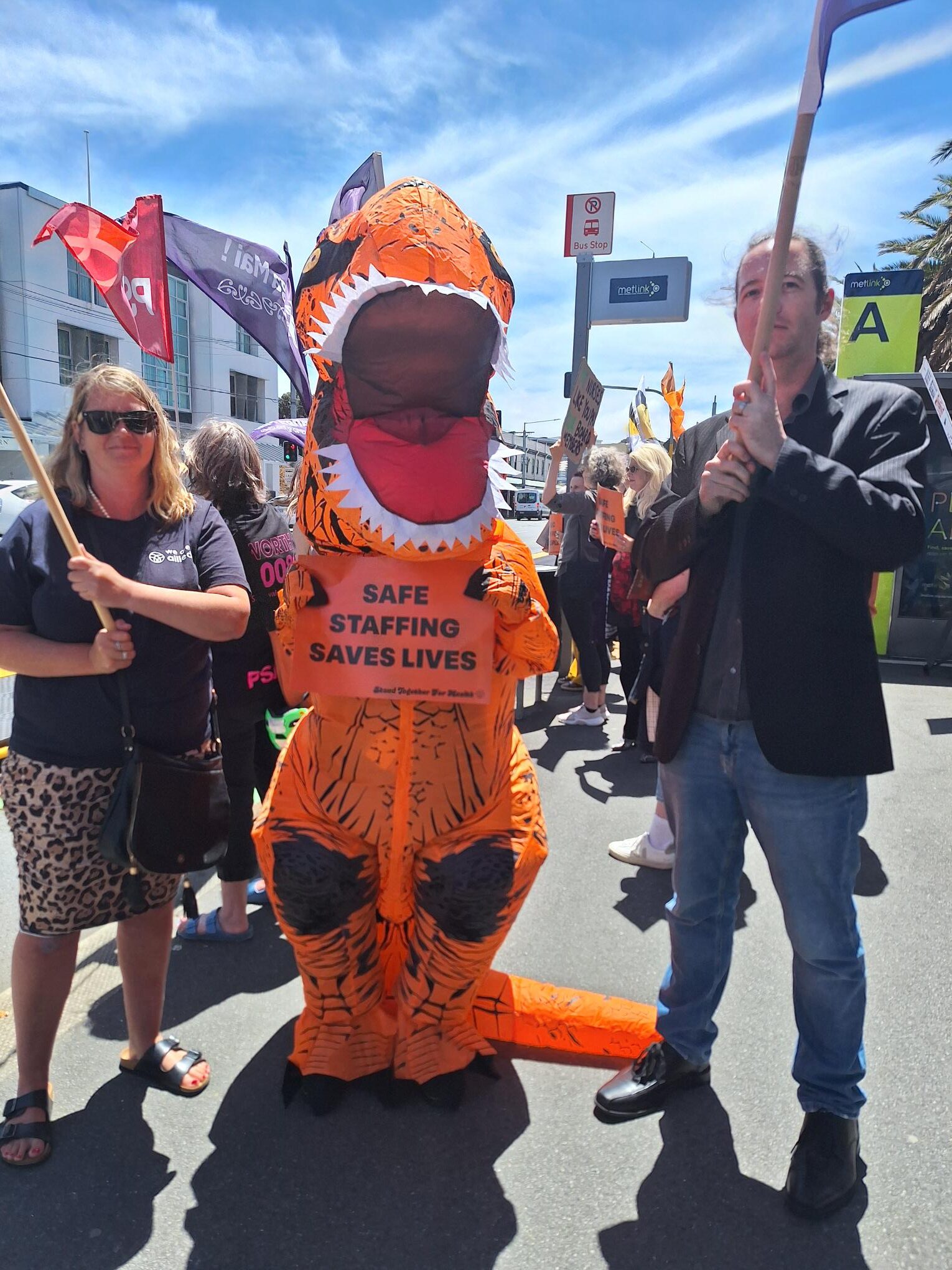
As NZNO nurses and kaiāwhina wrapped up their own gruelling 14-day work-to-rule strike with a “day of visibility” on Friday, many showed up to support striking Public Service Association (PSA) colleagues and firefighters.
For the past two weeks, NZNO nurses, health-care assistants (HCAs) and midwives around the country have taken strike action designed to expose how deeply the health system is understaffed and held up by the goodwill of nurses.
Refusing to do overtime or to cover extra shifts or redeployed to specialty areas outside of their own, has not been easy — but it has revealed how deeply the system relies on nurses plugging the gaps.
There were 61 requests for NZNO members to provide LPS in that time — 25 of which were refused as not legitimate, about 40 per cent, NZNO data revealed.
Further auditing of LPS requests would be carried out next week, an NZNO spokesperson said.

Whangārei emergency nurse Rachel Thorn has described how withdrawing all labour outside of normal shifts and workplaces has revealed dangerous practices being relied on for years. This include calling in theatre nurses early and calling in nurses with no specialist knowledge into areas such as orthopaedics or neonatal.

In Wellington, delegate Mel Anderson said it was nice not to lose children’s ward staff to other wards for a change.
“Usually, we lose at least one nurse every shift to patch up other wards but that hasn’t been happening so far,” she told Kaitiaki.
“The strike has given our members the confidence to push back if asked to jump to another ward, especially if patients aren’t needing life-preserving services.”
In several regions, staff reported being asked for medical certificates the same day they called in sick.
‘Push it uphill’
Tōpūtanga Tapuhi Kaitiaki o Aotearoa -NZNO chief executive Paul Goulter urged members to log all short-staffing and follow all the steps required by safe staffing tool CCDM (care capacity demand management). Its VRM (variance response management) would advise how to return to safe staffing.
“By following every step of the SOP [standard operating procedure], staff can accurately assess workload, escalate concerns and ensure that risks are managed.”
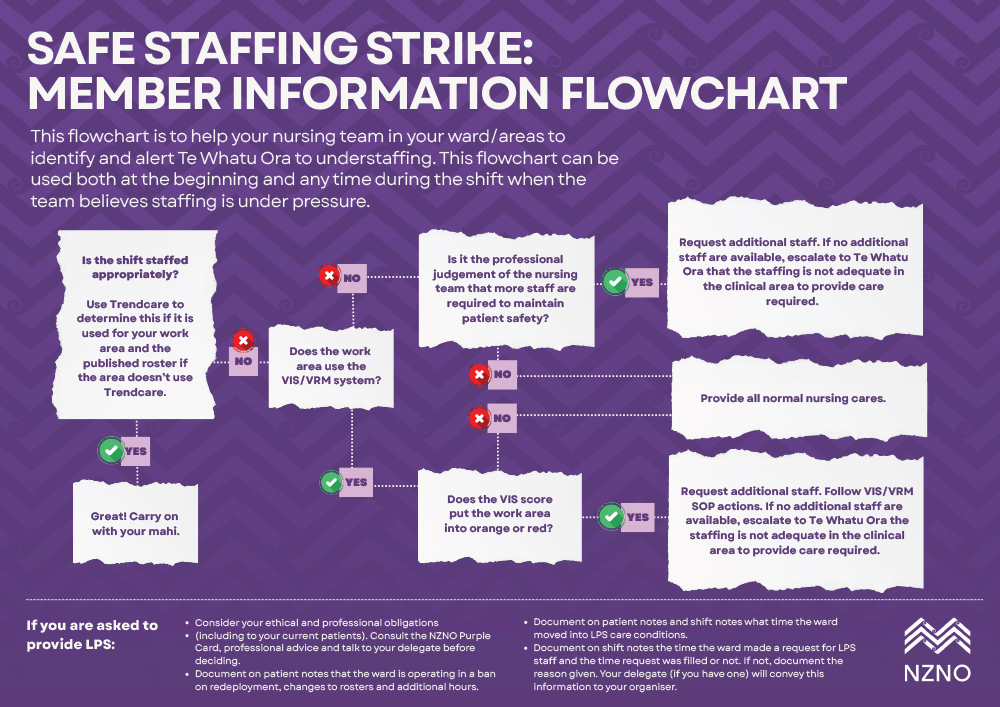
Goulter said it was critical that staff held their employer accountable for responding to the VRM’s traffic light alert system for patient risk.
Following the VRM system, “safeguards both patients and staff, ensures transparency and reinforces a culture of safety and accountability in health care,” he said.
Public is behind nurses
The strike concludes as the second part of a NZNO-commissioned poll by Talbot Mills released this week shows 83 per cent of New Zealanders believe patient safety is at risk because there are not enough nurses.
It found 94 per cent of people believed staff shortages in the health sector needed to be fixed. Only a third of respondents believed the Government valued or listened to nurses.
Several unions, including NZNO, have together written to Prime Minister Christopher Luxon for an intervention into essential health, education and public service bargaining.
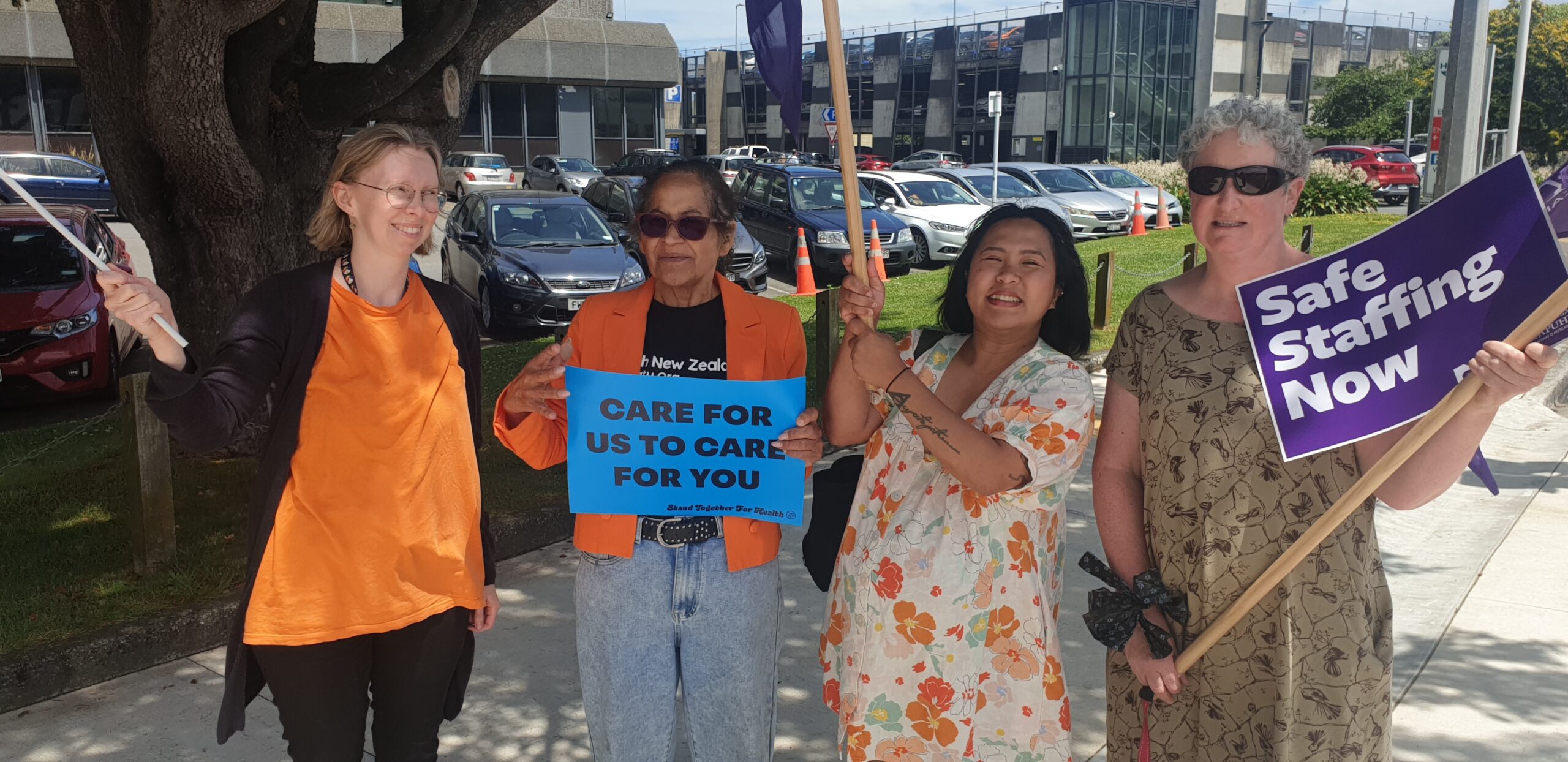
Members of several unions went on strike last month over stalled bargaining across their sectors.
PSA & firefighter strikes
Around 1700 PSA public health and mental health nurses, allied health workers including social workers, physiotherapists, occupational therapists, scientists and anaesthetic technicians, and policy workers are striking today for safe staffing and fair pay and conditions.
Another 2000 firefighters are also on strike again today for safer work environments and equipment, after 99 per cent of the NZ Professional Firefighters Union (NZPFU) rejected a 5.1 per cent offer from Fire and Emergency New Zealand (FENZ).