


The intensive brief intervention service for youth has run for two years in the MidCentral district. We cover from Dannevirke, down to Ōtaki, and up to Sanson: a large geographic area.
My colleague, advanced-practitioner social worker Amanda Dean and I see people in acute crisis, up to 18-years old, who have had either a self-harm attempt, or they’ve had suicidal thoughts or they might have had a suicide attempt, and they need urgent assessment and quick intervention.
We take referrals from the emergency department; general practice doctors (GPs) can ring directly and say ‘I’ve got a young person who’s suicidal that I’m seeing right now’. School counsellors ring us — or the paediatric ward in the hospital might have a young person with a medical issue and they realise some self-harming has happened.
Wherever there’s children and young people, they can be referred to us and we respond very quickly.
It’s fantastic to help young people and their families when they’re in crisis, and bring a calming, comprehensive assessment to what’s going on. We can reassure families there is help; that we’ll do everything in our power — take all of this information back to a multi-disciplinary team, come up with a plan and keep them linked with other support agencies.
We’re client-centered, and focused on how we can connect people to what they need. We can arrange with them to see a psychologist, a psychiatrist, a paediatrician: it’s very individual.
This approach has been tried in other districts but ours has been particularly successful because of our combined years of experience in mental health, more than 25 years each; our complementary roles as a registered nurse (RN) and social worker, and our collaborative approach.
We set up the service together: we support each other — and we utilise each other’s skills.
Nurses are naturally very collaborative. We bring a partnership approach and an ability to look at complex situations and peel back the layers of the onion — examine why this situation occurred for this young person, and what they need. Then we can make a plan, and work together.
That’s what works well with Amanda who is based in Horowhenua. As a social worker, she’ll bring her expertise to my cases, and I’ll bring my nursing expertise to hers.
I have been an RN since 1992. I’ve worked at an inpatient unit in adult community mental health, the alcohol and drug service for several years; five years at Feilding community mental health — a broad range of experiences.
I came into Child & Adolescent Mental Health Services (CAMHS) three years ago after working a short stint in an early-intervention service helping young people, 14 to 24, with early-onset psychosis.
That helped me become more passionate about working with young people, to reduce and prevent issues as they become adults: getting in early, providing education, support, and engaging their families to ensure people got well looked-after.
I’d like to grow the service — ultimately bring several more clinicians onboard.
Why mental health nursing?
Mental health nursing is holistic, it looks at the whole person: their social situation, their cultural and spiritual needs, their physical health needs, their emotional needs, it’s the whole picture. That’s what appeals to me.

It’s about building connections with people; it’s about utilising your communication skills to get people relaxed enough to tell you what’s really going on in their head. It’s very challenging for people to talk about what their values are, what their family’s like; to actually say the things that are really worrying them.
This is prevention health. This is a service that can get in there, help that young person and their family and work with all the other agencies to ensure that person has a fabulous life.
If we can invest into young people as a country, it helps New Zealand’s future. This is about knowing as a nurse you’re helping future generations.
And you can see the benefits in the present too.
You go to the supermarket and you see someone and they give you a thumbs-up. Or you see a young person working, and they didn’t have a job previously. A young lady came into the service and she said to the administrator to pass on to me that she was back at school. That really keeps me going.
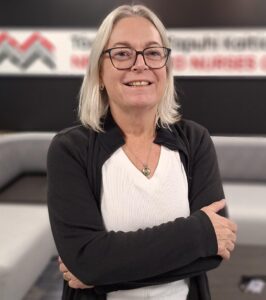
- Michela Fox Msc, RN is a specialty clinical nurse-intensive brief intervention at the Child & Adolescent Mental Health Service.