


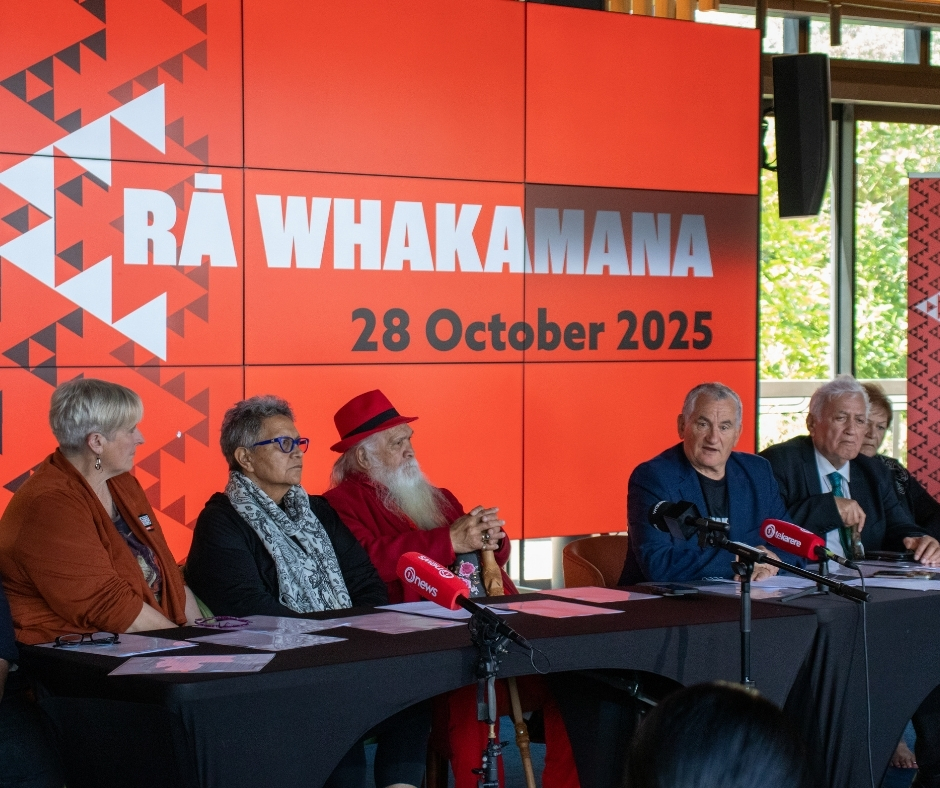
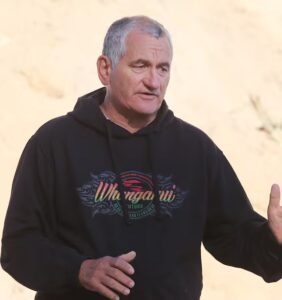
Whanganui iwi leader Ken Mair is no stranger to protest, so he was right in his element when he joined hundreds of essential workers in the mega strike actions in his hometown on Thursday.

“Iwi leaders from across the country met recently, and we will do what we can to help all the essential workers being harmed by the actions of this Government. A lot of the people affected by that harm are our people – tangata whenua.”
“And as Māori, we know Governments like this all too well. We’re well experienced in their arrogance, how they are ruled by a small number of rich elites, but more importantly, we know our people doing the mahi on the ground, we see the harm being done to them every day.”
Mair is part of the National Iwi Chairs Forum (NICF) which recently met with leaders from the Council of Trade Unions to discuss how they might work together.
“We refer to October 28 as Rā Whakamana – the date that marks the signing of He Whakaputanga o te Rangatiratanga o Nu Tireni/Declaration of Independence of the United Tribes of New Zealand (1835),” Mair said.
It is also the date of the first Labour Day demonstrations in 1890 that helped secure the eight-hour working day.
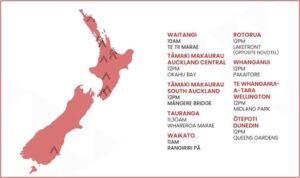
“This year, iwi, unions and activists are calling on tangata whenua and tangata Tiriti to come together for Rā Whakamana as a national day of solidarity to reaffirm the tino rangatiratanga of tangata whenua and protect the rights and wellbeing of all workers.”
Kerri Nuku, kaiwhakahaere for NZNO, said members were being encouraged to take part in the events that had been organised for Rā Whakamana 2025.
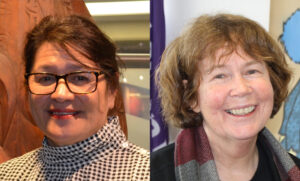
“NZNO is proud to be part of this action,” she said.
“Given the coalition Government’s attacks on Māori and unions, the attempts to silence both, this is a demonstration of our resilience.”
Anne Daniels, president for NZNO, welcomed unions and iwi standing up together.
“Naida Glavish put everything on the line to say ‘kia ora’ in 1984 and overcame a naysaying Government with the support of the public. Before her, the Māori Language Petition instigated by Hana Jackson, which supported the call for te reo Māori to be taught in schools, was presented to Parliament in 1972.
“Most of the people who signed the petition were Pākehā. Now te reo is being removed from the Pae Ora [health] legislation.”

Other iwi leaders in the NICF include Dame Naida Glavish (Ngāti Whatua – Kaipara), Professor Margaret Mutu (Ngāti Kahu, Te Rarawa – Far North), Bayden Barber (Ngāti Kahungunu – Hawke’s Bay), Rahui Papa and Tuku Morgan (Tainui – Waikato), Jamie Tuuta (Taranaki) and Willie Te Aho (East Coast).