


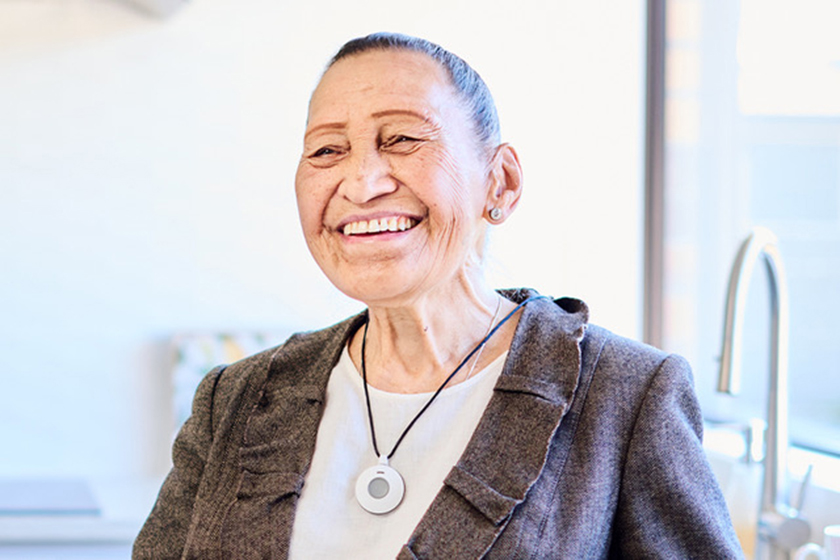
Emergency callouts reached just over 706,000 in 2025 – up nearly 30 per cent in five years – with almost half involving adults aged 65 and over.1 Falls remain one of the most significant drivers of ambulance demand, accounting for nearly 53,000 incidents in 2025, up 8.1 per cent on the previous year, and the fourth-highest category of emergency callout.1 Older adults are disproportionately affected; half of the almost 390,000 New Zealanders who sustained an injury from a fall at home in 2018 were aged 65 or older.2 For those living alone, a fall can mean lying unattended for hours, with consequences that may extend well beyond the initial injury.
HHStJ deputy chief executive of ambulance operations Dan Ohs states that “falls are not just accidents, they are a major and growing health issue” and that “early intervention can reduce long-term injury, loss of independence, and pressure on hospitals”.1
Beyond falls, cardiac and respiratory arrest callouts rose 4.8 per cent to 5,750 in 2025.1 Most out-of-hospital cardiac arrests occur in older adults, often at home and where events may be unwitnessed.3˒4 Delays between symptom onset and hospital arrival are linked with lower survival.5
For nurses across primary and secondary care, this data reflects a scenario that may be familiar – an older patient living alone where the concern centres on what happens if an acute event occurs with no one around to assist. The period after discharge or an acute presentation can be particularly concerning – once patients return home, the safety net of clinical oversight is gone, and the ability to summon help quickly can make a real difference to outcomes.

For older patients who want to remain at home, a medical alarm offers something practical: the ability to get help at the press of a button, 24/7. St John Medical Alarm activation data reinforces that falls accounted for the largest proportion of incidents requiring an ambulance (23 per cent), followed by breathing problems (14 per cent) and chest pain (13.5 per cent) – the kinds of acute events that may be difficult to manage for patients who live alone.
Users of medical alarms report feeling safer and less anxious, have greater confidence to continue living independently, and more willingness to stay active, helping to avoid functional decline and supporting independence.6˒7
A nurse’s recommendation carries real weight. Research shows that 61 per cent of people without a medical alarm would consider getting one if recommended by their GP, nurse or specialist.8 For patients who might benefit, a referral is a simple step – one that can support their independence and provide reassurance for them, their whānau and the clinical team around them.
A St John Medical Alarm provides 24/7 response and connects directly to Hato Hone St John. Activations are triaged by HHStJ staff, so some incidents can be resolved by phone while others receive timely in-person support. For patients who are older, living alone, and at risk of an acute event at home, it’s one of the most practical steps available at the point of care or discharge.
All patients are eligible for a free trial of a St John Medical Alarm. Simply complete a referral through your practice management system (Healthlink or ERMS) or online at stjohnalarms.org.nz/hcp.

References
- Tse B. Ambulance workload reaches new highs. Hato Hone St John; 2026. Available from: https://www.stjohn.org.nz/news–info/news–articles/ambulance-workload-reaches-new-highs/
- ACC Newsroom. What’s tripping us up? How Kiwis are falling over. ACC; 2019. Available from: https://www.acc.co.nz/newsroom/stories/whats-tripping-us-up-how-kiwis-are-falling-over/
- Bray J, et al. Resuscitation. 2022;172:74–83.
- Dicker B, et al. Out-of-Hospital Cardiac Arrest Registry: Aotearoa New Zealand National Report 2020/21.
- Hannan EL, et al. Am J Cardiol. 2010;106(2):143–147.
- De San Miguel K, et al. Australas J Ageing. 2008;27(2):103–105.
- De San Miguel K, et al. Home Health Care Serv Q. 2017;36(3–4):164–177.
- Clarity Insight. Telecare Segmentation: Quantitative Research Stage – Research Findings. October 2025. Data on file, Hato Hone St John.
This advertising content was paid for by Hato Hone St John. Hosted content may not represent the views of Kaitiaki Nursing New Zealand or the New Zealand Nurses Organisation.