


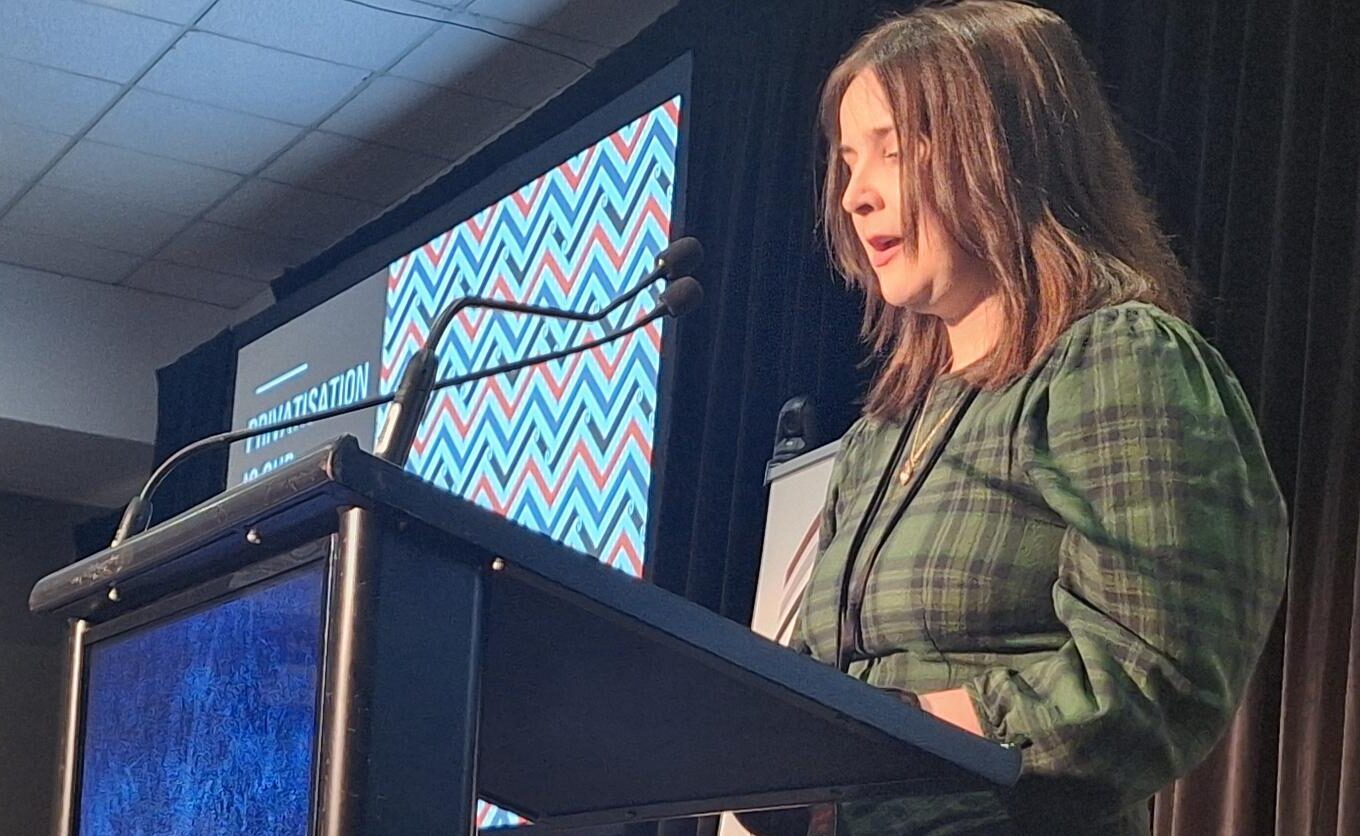
In a presentation revealing the troubling extent of privatisation in health, Jaques warned we were paying more, getting less, and losing accountability over our own public system.
“Ownership matters. It matters for patients, it matters for workers, it matters for Aotearoa.”
Privatisation, Jaques said, was about taking otherwise public care and pushing it into the private sector.
New Zealand’s free, universal, cradle-to-the-grave health care started in 1938 but thanks to lobbying at the time by the British Medical Association, primary care was not included.
General practice doctors could keep charging patients fees — and in 1941 the Government introduced a system that allowed doctors to receive government funding on top (via capitation).

“It’s this first and foundational privatisation of primary care that’s paved the way for barriers to access, prevention and early intervention in health issues and inequities in health outcomes ever since.”
Now, as part of a more dangerous wave of privatisation in the sector, private equity funds were “buying up clinics everywhere”.
Private equity is an investor class that buys, grows, then flips businesses for profit. They brought a “profit-seeking, revenue-seeking” behaviour into health care, she said.
Big health, big business
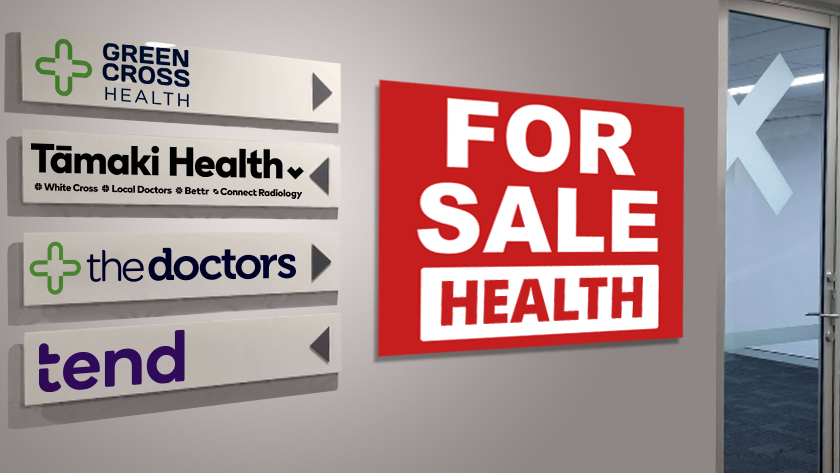
Nathalie Jaques: In June, Tend Health agreed to buy Green Cross Health’s The Doctors’ network for $270 million. Green Cross comprised 65 clinics and 400,000 enrolled patients, so this increased the Tend network to 90-plus clinics at around 10 per cent of the enrolled population, making it the largest provider in the country.
Jaques said corporate ownership in general practice had risen sharply. “In 2022 it accounted for 14 per cent of all GP clinics in Aotearoa, and in 2026 it has increased to 25 per cent: so one in four clinics is corporately owned.”
Debt, meanwhile, was another problem that emerged from this private equity investment.
NZNO members wrapping the 2026 conference with a call for change
In March, US private equity giant TPG bought Tāmaki Health’s 51 GP and urgent care clinics across the country — with more than 350,000 enrolled patients — for $450m.
Given the legal advice TPG received at the time, it was likely this deal was done through a “leveraged buy-out” said Jaques: borrowing against the assets of the company being bought, not the buyer.
The purchased company then pays off the debt through its cash flow and assets.
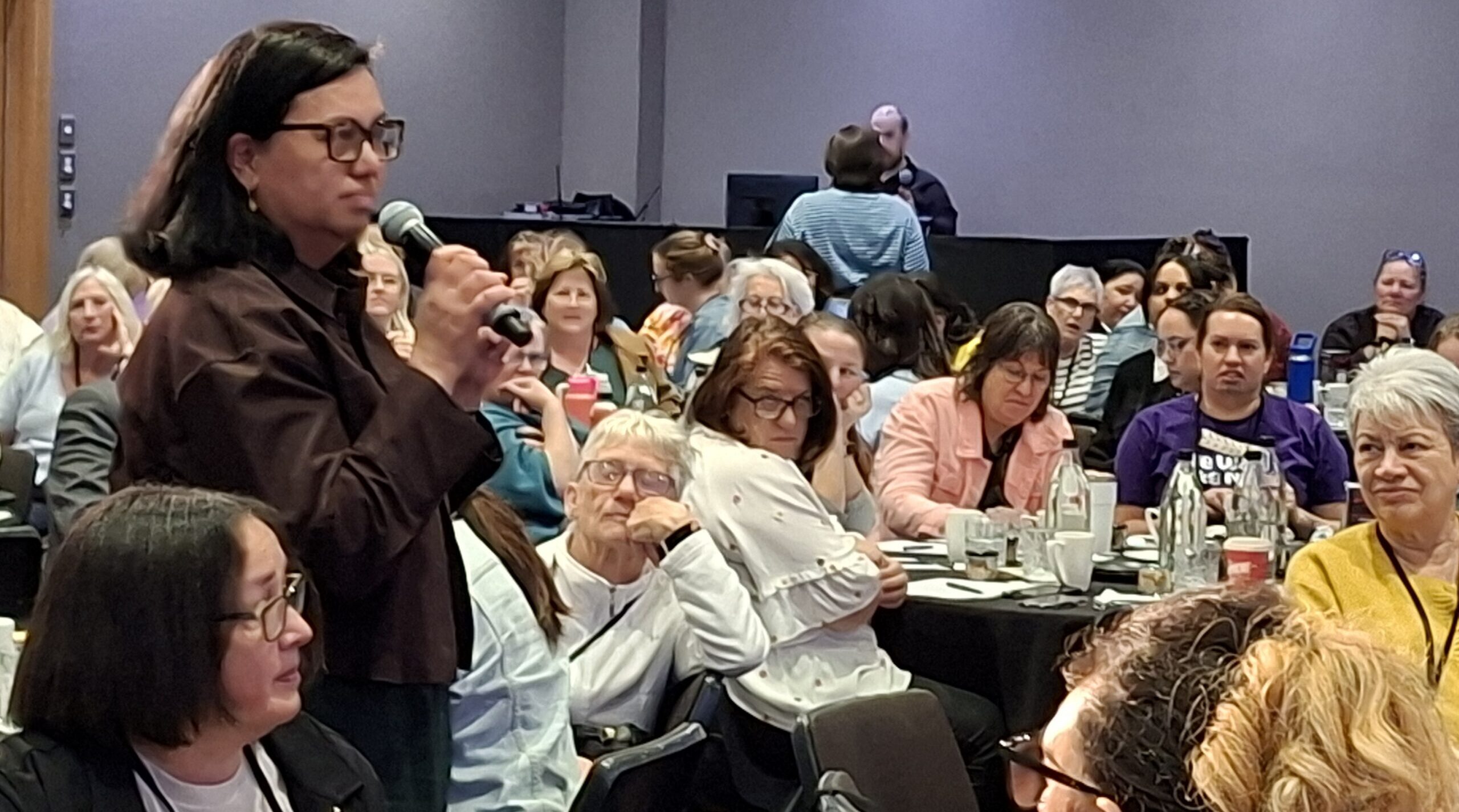
‘Why would you expect creditors or asset managers in Australia or America to care about householders in Aotearoa? They don’t.’
Jaques said even with a conservative estimate of the borrowing, Tāmaki Health would be paying about $22m annually to service the debt. Even if the patient catchment was drawing the maximum subsidy, “this still means that roughly one-third of total annual capitation, of public money, could be consumed by interest payments”.
So privatising Government services didn’t get rid of debt — it just shuffled it to the private sector, where public money ended up servicing large chunks of “opaque debt”.
“Servicing expensive debt mountains and money flowing out in dividends to share holders means obviously they are not putting money back into services.”
The Government was handing over essential services to people and companies that had no interest in New Zealand, Jaques said. “Why would you expect creditors or asset managers in Australia or America to care about householders in Aotearoa? They don’t.”
Elective outsourcing
Jaques said publicly-funded, privately-delivered elective surgical procedures (outsourcing) had more than doubled in the past six years: from one in every 10, to one in every five procedures.
Despite what Health Minister Simeon Brown said, this outsourcing was not simply “gap filling”. It was not, Jaques said, tiding the system over during temporary shortfalls, while New Zealand grew the workforce and capacity within the system.
The proportion of procedures outsourced to private hospitals in the last year:
- One in four ear, nose and throat procedures.
- One in five gastroenterology procedures.
- One in three orthopaedic surgeries.
- Almost half, 43 per cent, of all ophthalmology procedures.
“This shows large swathes of publicly-funded surgery being transferred to the private sector by deliberate but undisclosed policy design.”
Te Whatu Ora-Health NZ’s (HNZ) budget to outsource elective surgeries, for the fiscal year, was $942m, Jaques said. There had been legislative amendments “to make it an objective and function” of HNZ to work with private health-care providers.
These contracts extracted money and people out of the public system, Jaques said. New doctors didn’t just magically appear providing elective surgeries in private hospitals.
At the same time, Brown was telling HNZ to look at 10-year contracting arrangements for private providers, while public budgeting was getting crunched from three-yearly cycles to one-year cycles.
“So the the public health system finds out how much funding it has on a yearly basis, but private hospitals can have 10-year contracts with surety of funding.”
Also, outsourcing surgeries was simply more expensive.
Jaques said between 2019 and 2024, surgery costs for the same surgeries increased by 23 per cent in private hospitals, in contrast to only 14.6 per cent in public hospitals. Nevertheless, during that same period, the likes of ACC’s spending on surgeries in private hospitals increased by 44.2 per cent.
Meanwhile, surgical outsourcing often led to what was called “cream skimming”, where private providers choose patients with less severe and less risky conditions — leaving complex and expensive cases to the public system, Jaques said.

“Or when there’s complications or follow-up acute care for people receiving private surgery they dump them back into the public system too.”
Outsourcing meant the public was losing accountability over the health system; for the tax payer in general, and for Māori in particular.
The way treatment was provided was often not equitable or timely, and people waiting longer were disproportionately in rural areas, those who experience social deprivation, Māori, Pacific peoples and tāngata whaikaha. “Outsourcing bakes in these inequities.”
Honouring Te Tiriti
Nathalie Jaques: Health and wellbeing are inextricably linked to rights and protections under Te Tiriti o Waitangi. Article 2 guarantees Māori tino rangatiratanga or self determination over treasured things like hauora, and article 3 guarantees Māori the same rights and privileges as non-Māori, like the right to equal health outcomes.
There were 22 private hospitals in the wider Auckland district, Jaques said, but there was just one in Tairāwhiti district (centered around Gisborne).
Private hospitals fell outside the the bounds of the Official Information Act, and the “commercially-sensitive” nature of financial information meant made it difficult to get answers on cost effectiveness, or transparency on how public money was connected to care delivery, she said.
Some things belong to everyone, said Jaques. And New Zealanders “lose so much” when they don’t have public assets and services. “We lose more than just the assets themselves, we lose that collective sense that we can actually solve problems together.”
The changes weren’t happening by accident, they were happening by design.
Having a broken public health system, and a devalued workforce “desperately trying to hold it together” was a political decision that the country did not need to keep making.
There are four main ownership models in Aotearoa
- State-owned and run public health services like the 86 Te Whatu Ora-owned and managed public hospitals.
- Private for-profit services. That included general practices but included “corporate actors” like Tend Health and private surgical hospitals.
- Not-for-profit community and NGO services. Like Plunket and Hospice, these were still “technically private” but they’re not seeking to make a profit.
- Māori-owned health services. These were owned and governed by Māori — 285 health services across the motu.