



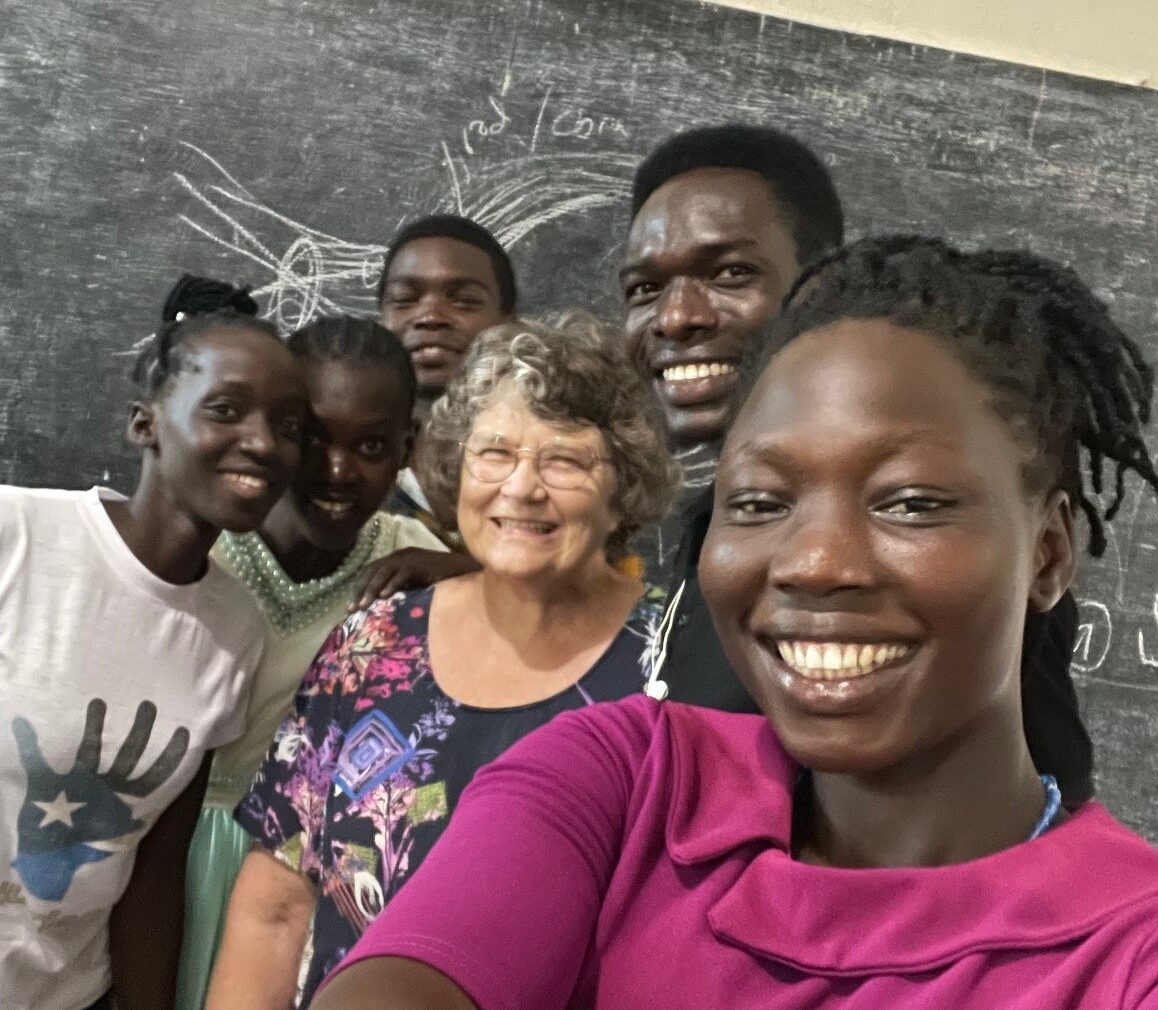
Over the years since my children became independent, I have been privileged to have had opportunities to volunteer as a registered nurse (RN). This has taken me from Mother Teresa’s Home for the Dying Destitute in Kolkata, India, to a mobile clinic for the poor in a Santiago slum in Chile; an AIDS hospice in Edinburgh and an orphanage for children with AIDS in rural Thailand.

In 2015/2016, I first volunteered with Solidarity for South Sudan, teaching nurses and midwives in the classroom and at the local hospital in the country’s second largest city, Wau.
I returned to South Sudan in 2024. It was my most challenging mission. The country has been embroiled in a nasty civil war since 2013. The two political leaders are from opposing tribes and cannot agree on anything of importance. Political leadership is sadly lacking.
Some recent statistics
- Seven million of the 12 million people in South Sudan go hungry every day.
- Only 46 per cent of children go to school. This is the second lowest country in the world out of 123 countries to provide primary school education and the last in the world for secondary education.
- 65 per cent of the population are women due to the war — yet 92 per cent of women are illiterate.
- 38 per cent of adults are illiterate, one of lowest rates in the world.
- 42 per cent of girls are married between the age of 15-18.
- Seven per cent of girls are married when they are under 15.
- South Sudan has the highest maternal and child death rate in the world.
- 78 per cent of the police are illiterate. Because many haven’t been paid for months, they are open to bribes in order to support their families.
- There are 64 tribes. 6-7 million people are Dinka and within the Dinka are 25 clans many of which are fighting with each other.
- The life expectancy is 56.
Solidarity with South Sudan is a Catholic organisation whose mission is to empower the people to be independent by training teachers, nurses and midwives. It also offers trauma-healing workshops for those severely affected by the war and provide education on basic agricultural practices.
Often, as I wandered the wards of the Comboni Hospital, I despaired at the seemingly hopeless plight of so many.
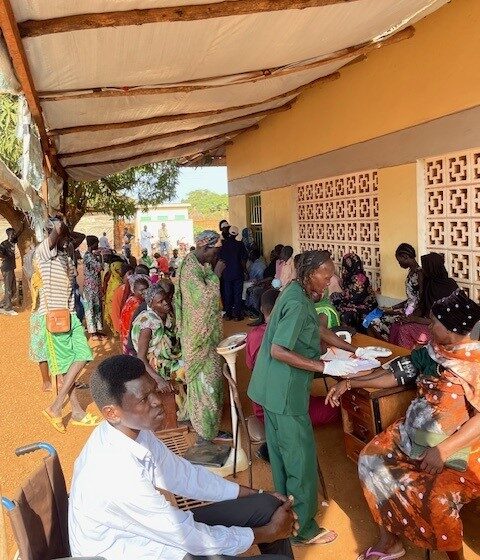
Many of the people are third-generation refugees, so previously-handed down farming practices have been lost.
As a nurse and teacher, I lived and worked with five sisters and one priest from various religious congregations in the Catholic Health Training Institute, in Wau. I was the only lay person. We lived in a convent on a 60-acre compound, guarded 24/7 by armed guards. The students lived in dormitories on the compound which also contained the school and the administration block.
The nursing and midwifery students come from all over the South Sudan for the three years of their education. Three quarters are men, as many girls are not educated to the standard required to be accepted for training.
‘Amazing’ student dedication
During both missions, the dedication of the students never ceased to amaze me. Many left their families for the whole three years of training because they could not afford to go home during the semester breaks. English was the third language for all of them. Their tribal language is their first language, Arabic is the most widely spoken language and English is only spoken by those lucky enough to go to school.
Often, as I wandered the wards of Wau’s Comboni Hospital, I despaired at the seemingly hopeless plight of so many. Hundreds of people lined up patiently waiting to be seen at the outpatient clinic or emergency department. If they couldn’t be seen on the day, they would sleep in the hospital compound overnight, risking being bitten by the ever-present mosquitos carrying malaria, or snakes.
As the children lay dying, all I could do was keep the flies off the child and hold the hand of the mother sitting close, so quiet, with the saddest of eyes.
They had often walked a long way from distant villages for treatment. Vultures would loom close by, waiting patiently for morsels of food.
Malaria is rife and is the highest cause of death. I acquired malaria on both missions. I have never been so ill. Malnutrition is rife and two wards were full of desperately-sick children as a result of malnutrition. As the children lay dying, all I could do was keep the flies off the child and hold the hand of the mother sitting close, so quiet, with the saddest of eyes. Many women have been through this before.
Kidnapping risks
Because I am white, I was a kidnap risk in the war-ravaged country. When I travelled from the compound to the hospital, an armed guard as well as a driver was present at all times. The people are so desperate, that crime is a way of surviving. Whilst at the hospital, an interpreter was also present because I am not fluent in Arabic.
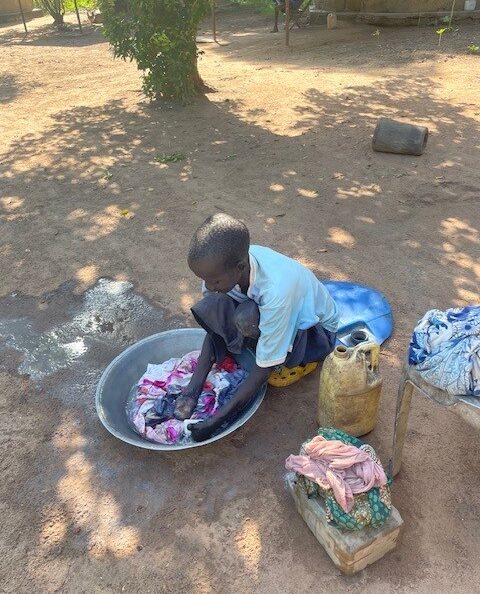
I also spent a day at the Agok Leper Colony, near Wau. The suffering there was confronting. The people there with leprosy had been abandoned to live in paddocks of scrub far from anyone else.
Sister Bibiana came faithfully every week, distributing medicine, food, buckets, drinking water etc. Their joy and gratitude was apparent. She was the only assistance the 30-40 lepers had.
During both missions, the dedication of the students never ceased to amaze me.
Living with the sisters, attending daily Mass and participating in the prayers of the church, sustained me when the going got tough. And it was tough. The heat and humidity was oppressive. Climate change has ravaged the country. I noticed a huge difference from 2016 to 2024. The people are disillusioned because the war has continued for so long and no help is available from the politicians. Refugees filtering from the Sudan are creating more famine and subsequent crime.
Is there hope?
Is their hope for South Sudan? Without the missionaries, at this point in time, I don’t believe so. Solidarity for South Sudan intends to slowly withdraw within 10 years and hand over to suitably-trained South Sudanese people. However many of the nurses and midwives travel to Kenya or Uganda where they can earn a lot more money to help their families.
Did I make a difference? I hope so. Mother Teresa used to say that what we do is a drop in the ocean. If that drop wasn’t there, the ocean would be less. Will I go back? No, my children have suggested that my next mission be in one of the Pacific Islands. That way they can come and visit me!
— Colette Blockley is a professional nursing supervisor based in Dunedin.