

Emotional nourishment comes in the smallest crumbs — as simple as some company. The elderly resident wanted to talk to the aged care worker — swamped with mahi — but she simply didn’t have time. “I’ll come back when I have a break.”

When she returned, the resident was not only sitting in a soiled pad, but she had died without comfort or support.
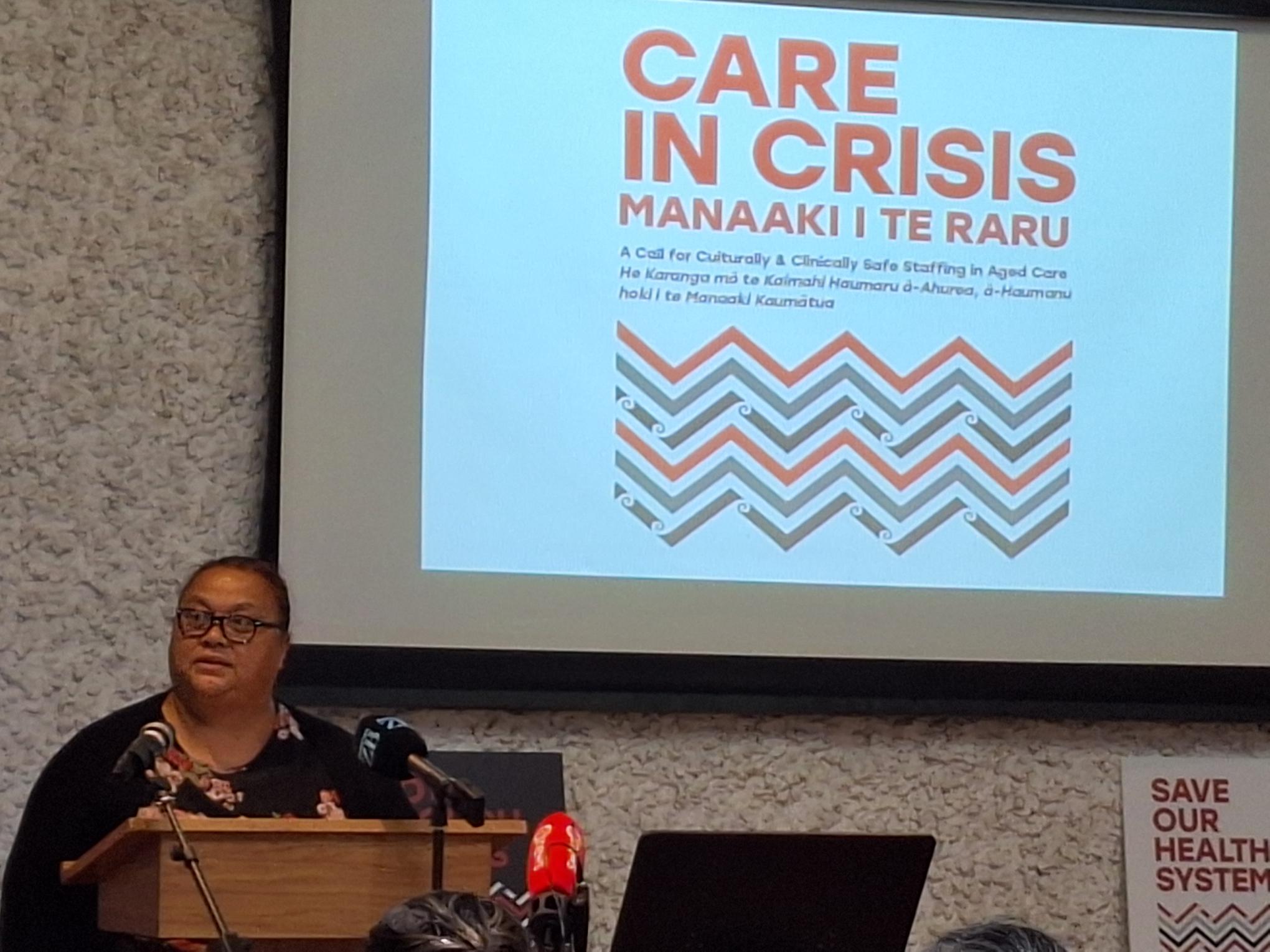
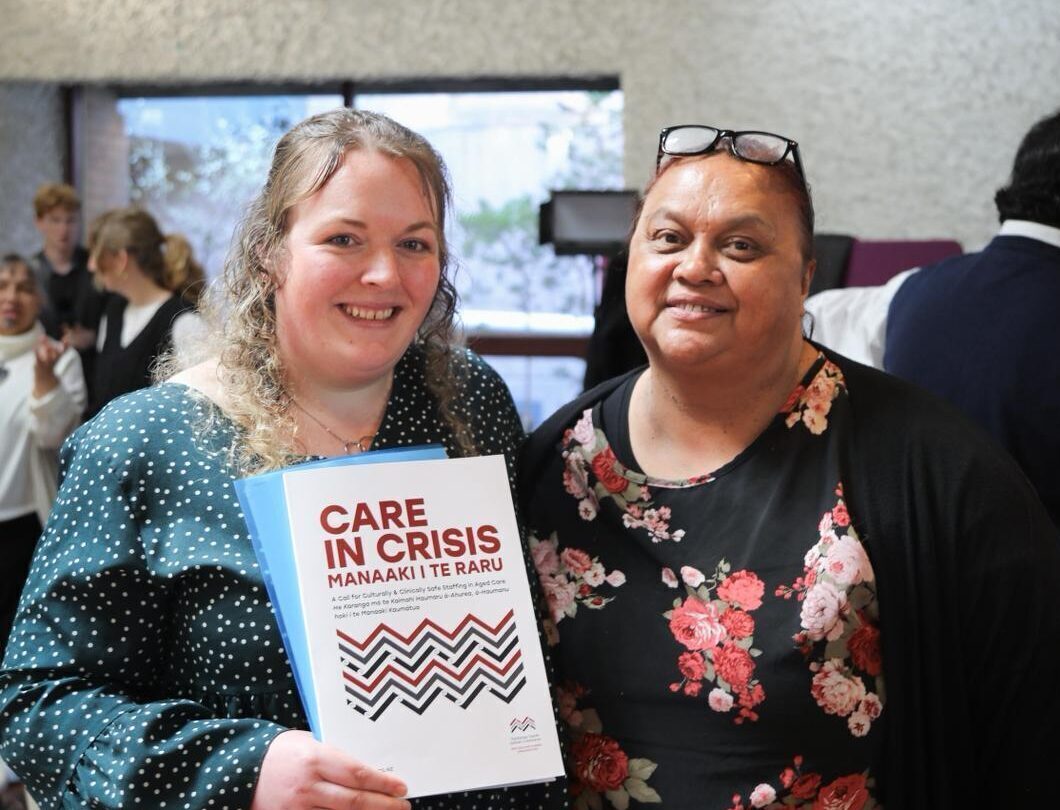
The reality of aged care in New Zealand was laid bare in the launch of the NZNO Care in Crisis report in Wellington — its goal, changing the sector’s future, and inevitably our own.
Keynote speaker Jannette Armstrong from the UNI Global Union fought back tears as she shared the story, told to her by an Australian worker, showing the brutal impact of understaffing. NZNO is affiliated to UNI via its members who are kaiāwhina and health-care workers.
“That worker had suffered a moral and emotional injury due to understaffing and inadequate ratios.”

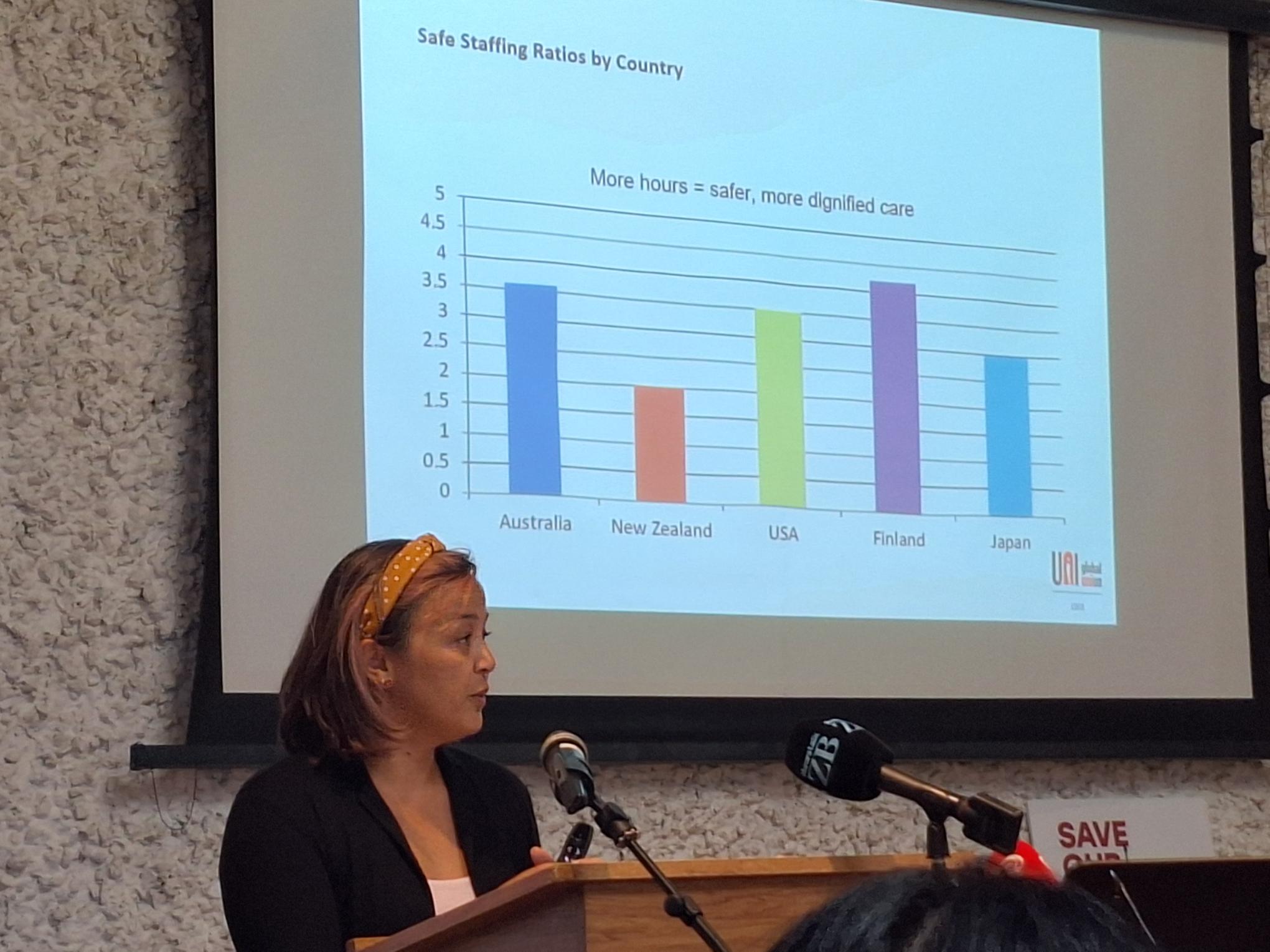
Armstrong, whose global union federation represented 2 million care workers around the world, said the report was groundbreaking and world-leading.
“When Governments see care as a cost to be contained, rather than a right to be guaranteed, the result is predictable — understaffing, unsafe conditions and exhausted workers.”
NZNO’s Age Safe campaign committee Māori co-chair and researcher on the report, Tracey Morgan said the stories were the same across the motu.
It made no difference, Morgan said, whether it was a small non-profit provider or Bupa or Ryman: Aged residential care was underfunded and understaffed and culturally unsafe.

Morgan said healthcare had to reflect New Zealand’s constitutional foundation, Te Tiriti o Waitangi — centering the voices, experience and expertise of tangata whenua.
In a Nutshell
The report was based on 80 in-depth interviews and 415 surveys of aged-care nurses and kaiāwhina across the motu — nearly 500 workers.
Nearly all — 96 per cent– believed their workplace was unsafe. More than half agreed understaffing was “systemic”, with shifts understaffed most of the time, or often.
NZNO’s Age Safe campaign committee co-chair HCA Brianna Dynes, a kaiāwhina in Christchurch, said she loved working in the sector and bringing joy to people’s lives.

“But to be honest with you, the reality of aged care today is heart-breaking . . . as workers on the frontline, we see the impact of underfunding.”
The report exposed care that was constantly rushed, delayed or missed. Patients’ showers were skipped for days — sometimes weeks, said Dynes. Residents were left waiting in soiled pads, meals were served cold, wounds not treated, medications not delivered and call bells left unanswered.
“These are not rare exceptions, these are daily realities.”
Dynes said aged care would impact everyone — “one day your family, friends or even yourself may need a care facility, so how would you like to be cared for?”.
Report lead author Nathalie Jacques said there were no legally-required staffing levels in aged residential care.
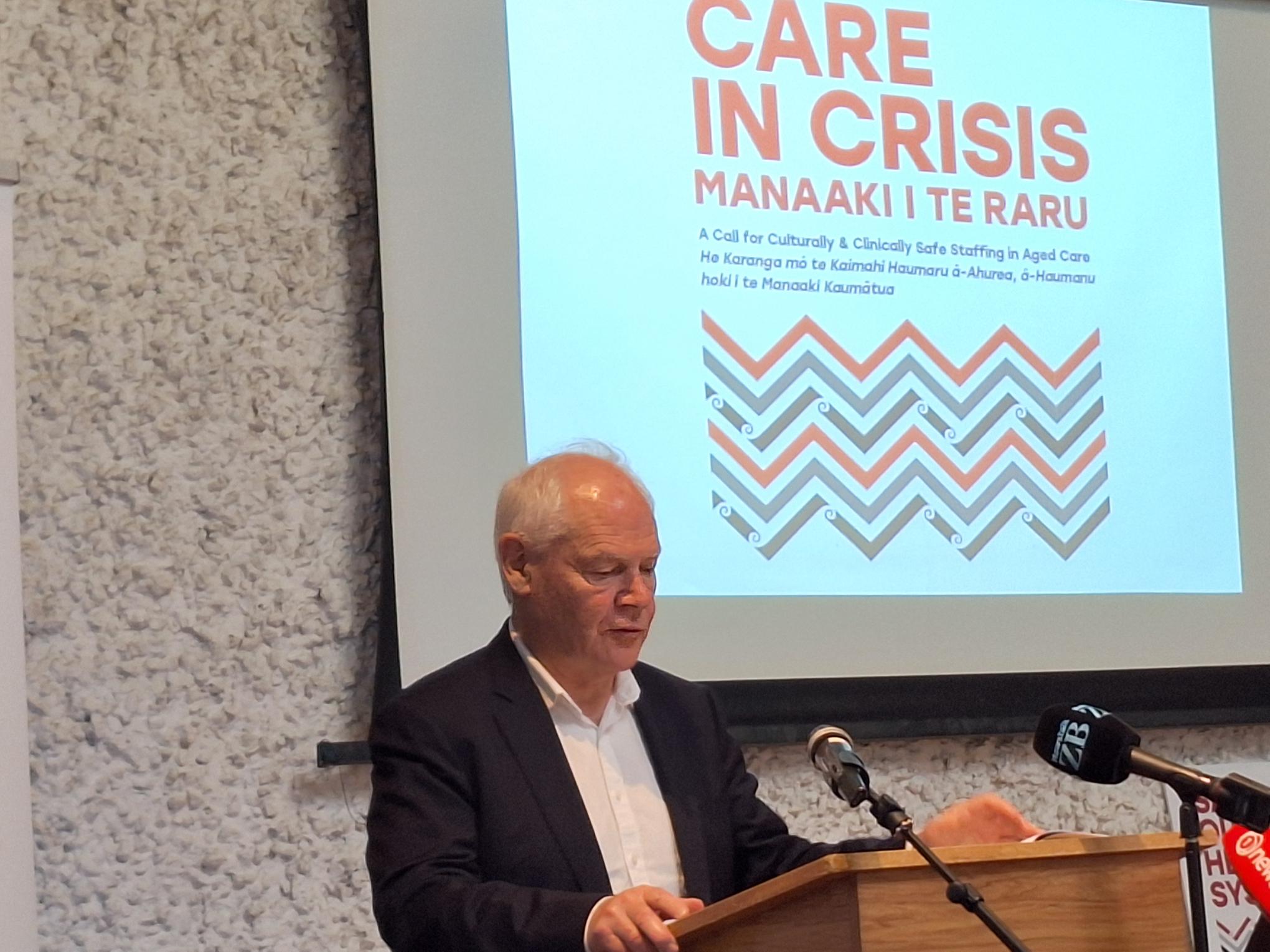
There have been at least 37 staff restructures in aged residential care facilities this year and all resulted in a cut in direct care time for residents. This showed the problem was only getting worse, she said.
NZNO chief executive Paul Goulter said the failures in the aged care sector were now glaringly obvious. “It is not a dumping place for New Zealand citizens and for the staff who work there.”

The union’s focus would now shift to next year’s national elections. “It shifts to our employer partners, and to our union partners, and to the Government and the Opposition parties at large. The evidence is in — you cannot ignore it any longer.”
Care in crisis’ recommendations for aged care:
- Registered nurse on site and on duty 24/7
- Assessing residents’ complexity now and projected, to plan funding into the future.
- Legally-enforceable minimum safe staff-to-patient ratios, based on how many care minutes each resident needs per day to meet their clinical and cultural needs.
- Cultural safety embedded into clinical assessments.
- Aged-care workforce planning, with training and pay parity with Te Whatu Ora-Health New Zealand.
- Funding based on residents’ care minutes calculations.
- More aged care beds
- Mandatory reporting on aged-care safe staffing levels
- A workers’ voice committee in every aged-care facility including staff and union representatives, with access to rosters, staffing data and RN logs.