



The People’s Select Committee on Pay Equity has released its report on the Government’s controversial — and surprise — axing of pay equity claims.

The report outlines a slew of criticisms of the law-making process, the law gutting the pay equity scheme itself, as well as its Treaty implications — and lays out a timeline of its “covert” preparation, including the use of a project code name, hand-delivered documents, and a Minister having to keep a straight face while meeting oblivious stakeholders.
It says the law should be repealed, the claims process simplified and sped up, and called for more financial support for the likes of unions and health service providers to make future claims.
On May 6, 2025, the Government announced it was introducing and passing the law the same day. At that point, 14 claims had been settled, and 33 were still underway. The changes saved the Government $12.8 billion for Budget 2025.
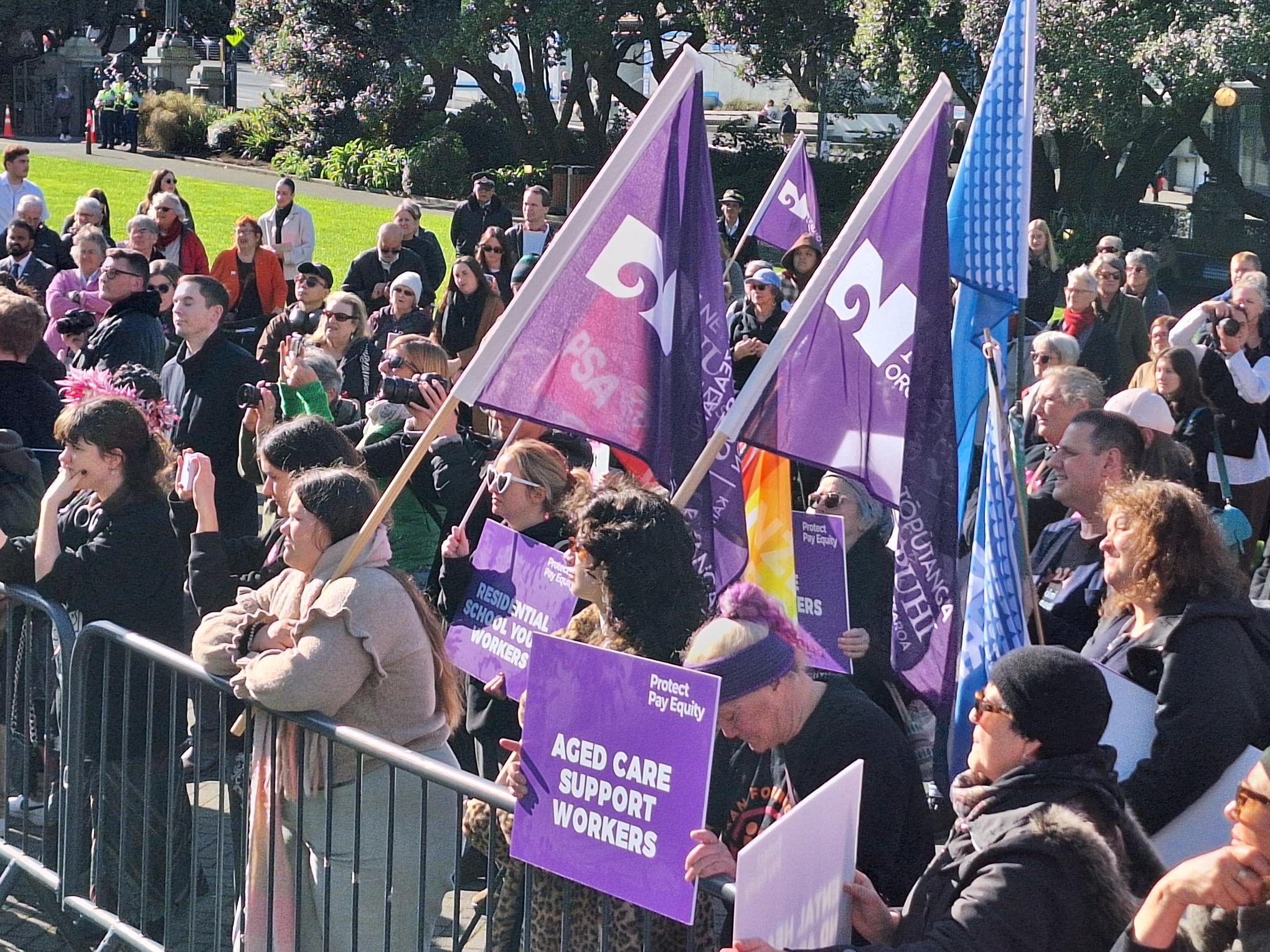
NZNO was involved in 12 of these live claims — including two that were only weeks from completion.

The committee, comprising former MPs from across the political landscape, held hearings from August to October last year. The aim was to give a voice to communities denied in the actual law-making.
The report warns axing pay equity claims could blow up in the face of an increasingly elderly nation — needing a predominately female workforce to care for it.
It draws together submissions, Cabinet papers and and other research and includes extraordinary nuggets of information.
- In February, 2024, Minister for the New Zealand Workplace Relations and Safety Brooke van Velden met lobby group Business NZ, who complained about the cost of public service pay equity settlements, and asked for a review of the law.
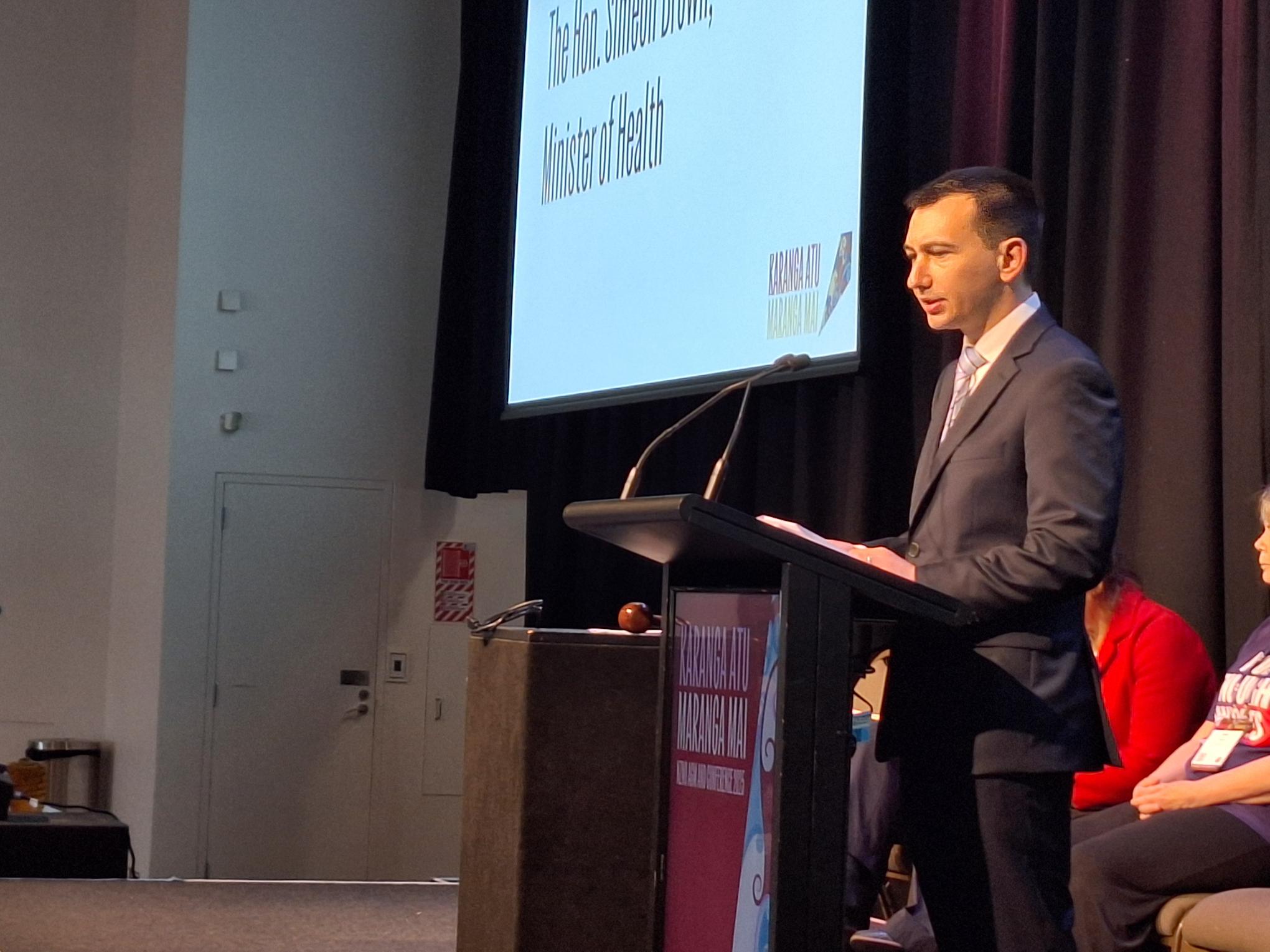
- Health Minister Simeon Brown met employer groups just five days before the shock law change. He knew Cabinet had already agreed to dump the three claims in which they were involved. They left none the wiser.
- Work to axe pay equity was shrouded in such secrecy that it had its own code name, Project Ten, and a no-attachments rule for emails. All papers had to be hand-delivered.
In the dark
Just five days before the Act was passed, Brown met employer groups to discuss three claims without revealing Cabinet had already decided to dump them, says the report.
Just a couple of months earlier, on March 19, Brown was part of a hui of ministers, including van Velden, Nicola Willis and Erica Stanford, nailing down finer details of the law change. They’d push up the threshold to make it harder to apply. They removed to ability to seek a male comparator outside the claimant industry, the report said.
The Government was covertly preparing to dump pay equity claims while its agencies were dragging out those claims, says the report. The Aged Care Association estimated employers and industry bodies spent more than half a million dollars gathering information for a claim ministers knew would be dead on arrival.
“When we track the progress of the aged care pay equity claim alongside the timeline, we can see that employer groups and unions were essentially being strung along,” the report says.

And how covert was all of this? The report says in the lead-up to the law change any papers were hand-delivered in hard copies. The subject line on any emails about the work was code-named Project Ten.
Shonky lawmaking
The committee found criticism of the law-making across multiple fronts, including:
- The use of retrospective legislation.
- The lack of consultation especially with those affected by the law change.
- The use of urgency and lack of a select committee referral, which meant there were no checks and balances, nor evidence provided to support the changes.
- Evidence of bad faith that received from submitters.
- The impact that all of these have had on trust and confidence.
The Treaty implications
Meanwhile the report outlines damning submissions over the impacts of the law change on Māori and in particular, Māori women.

“Kaupapa Māori submitters viewed the Government’s changes . . . as a deliberate rollback of hard-won rights, a breach of Te Tiriti o Waitangi, and an assault on intergenerational equity for wahine Māori, their whānau and communities.”
The report said submitters saw the law change as a “profound breach” of the Crown’s obligations under Te Tiriti. This included a breach of the principle of partnership with the “complete exclusion of Māori from consultation on a law that disproportionately affects them”.
Data submitted in hearings revealed that the ethnicity pay gap for Māori women compared to Pākehā men was 21.4 per cent.
During the hearings, NZNO kaiwhakahaere Kerri Nuku said Māori women and Māori nurses had already been “undermined within the health system”, something only made worse by the pay equity changes.
Axing pay equity claims put a critical workforce at risk in an aging nation, the report said.
The “unprecedented growth” in over-75s placed immense pressure on the health and care sectors, both dominated by women whose claims were axed.
“Importantly, Māori and Pacific demographics are proportionately younger. They are a key contributor to sectors that have been traditionally undervalued. This will be eroded if the true value of this work is not recognised.”
Cabinet paper analysis
In an analysis of Cabinet papers the committee says “no Cabinet Minister was ever fully briefed on the measure’s human rights consequences”.
Documents sent to Cabinet ministers were so dumbed-down most readers relying on them for advice “would fail a simple test on what pay equity means”, the report says. They were “bite-sized”, “simplistic”, “undeveloped”.
It appears the ministers weren’t starting from a well-informed foundation either.
The report outlines a timeline beginning in December, 2023:
“MBIE [Ministry of Business, Innovation and Employment] gets an email request for a briefing for Minister van Velden on ‘pay parity.’ Although the officials respond politely, it is clear that the Minister is actually seeking information on pay equity and does not yet understand the distinction.”
She was given “a simplified slide presentation outlining the differences between equal pay, pay parity, and pay equity”.
“Kaupapa Māori submitters viewed the changes as a deliberate rollback of hard-won rights, a breach of Te Tiriti o Waitangi, and an assault on intergenerational equity for wahine Māori.”
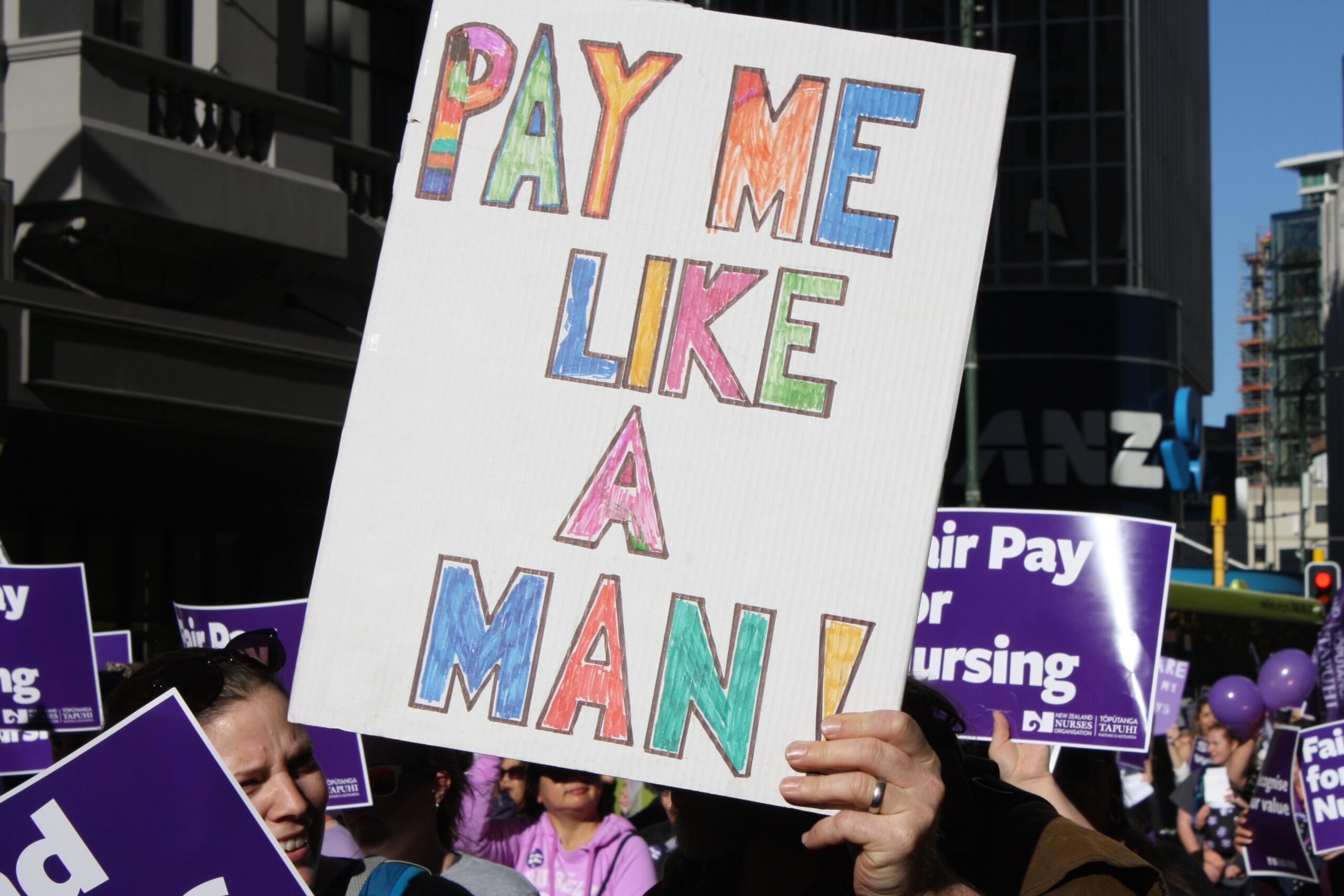
Pay equity seeks the same pay for female-dominated professions (nurses, health-care assistants) as male-dominated mahi requiring similar effort, skills and responsibilities.
Meanwhile the timeline says van Velden met Business NZ (BNZ) who asked for the Equal Pay Act to be reviewed. “At this meeting BNZ advise: ‘the flow-on effects from public sector settlements across the labour market, particularly in health and community services, is significant’.”
This contradicts the Government’s claim that it only consulted its own agencies, said the report.
What is needed?
The committee made a raft of recommendations including:
- Repeal the 2025 law, then introduce simple changes to cut time frames for claims; The government should then establish and resource an independent pay equity unit.
- Provide financial support to unions bringing pay equity claims.
- Prevent laws affecting fundamental rights to be passed under urgency (aside from times of emergency).
- Recognise pay equity as a constitutional principle, protected from political interference.
- Government agencies should improve funding for health, social and education services to support future pay equity settlements.