

Remembering the nurses
| Canada (1) | |
| Marielle Falardeau | 60 |
| Japan (13) | |
| Yumiko Hata | 29 |
| Miki Hayasaka | 37 |
| Yuko Hirabayashi | 28 |
| Hifumi Hoshiba | 41 |
| Haruki Hyakuman | 27 |
| Rika Hyuga | 30 |
| Toshiko Imaoka | 34 |
| Noriko Otsubo | 41 |
| Yoko Sakurai | 27 |
| Yoko Suzuki | 31 |
| Hiroko Tamano | 43 |
| Asuka Tsuchihashi | 28 |
| Ayako Yamaguchi | 30 |
| New Zealand (4) | |
| Elizabeth Jane ‘Jane’ Grant | 51 |
| Teresa McLean | 40 |
| Christine Patricia ‘Trish’ Stephenson | 61 |
| Lisa Willems | 43 |
| People’s Republic of China (16) | |
| Yu Cai | 31 |
| Xiling ‘Vivi’ Han | 25 |
| Wen He | 25 |
| Chang Lai | 27 |
| Jin-Yan ‘Vicky’ Leng | 30 |
| Wanju ‘Julia’ Li | 44 |
| Hui Yun Tu | 22 |
| Li-Min Wang | 32 |
| Tao Wang | 29 |
| Lin-Lin Xu | 26 |
| Xiujuan Xu | 47 |
| Caiying ‘Cathy’ Ye | 27 |
| Di-Di Zhang | 23 |
| Hui Zhang | 34 |
| Yan-Tao Zhong | 31 |
| Xiao-Li Zhou | 26 |
| Phillipines (11) | |
| Lalaine Collado Agatep | 38 |
| Mary Louise Anne Bantillo Amantillo | 23 |
| Emmabelle Cabahug Anoba | 26 |
| Valquin Descalsota Bensurto | 23 |
| Ivy Jane Cabunilas | 33 |
| John Kristoffer Villegas Chua | 23 |
| Jewel Jose Francisco | 26 |
| Ezra Mae Sabayton Medalle | 24 |
| Erica Avir Reyes Nora | 20 |
| Jessie Lloyd Albaracin Redoble | 30 |
| Rhea Mae Sumalpong | 25 |
| Republic of Ireland (1) | |
| Eoin Thomas ‘Owen’ McKenna | 40 |
| Taiwan (1) | |
| Hsin Hung Lee | 32 |
| Thailand (6) | |
| Thanydha ‘Koy Thanida’ Intarangkun | 36 |
| Phimphorn Liangchuea | 41 |
| Haruthaya ‘Jenny’ Luangsurapeesakul | 32 |
| Wanpen ‘Nok’ Preeklang | 45 |
| Jiitra ‘Tarr’ Waithayatadapong | 40 |
| Siriphan Wongbunngam | 27 |
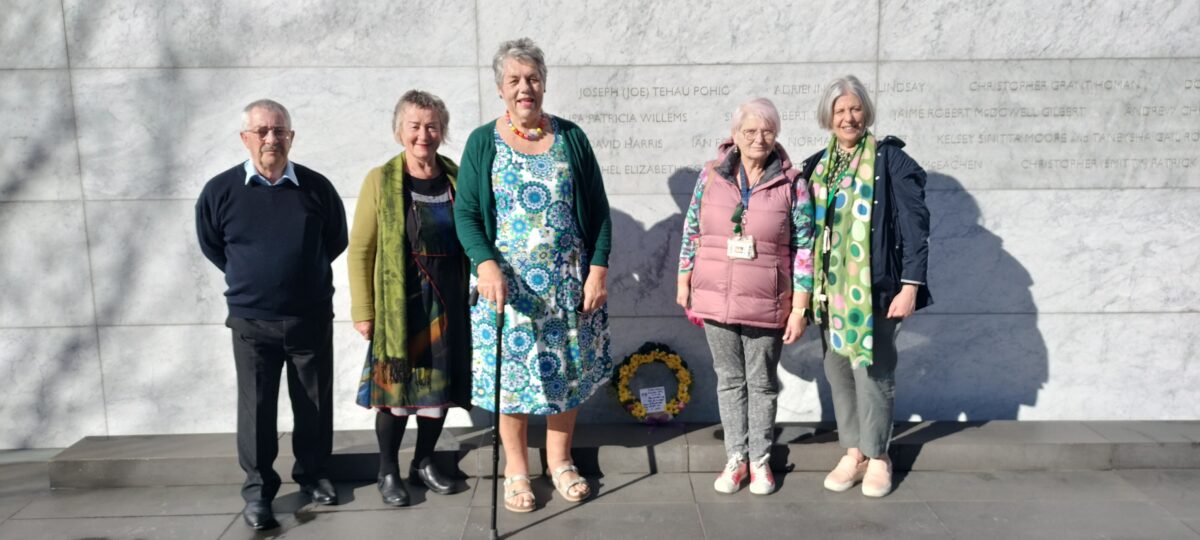
Every year, Christchurch nurse Janine Randle lays a wreath at the city’s earthquake memorial wall for 53 nurses who died in the February 2011 earthquake.
“Kei te hiahiatia e au kia haere tonu, ā, ko tōku whakapepeha ‘kia maumahara i ngā tapuhi’,” hei tā Randle, nāna i mahi i te mātūtū tamariki i te Hōhipera o Ōtautahi.
“I just like to keep things going, and my motto is ‘remember the nurses’,” said Randle, who works at the Christchurch Hospital children’s surgery ward.
Ko Randle — māna e tae atu ki tōna tau 70 i te Noema — i mahi hei tapuhi mō ngā tau 52 kua hipa, hei māngai NZNO noki mō ngā tau 42. Ka kīia e ia ka “tino ohorere” ngā tāngata i a rātou e mōhio ana ki te rahi o ngā tapuhi i mate i taua rā, i te rū 6.3 te kaha i patua mai i te Pēpuere 22, 2011.
Randle — who will be 70 in November — has been a nurse for 52 years and NZNO delegate for 42. She says people are often “gobsmacked” when they find out how many nurses actually died that day, in the magnitude 6.3 earthquake that struck on February 22, 2011.

“Ko ētahi o rātou he wae tāpoi, i te wāhi tino hē, i te wā tino hē. Ko tētahi o rātou i mahi i te Hōhipera o Ōtautahi hei kaiwhakahaere nēhi.”
“Some of them were tourists, just in the wrong place at the wrong time. One of them worked at Christchurch Hospital as a duty nurse manager.”
I roto i ngā tāngata 185 i mate i taua rā, he hunga tapuhi 53 i hinga. Ko te nuinga o rātou nō tāwāhi, e ako ana i te reo Ingarihi i te tari CTV kua turakina kia whakarite mō tō rātou whakamātautau rēhitatanga. Kō ētahi atu i mahi i tētahi whare haumanu ki reira, i whakatā ai i te pukapū tāone, he wae tapoi noa iho, rānei.
Of the 185 people who lost their lives that day, 53 were nurses. Many were from overseas, studying English in the CTV building that collapsed in preparation for their registration exam. Others were working in a medical clinic there, or were off duty and in the central city — or simply visitors, unfortunate tourists.
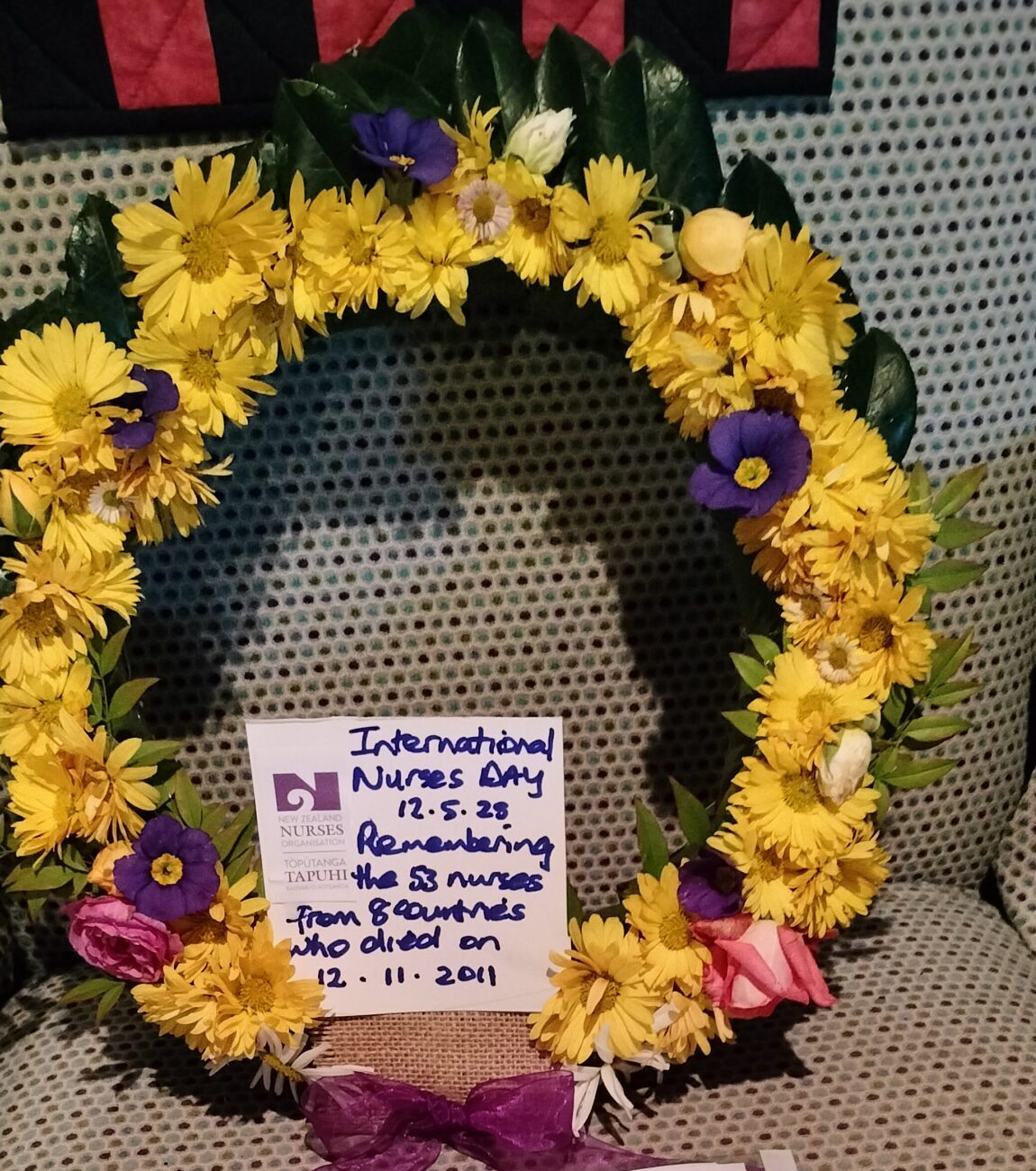
Ā, mō tata ki te 10 tau, ia tau i te Mei 12, koia te Rā Whakanui i te Tapuhi ā-Ao, ki reira a Randle, e tuku ana i ngā mihi — tae noa ki te tau tata i hipa ahakoa tētahi poka ki tōna hope he 3 wiki i mua.
And for nearly a decade, every year on May 12, International Nurses’ Day, Randle has been there, paying her respects — even last year, just three weeks after hip surgery.
He rua tau nō muri mai, i te whakatuwheratanga o te pakitara whakamaumahara i te 2017, kua taka te kapa mō tetahi atu RN, Terry McLaughlin, kua mōhio ia ki te nuinga o ngā ingoa kua pānuitia.
It was a few years later, at the opening of the city’s memorial wall in 2017, when another RN, Terry McLaughlin, realised he knew many of the victims’ names as they were read out.
I a ia a mahi ana i ngā ratonga kiritaki i te Hōhipera o Ōtautahi i te rā o te rū, kua waea mai ētahi whānau i tāwāhi e rapu ana ki ngā kōrero mō ō rātou pūtahi aroha i Aotearoa.
Working in customer services at Christchurch Hospital on the day of the earthquake, McLaughlin had received several overseas calls from families seeking news of their loved ones in New Zealand.
I could hear the children in the rooms around me saying: ‘help, help’.
Kua whakatewhatewhatia e ia, ā, ka kitea i hinga ngā tapuhi 53 nō ngā whenua e 8 — he 16 nō Haina, 13 nō Hapani, 11 nō Piripīni, he 6 nō Tairana, he 4 nō Aotearoa, me kotahi nō ia o Kānata, Aerana me Taiwana.
He did some sleuthing, and discovered that altogether 53 nurses from eight countries — 16 from China, 13 from Japan, 11 from the Philippines, six from Thailand, four from New Zealand and one each from Canada, Ireland and Taiwan — had died in the quake.
Kua whakamōhiotia NZNO e McLaughlin nā runga tā te uniana kaunihera ā-rohe o Waitaha (inaiānei he rōpū whakariterite paetata). I marohi Randle, tētahi mema, kia whakatakoto i tētahi puapua whakamahara ia tau, ia tau, i te Mei 12.
McLaughlin alerted NZNO via what was then its Canterbury regional council (now, local organising group). Randle, a member, suggested laying a wreath every year on May 12.
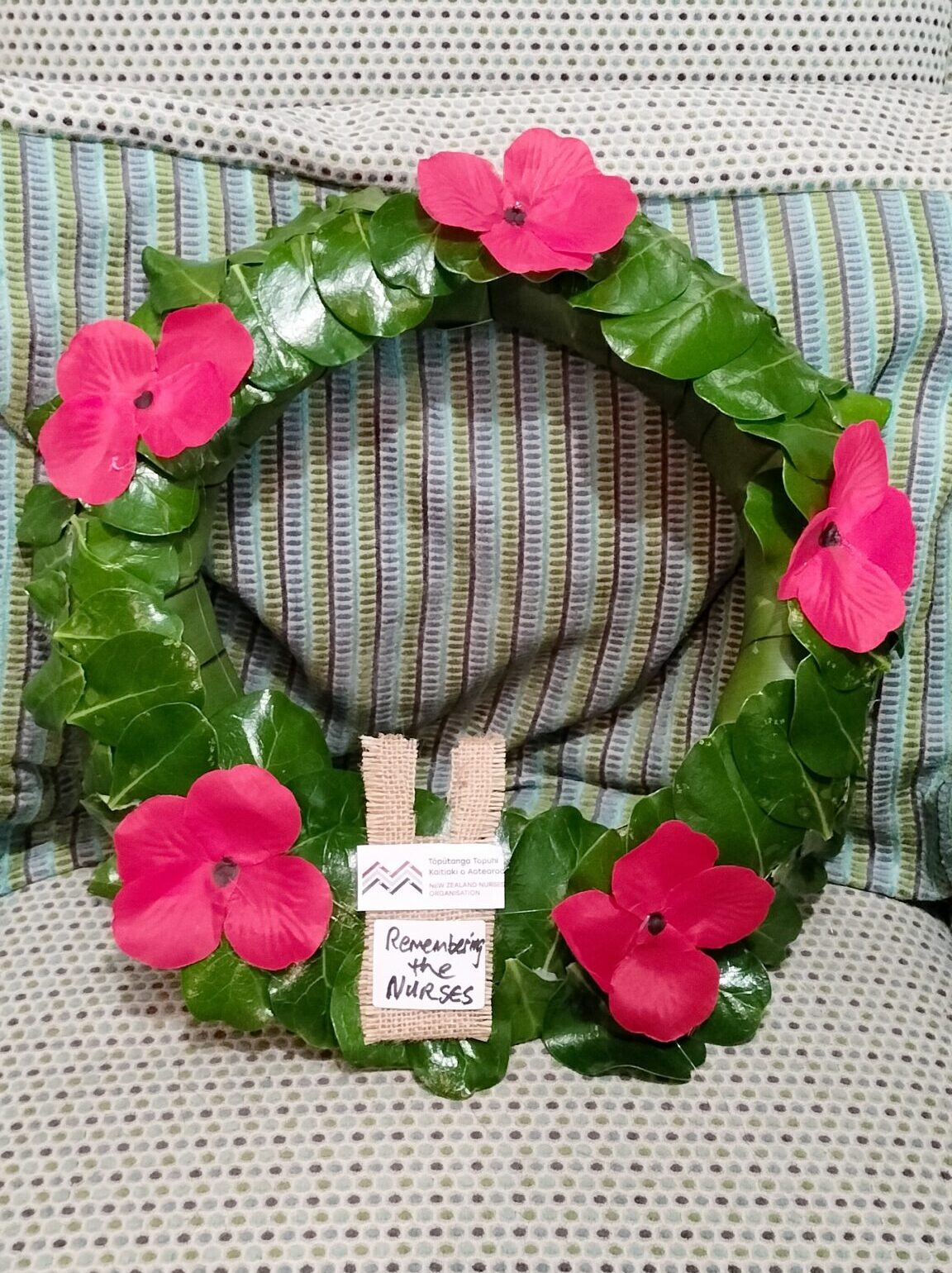
“Nō reira, kua kī taurangi mātou o te kaunihera ā-rohe kia maumaharatia rātou i runga i te Ra Whakanui i te Tapuhi ā-Ao, tau atu, tau mai, me te aha ka whāia tonu taua ara.”
“So we made a commitment, NZNO regional council, that we would commemorate them on International Nurses’ Day every year, so that’s what we’ve done.”
Ia tau, ka whakatakotoria te puapua whakamahara i raro i te ingoa o tētahi nēhi hou.
Each year, the wreath is laid under the name of a different nurse.
I te tuatahi, ka huihui mai te hapori me te arapāho ki te whakatakotoranga puapua whakamahara mō ngā nēhi i hinga. Engari “kua mimiti haere” te rahi o ngā tāngata — he āhuatanga e hiahiatia ana e ia kia whakatika.
At first, the community and media thronged the wreath-laying ceremony for the lost nurses. But nine years later, numbers have “whittled down” to a handful — and that’s something she wants to remedy.
“Kāhore tēnei i te tino mōhio — tae atu rā ki ngā tāngata o Ōtautahi,” ka kīia e Randle ki Kaitiaki. “Nō reira, kei te hiahia mātou kia whakamaharatia anō ngā tāngata.”
“It’s not something that’s well known — even Christchurch people don’t know,” Randle told Kaitiaki. “So, again, we want to make sure that people remember.”
Ka whakatakoto ia i te puapua whakamahara i te 11.30am i te Tūrei, Mei 12.
She will be laying the wreath at 11.30am on Tuesday, May 12.
Ka hangāia, ka whakatakotoria noki e Randle tētahi puapua whakamahara ia Rā ANZAC i te whare karakia nēhi i te haeata, mō ngā tapuhi i mate i WWI.
Randle also makes and lays a wreath every ANZAC day in the nurses’ memorial chapel at dawn, for nurses who lost their lives in WWI.
I whakatū ngā mema NZNO o Waitaha i tētahi tūru papa rēhia hei maumaharatanga mō ngā pārurenga o te parekura whare karakia Ihirama i te 2019.
The Canterbury NZNO members have also erected a park bench in memory of the 51 victims of the 2019 mosque shootings.
‘The whole building shook’
I mahia e Janine Randle i tō te Hōhipera o Ōtautahi mātūtū tamariki i te patu mai a te rū 7.1 i te Hepetema 4, 2010 — he rima marama i mua i te rū kino ake i te Pēpuere.
Janine Randle was on duty at Christchurch Hospital’s children’s ward when a 7.1 earthquake hit on September 4, 2010 — five months before the more catastrophic February quake.
“Kei roto ahau i tētahi taiwhanga me te tākuta e mātai ana i tētahi kōtiro, ā, ka rūrū mai te whare katoa,” kua kīia e ia ki Kaitiaki. “Kei waho o te taiwhanga he kāho wai, ā, ka taka mai taua kāho, kua waipukengia te katoa, ā, i rangona ngā tamariki i ngā ruma tata e tangi ana ‘āwhinatia mai, āwhinatia mai’.”
“I was in a room with the registrar examining a teenage girl and the whole building shook,” she told Kaitiaki. “Outside the room was a water cooler and the water cooler fell over and the water flooded everywhere and I could hear the children in the rooms around me saying: ‘help, help’.”
I te patu mai a te rū Pēpuere 22, e noho ana ia i tōna kāinga
When the February 22 quake hit, she was at home.
“Kua puta mai ngā mea katoa i ngā kuaha, engari kīhai mātou i tere mōhio ki te taumahatanga i te tāone i te mea kua turakina ngā waea hiko me te pouaka whakaata.”
“Various things shook and flew out of doors but it was some hours before we realised how serious it was in town, because the TV and phonelines were down.”