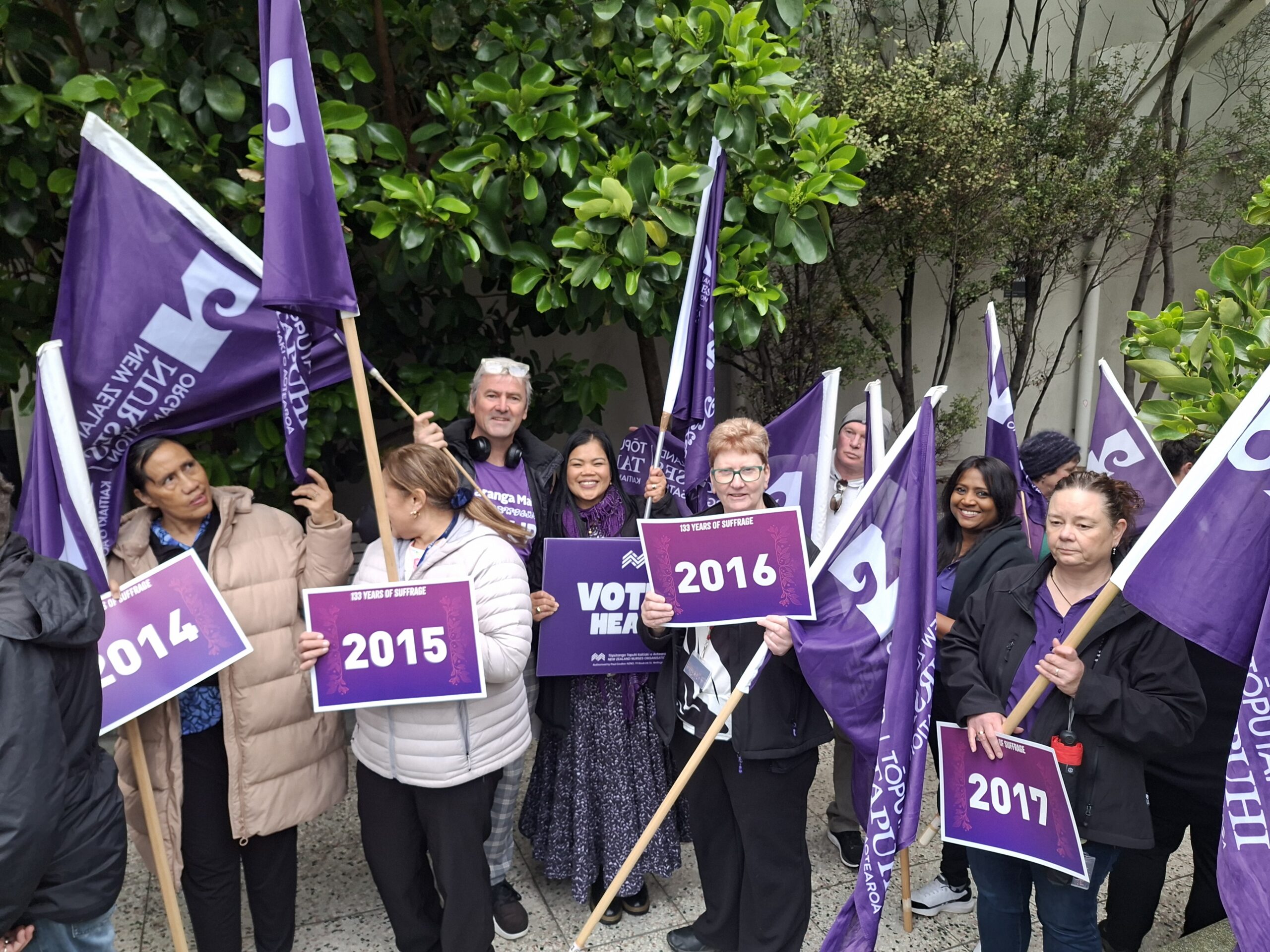


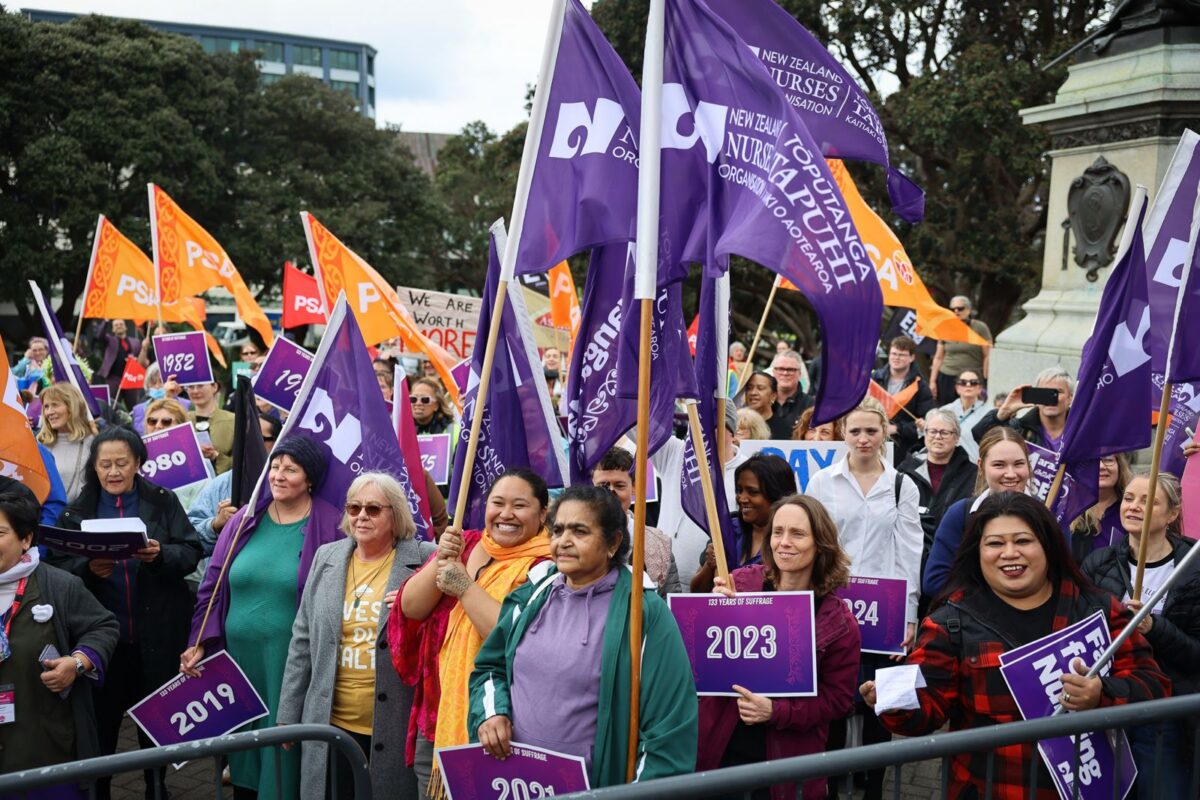
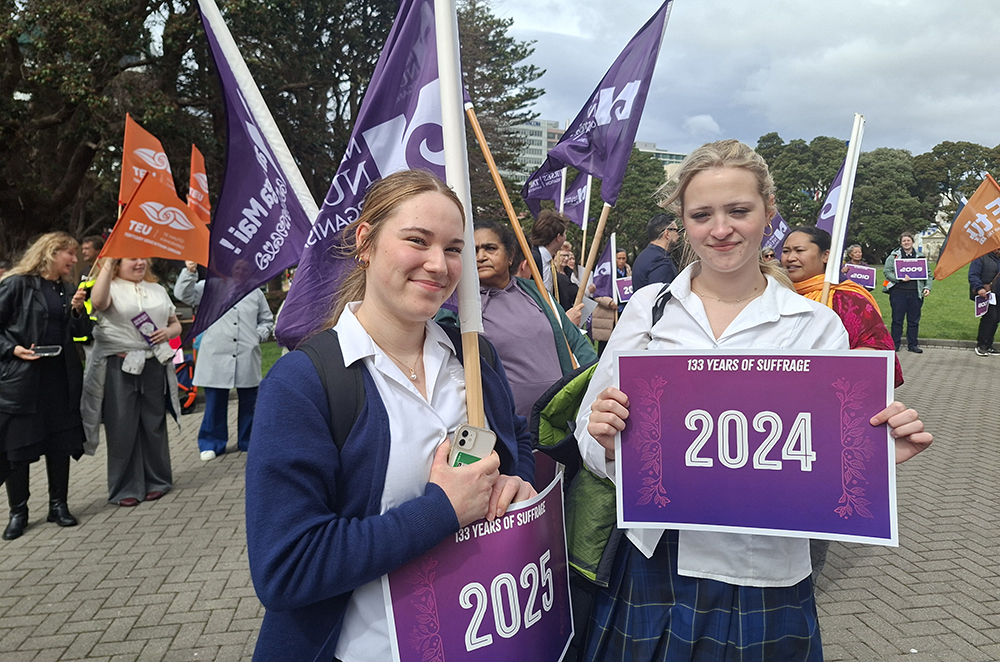
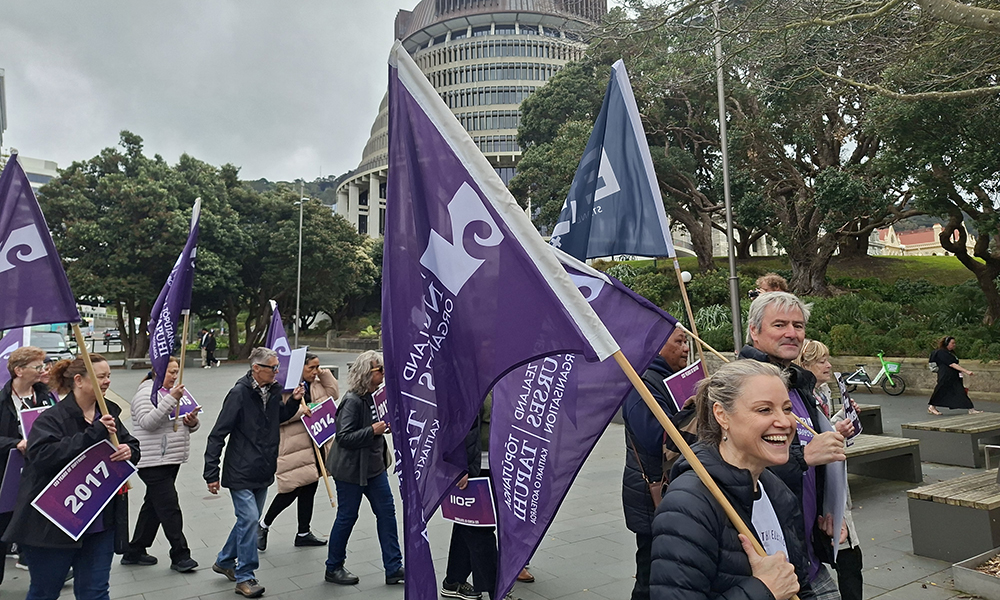
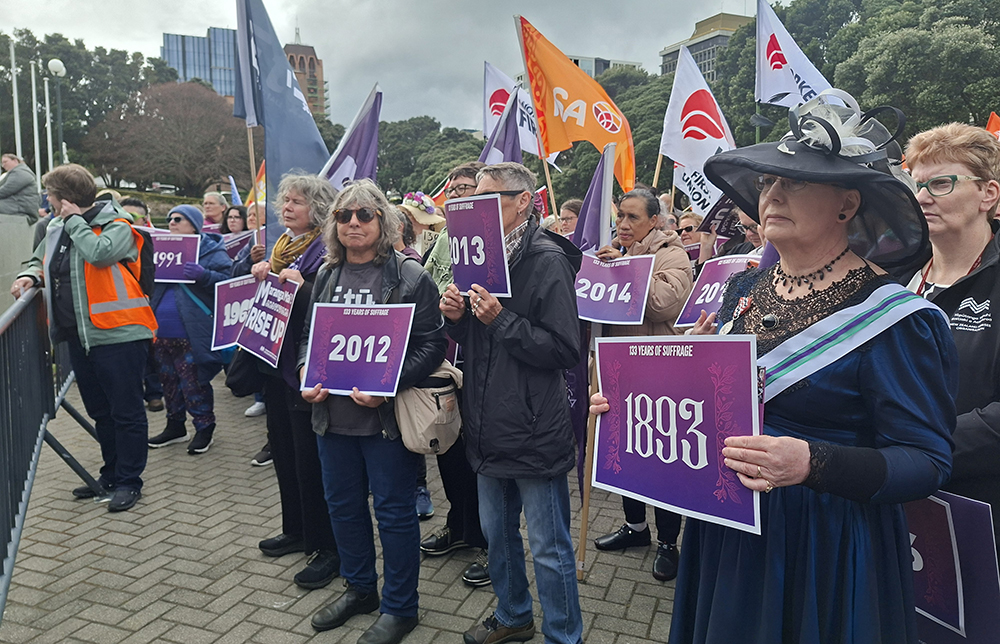
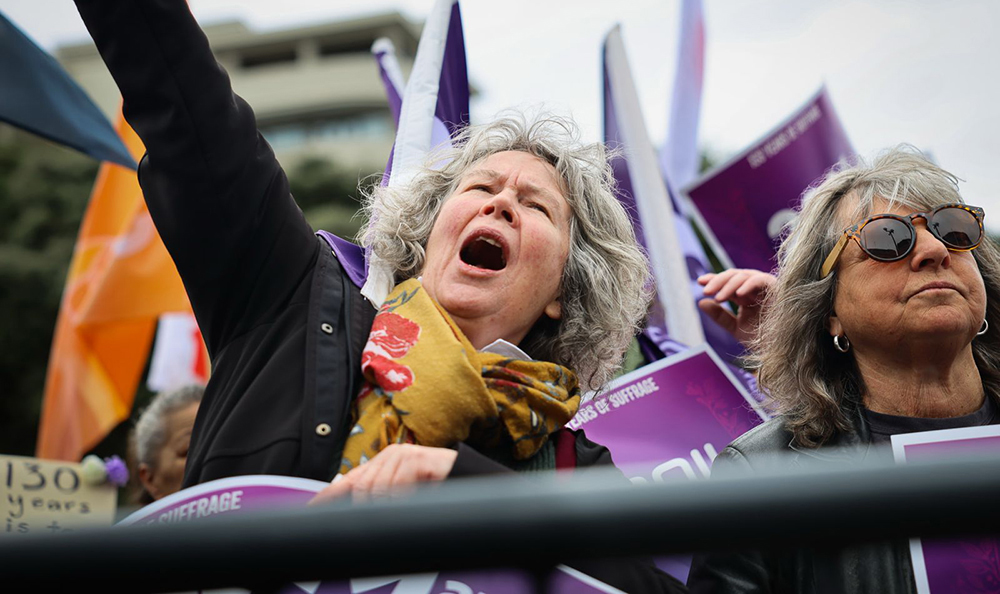
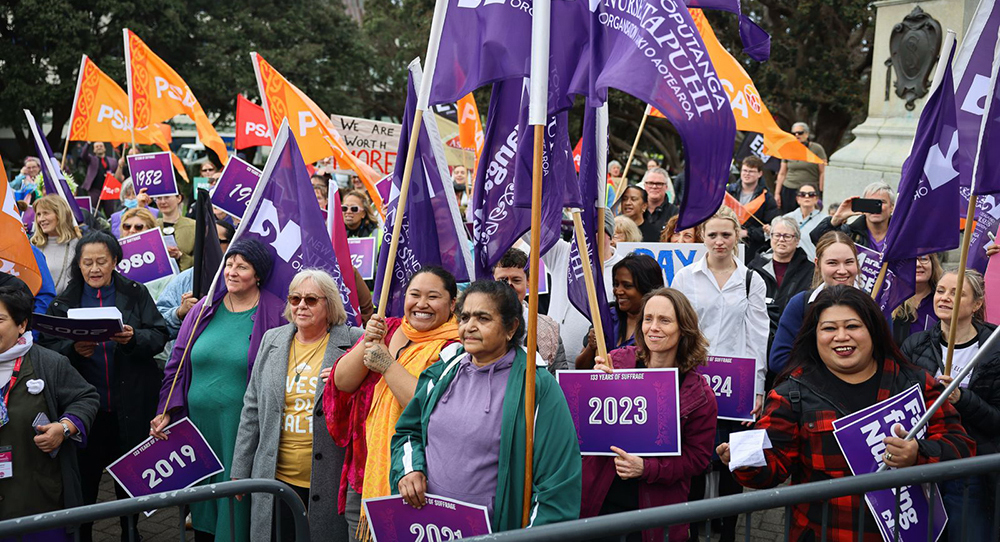
High school students joined original feminists from the ’70s and beyond as women across generations marched downtown to Parliament — many frustrated to still be fighting for equal pay 133 years after women’s suffrage or manapōti wāhine in te reo Māori.
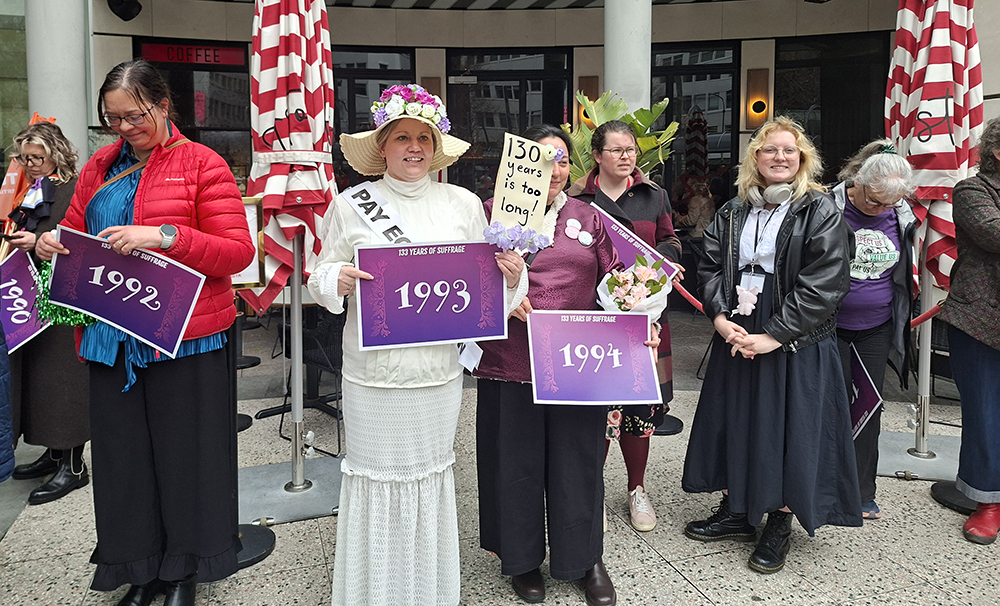
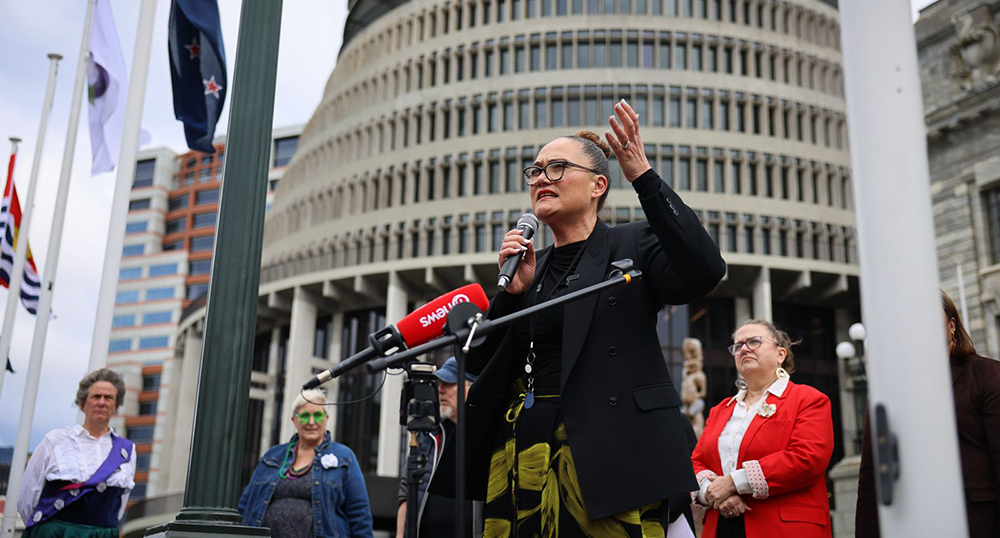
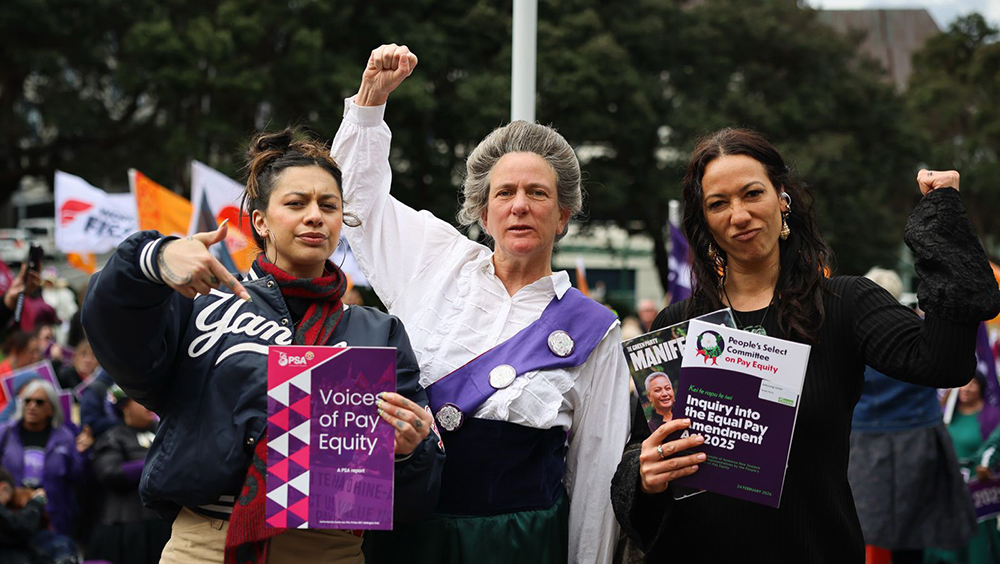
Teacher aide Ally Kingi, in full suffragette regalia, told an enthusiastic crowd of 300-odd dancing wāhine and supporters they were “beautiful, powerful and strong” as they arrived, dancing, in celebration of Aotearoa’s world-leading move to give women the vote on September 17, 1893.
Watch the dancing at: Girls just wanna have . . . equal pay!
But there was also anger — rage, even — at still having to fight after losing 33 pay equity claims after the Government’s shock law change last May. Or, as Kingi put it: “Dumped overnight after their little secret meeting”.
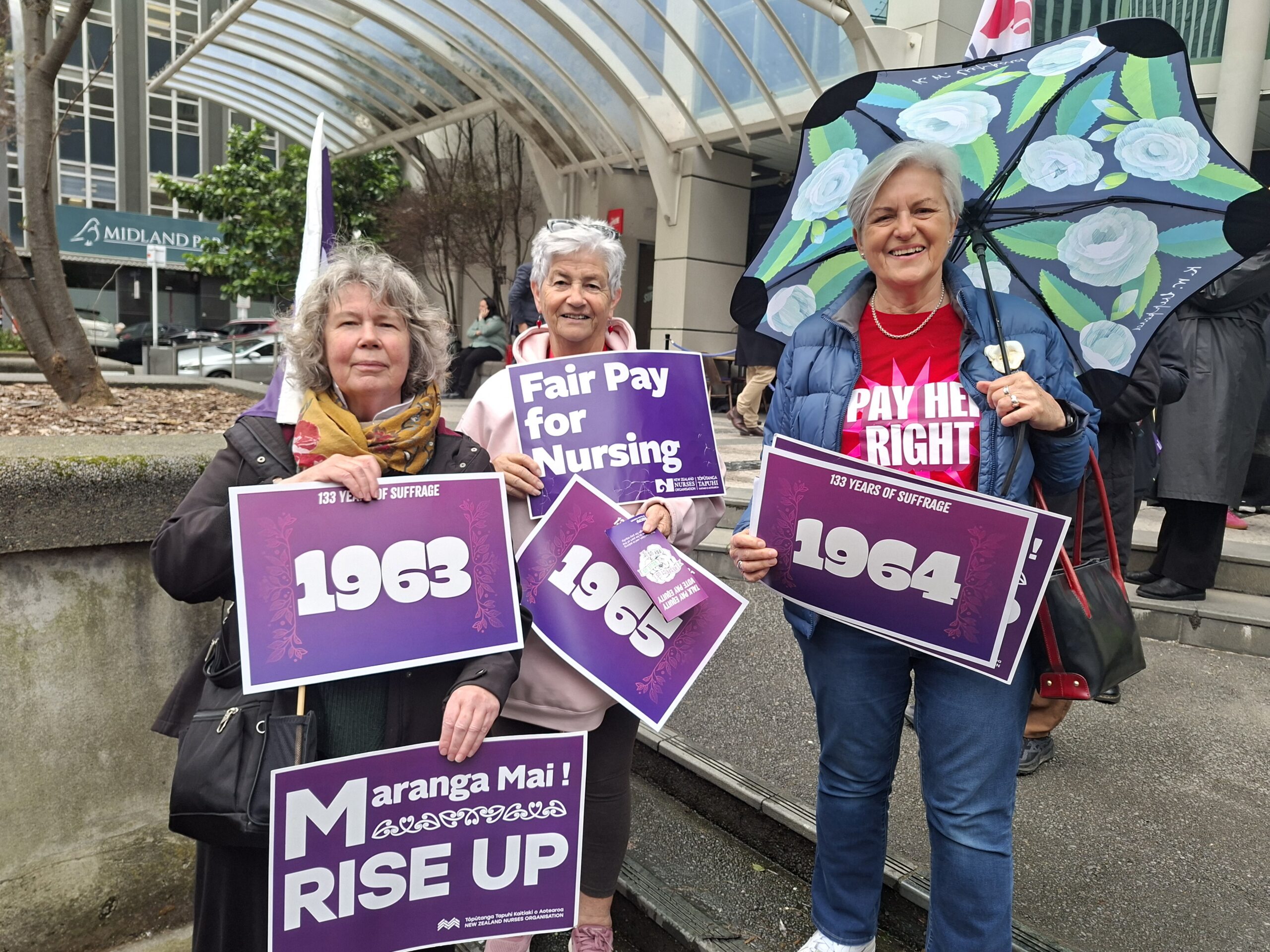
At that point, 14 claims had been settled, and 33 were still underway. The changes reportedly saved the Government $12.8 billion for Budget 2025.

Former Labour Party president and minister Maryan Street said it was a disgrace women were still fighting for economic equality. “Pay equity is all about economic justice and we don’t have it and this lot aren’t going to give it to us.”
Tōpūtanga Tapuhi Kaitiaki o Aotearoa-NZNO president Anne Daniels was both proud and angry to be marching.
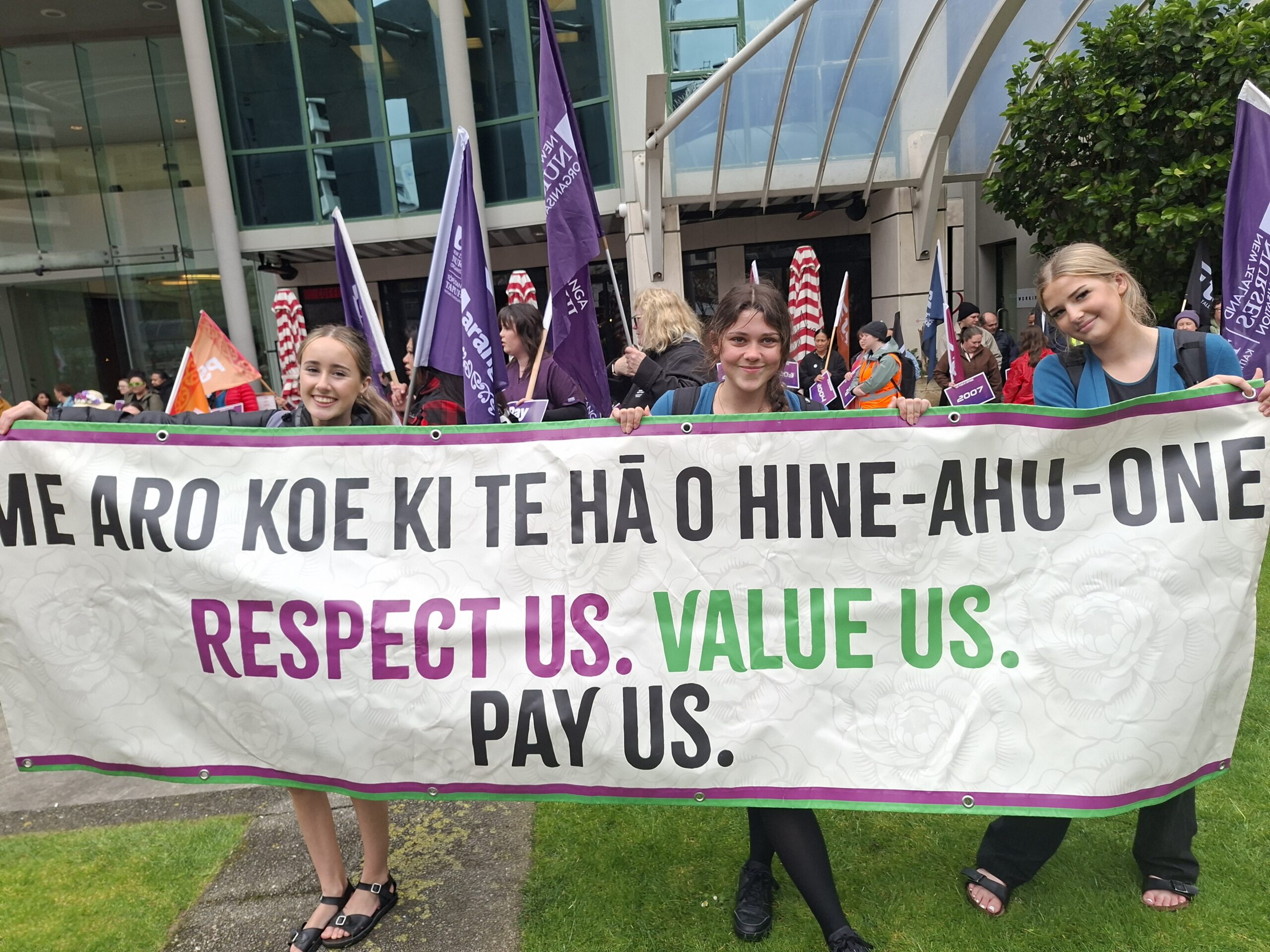
“We’re still fighting because we have to — because we are being made to,” she told Kaitiaki. “We are supporting women in this country to have equality and equity in every aspect of their lives.”
Outside Parliament, aged-care worker Lisa Marriner told the crowd that women “deserved dignity and knowing that our work is valued fairly”.
The Government’s move meant care and support workers like her — in a workforce largely of women — lost their only pathway to level up pay rates to male-led professions.
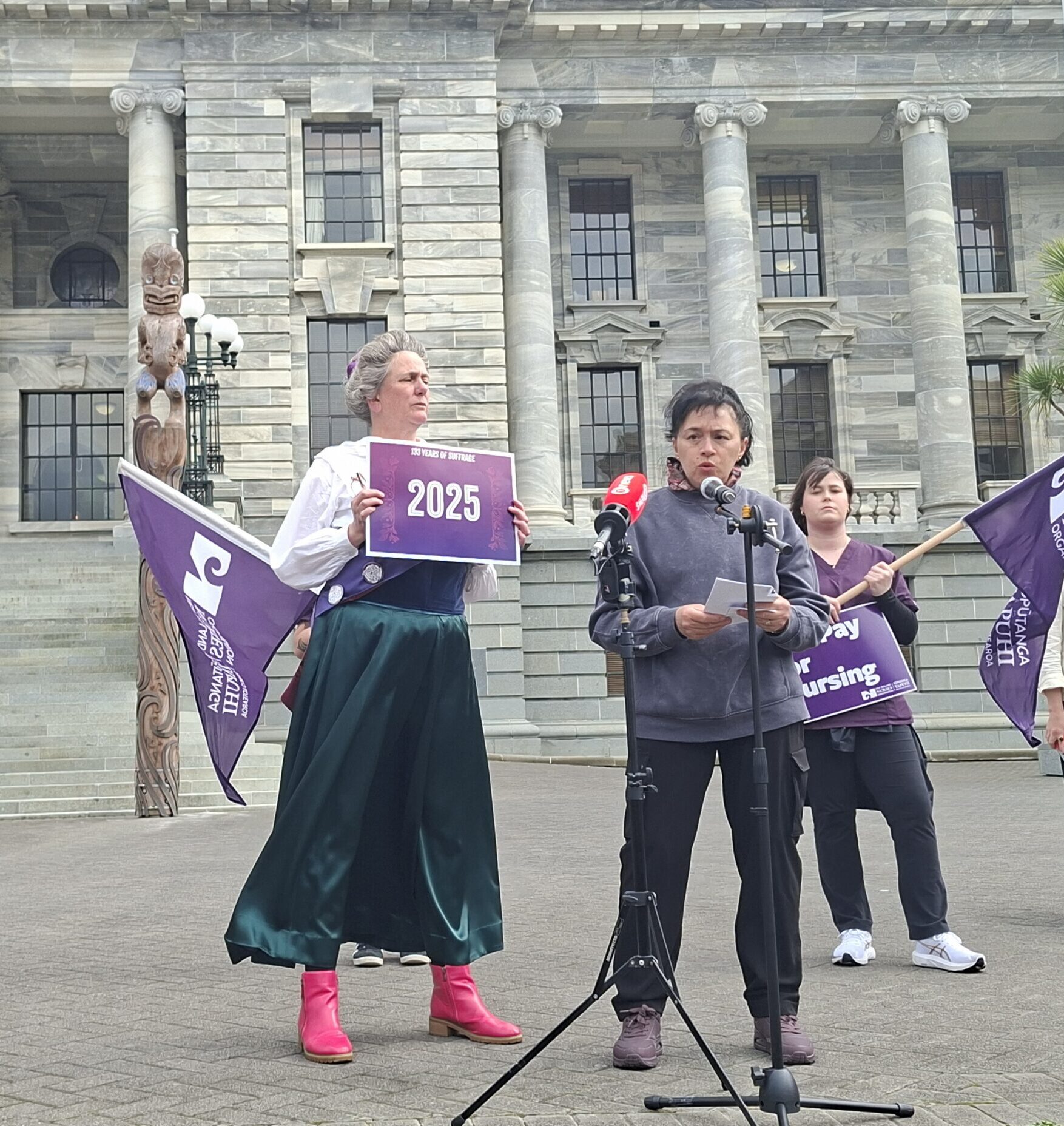
“I and thousands of women across the country were gutted when the Government cancelled 33 active pay equity claims,” she said, to cries of “shame”.
The work of teachers, nurses, teacher aides, librarians and lab technicians, too, was “essential to New Zealand’s health and wellbeing, our prosperity and our quality of life” yet undervalued.
Wellington enrolled nurse Sarita Sharma said the nursing workforce was under huge pressure.
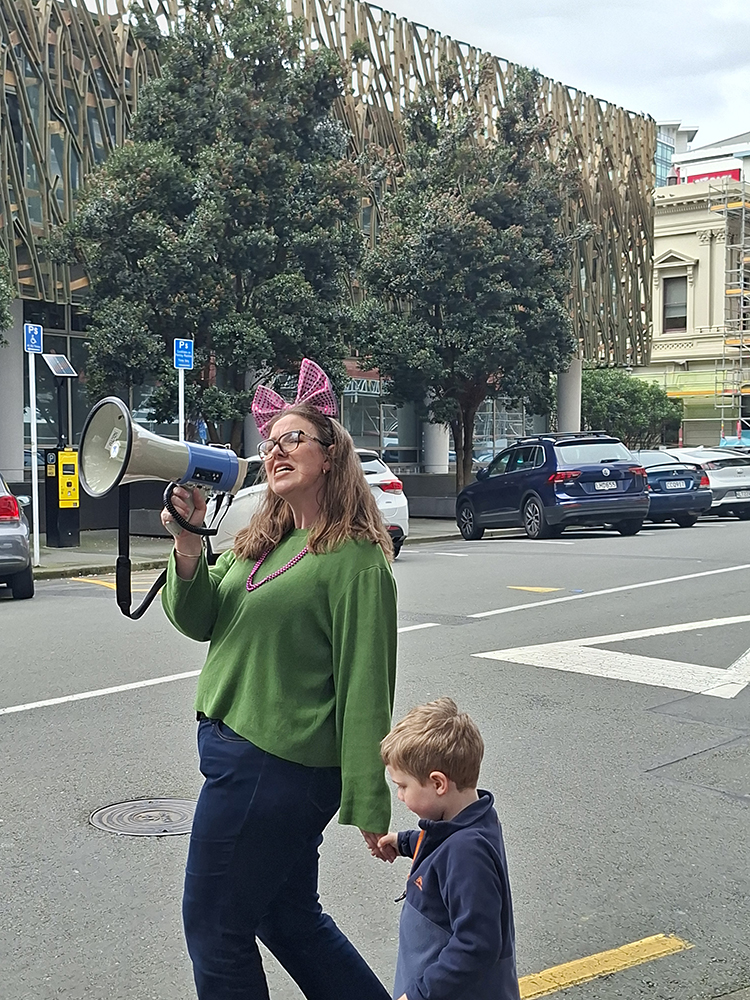
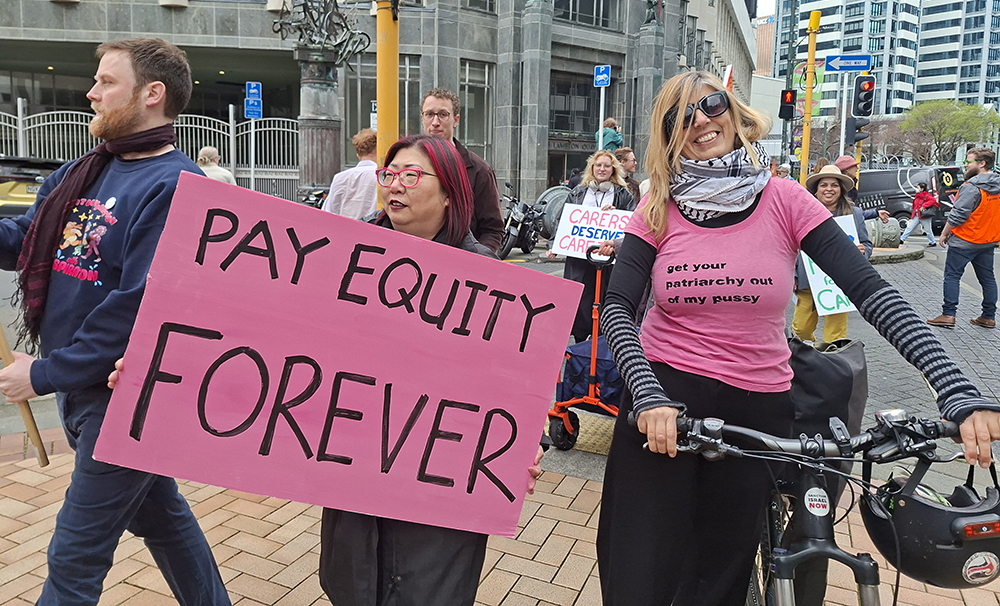
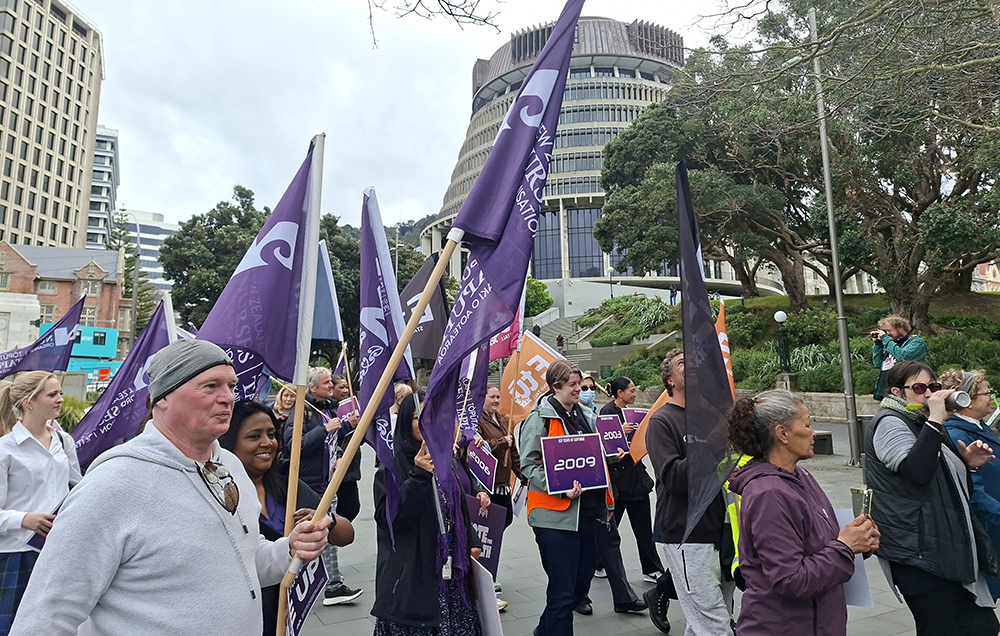


‘Pay equity is all about economic justice and we don’t have it and this lot aren’t going to give it to us.’
“We are so short-staffed and we deserve fair pay,” she said in between hospital night shifts. “At night they sleep in their beds while we look after their whānau. They don’t sit there and hold dying patients’ hands — they sit behind their desks and make policies.”
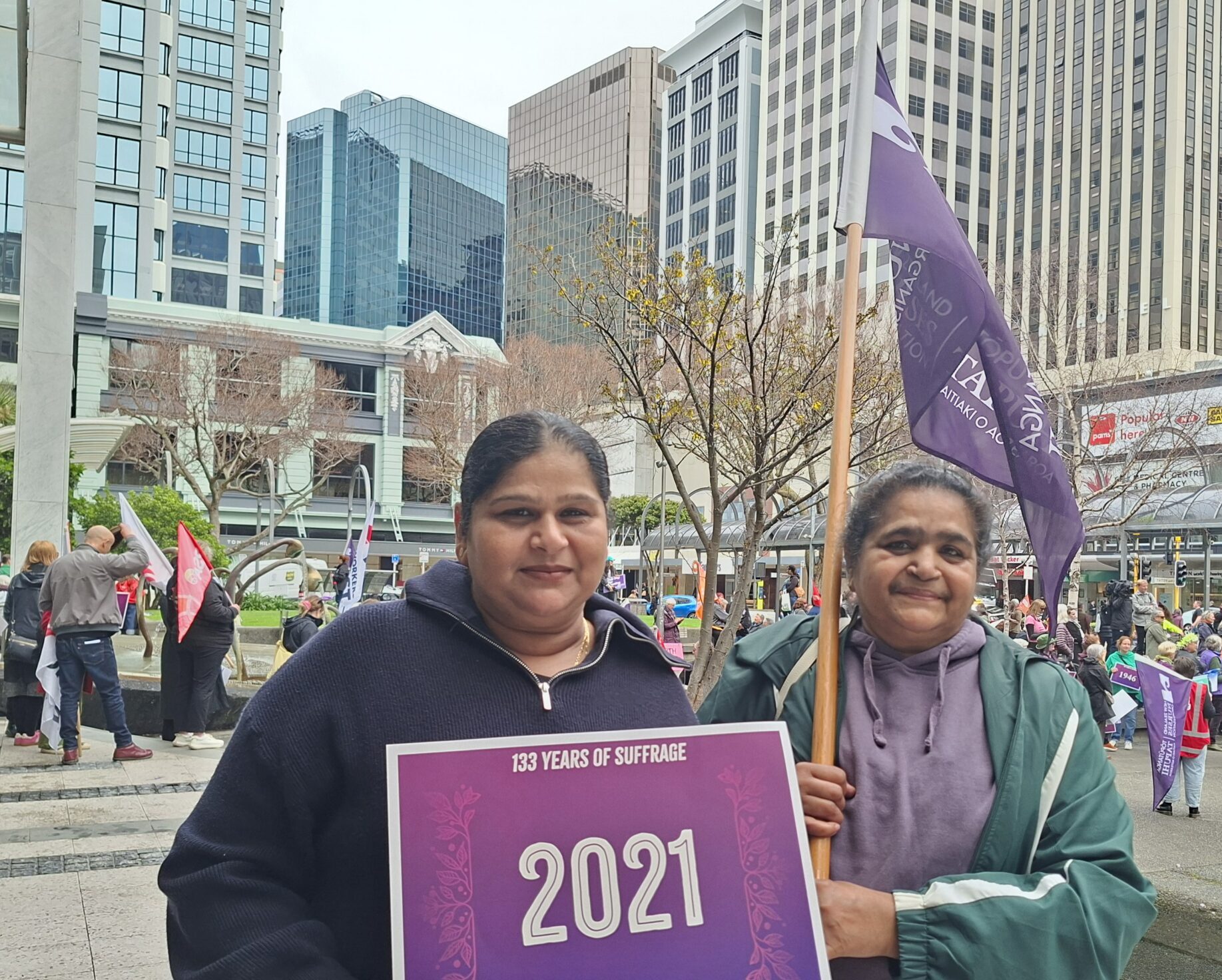
Wellington student Alice Doolan, 15, said she enjoyed seeing people from different generations at the event.
“I think it’s important to have young people as well as older people — all ages.”
Marriner called on the next Government to fix the system — which meant ensuring pay equity was easy to access, easy for employers to engage with and sufficiently funded.
Labour deputy leader Carmel Sepuloni said Labour had already promised it would reinstate pay equity if re-elected but — like leader Chris Hipkins — would provide no details.
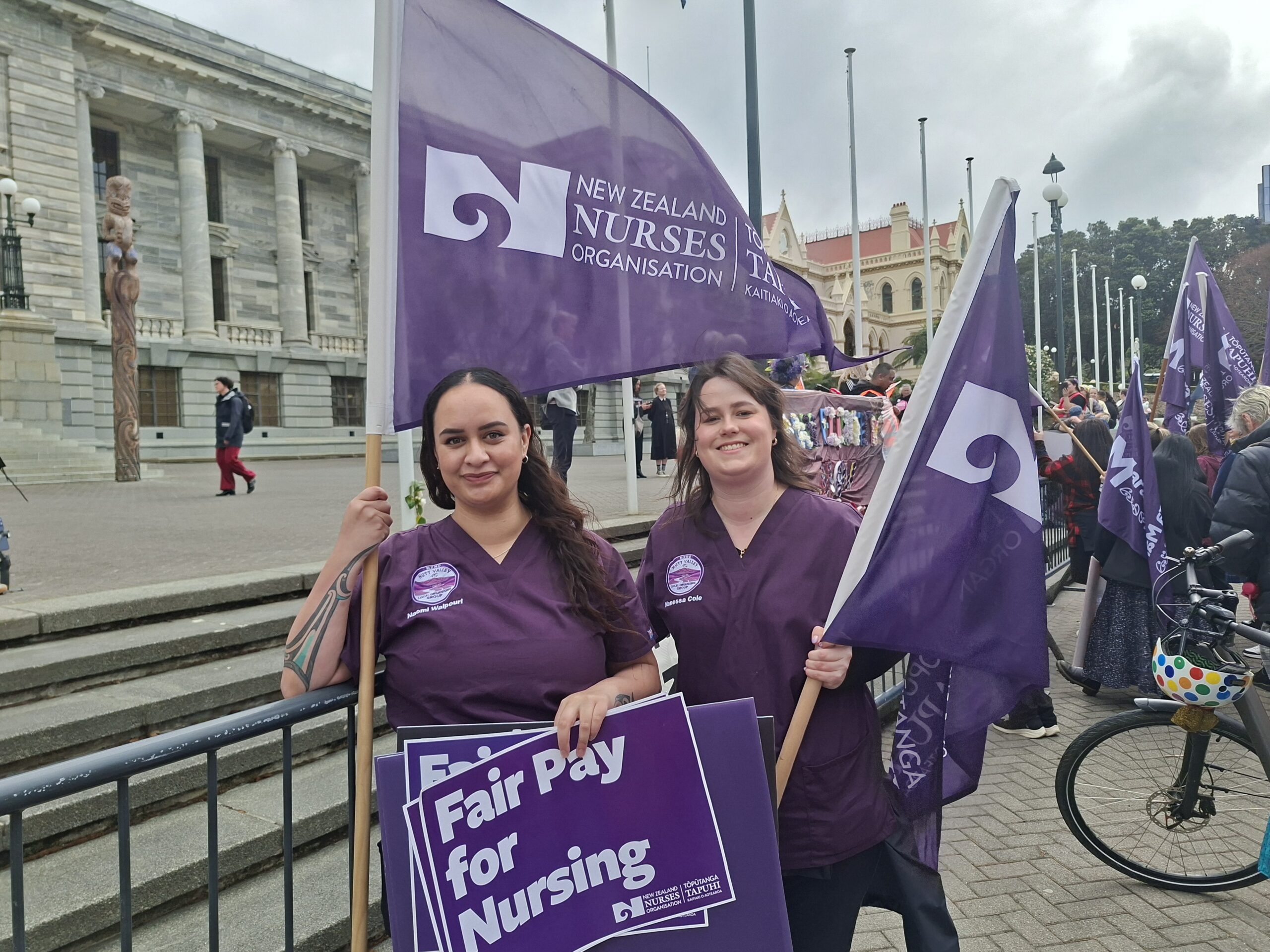
Pay Equity Coalition Aotearoa (PECA) in May complained to the United Nations over the pay equity law changes, claiming it demonstrates systemic discrimination against women.
Twelve of the 33 cancelled claims were NZNO’s — however Plunket, hospice and Bupa aged-care members have refiled claims under the new system, despite near-impossible thresholds.

A muti-union legal challenge in the High Court in Wellington was lodged in August arguing that the Government’s gutting of pay equity breached the bill of rights.