


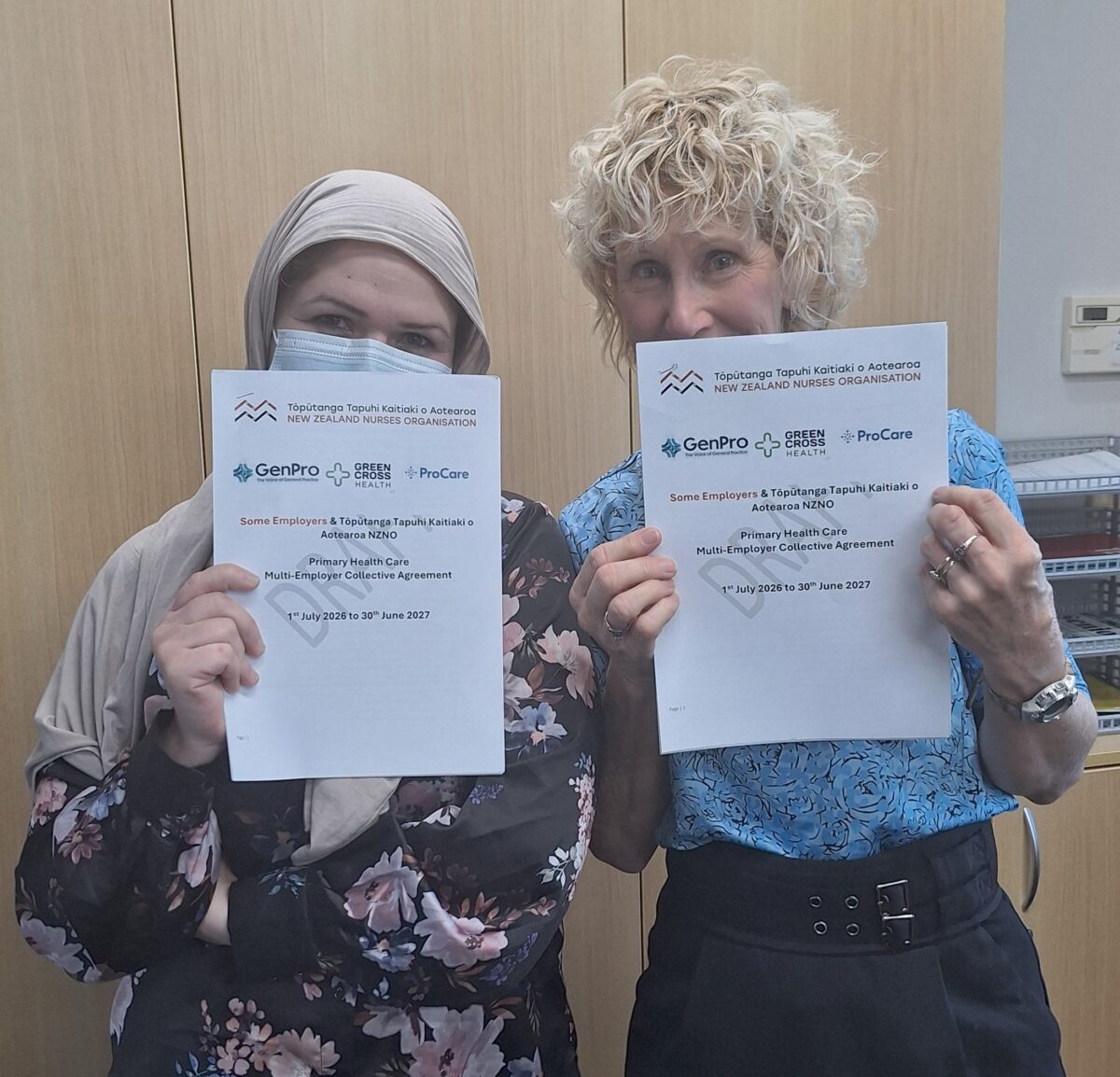
Voting closes today at noon on the offer, which includes a pay rise of 3.5 per cent pay rise for registered and enrolled nurses and health-care assistants (HCAs) and 7-10 per cent/$2 per hour for administrative staff, who currently face a gap of up to 28 per cent with HNZ. RNs face a gap of 8-10 per cent.
Employers are also offering a prescribing allowance of $1.50 per hour for designated RN prescribers and $1 per hour for community health nurse prescribers.
Auckland registered nurse (RN) Kylie Goddard said pay parity with HNZ remained the goal. While this offer was a step in that direction, it was “certainly not the end point” for the sector.
‘It’s not just about nurses — everyone in primary health does as much or more as those in hospitals.’
Nurses, HCAs and administrative staff have been frustrated with a persistent pay gap which widened again after HNZ and NZNO settled a new collective earlier this year — and after a horror winter which has seen the sector overwhelmed by sickness while struggling to retain nurses.
Many have described acutely unwell patients being sent back to clinics by hospitals and emergency departments because they are full.
Goddard said it was important everyone in the PHC team, including administrative staff and HCAs, were recognised for their work.
“It’s not just about nurses — everyone in primary health does as much or more as those in hospitals.”
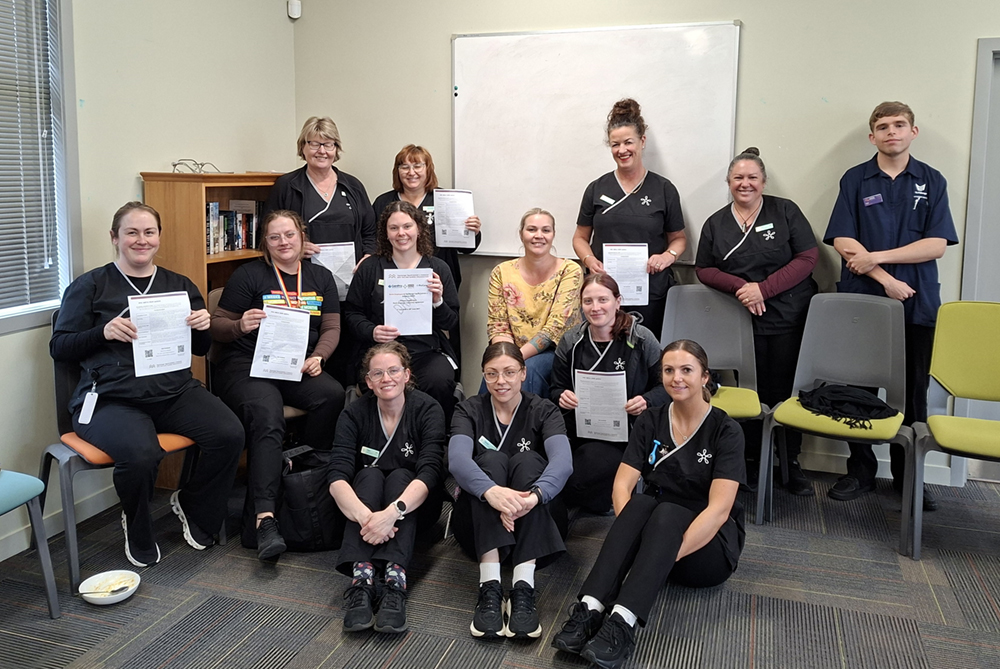
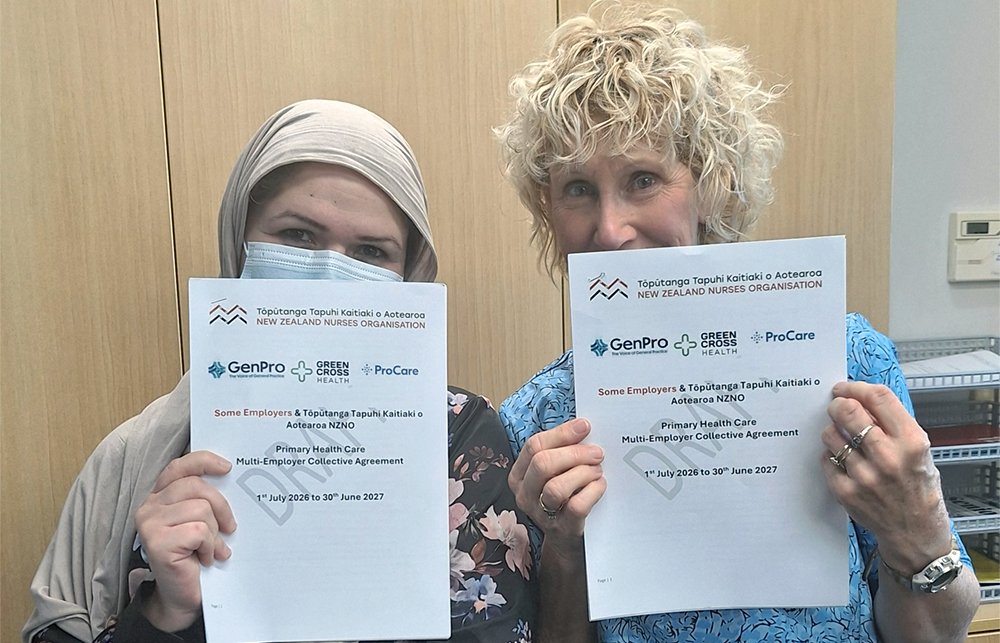

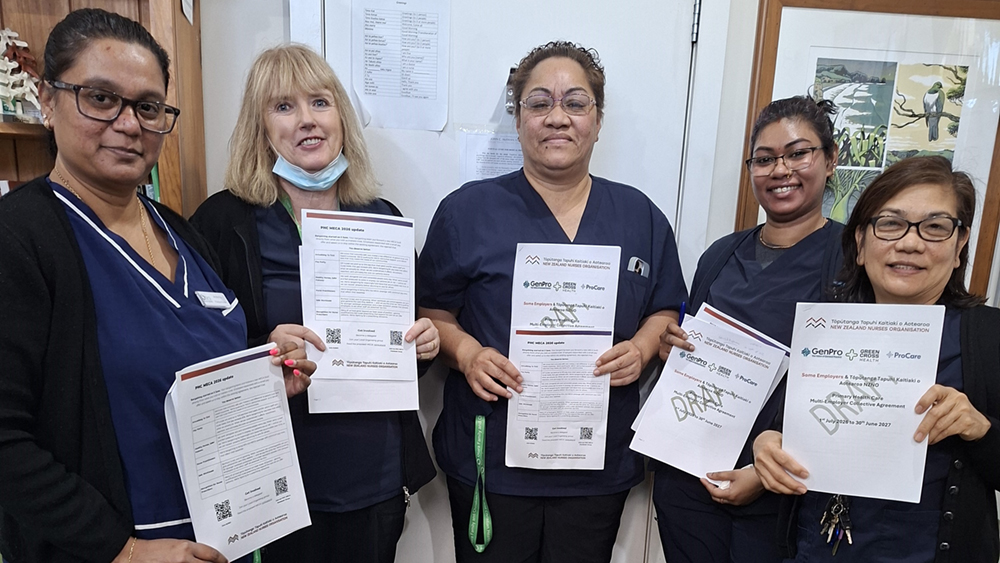
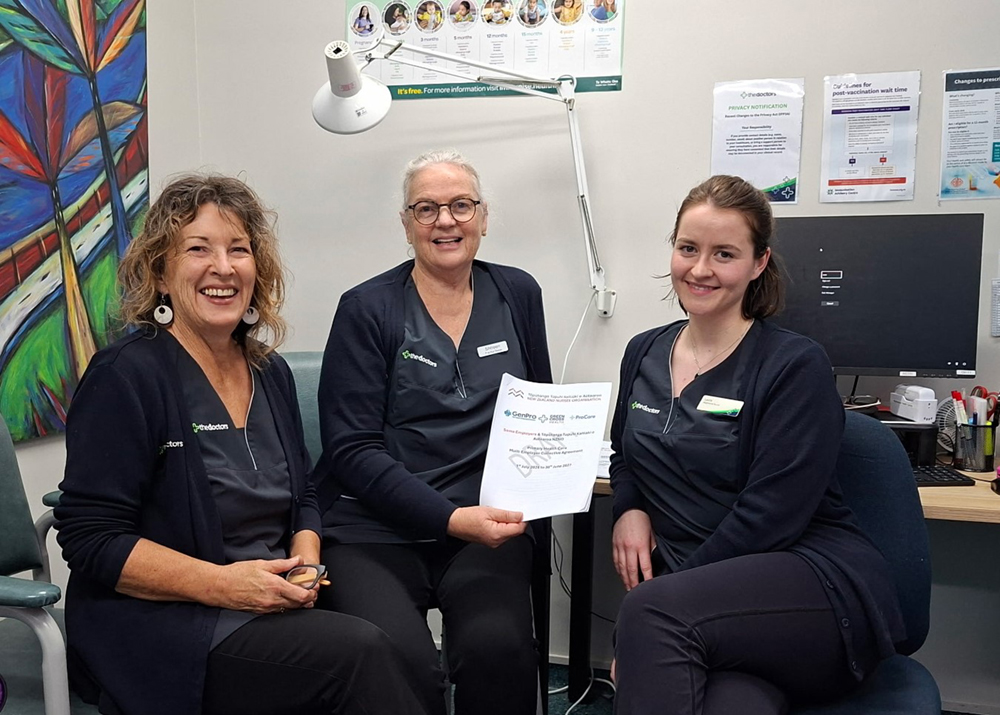
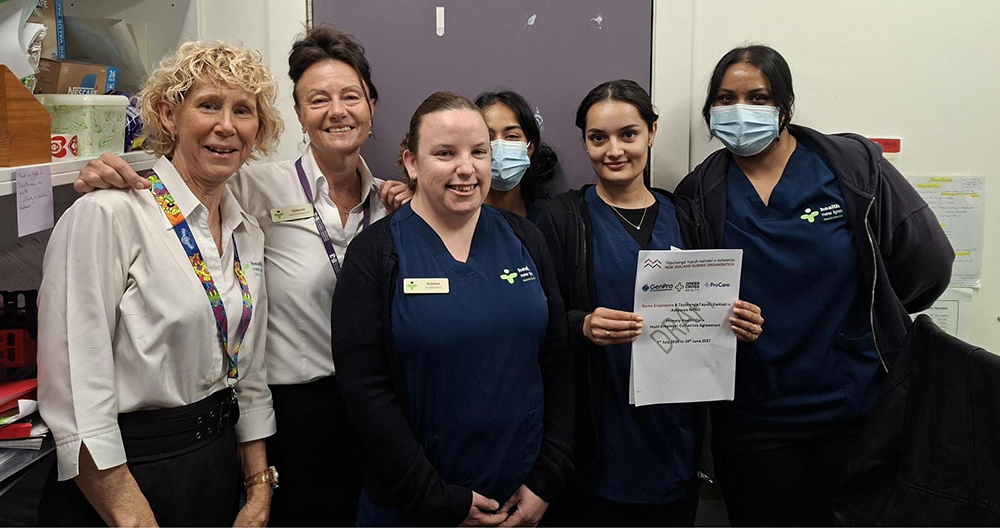


PHC members around the country have been getting behind the bargaining
It was also about better sick leave for PHC workers, who were regularly “exposed to infectious diseases”.
NZNO’s team representing 3500 PHC nurses along with administration staff and HCAs has been negotiating their multi-employer collective agreement (MECA) since June with representatives of about 580 PHC employers.
NZNO made its claims on June 3 then waited three months for the second day of bargaining on September 3, before this offer was made on September 17.
The current offer falls short of NZNO’s claims on pay, sick leave increases, Te Tiriti-guidance and bringing nurse practitioners into the MECA. However, employers have agreed to work with NZNO on modernising the current MECA, which runs to nearly 50 pages.
Goddard said bargaining over a busy winter had been tough and the team appreciated the support of members around the motu.
She encouraged PHC workers to make sure they were NZNO members to grow their collective strength at the bargaining table. “We need every primary health-care employee committed to collective bargaining.”
Goddard said the team had worked hard to get the offer and asked people to vote.
“This gives us a year and then next time we’ll be negotiating in the spring not the winter.”
Vote on the offer here. Voting closes Wednesday 23 September at 12 noon.
The full offer can be found here.
Current offer includes:
- A 3.5 per cent increase for RN, ENs and HCAs. For RNs, this would see new graduates start on $33.93 per hour and rise to $48.60 per hour for nurses on the top scale. For ENs it would be $31.16 to $36.34 per hour; and for HCAs $26.39 to $30.46 per hour.
- A 7-10 per cent increase for administration staff which would see them paid $27.04 to $28.86 per hour.
- A prescribing allowance of $1.50 per hour for designated RN prescribers and $1 per hour for community health nurse prescribers.
- A new hourly rate of $49.90 for nurses in leadership roles.
- Increases of $1.10 to $2.35 per hour for RNs and ENs to recognise professional development and/or merit; and $1.45 for administrative staff.
- A one-off $500 lump sum for those on 0.6 full-time equivalent or $250 for those under 0.6 FTE.
- A commitment for employers and NZNO to jointly develop a new modern multi-employer-collective agreement (MECA).