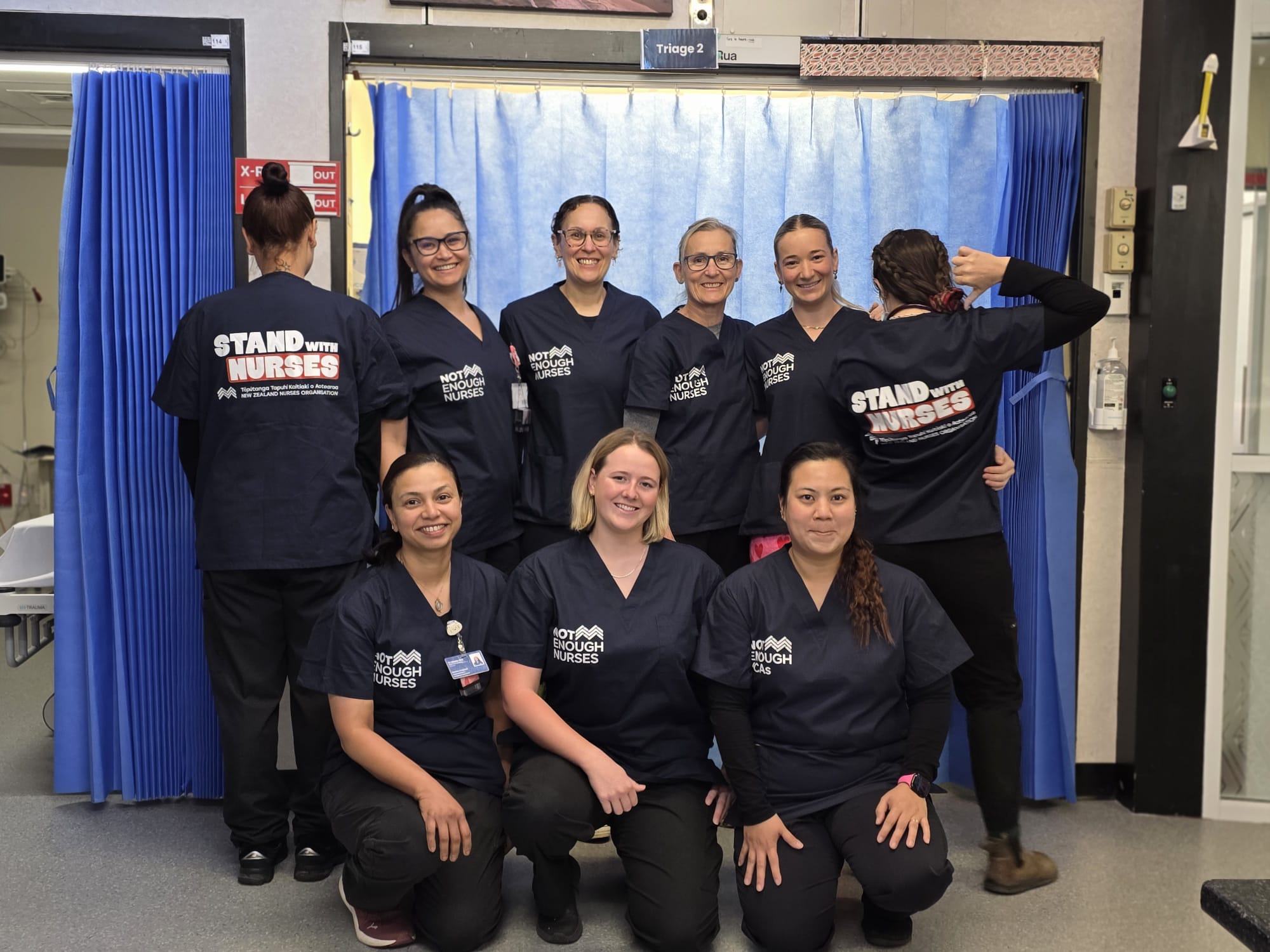

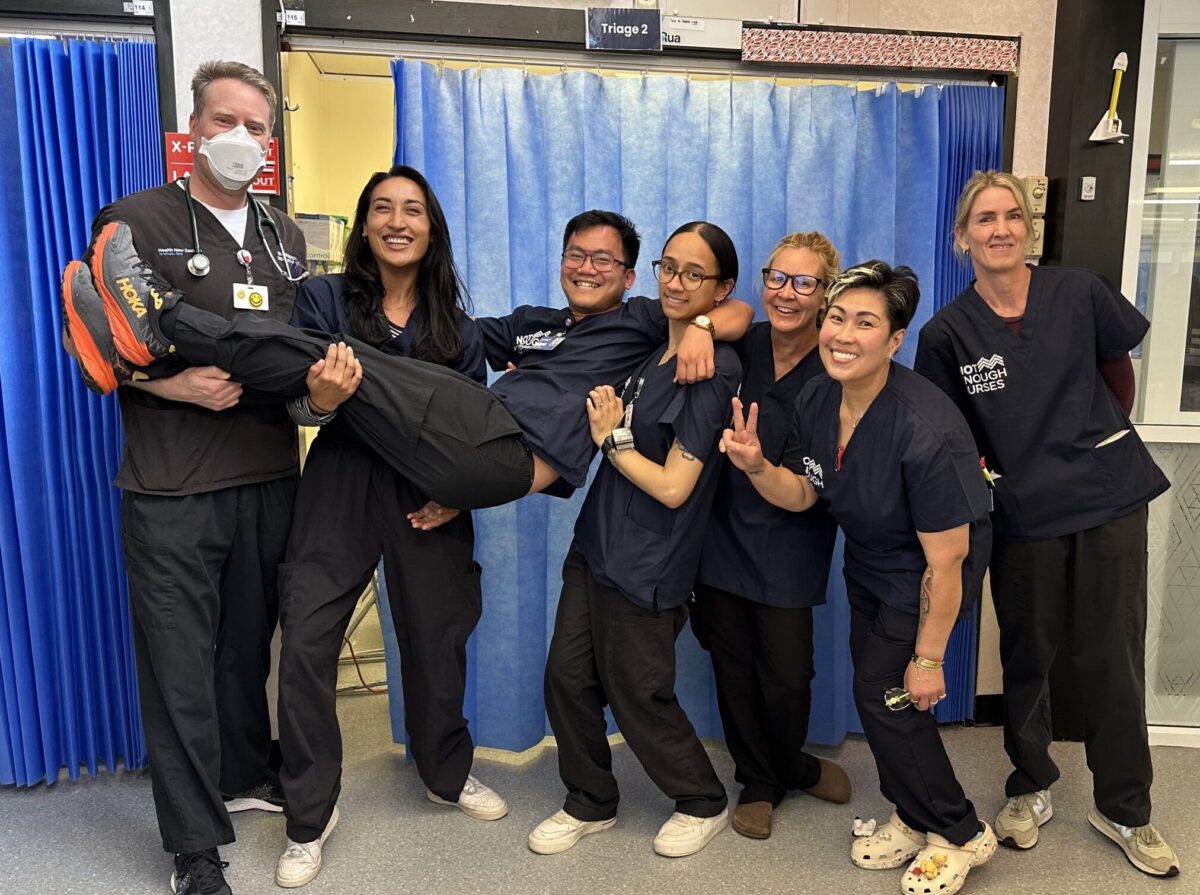
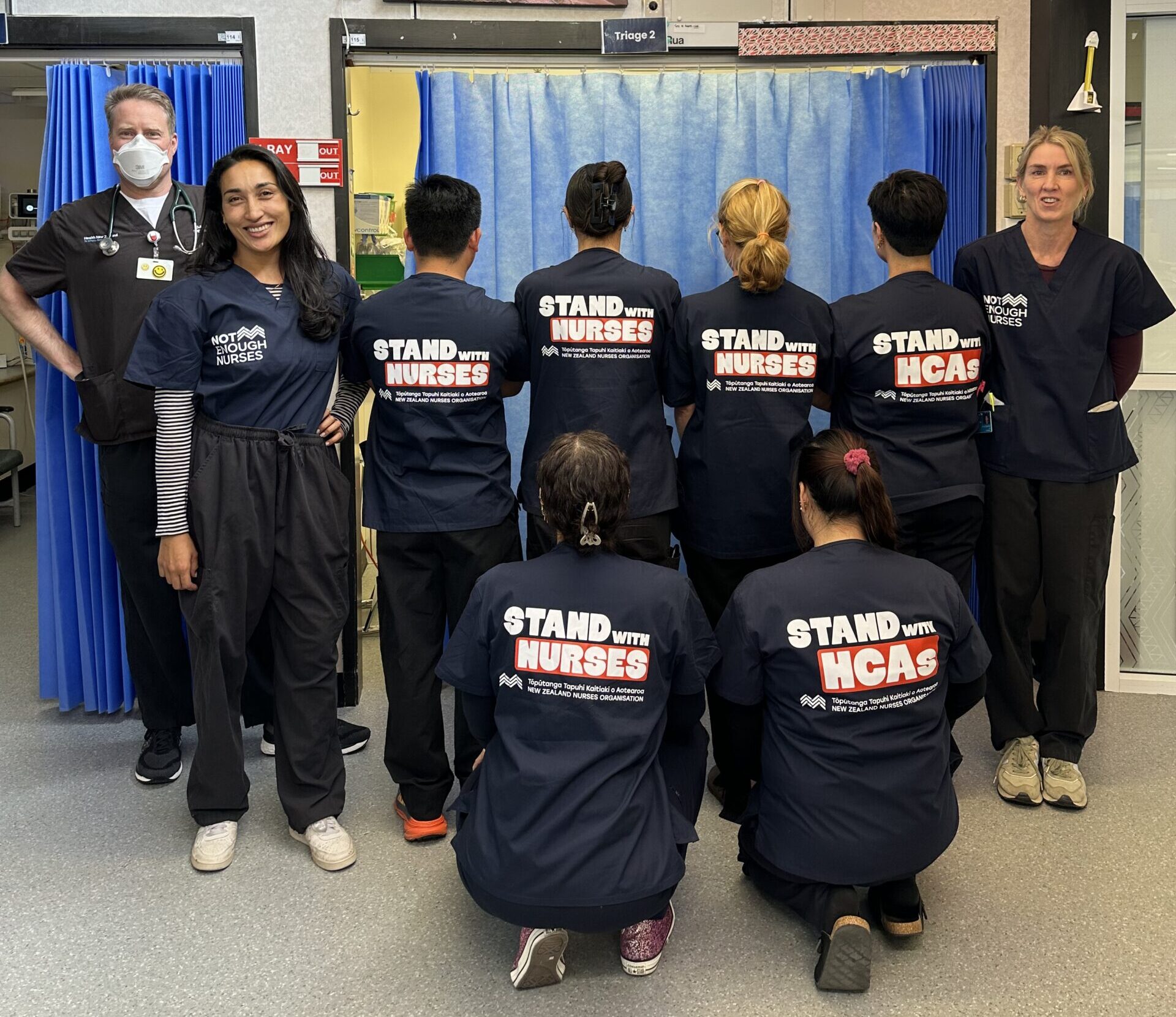
Exasperated NZNO ED nurses and health-care assistants launched a two-week uniform strike on Friday — just two months after walking off the job in September over unsafe staffing.
NZNO delegate Clara Dolman-Tuhou said staff were “fed up” arguing with management over their reality — which was significantly fewer nurses on the floor.

‘It’s just so sad to see our pillars, who have been there through pretty much all of it, have been there over 30 plus years, and they’re just exhausted.’
“It’s just pure exhaustion — just constantly having to do 12-hour shifts,” she told Kaitiaki.
NZNO’s ED delegates wrote to Gisborne Hospital director of operations Nicola Barrington earlier this month, warning they’d lost more than 14 full-time equivalent (FTE) registered nurses and health-care assistant hours over the past year.

Yet just 5.5 FTE registered nurses (RNs) had been hired in that time — and no HCAs, leaving a shortage of 8.8 FTE staff.
But in response, Barrington claimed the ED was only short an 0.9 FTE RN.
Dolman-Tuhou said management was not counting ED staff who had reduced their hours or been on contracts which had ended — but the reality of fewer nurses on the floor was causing more burnout and resignations.
“It’s frustrating and we’re just looking for an actual genuine commitment to getting out safe staffing and we need it backed up by the practical action.”
One casualty is long-time Gisborne ED stalwart “nanny Karen” — Karen MacDonald who featured in Kaitiaki recently as part of a multi-generational family of ED staff and had taken extended leave after burning out.
“Camille [Collier]’s mum has had significant burnout. She is one of our staples and one of our pillars in that department,” Dolman-Tuhou said.
“She needs a break. And it’s just so sad to see our pillars, who have been there through pretty much all of it, have been there over 30 plus years, and they’re just exhausted.”
Dolman-Tuhou said it was hard watching families which so much history and connection to the ED burn out.
MacDonald and her daughter Camille Collier both work as RNs in the ED, along with Collier’s daughter Eden Collier who also works at the hospital.
‘It’s frustrating and we’re just looking for an actual genuine commitment to getting out safe staffing and we need it backed up by the practical action.’
Dolman-Tuhou said they appreciated hiring sufficiently experienced ED staff took time, “but we’ve been struggling for a whole year now and it’s just not good enough”.
After going “around and around in a circle” with management, ED staff had even reached out to Minister of Health Simeon Brown but he had declined to meet with them.

Gisborne Hospital’s NZNO ED staff will be donning ‘safe staffing’ scrubs and putting up posters drawing attention to their plight for the next two weeks.
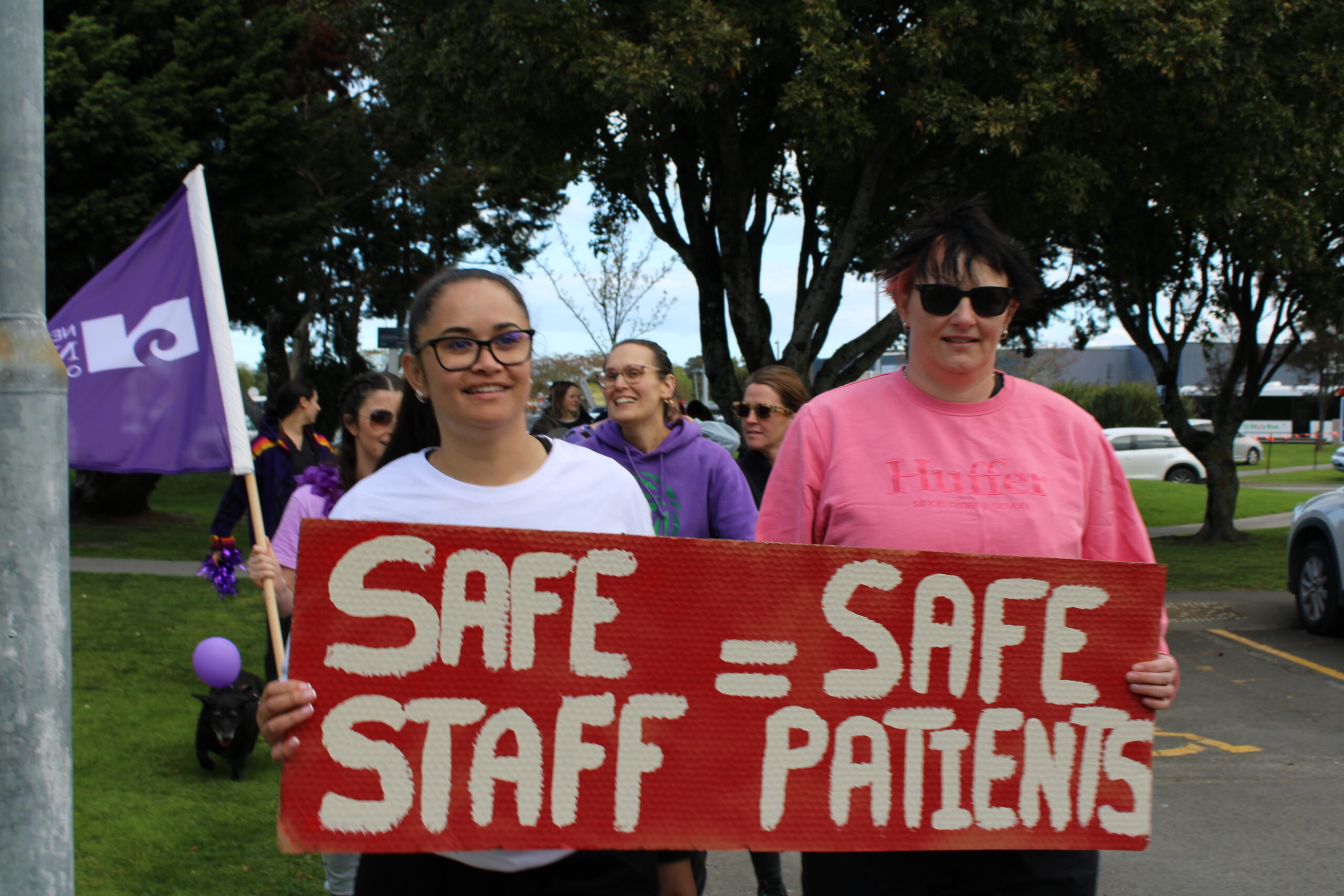
In September, ED members launched a one-hour health and safety strike for safer staffing, gathering outside Gisborne’s hospital.
About 34 members walked out of the ED waiting room, clapped on by supporters and doctors as they joined a crowd of about 200 people. Members slammed what had become a “rollercoaster” of short staffing and repeated ‘code reds’ that had pushed workers beyond their limits.
Understaffing was ongoing since the end of 2025 – management even considering rolling back nursing staff further, from 14 to 13 across the three shifts rostered each day.
This was paused after pressure from NZNO.
Strike ‘disappointing’ — HNZ
In a statement, Barrington said the latest strike action was “disappointing”.
Te Whatu Ora-Health NZ (HNZ) was continuing to look at ED nursing staffing levels across Tairāwhiti “to ensure we have the right workforce capability, capacity and skill mix to deliver safe high-quality patient care”.
There was also national “system-wide” work underway “to strengthen how we plan for, manage and assure nursing staffing across our organisation”, she said.
This was intended to shift care towards prevention, early intervention and providing services closer to people’s homes rather than hospital “while ensuring patients receive the right care when hospital treatment is required”, Barrington said.
“We are dedicated to ensuring the people of Tairāwhiti have access to safe, high-quality care, while supporting the workforce that delivers it.”
Brown’s office did not respond by deadline.
See also: ‘I miss the simple moments of everyday family life’ — the real cost of understaffing