



 I have a vision to bring IPC nurse leaders from across the health system — aged care, mental health, corrections, private hospitals, primary health — together into a national advisory group, to collaborate and develop strategies to tackle infection prevention and control (IPC) issues.
This would make New Zealand’s health-care environments safer for everyone and provide consistent IPC guidance wherever health care is provided. The risks of not having cross-sector IPC policies are quite high. We know, for example, that residents in long-term care facilities tend to have more multi-drug-resistant organisms. So, if we’re not consistent in how we manage this, we risk proliferating them. Or things like emergency planning. Imagine if there was no coordinated response to COVID — we’d be on the back foot. Whereas, if we’ve already got those relationships, trust and communication, we can quickly agree on a response to whatever the outbreak is.
I just think having something set up in times of peace, makes it easier in times of war.
We would love to get this underway soon, before our Lights, Camera, Prevention! conference in Wellington on August 26-28 — when I’ll be stepping down as chair after more than four years.

The Health Quality & Safety Commission developed an independent cross-sector IPC programme. But the programme transitioned to Te Whatu Ora-Health NZ last year and since then the forum for cross sector collaboration has not occurred.
Working as a whole of health system is important because there is an ongoing risk of multi-drug-resistant organism transmission or other disease outbreak. Since the beginning of the year, there have been three significant outbreaks that have the potential seriously affect New Zealand. Australia has a bird-flu H5 variant confirmed for the first time – human to human spread is unlikely but this could be devastating for our bird life. The risk of the latest strain of Ebola reaching New Zealand from the Congo or Uganda is low, but not zero. The recent rodent-borne Hantavirus which infected a New Zealander aboard the MV Hondius cruise ship reminds us we are not too far away to escape these risks.
These potential threats are on top of the infectious disease outbreaks that aren’t quite as novel or exotic. The ongoing measles epidemic in America means New Zealand is likely to continue to see occasional cases, with the potential for a wider outbreak, which is why ongoing vaccination for susceptible people is vital. Pertussis/whooping cough is another vaccine-preventable illness that New Zealand is still seeing cases related to the outbreak that began in 2024. COVID continues to lurk — although it is starting to settle into a more seasonal pattern.
If we do our job right in IPC, nothing exciting happens — but it also means we fly under the radar when it comes to funding and resourcing.
During COVID, I think we lost some of our humanity in some of the policies and procedures we put in place.
I stepped into the chair role during COVID when IPC nursing was in the spotlight and under pressure — but also appreciated and resourced. A lot of district health boards got extra IPC funding, but some of that was only temporarily. So, now we are back to the status quo — not enough IPC staff. In smaller regions there may be a single IPC nurse or clinician, such as Wairarapa, Te Tai Rāwhiti (East Coast) or south Canterbury.
It’s not just nurses we don’t have enough of. Infectious diseases physicians are understaffed. Medical microbiologists, we don’t have enough. Specialist antimicrobial stewardship pharmacists, we don’t have enough.
At the same time, we’re starting to hear about the impact of Health NZ’s review of occupational health services. IPC and occupational health both have a responsibility for staff health, including vaccination and follow-up from occupational exposures to blood and body fluids, or a workplace exposure to an infectious organism. In areas where occupational health staff full-time-equivalent (FTE) hours have decreased, some of our members report that supporting staff has become the IPC teams responsibility.

Aside from outbreaks, there are the day-to-day things that bubble along all the time. Like cleaning guidelines. What does clean look like? What equipment is useful? What does waste management look like? Staff vaccination and illness — when should staff be back at work after being sick?
These are all things that would be useful for the IPC group to have an opinion and feedback on to keep IPC guidelines current across sectors.
COVID hangover
There’s still a level of exhaustion among the IPC workforce, post-COVID. The level of stress, ongoing heightened awareness and additional workload — we are definitely still feeling it. I’m not sure we’ve done psychological support for health-care workers very well post-COVID. Not just for IPC nurses but all health-care workers. It affected everyone and lot of people are feeling tired, overwhelmed and under-appreciated, still.
During COVID, I think we lost some of our humanity in some of the policies and procedures we put in place. The Government eventually eased off which was great, but I think at the beginning, I feel, to have people dying by themselves, that’s not a kind or compassionate thing to do.
In an infectious disease outbreak, it’s not unusual for people to die. But what we can do — with good IPC risk assessment — is put controls in place. We tell the family they need to wear PPE, go straight home, do not visit anyone else and watch out for symptoms.
If we do our job right in IPC, nothing exciting happens — but it also means we fly under the radar when it comes to funding and resourcing.
But in COVID, we didn’t always treat people as people which is one of the nursing fundamentals — treat the person, not the disease.
It was also unfortunate that vaccinations became such a polarising topic. It was very much ‘if you’re not with us, you’re against us’. Whereas most people want choice, even if it’s a limited one. We did suggest at the start that it would appropriate to have more than one type of vaccine available — the conventional one, even though it wasn’t as effective — or the new one, which was a bit scarier or unknown. It’s your choice. That might have helped move more people into vaccination.
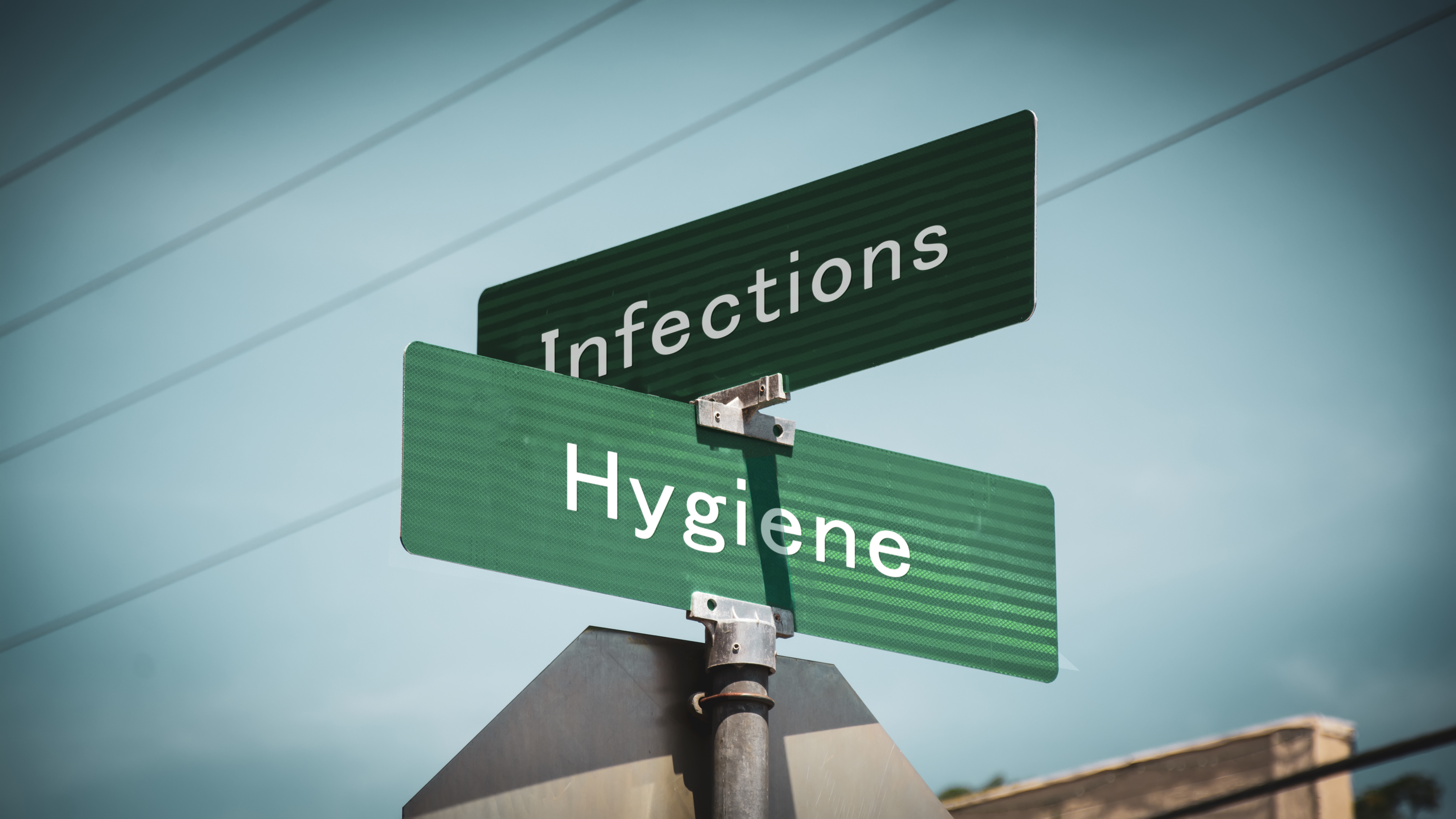
Climate change, too, is a huge risk for IPC.
We’re going to have an increase in soft tissue and skin infections and food-borne illnesses because the environment is warmer, so the bugs will breed better. We need that advisory group to be advising Government on how to manage this increased infection risk.
College mahi
We’ve got about 900 members, which is great. Anyone with an interest in IPC can join, no matter where you work — check it out!
Lately, we’ve made our fundamentals of IPC programme more sustainable. This links experienced IPC practitioners with small groups of new IPC nurses, to mentor them as they complete education modules. It teaches new IPC nurses the basics and provides them with a network of other IPC nurses.
We’re also reviewing our education and travel scholarship and award funding, to make sure it’s sustainable into the future.
Another focus this year has been on a closer relationship with the Australasian college for IPC, so we can make sure that their guidelines and statements are appropriate for the New Zealand context.
‘I enjoy the detective work’ — why I became an IPC nurse
I caught the IPC bug when I started in IPC, last millenia. I’d just had my first baby and was looking for a “little” part-time job — bonus points if it was “ladies” hours. Once I started, I was excited to learn about all the organisms. I enjoy the challenge of the detective work. I love that there is the ability to influence and teach and make change.

I describe three prongs in IPC. First, education. Second, surveillance, which is the detective work — linking together different infections, like you’ve got a cluster of surgical site infections and you’re trying to figure out what connects them. And thirdly, the firefighting — when things go wrong, like COVID, or other outbreaks..
The other thing that keeps me interested in IPC is how broad a topic it is. We spend a lot of time with facilities, looking at building and construction, waste management, laundry standards and PPE. We look after staff, visitors, patients — it’s so broad, it’s great.
The future has so many things to worry about – antibiotics no longer working, pandemics, preparedness and zombie apocolypses, climate crises — all of that, but I am confident that when I step down from chair at our annual general meeting later this year, the team I work with have the right stuff to help us all sleep at night.