


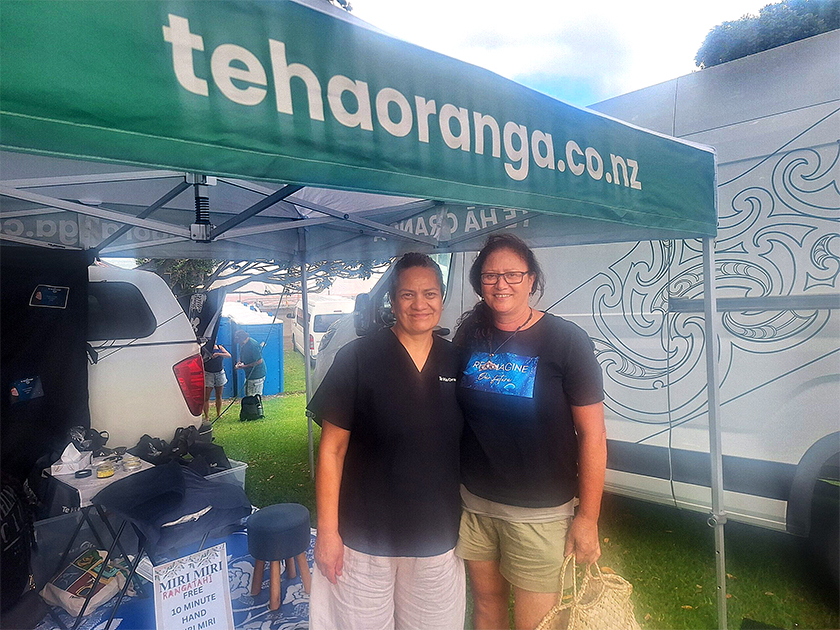
Te Tai Tokerau nurse Virginia Wati was giving free hand massages to rangatāhi at Waitangi this year. It’s a good way to connect with them and have a low-key kōrero about their health, she told Kaitiaki.
“A lot of people don’t know about their body,” said Wati, who alongside a listening ear, also gives out out sexual health packs, period products – and even soap, underwear, toothbrushes and shavers, she said. “It’s just about basic self-care.”
Wati is one of three enrolled nurse (EN) at Te Hā Oranga — one of several iwi health providers with a presence at Waitangi this year. Te Hā Oranga also has four registered nurses (RNs) and a nurse practitioner who help care for about 1200 patients across vast and remote swathes of land within the Ngāti Whātua rohe, including Hokianga, Kaipara, Waitematā and Manukau.
With 80 per cent Māori staff, its clinical services included mobile nursing clinics, whānau ora primary health, outreach immunisation and general clinics, cervical screening and many more; alongside public health, addiction, education, kaumātua and youth services.
‘In the community, with the Government changes, we are feeling a lot of pressure.’
Te Hā Oranga is a nurse-led service but whānau needing further medical care can be referred by the mobile nurses to GPs in the region.
“We engage with whānau, then we can hopefully bring them into the GP outreach clinic,” Wati said.

Tough times
Wati said it had been really tough out there for iwi providers recently – and the whānau they cared for — amid the political shift away from targeted Māori health services.
“Our whānau struggle all the time – and even more so, lately,” she said. “In the community, with the Government changes, we are feeling a lot of pressure.”

Wati said she and colleagues had also noticed fewer whānau were accessing health care, with barriers likely being financial and transport difficulties.
A fragmented workforce, iwi health workers were often paid up to 25 per cent less than hospital nurses – which was frustrating and meant staffing was always a challenge in the hard-to-reach communities, she said.
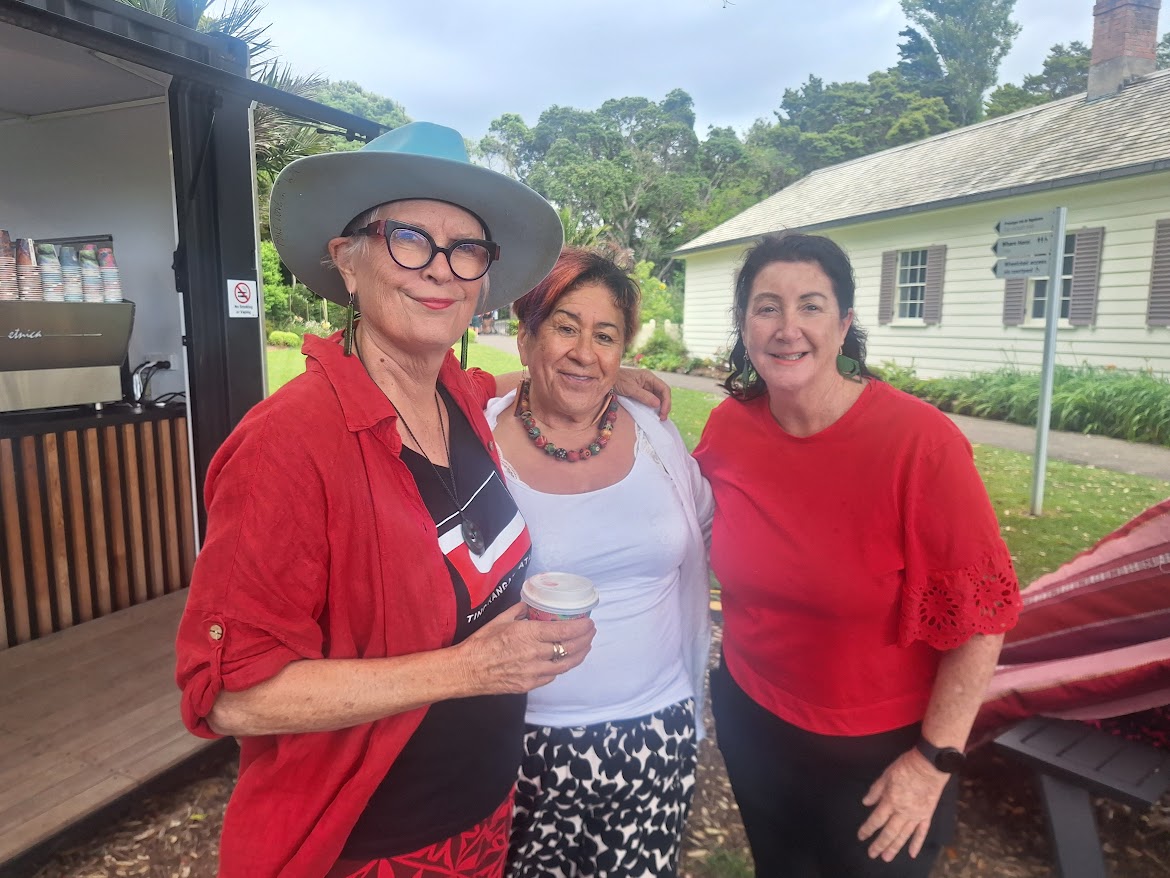
Another local provider is Hauora Hokianga, which provides holistic care to whānau from GP and community nursing services, to inpatient and maternity services — and even gardens providing home-grown kai.
Worker Lovey Fife said she saw how much of a difference it made to people’s lives.
‘This is where good health comes from’
“We need more of this model funded by Te Whatu Ora – because this is where good health comes from.”
While some larger Māori/iwi providers offer collective agreements, many working for smaller providers are on individual contracts.
Without collective muscle, many iwi health and social service workers are facing pay rises as low as one per cent this year.
About 738 NZNO nurses and kaiāwhina work at about 104 iwi/Māori providers across Aotearoa.