



As NZNO calls for the Health Minister to come clean on whether he delayed a health workforce report till after the election, nurses are simply pleading for a bit of honesty so they can be prepared for work.
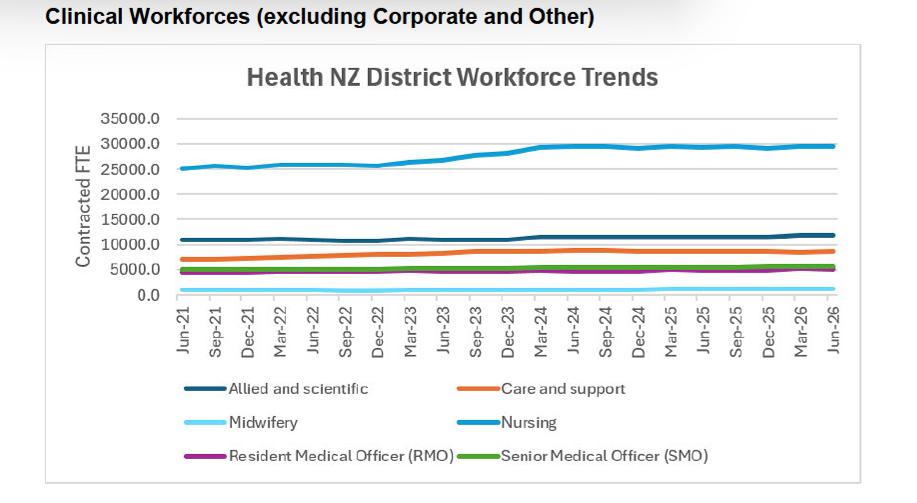
Te Whatu Ora-Health NZ’s (HNZ) workforce report in the three months to June revealed a meagre 15.6 fulltime equivalent (FTE) increase in roles across Aotearoa — a 0.1 per cent overall boost.

There were only 117 more FTE nursing roles for the entire year — a 0.4 per cent boost.
The report revealed stagnant FTE growth since the Coalition Government got its feet under the health desk in early 2024. This despite repeated claims by Prime Minister Christopher Luxon that there were 2100 more nurses.
Making things worse, the HNZ briefing note to Brown, revealed in media reports and dated September 30, said the workforce report would be published in early October. It was released late Friday, November 20.
HNZ says the October date was tentative — and it needed time to make clarifications and changes. The Minister himself refused to reply to Kaitiaki.
College of emergency nurses NZ (CENNZ) co-chair Vicky Bijl called for more “honesty and transparency” over nurse recruitment numbers, saying at least then departments could prepare.

“I’d rather transparency and honesty even if it’s not [more staffing] right then and there,” Bijl told Kaitiaki.
Instead, EDs were being told they were getting more nurses – but none would appear for weeks or months in what appeared to be strategic and deliberate delays.
“They’re pushing everything out and pushing the budgets around so it helps them long term,” Bijl said.
In her region, Nelson, for example, new graduates weren’t starting till February, 2027, instead of the usual December/January.
“Those are the things they’re trying to strategise on — so we’re getting little tiny increments but not till this date, which is way in advance.”
The ongoing failure to fully staff hospitals and emergency departments was “holding back the ability to provide safe and timely care” for nurses around the country, she said.
“It’s just hard to provide good quality nursing because we had so many roster gaps – and it’s exhausting coming to work knowing you’re already down nurses, so it does impact our morale.”
Previously, Brown had touted 2100 new nurses — a head count not FTE — hired under the Coalition Government. However he later admitted in Parliament that the nursing workforce had only increased by 54 FTE in the two years to March.

By the end of June, that number had increased to just 70 FTE, according to the new data.
NZNO kaiwhakahaere Kerri Nuku said the seven-week wait for the report’s release “smacks of political interference”.
“Simeon Brown needs to come clean on whether he ordered Te Whatu Ora to delay the publication of workforce data that contradicted claims made on the campaign trail.”
Nuku said the caretaker Health Minister should acknowledge his role in hiding the information from voters before the election.
The data showed the impact of hiring freezes and unfilled vacancies on the overall nursing workforce, which had not returned to the levels when these policies were put in place in June 2024, she said.
“Simeon Brown should apologise for misleading nurses and the public over nursing numbers.”
Mental health nursing hit hard
NZNO mental health nurse chair Helen Garrick said when National came to power, they warned Minister for Mental Health Matt Doocey of severe nurse shortages across inpatient and community mental health.
The group urged the Government to better support new graduates and focus on enrolling more nursing students with an interest in mental health.
Instead, Doocey had funded more peer support workers and created a new assistant psychologist workforce — completely undermining the nursing workforce.

“He ignored everything we said,” Garrick said. “Just think what we could have done with that money in mental health nursing?”
Nurses were “hugely frustrated” as pressure had only intensified in the past couple of years with shifts below-target data consistently showing mental health wards were the worst-off.
Meanwhile last week the latest new graduate hiring matches were released with only 50 per cent of the 1877 applicants getting job offers.
HNZ executive national director, people and culture, health and safety, Robyn Shearer said the October release was “tentatively the intended publication time”.
“However, that was always based on all required checks and balances being completed.”
Shearer said a number of changes and clarifications were needed to be made on the data. “Once we were satisfied that had been completed, Health NZ was able to confirm the date for publication.”
The start-date for graduates needed careful consideration of demands such as appropriate supervision, preceptorship and clinical support, Shearer said. “Recruitment therefore needs to balance graduate opportunities with clinical safety, service demand, skill mix, supervision capacity and the need to recruit and retain experienced nurses as well.”

By the numbers
- The HNZ nursing FTE increased from 29,458.2 in March, to 29,473.8 in June.
- In the same period the nursing head count dropped by four from 35,342 to 35,338.
- The FTE for midwives decreased slightly by 1.6 FTE from 1288.5 to 1286.9.
- In June, only 6.9 per cent of the nursing workforce was Māori — up from 6.8 per cent a year earlier.
- In the quarter to June there were 30,780 female nurses and 4524 male nurses.