


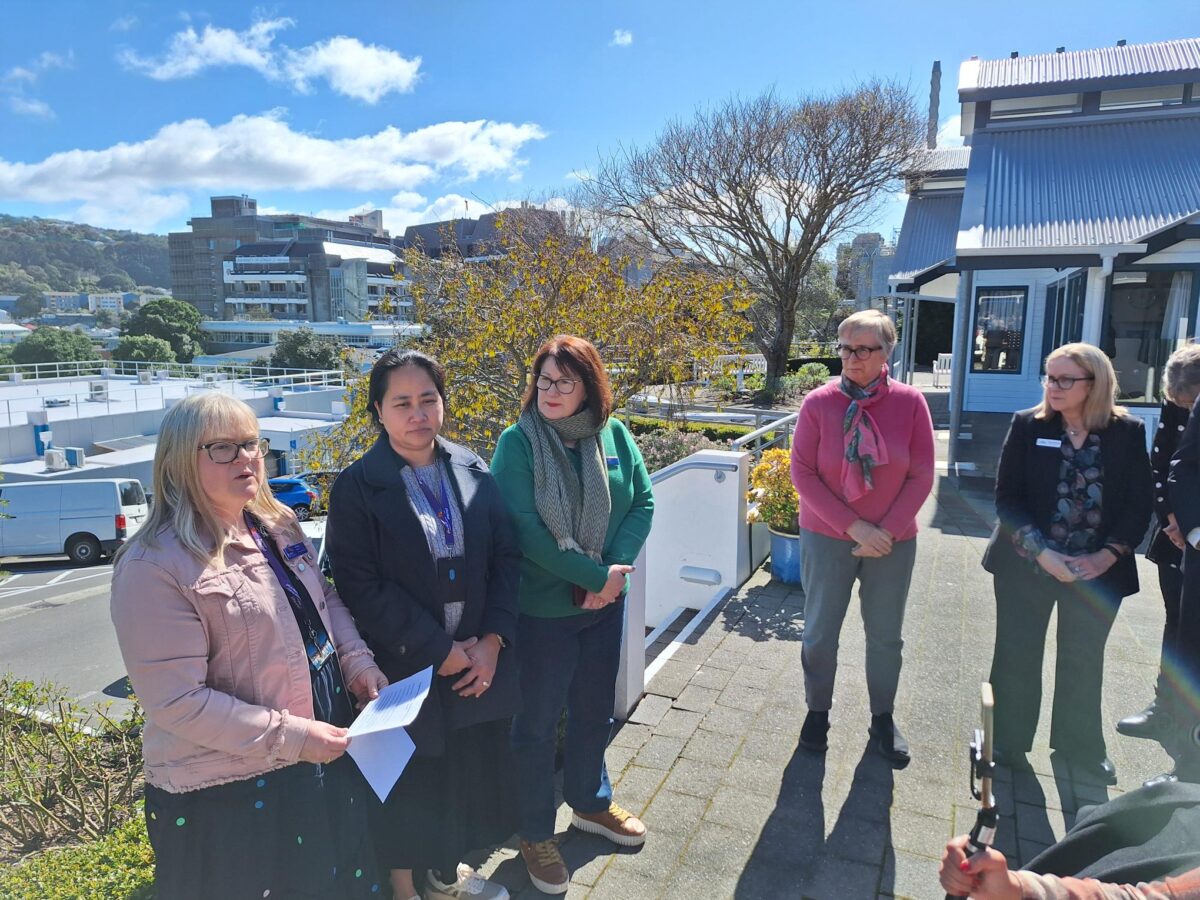
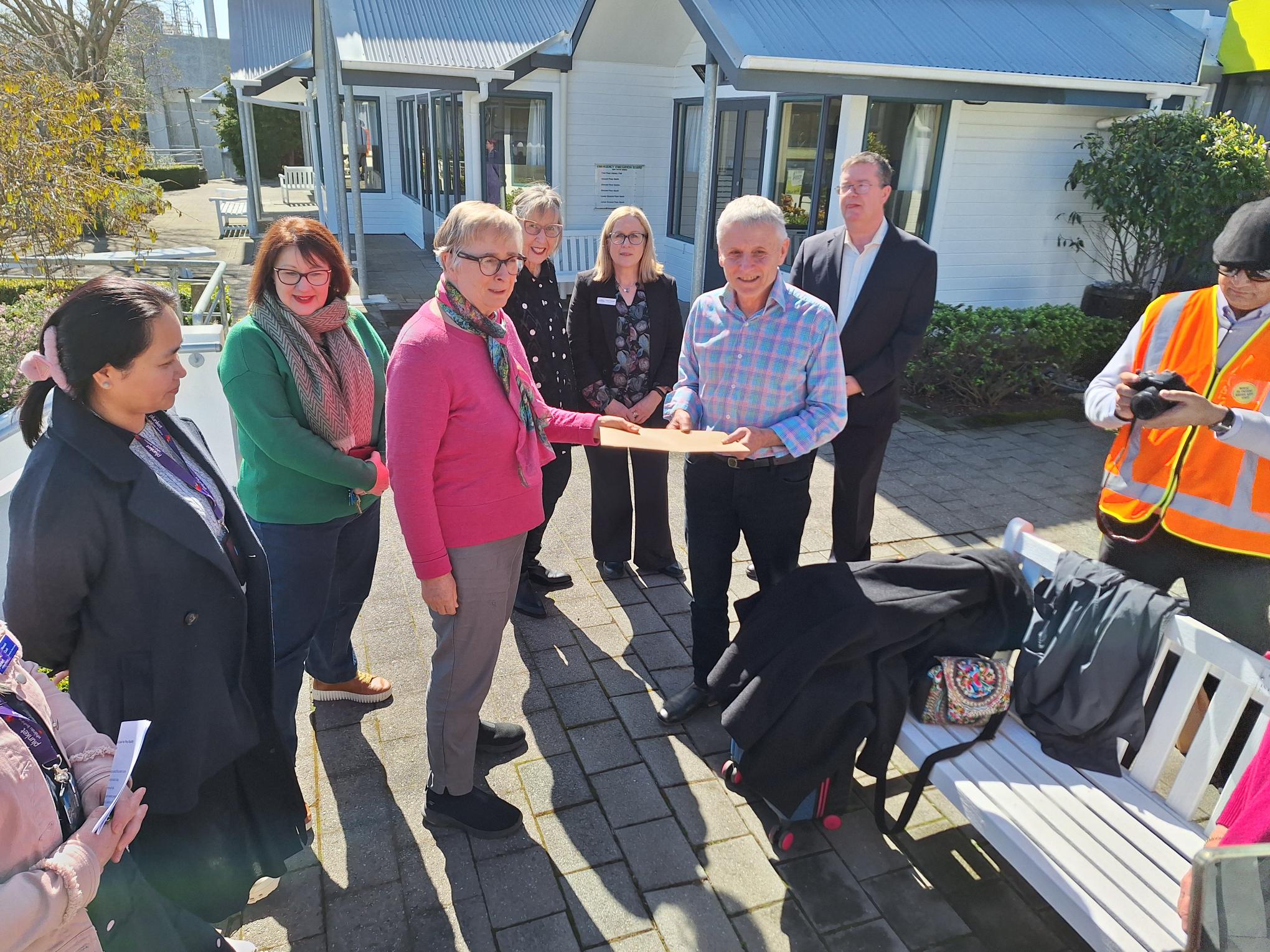
Handing over the paperwork at Mary Potter Hospice in Wellington, to chief executive Tony Paine, was palliative care nurse Fiona McDougal.

“Women have looked after people who are dying and their families for centuries, way back into the mists of time, but we’re professional people as well . . . and we’d like to really see that remunerated.”
After 40 years in the job, McDougal — originally born in Aberdeen — was coming up to retirement. “And I was kind of hoping to get a wee boost to my pay before I retire . . . but that hasn’t happened so far.”
She said to the Government and Te Whatu Ora: “Fund our pay equity claim, now.”
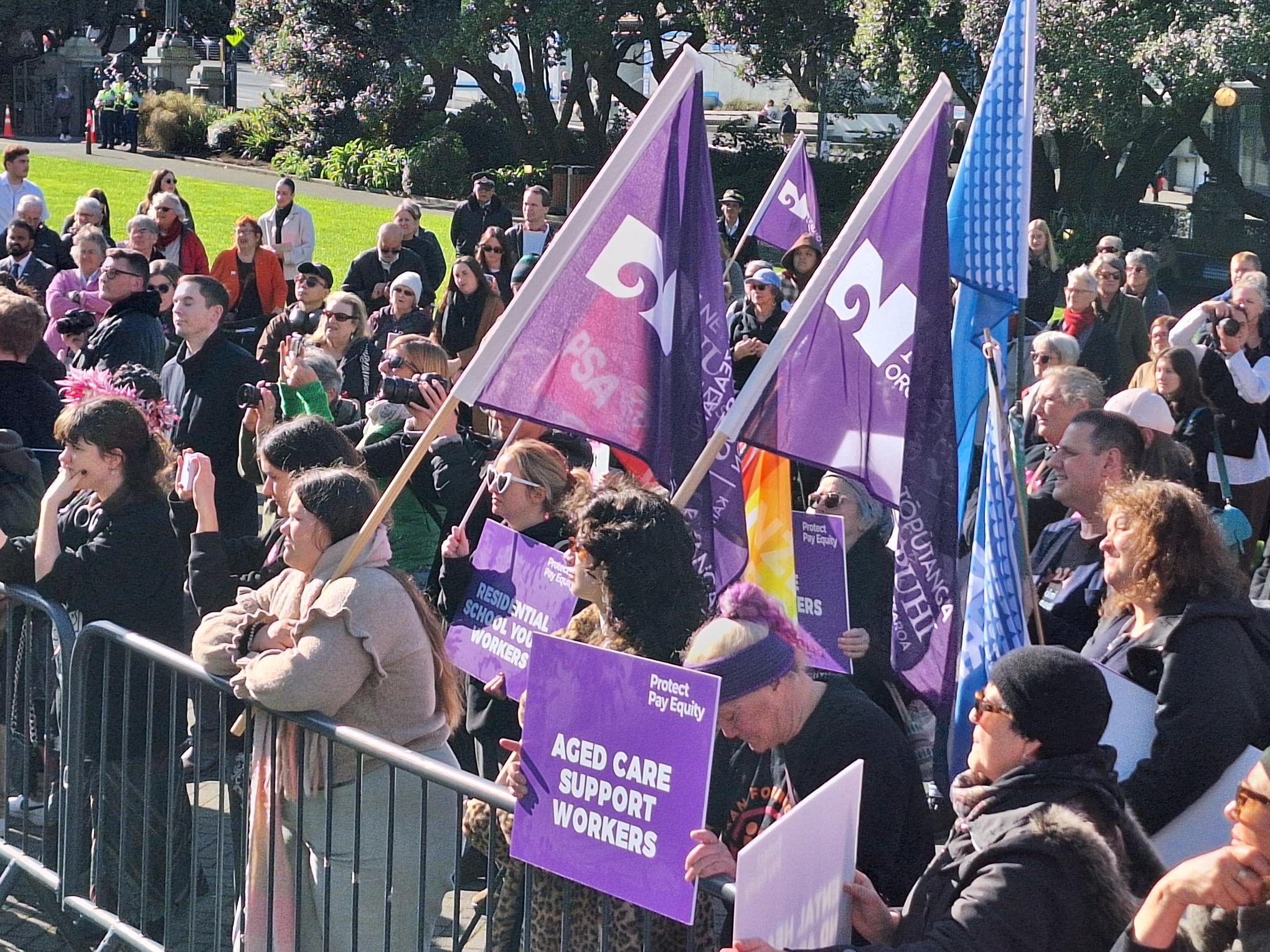
In May the Government passed legislation under urgency that deleted all 12 of NZNO’s claims. It imposed strict new criteria and forced all claimants to restart the process.
The new law freed up $12.8 billion for the Government’s Budget 2025 instead.
‘The work is so draining, part-time was fulltime’
Palliative care facilitator for primary care at Te Omanga Hospice, Anna Garton had worked with hospices since 2009, and said back then part-time roles were considered fulltime.
“When I started it was really clear that .8 was considered fulltime because of the strain of the work and intensity of the work, and the recognised need for self-care.”
Because of the challenging nature of the work, real attention needed to be paid to keeping specialist nurses in the sector, she said.
“We know that the numbers of people that are going to be looked after in the community are going to exponentially increase.”
Watch the video in our new section here.
According to Statistics NZ, the number of people in Aotearoa aged over 65 will likely hit 1 million by 2028. This is up from barely 564,000 in 2010.
‘We’re here at the start and the end.’
Plunket nurse Hannah Cook said the day was an important one for members — even though the nurses shouldn’t have to be there again.
“Our previous pay equity claim was just weeks away from being completed and submitted after nearly two years of work when the Coalition Government changed the scheme overnight without warning.”

She said about 98% of Plunket nurses were women. “Plunket is here at the start of life to support our whānau, and hospice is here at the end of life to support our whānau. What we do is important mahi.”
The nurses deserved to be paid at the same level as those in comparable male-dominated organisations and occupations, she said.
Tony Paine, Mary Potter chief executive said the organisation was happy to have the application, and hoped the simple brown envelope in his hands “achieves big things”.
He said he wanted nurses at the likes of hospices paid the same as nurses across the road at the nearby Wellington Regional Hospital.
‘Plunket is here at the start of life, and hospice is here at the end of life.’
The Plunket and hospice claims cover about 800 and 750 members respectively.
The Government’s law change cancelled 33 claims across multiple sectors. Many cannot be resubmitted under the stricter criteria.

In August NZNO was one of five unions launching a High Court legal challenge to the pay equity law changes, arguing they breached members’ rights.