

At a glance:
- 66 per cent described the health system as “poor” or “very poor”, while 30 per cent described it as “good”.
- 82 per cent rated nurses, midwives and health-care workers as “very important” to society. A further 13 per cent said “moderately important”.
- 53 per cent disagreed the Government was focused enough on improving New Zealand’s health system.
– Talbot Mills Research, October 2025
Talbot Mills research, released today by Tōpūtanga Tapuhi Kaitiaki o Aotearoa-NZNO, reveals New Zealanders have serious concerns about the public health system, with two-thirds describing it as “poor”.
But nurses, midwives and health-care workers were overwhelmingly appreciated as vitally important to our lives, it found.
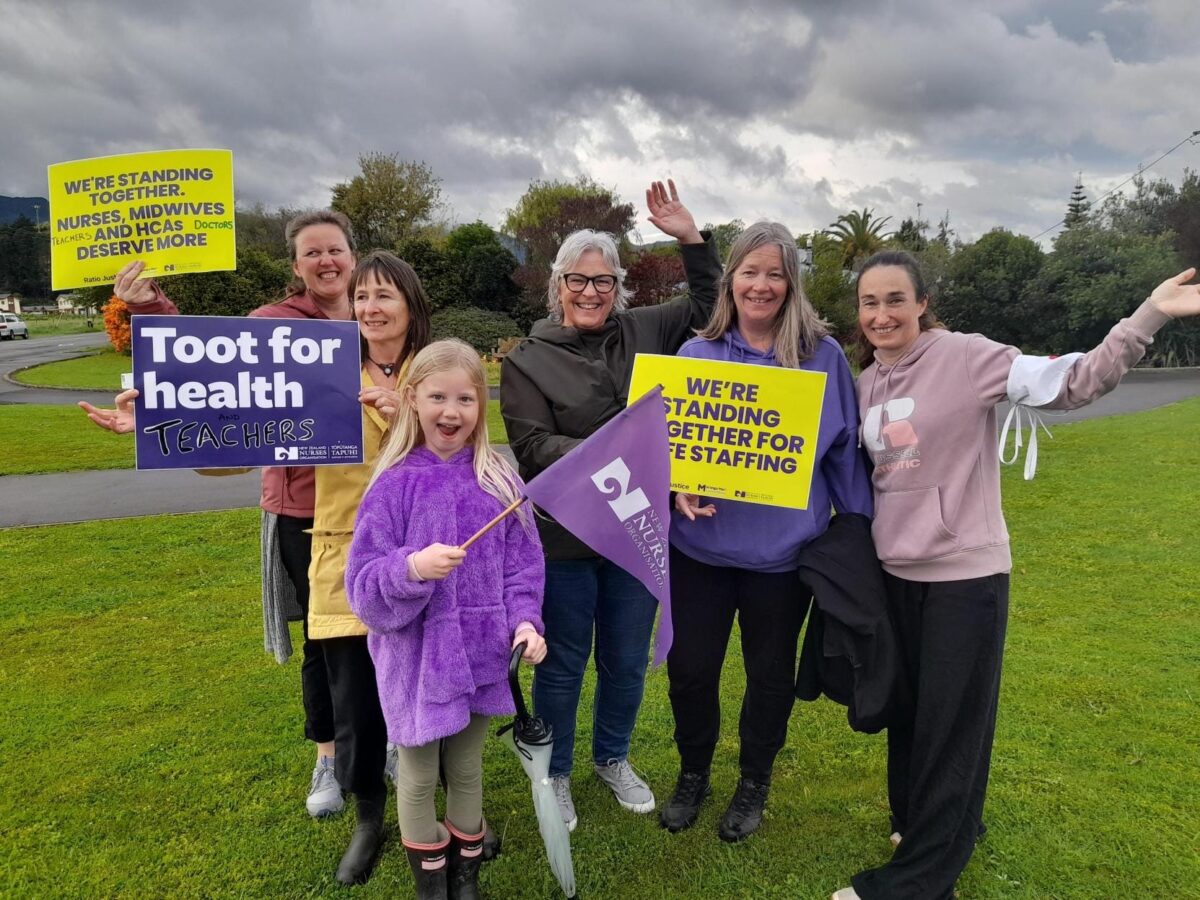
The findings come as 37,500 Te Whatu Ora-Health New Zealand nurses, midwives and kaiāwhina begin two weeks of new strike action around the country.
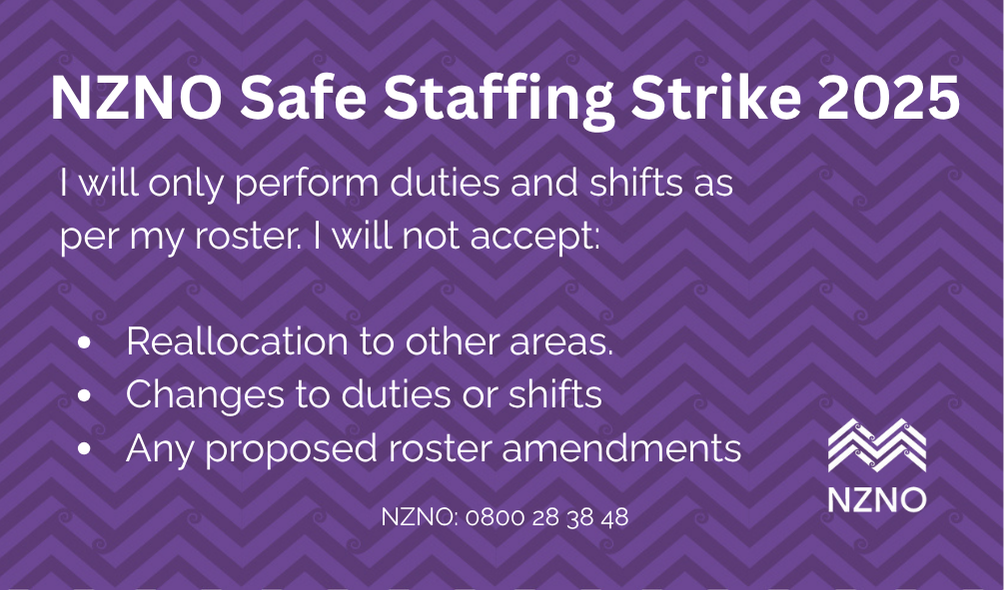
The strikes are not your usual pickets. Aiming to highlight how unsafe staffing levels are, for the next two weeks, NZNO’s Te Whatu Ora members are refusing to be redeployed to any areas or work for which they are not rostered; or work any extra hours.
For the second week — 24 to 30 November — members will also refuse to accept any roster changes.
‘We are anxious — we haven’t done this before . . . but we will manage, we will cope.’
Hawke’s Bay nurse Noreen McCallan — a member of NZNO’s bargaining team — said the poll results showed nurses’ concerns about the health system were shared by the public.

“Te Whatu Ora is increasingly relying on the good will of health workers to cover up chronic short staffing by redeploying them away from their patients to fill roster gaps in other parts of hospitals and public health.”
Understaffing ‘unsustainable’
The results come a week after a coroner said the 2020 death of Leonard ‘Len’ Collett in Taranaki Base Hospital ED put a human face to the consequences of the “conscious decision” to understaff.

Coroner Ian Telford slammed chronic understaffing and said the risk of another “catastrophic event” remained high.
McCallan said it was concerning after more than a year of bargaining and several strikes, Te Whatu Ora still wasn’t listening.
Lower Hutt emergency nurse Kelly McDonald said staff were anxious about the strike, particularly as they were launching on a Monday, — usually extremely busy in EDs. But she knew the current staffing situation was “unsustainable”.
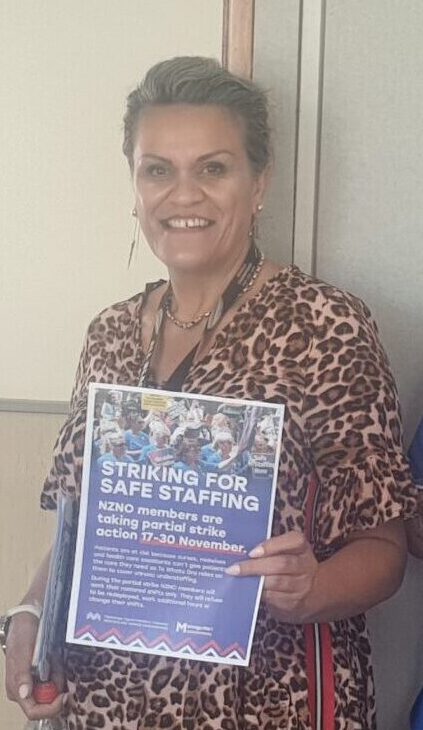
“We understand but we are anxious — we haven’t done this before,” she told Kaitiaki. “But we will manage — we will cope.”
NZNO Whangārei delegate Chantelle Thompson has said while the new style of strikes would likely be challenging for nurses, the aim was for “a better outcome for the future”.
Life-preserving services (LPS) will continue to be provided, with the oversight of NZNO delegates teams to ensure they meet LPS criteria.
In some districts LPS could not be agreed requiring adjudication hui with the district’s chief medical officer. Those LPS determinations can be found here.
The latest strikes follow a 24-hour NZNO strike in August, two days in September and then nationwide strikes on October 23 by nurses, midwives, teachers, principals, doctors, social workers and other public service workers.
Talbot Mills’ October research polled 1020 people asking them to describe the public health system in one word.
McCallan said several of the responses couldn’t be repeated, but “broken”, “underfunded” and “struggling” were the most frequent.
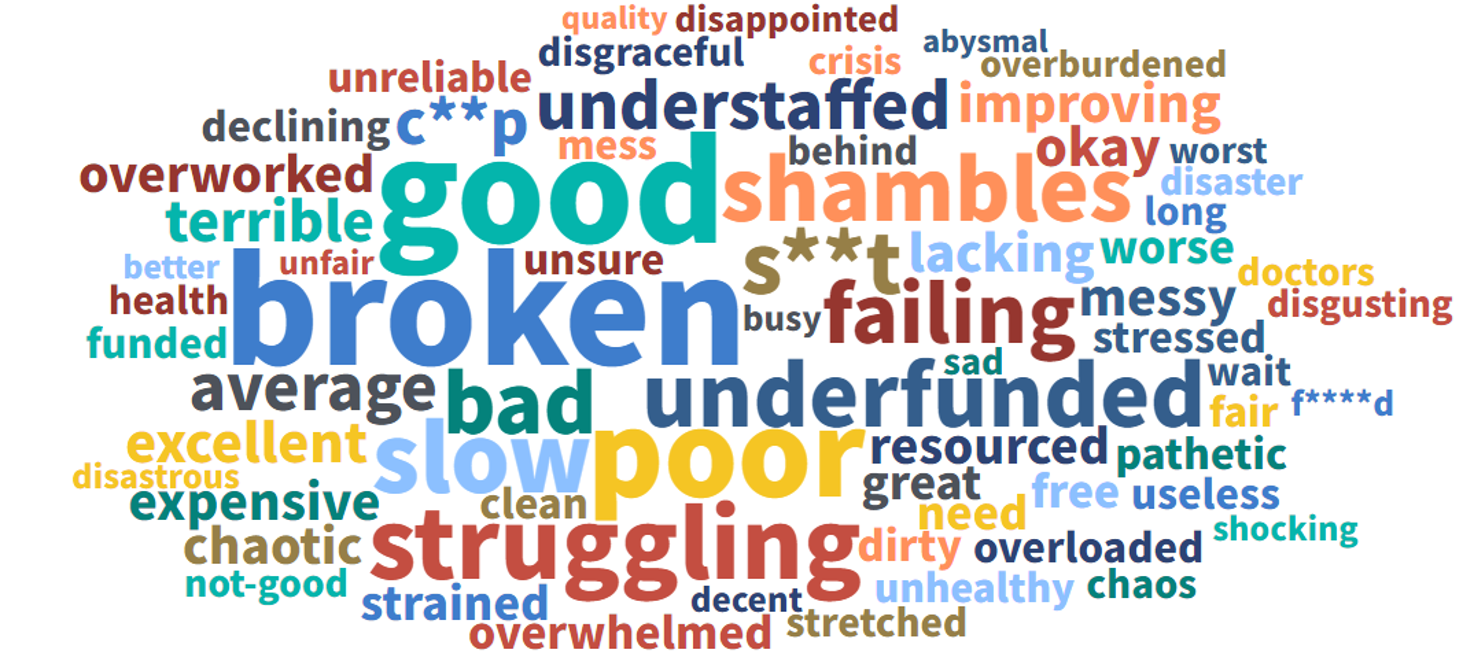
“Good” was up there, but closely followed by “poor”, “s**t”, “struggling” and “shambles”.
However, the vast majority — 82 per cent — rated nurses, midwives and health-care workers as very important to society.
Safe staffing strikes — your rights
- The right to strike is fundamental under New Zealand law.
- During the strikes, members can decline requests to redeploy them from the area of work or role they are rostered in for that day.
- If requested to do redeploy, they should seek advice from their NZNO delegate.
- Members cannot be compelled to break the strike for life-preserving services (LPS).
- Daily Q&A sessions will be held throughout the strikes on 12-28 November, at 10-11am for delegates and 3-4pm for members.
More information about the strikes can be found here.