


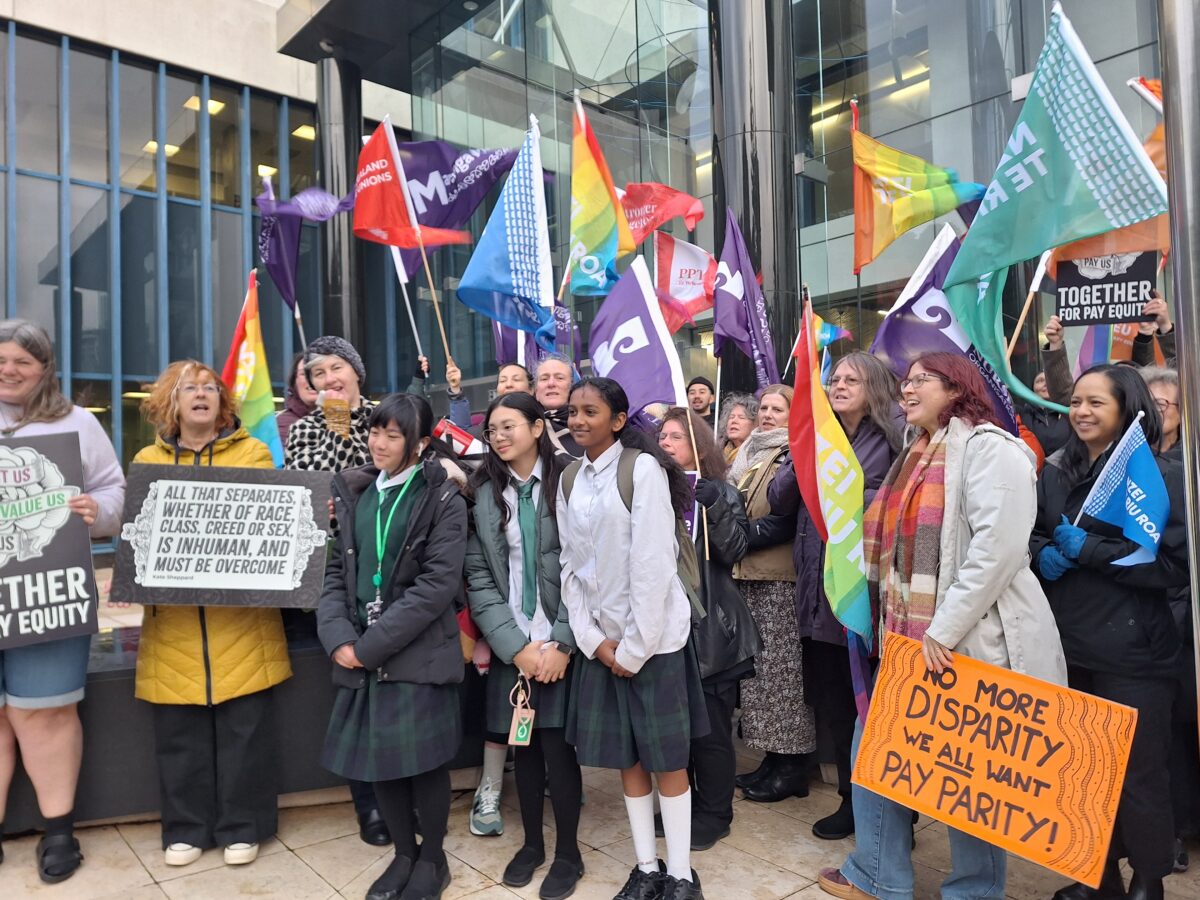
They weren’t even worried that they might be late for school.

A muti-union legal challenge in the High Court in Wellington was heard on Tuesday — arguing that the Government’s gutting of pay equity breached the bill of rights.
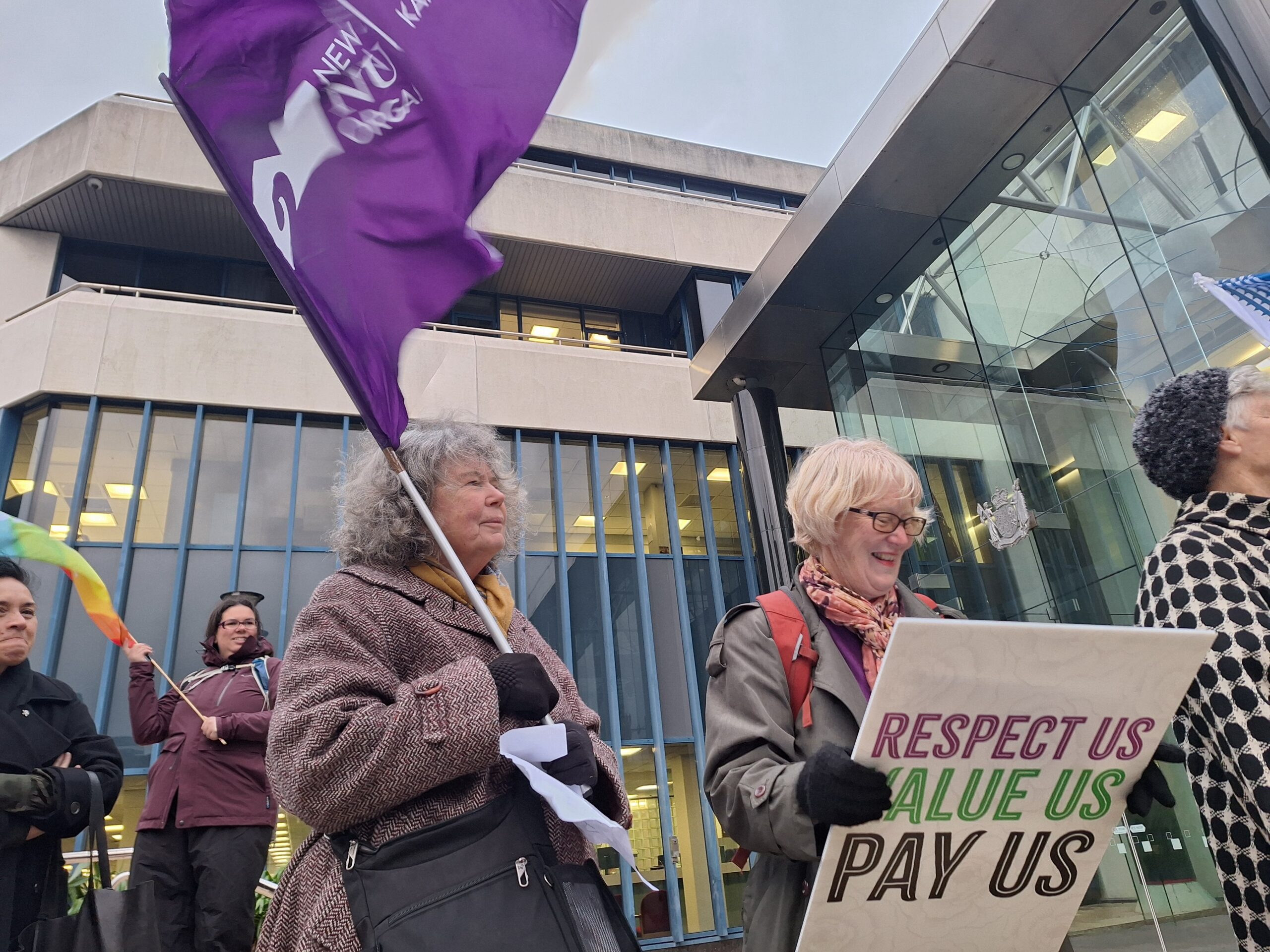
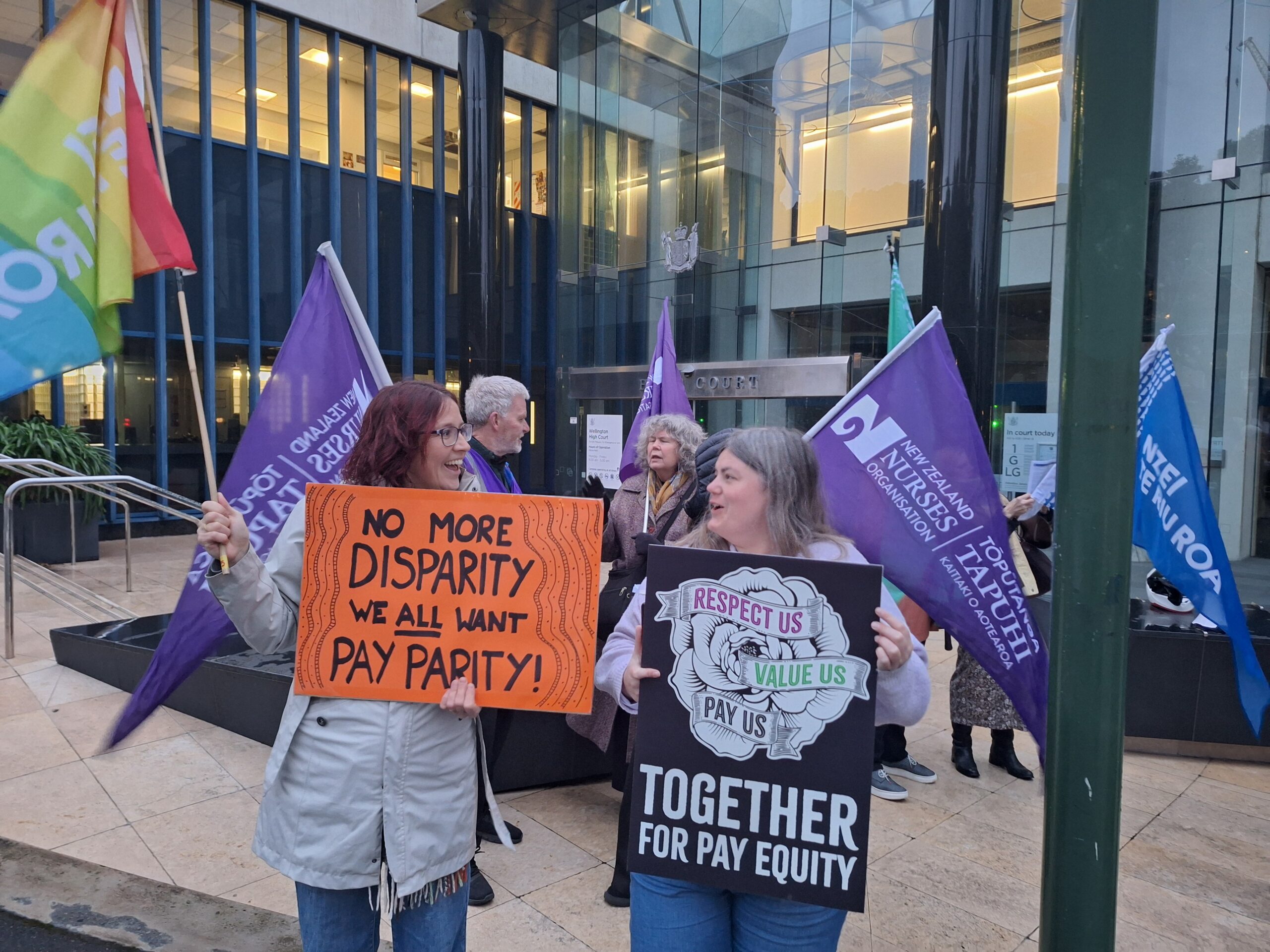
Ahead of the opening arguments, members from all five unions involved in the challenge — including NZNO — rallied on the steps of the court in freezing Wellington weather.
Three primary school students, Cathriz Moreno, Julia, and Jaynelle Anthony were walking past when they struck up conversation with union members.
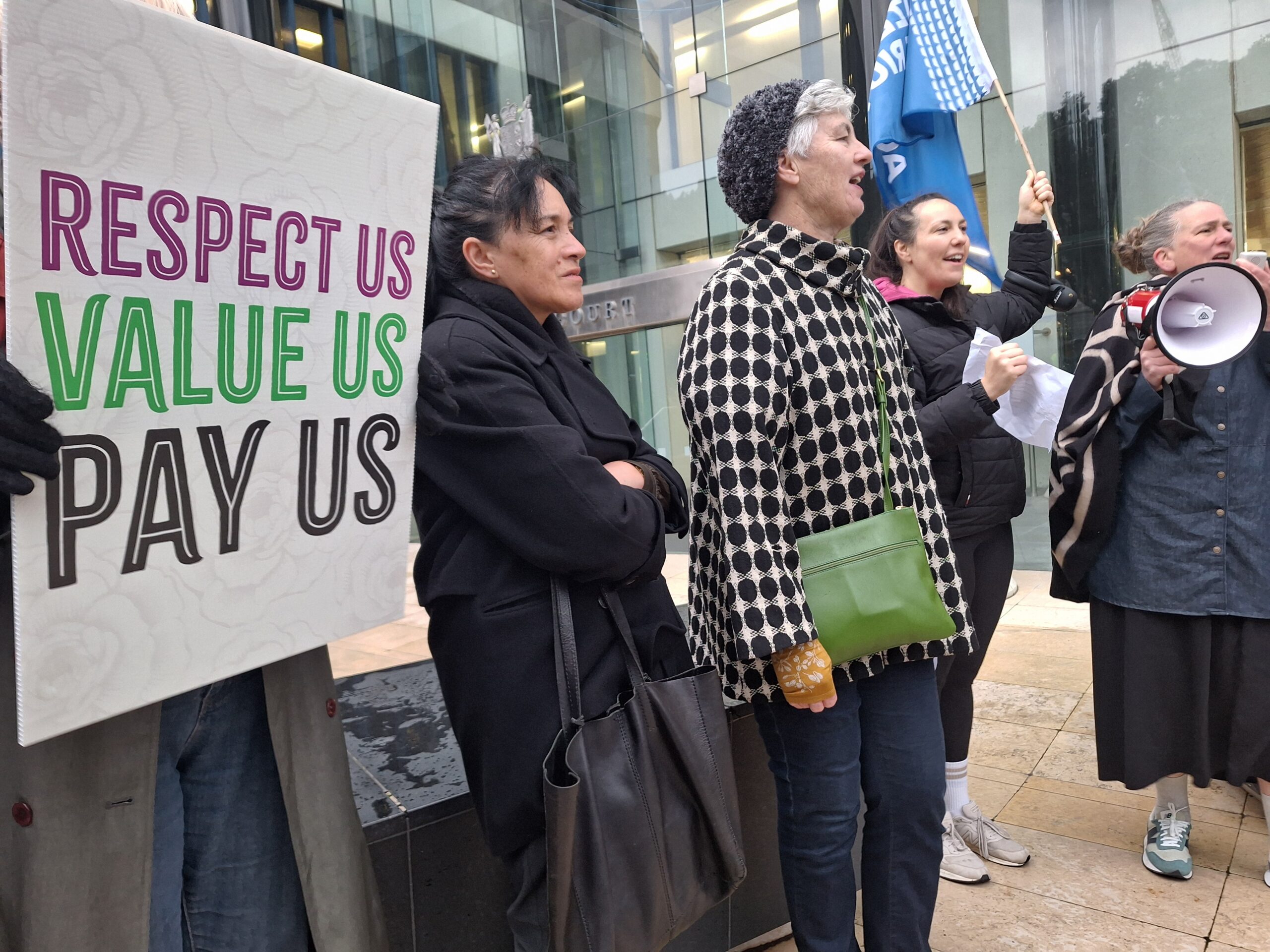
Moreno happened to be preparing to give a speech on pay equity in her class — so she and her friends stepped up and delivered an impromptu speech in front of the gathered crowd.

They always pay men more than women for doing exactly the same jobs, Moreno said, “and that’s what I don’t get about it”. “We women should be treated equally, no matter if we do the same thing or a different thing, no matter what job we do, we should be paid equally to men.”
On May 6, 2025, the Government announced it was introducing and passing the law gutting pay equity the same day. At that point, 14 claims had been settled, and 33 were still underway. The changes reportedly saved the Government $12.8 billion for Budget 2025.
Also speaking at the rally, Wellington caregiver and NZNO delegate Lisa Marriner said she was “absolutely gutted” when she found out what the Government had done.
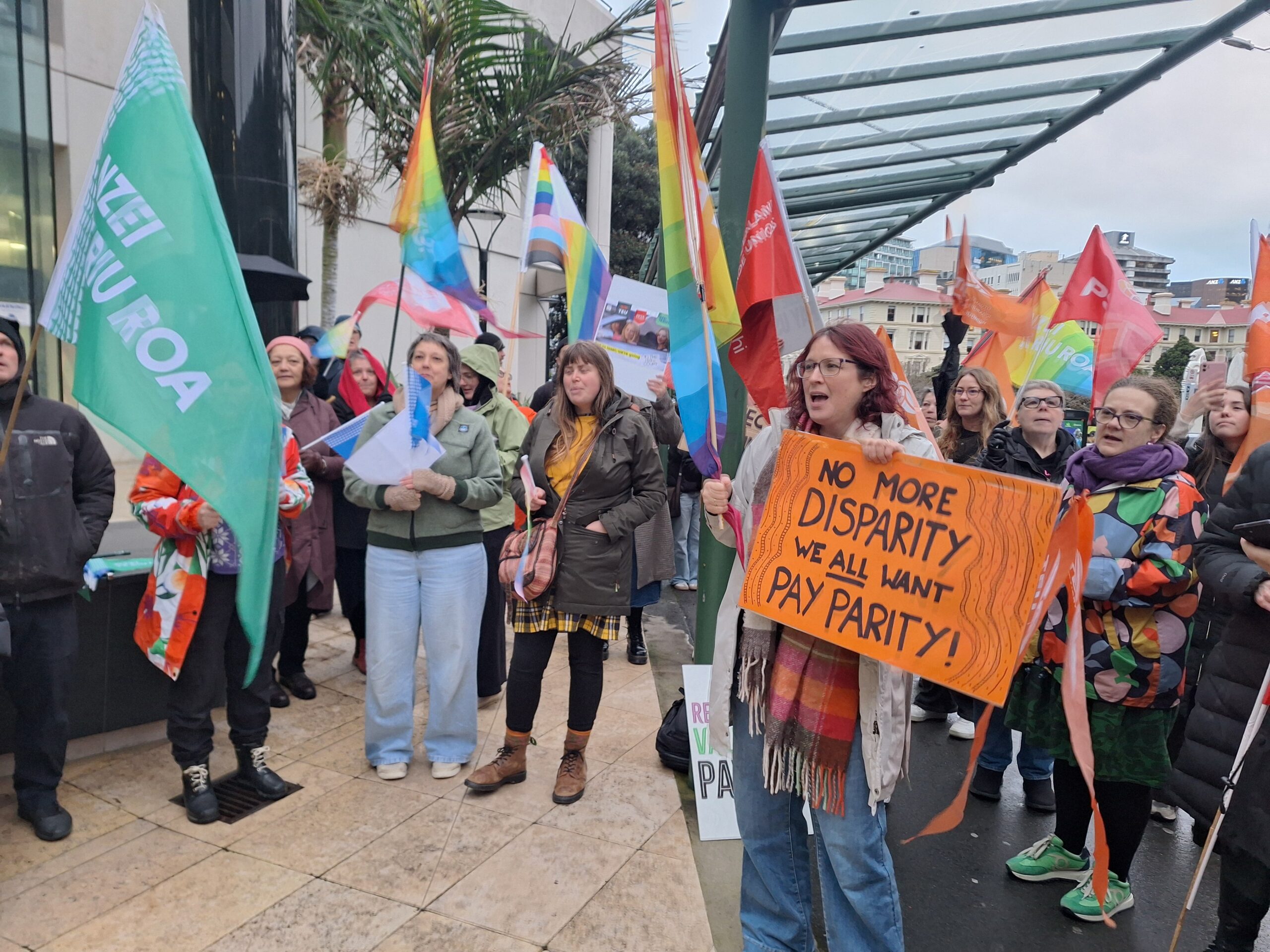
Gutting pay equity was touted as an “elegant solution” to meeting fiscal constraints, she said, with some politicians even proud of doing it.
Marriner said that NZNO represented one-third of the axed claims — the likes of nurses, midwives, and health-care assistants.
“For the sector I work in — aged-care — without pay equity our current system is actually keeping our workers, mainly women, poor. Systemically and structurally keeping us poor.”
The case before the court was about fairness, she said: about bringing it back as “an overt value” that had historically been the Kiwi way.
The challenge would argue that the legislation, made without consultation — interfering with completed settlements — discriminated on the grounds of sex, and trampled natural justice.
Pay equity seeks the same pay for female-dominated professions such as nurses and health-care assistants as male-dominated mahi requiring similar effort, skills and responsibilities.
NZNO president Anne Daniels said that on September 19 Aotearoa would be marking 133 years of women’s suffrage.
“It is unacceptable that we’re actually standing here in front of the High Court, fighting for our human right to be treated as equals.”
For pay equity to be removed “in such an underhanded way”, had been a total betrayal of women’s trust in the Government.
“But the fact is, we will win, we will keep fighting, and it is something that’s got to happen for our future generations.”
The hearing was set down for three days — with a decision likely to be reserved.
Unions in the action
- New Zealand Nurses Organisation Tōpūtanga Tapuhi Kaitiaki o Aotearoa
- Public Service Association Te Pukenga Here Tikanga Mahi
- Post-Primary Teachers Association Te Wehengarua spokesperson
- Te Hautū Kahurangi o Aotearoa | New Zealand Tertiary Education Union
- NZEI Te Riu Roa