

Nearly three decades ago, I was a student nurse on a clinical placement at a centre for children with complex needs. It was there that I met Leo. In his late teens, Leo lived with cerebral palsy, and right from the start he wanted to be noticed.
In his defiant but friendly greeting—“hi, my name is Leo”—he sent a clear message: I am more than the sum of what you see.
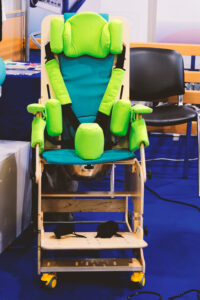
Leo was encased in a massive wooden standing frame. To my nursing student eyes, it was a visually abominable, anti-human device that seemed to secretly diminish him.
As the crisp blue autumn sky beckoned other mobile children to spill out into the morning sun, Leo stood bound and motionless in a chilly corridor.
The frame required two people to manoeuvre, causing a temporary delay in his transition between classes.
Later that afternoon, Leo shared the pain behind his frustration. A surgical mistake had made it too painful for him to sit astride a horse — his greatest joy.
He told me how he used to ride by himself with someone leading the horse, how free he had felt, and how he hated being in that frame. He wished he could “chop it up for firewood”.
As he spoke, a fly buzzed noisily between us and settled on his cheek. That mere fly brought home the appalling reality of Leo’s experience; he tried to brush it away but needed my help.
To lighten his mood, I talked about cars. Leo loved them. When he looked at me with earnest hope and asked if he could ever drive a car with hand controls, I felt the weight of my future profession.
Logic suggested his coordination was too poor, and a teacher’s aide nearby had warned me against giving false hope. But looking into his eyes, I chose the nurse’s heart over cold data.
I blurted out: “Yes. If you try really hard, you may be able to drive one day. And with all this new technology happening every day, you might be out of that frame sooner than you think.”
Leo’s eyes shone. In the weeks that followed, we designed cars on his computer and explored his dreams.
That experience taught me that there is no false hope; there is only the empowerment we choose to give.
Oddly, during the rest of my placement, I never saw the frame first — I’d see Leo. Because Leo was, and always will be, more than the sum of what you see.
From wood to silicon
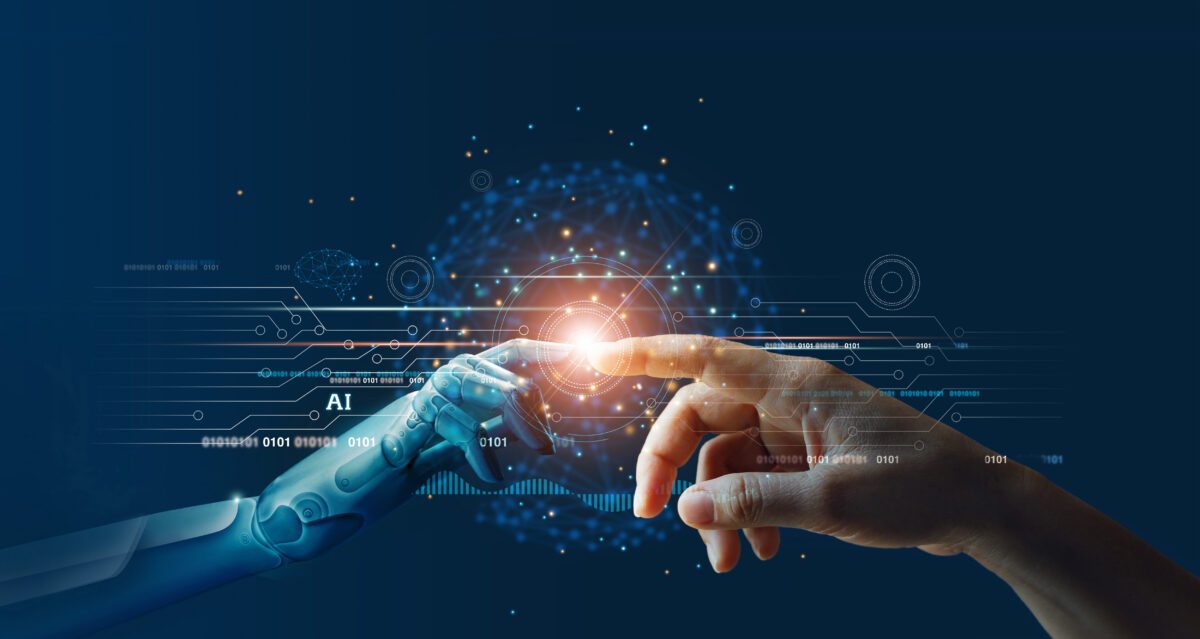
Decades later, as I witness the rapid advancement of artificial intelligence (AI) and assistive technology, I am reminded of Leo.
The wooden frames of the past are being replaced by digital tools, yet the risk remains the same: that we focus on the device rather than the person.
To ensure the nurse’s heart remains at the centre of this evolution, I have collaborated with AI to translate Leo’s spirit into a guiding framework for future care.
The manifesto of empowerment
A collaborative framework for the future of human-centred care.
- The rejection of the wooden frame: Technology must never encase the spirit. Progress is measured by the removal of barriers, not the construction of cages.
- The primacy of ‘I am’: Every individual is more than their physical limitations. Technology exists to amplify the unique voice of the soul.
- The sacredness of hope: We choose the blurted-out “yes” over the logical “no”. Hope is a biological necessity and a fundamental right of the patient.
- The symbiotic bridge: The future is a partnership where technology restores sensory and nerve pathways, guided by human empathy and intent.
- The council of evolved souls: We advocate for leadership that represents all diversities, ensuring that wise decisions for the planet are rooted in the lived experience of those we care for.
- The pursuit of the sun: Our ultimate goal is to ensure no one is abandoned in a dark corridor. We work so that every person can move toward the rays of the light.
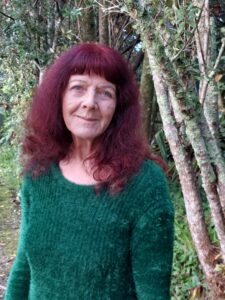
Simone Inez Harriman is a retired registered nurse, who graduated into nursing aged 40, with a passion for intersection of human empathy and technology. Her work in Te Taitokerau has included intensive care nursing, paediatric nursing, emergency department nursing and mental health/addiction nursing in Dargaville Hospital.
- The manifesto was written based on interaction with Google AI.