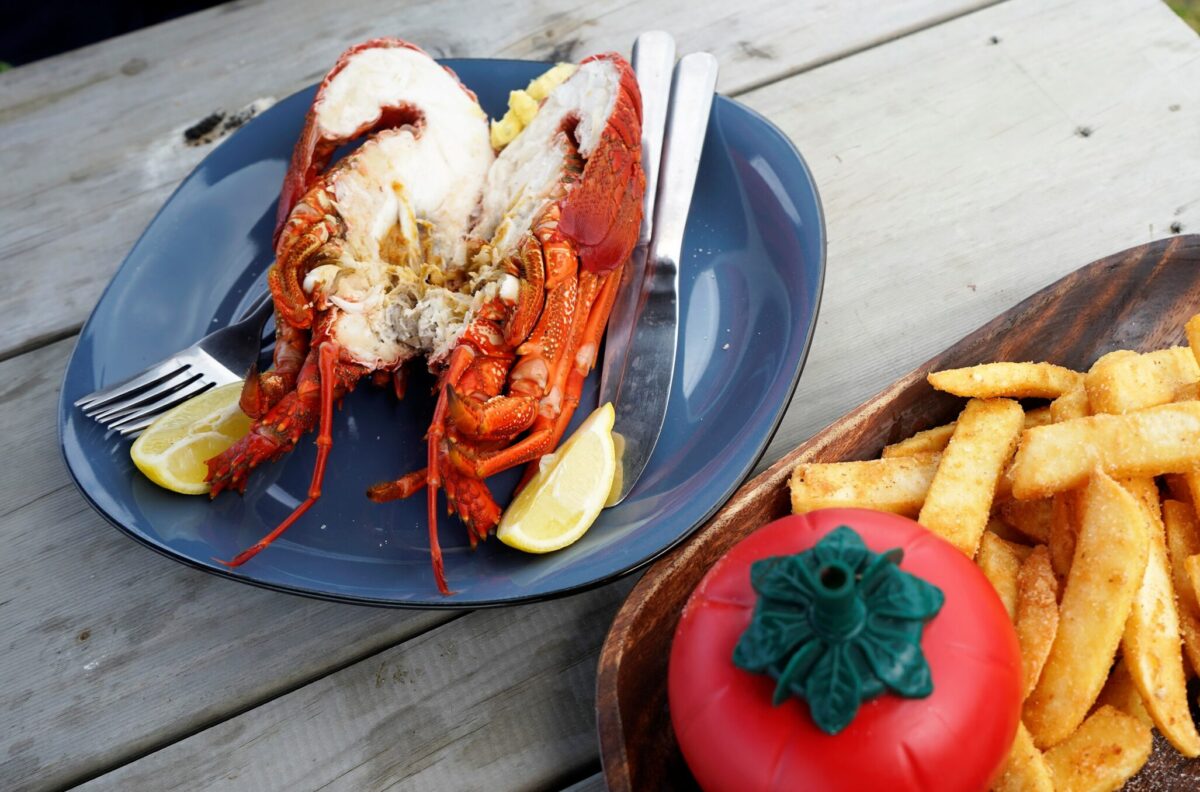
Kai moana -- food from the sea, in this case kōura -- Aotearoa's saltwater crayfish. Photo: Adobe Stock
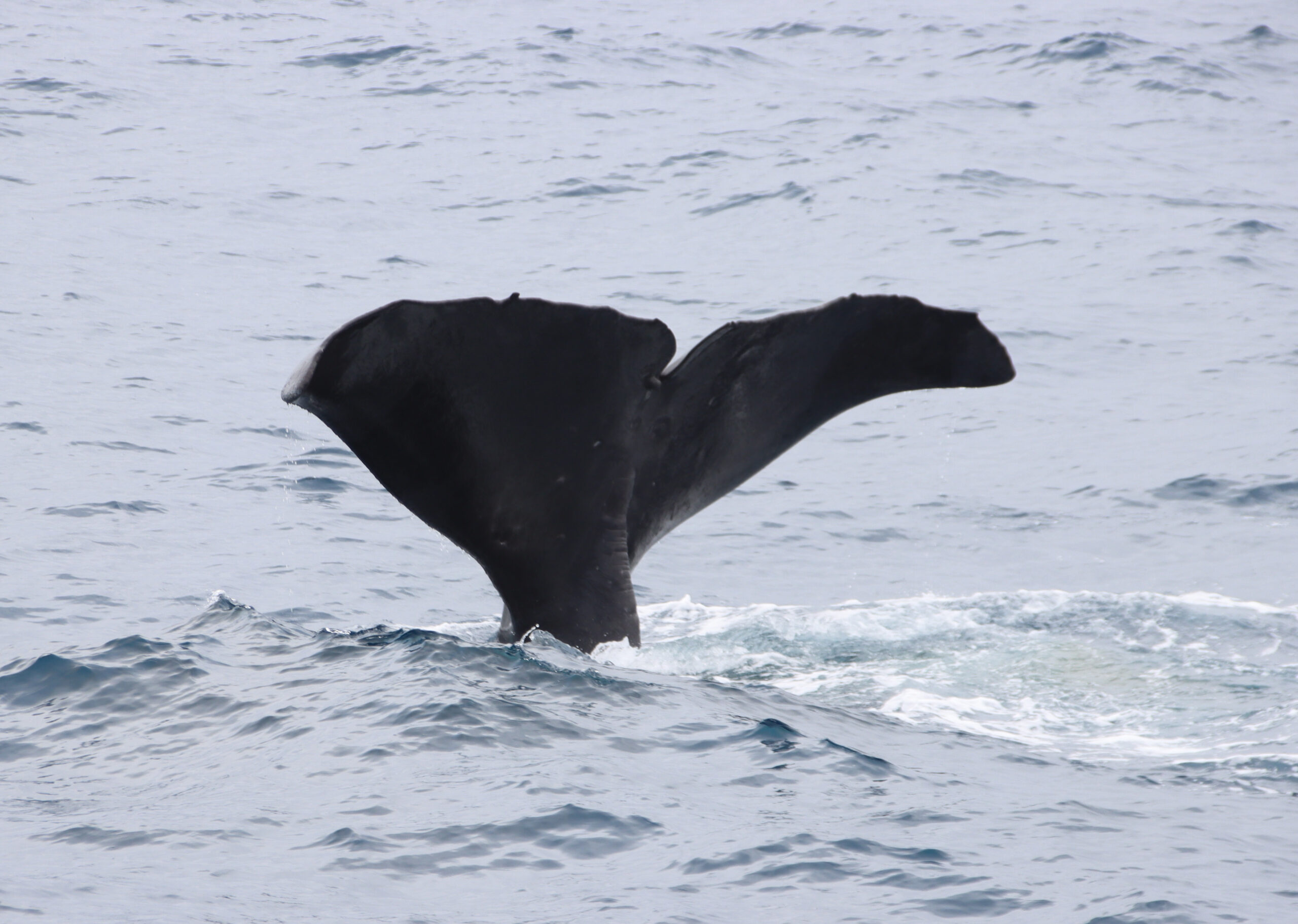
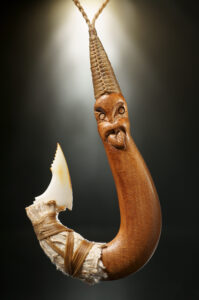
Off the coast of Kaikōura, a mighty parāoa (sperm whale) flicks its tail as it dives. Photo: Adobe StockA traditional Māori matau (fishing hook), crafted out of wood, bone and flax. Photo: Adobe Stock
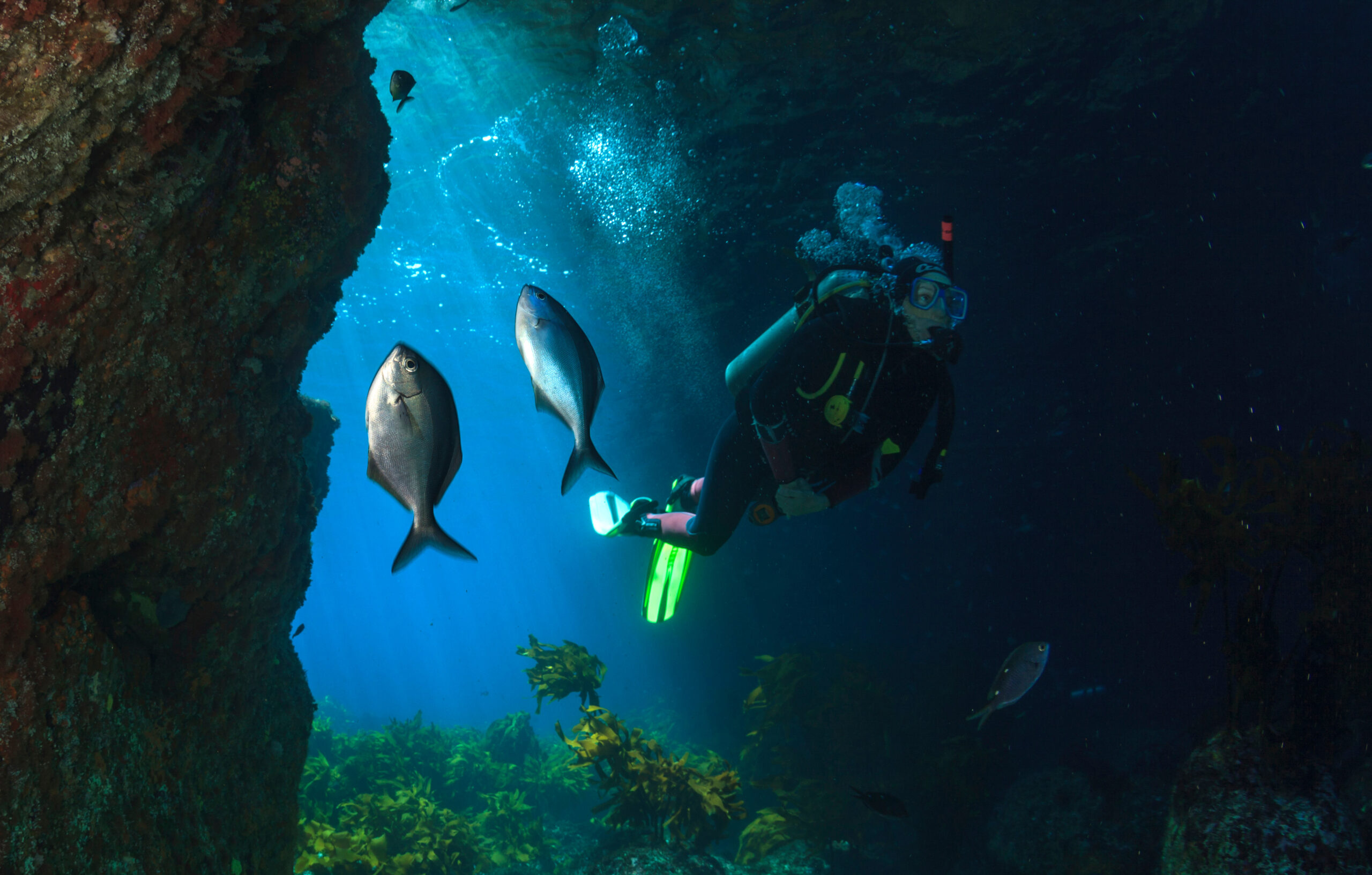
A diver swims through a sea cave near Tawhiti Rahi (Poor Knights Islands), off the east coast of Te Tai Tokerau. Photo: Adobe Stock
Haere mai — welcome to the August kōrero column. Traditional Māori were very much at home in te moana (the sea). They were fine navigators and builders of sea-going waka, which allowed them to make the long voyage to settle here.
Te moana provided a vital means of travel, as well as being the source of bountiful kai moana (seafood), which remains a well-loved part of Māori cuisine.
Māori fishing skills are evident in the mythical creation story of Aotearoa: the Polynesian hero and trickster Māui went fishing with his brothers and, with his magic matau (fishing hook) hauled up a massive catch — Te Ika-a-Māui (the fish of Maui, ie the North Island). One of the Māori names for the South Island is Te Waka-o-Māui (the waka of Māui).
Kupu hou (new word)
Moana (sea, ocean, lake) —pronounced “mo (as in more)-ah-nah”
I tēnei rā kua orua te moana. — The sea is rough today.
More words related to moana:
pae moana — sea level, sea surface
tārawa — wave
tauā moana — navy
Raukawa Moana — Cook Strait
ika moana — whale (general term)
moana waiwai — open sea, ocean
Te Moana nui-a-Kiwa — Pacific Ocean
ngohi — fish
matau — fishing hook
kai moana — seafood
Whakataukī
He toka tū moana. — A rock standing firm in the sea. (This refers to a person who is steadfast in their beliefs or position, like a rock that withstands the battering of the elements.)
E mihi ana ki a Titihuia Pakeho rāua ko Mairi Lucas.