


I feel that it is time for those out there to know — to remember — that with a spark of enthusiasm, dreams can happen.
About 10 years ago, I had this idea that one day, kaiāwhina, health-care assistants (HCAs) and all care and support workers would be recognised for the mahi they do.
It started with a letter in 2016 to NZNO leaders at the time suggesting a section be set up within NZNO for HCAs.
It has taken many years to get this new kaiāwhina rōpu up and running and I am so grateful that it is now finally being taken seriously.
I was told — nicely — there wasn’t anything set up in the NZNO rules for us HCAs and that I should join the college of gerontology nursing instead.

I wrote many letters to Kaitiaki Nursing New Zealand pleading my case. This eventually led to a very passionate group of people who who managed to get a Facebook page up and running: Victoria Richards, Al Dietschin, Michael Deibert and myself.
This page actually came in handy during COVID in 2020. I believe it helped a lot of confused, unsure people by giving them a place to vent and talk with other HCA/kaiāwhina at a time when New Zealand and the world were all going through a tough time — not knowing what was the right way to deal with a illness that silently took people’s lives.
Without the support of these people in the early stages, the current special interest group would not be here today. So I want to acknowledge their contribution as the forerunner of what is happening today.
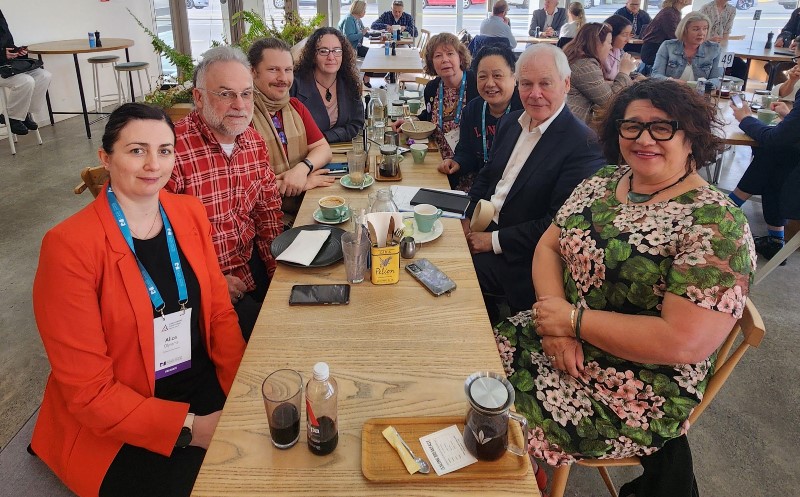
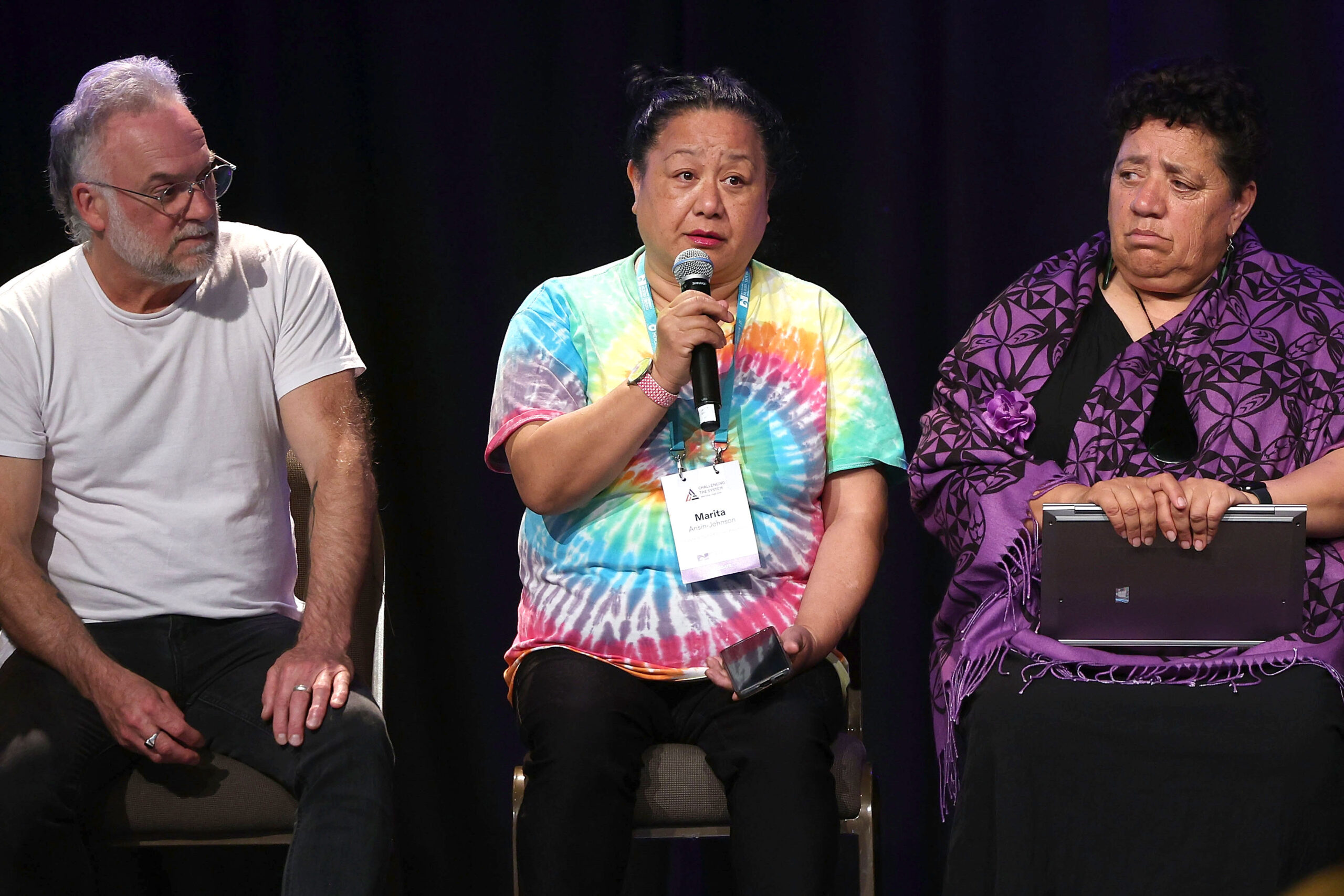
It was at the 2023 NZNO conference and annual general meeting in Wellington where I decided to speak up in front of everyone. I did not feel that the kōrero on the professional issues facing members was inclusive of the whole workforce.
‘No longer were we kaiāwhina in the background. We are part of the nursing team.’
We — the kaiāwhina, the HCAs, the support workers — were missing from the conversation about the role of the nurse. So, Christchurch Hospital HCA Al Dietschin and I got up to speak — to ask for HCAs to be included in the language of NZNO. To ask for that respect.
This was the starting point of making ourselves be heard.
No longer were we kaiāwhina in the background. We are part of the nursing team — COVID made this obvious, as we had to step into roles left vacant by sickness and staff shortages.
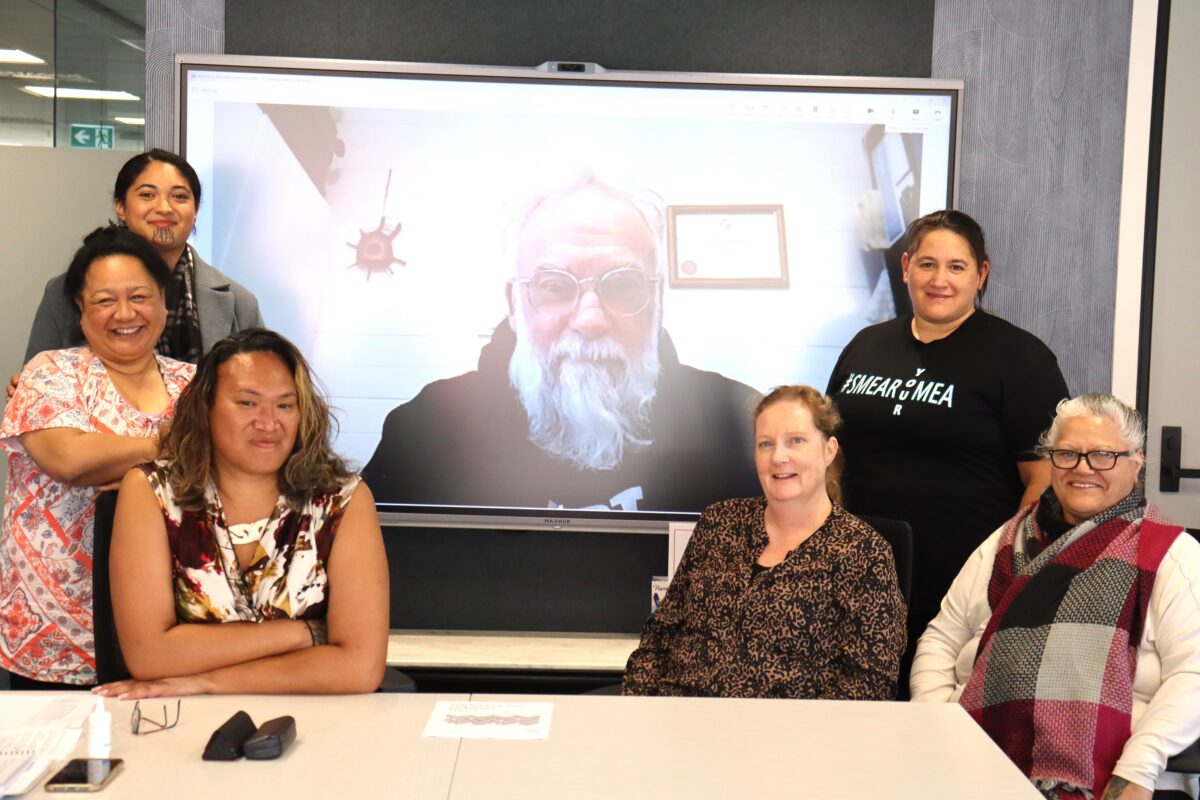
An interim kaiāwhina group was formed in 2024 with many who had been the driving force from the start. Then, after going through the administrative process, the kaiāwhina national committee was launched last year.
Today, after some of the original members have moved on, or moved countries, we have almost an entirely brand new committee, including members across Te Whatu Ora-Health NZ, aged-care and primary health care.
It has taken many years to get this new kaiāwhina rōpu up and running and I am so grateful that it is now finally being taken seriously.
The co-chairs that we have now in this group are doing a fantastic job of moving us forward.
First up, we are considering how to describe our role. Kaiāwhina? HCAs? Care and support workers? We do so many different tasks as members of the nursing team. We are also considering health and safety aspects, when we are asked to work beyond our scope.
And, yes, I am still in the group, standing back, watching — happy in the knowledge that this is for the future, for patients and for the kaiāwhina/HCA workforce to come.
This is for them.
— Dunedin aged-care health-care assistant Marita Ansin-Johnson is a founding member of NZNO’s HCA/kaiāwhina group.