



 Would you tolerate being punched, kicked and strangled at work? Or having to send an email to get police help when taking a highly-distressed tangata whaiora (person seeking health) back to hospital?
This is our stark reality since New Zealand Police began withdrawing from mental health callouts in late 2024 to focus on “core policing”.
Working in mental health has always been challenging, but never more so than now.
We are enduring more violence and feel way less safe without knowing police have our backs when we need it.
At a glance: The four stages of Police withdrawal
- Phase one Nov 2024: Withdrawal from mental health transportation without written risk assessment; reduced presence at mental health facilities and faster ED handovers.
- Phase two April 2025 (delayed from March): ED patient handover within one hour; people experiencing mental health distress moved from police custody to health facility within 30 minutes.
- Phase three November 2025: Reduced response to non-emergency mental health assistance, including at inpatient units; Missing persons in mental distress, or from mental health facilities, response only if there is immediate safety risk.
- Phase four: Yet to be implemented. 15 minute ED handovers and reduced involvement in community welfare checks.
Yet, there can also be a deep sense of satisfaction in caring for people at their most vulnerable — when we are supported to do so.
I became what was then a psychiatric nurse nearly 50 years ago. I wanted to work with people at a time they are experiencing crises or vulnerabilities. I really enjoy knowing what’s happening with people, getting to know them at a deeper level and figuring out how to work with them.
I also think there’s a social justice element for me in that people with mental health problems are often not treated with respect or genuineness or empathy, so I think it’s important to have someone there constantly pushing for that.
But now it’s we who work in mental health who are not feeling respected. We are enduring more violence and feel way less safe without knowing police have our backs when we need it.
Worse to come?
We now have to transport mental health patients — who might not want to go or return to a facility and may be aggressive — by ourselves. If we are concerned for our safety, we have to do a written risk assessment in advance!
We were already a struggling with a loss of experienced nurses — and now we fear worse is to come.
After withdrawing from transportation of people in mental distress, callouts to mental health wards and missing people with mental health concerns, police are now set for the fourth and final withdrawal phase: Community welfare checks following a 111 call.
These can be unpredictable. Just last year, a nurse was stabbed doing a mental health callout in Rotorua. So, how is it going to work? We don’t know — we’re waiting for Te Whatu Ora -Health New Zealand (HNZ) to come up with some safety measures.
I don’t know if a single organisation or union has the power alone to change this, but all of us pressuring? Maybe.
Our safety doesn’t feel like a priority right now.
In November, Police failed to respond to an assaulted mental health worker resulting in a complaint to the Independent Police Conduct Authority. Despite promises police would always respond to “immediate risk to life or safety”, they never arrived.
NZNO’s recent survey of mental health workers found an overwhelming number felt unsafe because of the changes. It also revealed police had dumped a violent meth-fuelled patient at an ED and left, resulting in ED workers being punched, kicked and choked before police finally returned.
‘They’re not listening’
We are feeling frustrating about not being heard. We’ve been talking about this since it was first proposed, in the media and with HNZ. But I don’t think there’s much listening going on in Government.
Nurses are afraid. The new rules demand we call 105 if we are being assaulted. Now, if you’re being assaulted, to most of us, that seems pretty urgent. But we are now reliant on whether the police operator thinks it’s urgent enough for police to attend.

Even if nurses are directly in harm’s way, we are told to call our security. But there is no security for community nurses — and hospital security have very limited powers.
Adding fuel to us feeling totally disrespected, is a proposal to better protect police and ambulance officers — but not mental health workers.
I don’t know if a single organisation or union has the power alone to change this, but all of us pressuring? Maybe.
So, the MHNS has joined a network of other mental health organisations and we are all sharing what we’re doing with each other. We are supporting other groups, such as the Mental Health Foundation when it launched a petition for better child and adolescent mental health services, and working closely with the Public Service Association (PSA).
If we can all do that for each other, we might be able to effect change.
Workforce
We are also supporting clinical psychologists, who are concerned about the fast-tracking of the new associate psychologist role into New Zealand — which we believe undermines our existing respective workforces.
The real challenge is to support and grow our mental health nursing workforce, rather than plug the gaps with other, imported, roles.
Acute or forensic mental health services were the most-understaffed wards last year — some, almost constantly. And in the community, who knows?
We need to:
- Recruit more mental health nurses
- Import more specialised mental health nurses from places with specialised training like the UK.
- Increase and standardise mental health within the nursing curriculum
- Return to a mental health nursing undergraduate degree.
Mental health nursing attracts people who want to know and understand about people. That doesn’t change. But social and environmental things change — they can make it worse. At the moment, for example, we have high levels of poverty and homelessness and those things don’t help mental health outcomes.
Have I ever wanted to quit? Never! Specific jobs, yes. Mental health nursing, no!
Mental health nurses committee bounces back
We now have got four new members, bringing our committee to six, who together bring expertise across primary, child and adolescent and forensic mental health services as well as telehealth and education. We were down to three last year, so this is a big improvement! Getting involved with the section gives you an in-depth understanding of what’s going in nursing — and a chance to influence it. So please so join us here or through our Facebook page.
Te Whatu Ora-Health New Zealand responds:
HNZ director specialist mental health and addiction Karla Bergquist said HNZ was committed to working with Police to safely phase in the changes “in a way that ensures those in mental distress receive appropriate care, while maintaining staff safety”.
The changes were being monitored and any “unintended impacts” would be addressed.
So far, no decisions had been made on timing and final nature of phase four of the changes, Bergquist said.
She said HNZ did not expect staff to put themselves at risk or in dangerous situations.
“There may be times when staff need to withdraw from unsafe situations to minimise risk of harm until a safety plan is in place.”
Police would continue to respond when there was “immediate risk to life or safety, or when an offence has taken place”.
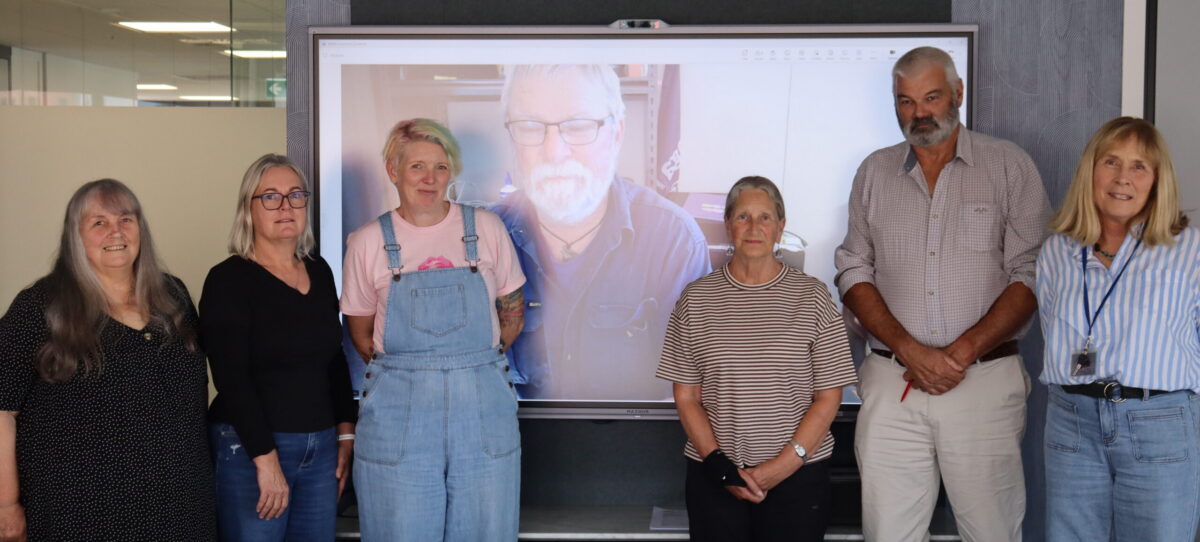
— Helen Garrick now works for a mental telehealth service.