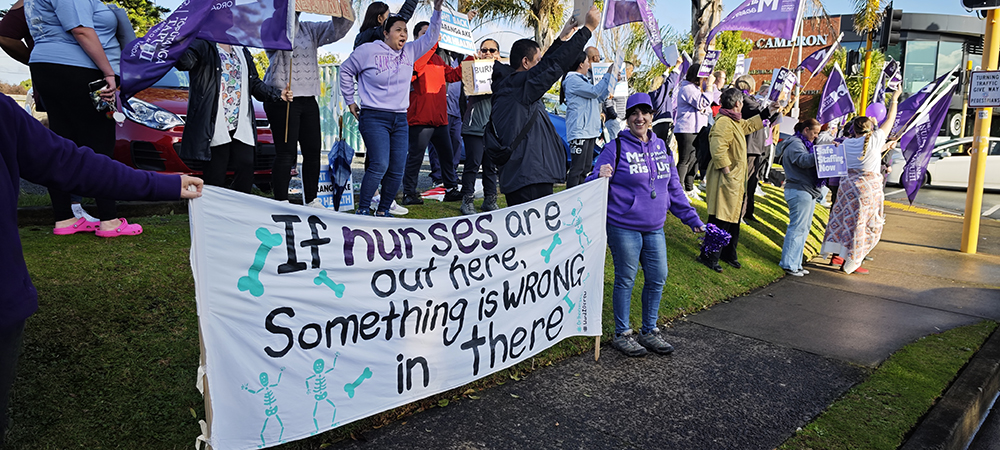



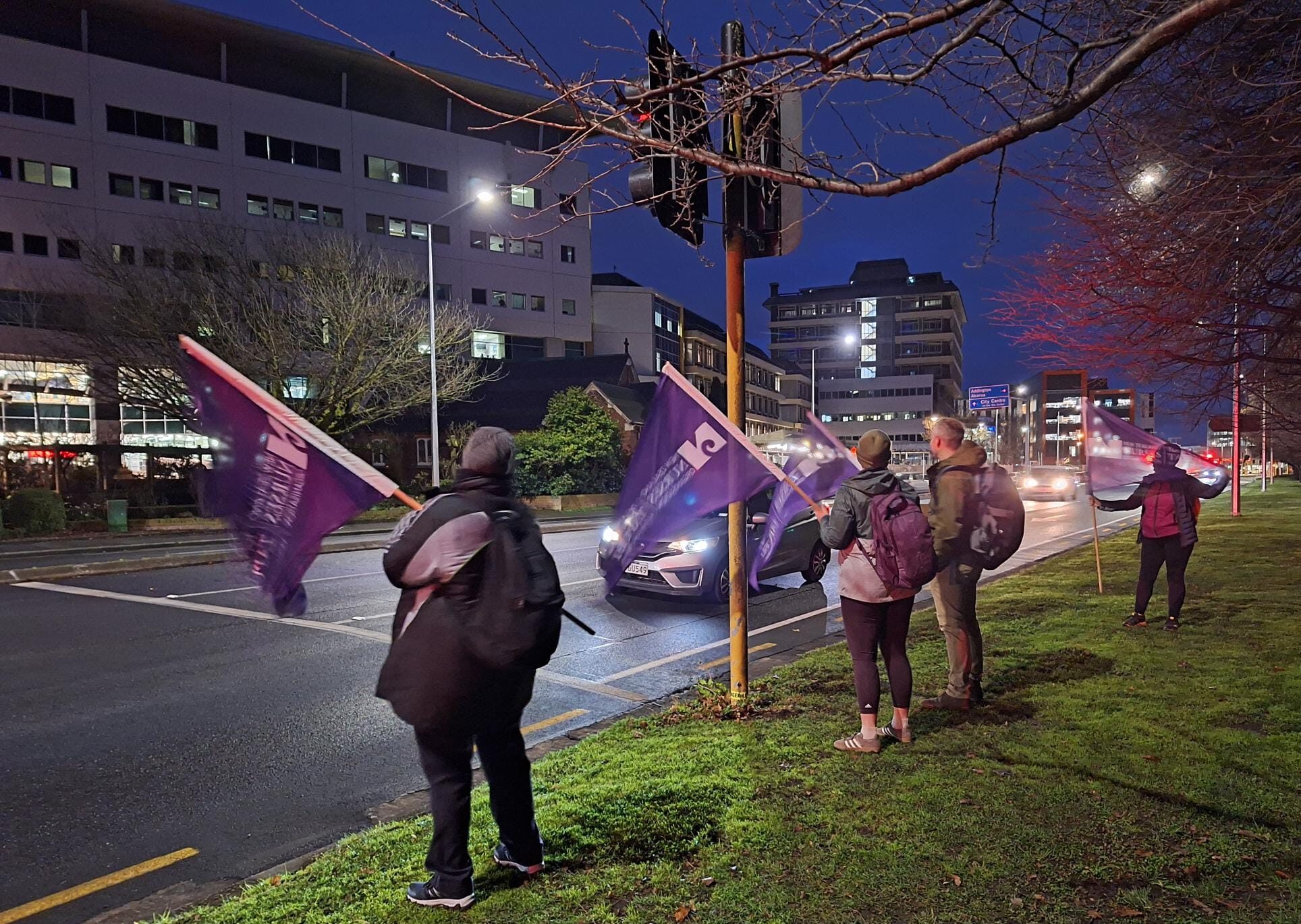
As a 24-hour nationwide strike concluded at 9am today with a final flourish of banners, members at Auckland, Whangārei and Christchurch hospitals revealed plans for more strikes in August, in their local area.
Nurses and kaiāwhina around the motu were again out on picket lines early this morning, determined to protest their working conditions to the bitter end.
‘More people should walk out on their jobs, so the Government can see how badly we’re impacted.’
One, Wellington nurse Sarita Sharma who picketed in a classic rainy and windy morning straight after a night shift doing life-preserving services, said they were fed up with understaffing most days — and were prepared to make a stand.
“We’re really tired. Every shift, we are short of staff,” she told Kaitiaki.

“More people should walk out on their jobs, so the Government can see how badly we’re impacted.”

Hutt Hospital delegate Trevor Harris — who also hit the picket lines this morning for a final stand with colleagues — said the biggest issue was staffing.
“We’re all upset, because safe staffing has gone out the door,” he told Kaitiaki. At the same time, there were more patients with delirium or dementia on the wards because of a shortage of beds in the community.
“This is putting pressure on staff, and they’re not hiring or replacing staff who leave.”
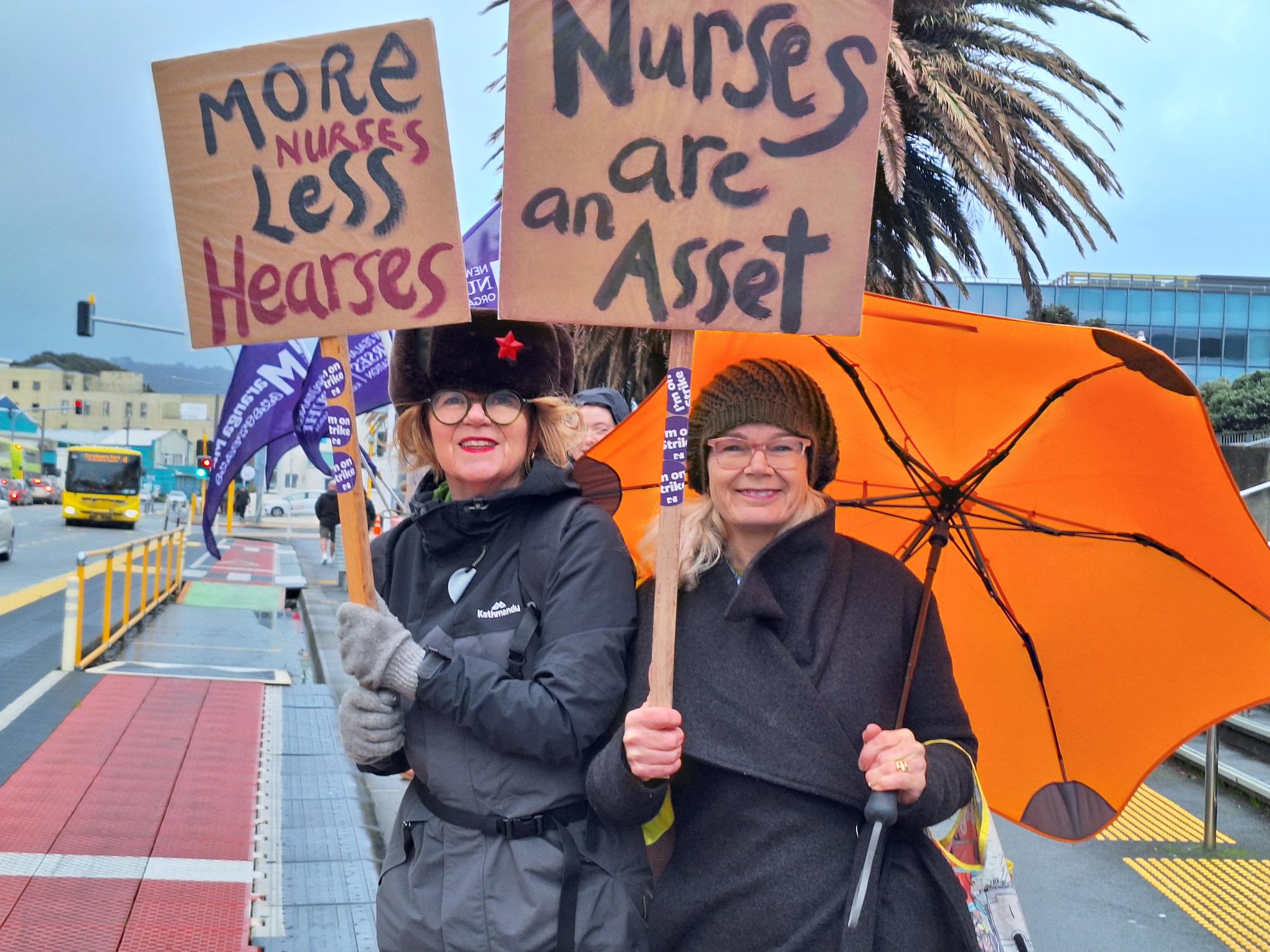
On his ward, staff had been calling for more health-care assistants (HCAs) for “years”, said Harris, an HCA. “Two on the floor is simply not enough.”
‘They struggle and work their butts off taking care of people.’

An urgent need for safer staffing for patients has been at the heart of strike action for many members, Tōpūtanga Tapuhi Kaitiaki o Aotearoa – NZNO chief executive Paul Goulter said.
Data obtained by NZNO has shown 56 per cent of all day shifts in surgical wards across 16 districts were understaffed last year.
Goulter said concerns over chronic staff shortages had been raised “repeatedly” since bargaining began almost a year ago in September 2024.
Yet Te Whatu Ora continually refused to acknowledge the concerns, which he said was “exasperating” for members.
“Nurses, midwives and HCAs want to give their patients the care they need, when they need it. Instead they are stretched too thin and their patients forced to wait for care.”
Pay wrangles
However, Harris said Te Whatu Ora nurses — who have been offered a two per cent pay rise this June (backdated) followed by one per cent next June — also deserved a pay rise that matched the cost-of-living.
NZNO is seeking a three per cent pay rise from April this year (backdated) and another two per cent next April.
“They struggle and work their butts off taking care of people,” Harris said of his nursing colleagues.

Yet some Crown board members were being given an 80 per cent pay rise, Harris said. “Why don’t they give us frontline workers some?”
‘Thank you’ — Te Whatu Ora message to hospital staff
Te Whatu Ora chief executive Dale Bramley said despite heavy winter occupancy, hospitals got through the strike without any serious incidents which was “testament to all those staff and volunteers who provided support”.
Bramley — who was appointed in June, four months after Margie Apa resigned from the chief executive role — thanked the contingency and life-preserving services staff who worked to provide care.
Thousands of patients whose planned procedures were deferred because of the strike would be contacted to reschedule, he said. Te Whatu Ora was “committed” to settling the 2024-26 collective agreement with NZNO.

“We encourage the union to focus its efforts on bargaining, so we can resolve the outstanding issues.”

Goulter said that no further meetings had been set up at this stage. “We want to negotiate a settlement that meets the needs of both parties.”