



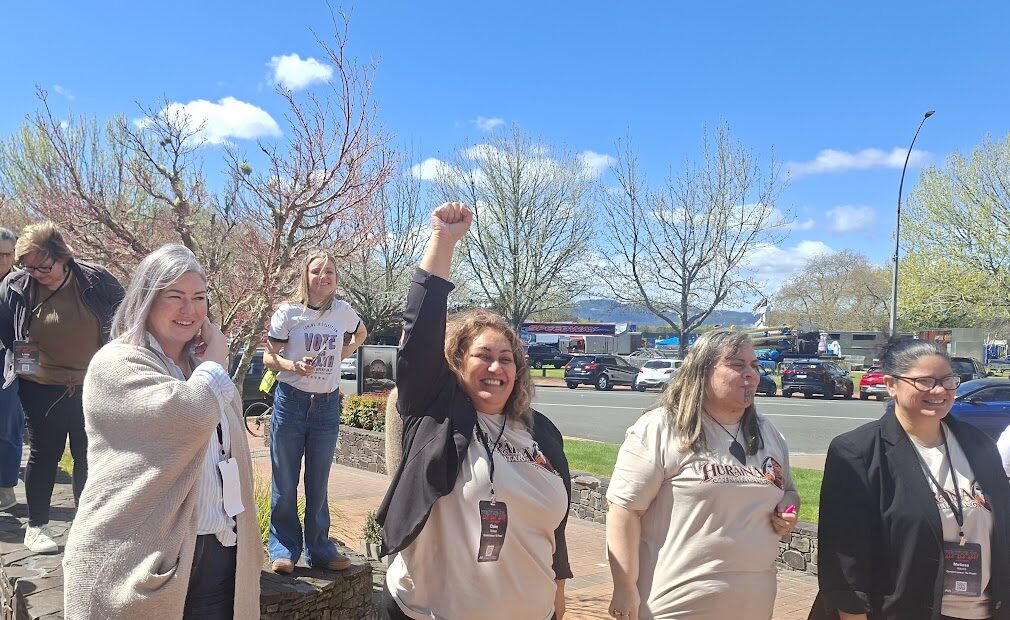
After three days of kōrero about racism, power, abuse, wealth and — most of all — the need for a safe and public health system, a powerful beat throbbed through the Rotorua Novotel atrium.
Challenged to “be the voice” for a safer health system, about 200 nurses, health-care assistants and students stood, clapped and shimmied out into the sunlight chanting: “This is what democracy looks like!”
‘Never has your voice been so needed — and never has it been so listened to.’
NZNO chief executive Paul Goulter said the voice of nurses and all workers was never so important as now, as New Zealand faced a “stark” choice between greed and individualism or equality.
“Never has your voice been so needed — and never has it been so listened to.”
NZNO and its members must not only speak up for health, but also against racism and inequality.
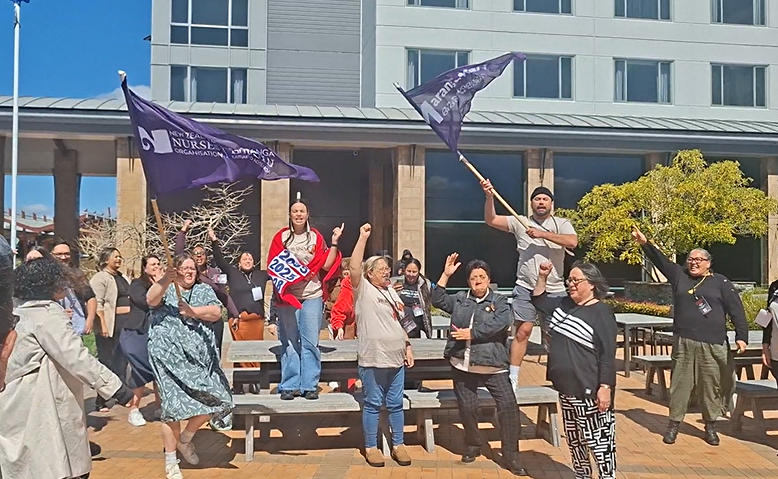
“We have to be that voice for the vulnerable — we have to be the voice, not just for nursing, but for a quality public health system as well,” he said.
Watch the full video: This is what democracy look like!
“We speak for those who cannot get to see a GP for weeks. For those who can’t even afford to go and see the GP. For those waiting endlessly in EDs. For those who sit in pain on wait lists for operations and care. For Māori and Pacific peoples enduring terrible, racist health outcomes.”
“Nurses and the union must speak for all of these — this is our mission.”
Really up for it!
Members responded, calling they were “really up for” the challenge.
Over the three-day conference, registered nurses (RNs), enrolled nurses (ENs), health-care assistants (HCAs) and midwives listened, spoke, argued cried — and even danced a bit — in between brainstorming on how to save a dangerously understaffed health system.
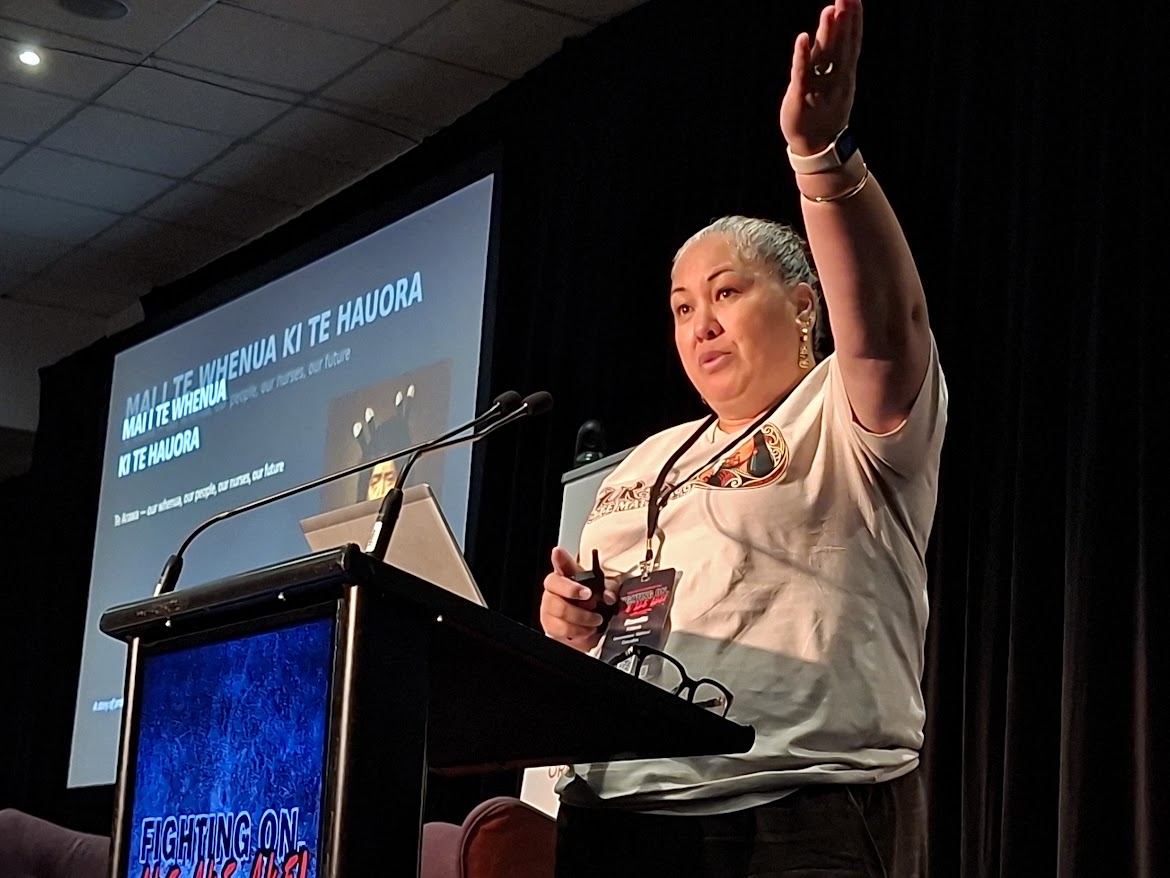
Rotorua nurse Rosie Katene, mana whenua, opened the conference with the story of tribal leader and peacemaker, Te Ao-kapurangi.
Katene’s connections with her kāinga run deep – as shown in the iwi affiliations shared with Kaitiaki:
Ko Matawhaura te maunga
Ko Te Rotoiti-i-kitea-ai-a-Ihenga-i-ariki-ai-a-kahu te moana
Te Arawa te waka
Ko Ngāti Pikiao te iwi
Ko Ngāti Rongomai, Ko Ngāti Te Rangiunuora, Ko Ngāti Te Rangiwewehi ōku hapū.
At the conference, Katene shared how Te Ao-kapurangi — descended from Tamatekapua of Te Arawa canoe and Hoturoa of the Tainui canoe — was a woman of mana who belonged to Ngāti Rangiwewehi and Tapuika hapū. Her courage and quick-thinking saved many lives in the early 1800s.
“And that’s what we do as nurses — we put other people’s wellbeing before our own.”
‘Nurses and the union must speak for all of these — this is our mission.’
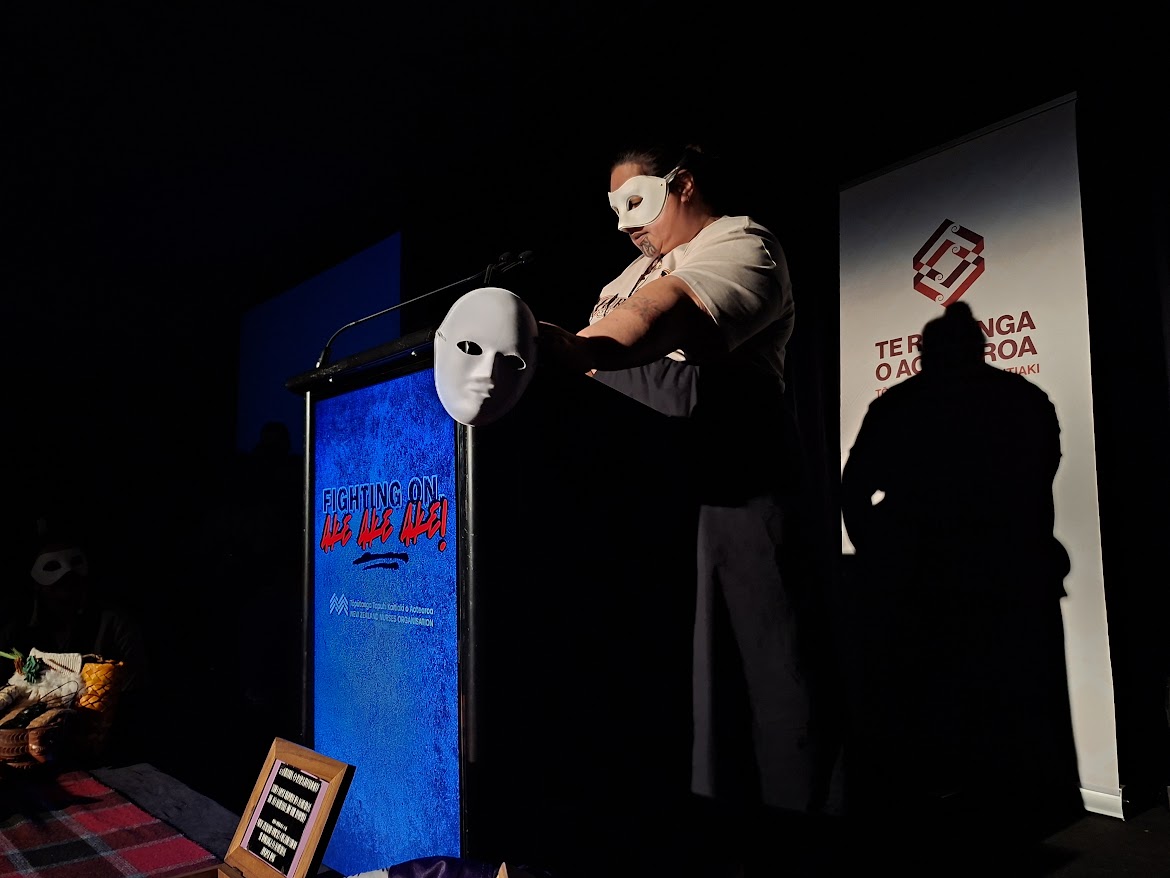
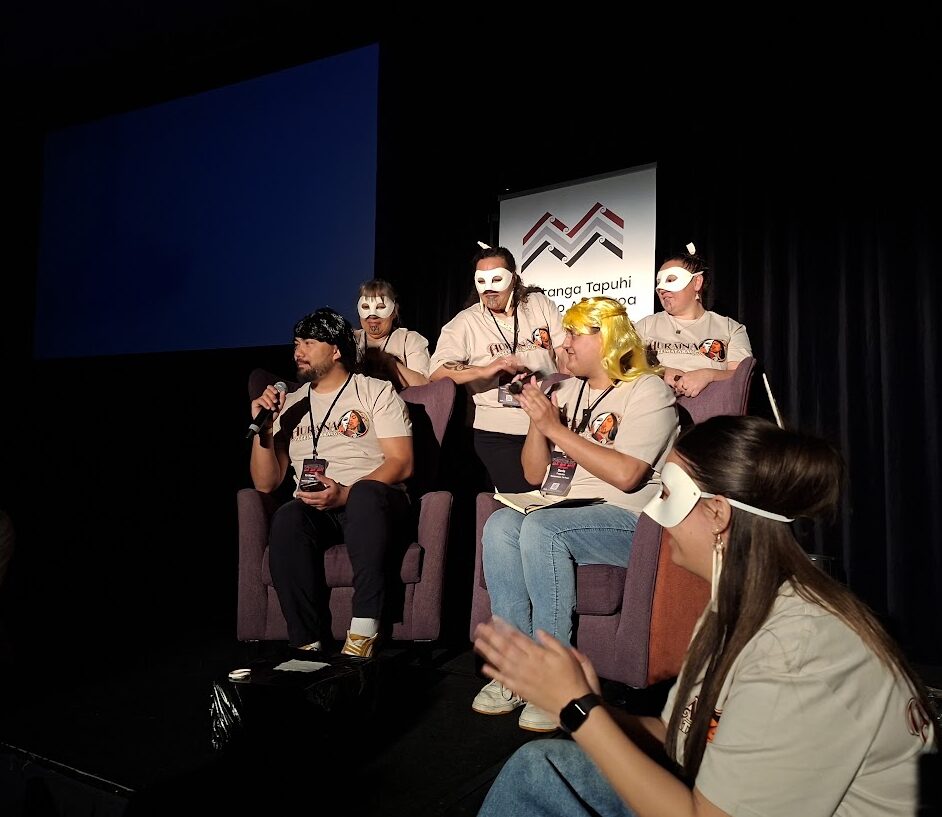
Members of NZNO’s Māori governance arm, Te Poari, also shared their experiences of identity and unmasking — taking off “the masks we wear every day, working in places we don’t identify with which have been developed with no consultation”, NZNO kaiwhakahaere Kerri Nuku said.
“No longer will we wear masks — we will and will continue to be — unapologetically Māori.”
Economist Max Rashbrooke slammed National’s track record, New Zealand’s supermarket duopoly and lobbyists for creating a chasm between rich and poor — an “extractive” rather than inclusive economy. This meant wealth, power and influence was concentrated in a small portion of society, and extracted from others.
A successful society, on the other hand, was inclusive, with shared wealth, less poverty and widespread political engagement.
‘Health care doesn’t stop until the day you die and we’re sick and tired of being the ugly cousin.’
In New Zealand the widening gap in the past 40 years, had been driven by National’s Ruth Richardson’s slashing of benefits in the 1990s, cuts to top tax rates from 66 to 39 per cent, and a decline in union cover for workers: ” . . a big shift in economic power away from ordinary working people towards people who are running companies”.
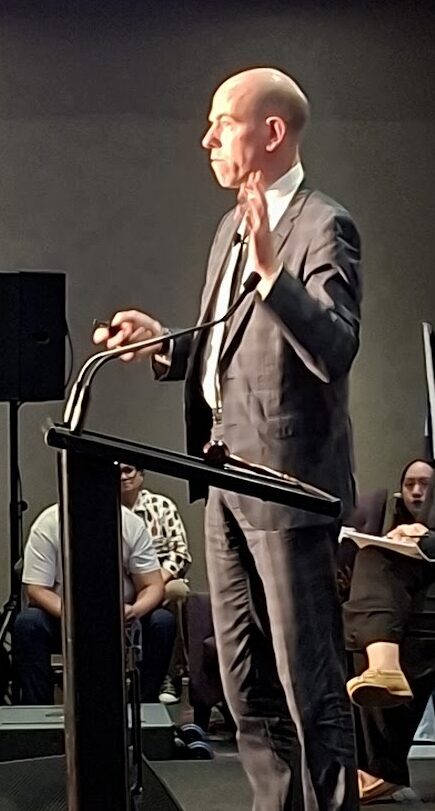
Association of Salaried Medical Specialists (ASMS) research showed health had been underfunded for decades here, compared to similar economies overseas who spent about $4 billion more per year.
“That’s what we would need to spend, extra, if we were going to lift our spending to a comparable level to that of a country whose health system you look at and think ‘that’s a pretty well-functioning health system’.”
Rashbrooke said this could be funded through “comprehensive” capital gains tax which included all income people made from selling assets and would raise about $5-8b per year.
“So you could fund a better health-care system out of a proper capital gains tax.”
Nurses need to ‘come together, park the stuff you disagree on, find the stuff you agree on, and have a kōrero.’
What can we do?
Rashbrooke believed the answer lay in more citizen assemblies, with grassroot and community networks such as Porirua’s Assembly on Climate, greater union voice and Māori making decisions about Māori, such as Ngāti Toa was doing in its rohe.
Watch Max Rashbrooke explain how to get back to where we want to be.
In Scandanavian and some European countries, for example, Governments sat down with unions and business to “thrash things out”.
A $10,000 cap on political donations and more lobbying transparency with a register would also help right the scales, as would halving child poverty, funding poorer schools more, building 50,000 more state houses, restoring pay equity, making union membership automatic and increasing our “criminally-low” tax rates which meant the wealthiest people paid as little as nine per cent tax, when counting their untaxed asset sales.
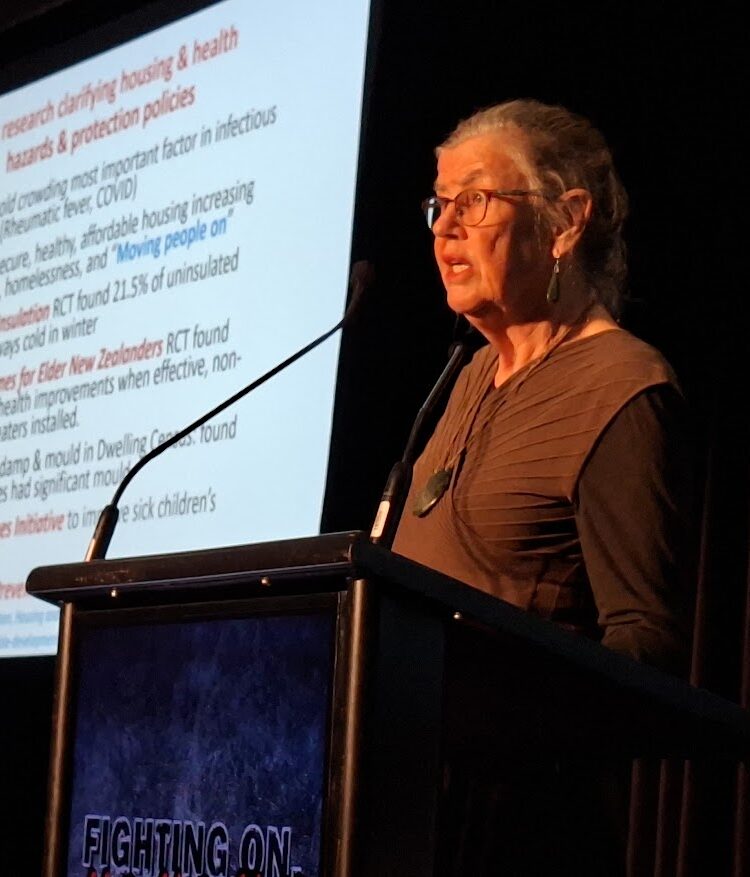
Public health and housing researcher Philippa Howden-Chapman said a “kind” society would build enough dry, healthy homes to stop children ending up in hospital with an asthma attack.
She noted a clear link between warm homes and children’s health, with 25,000 — a third — fewer children hospitalised with preventable conditions each year after the Healthy Homes initiative was introduced in 2014.
Good community nursing and public housing was the way forward for healthier families, she said.
Aged Care Association chief executive Tracey Martin — a former New Zealand First MP — called for aged care to be part of the health system rather than the underfunded “ugly cousin”.
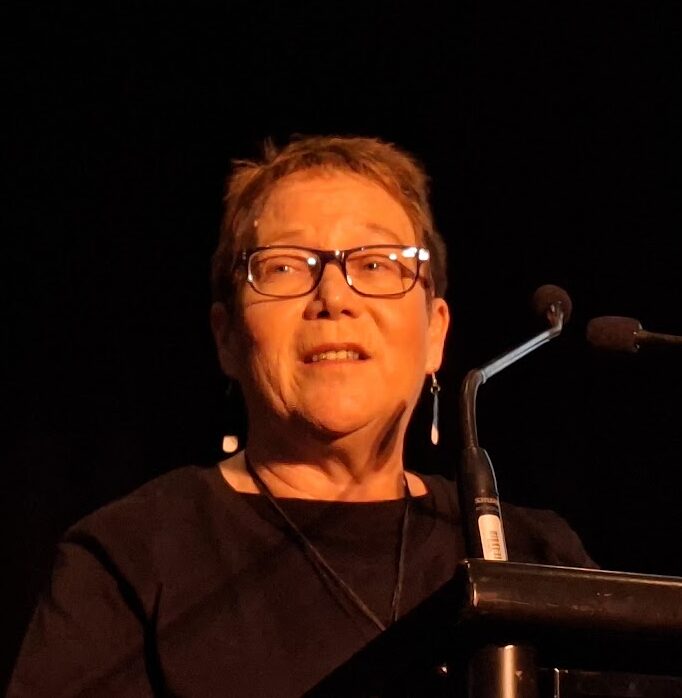
“Health care doesn’t stop until the day you die and we’re sick and tired of being the ugly cousin,” she said. “Suddenly the funding is different from when they’re in hospital . . . why? The only thing that’s changed is the address, not the right to care.”
Lack of funding made it hard for nurses to provide safe and meaningful care — something the Association was working with NZNO and fellow worker union E tū on changing, along with pay parity for for the sector.
“We cannot expect nurses and care workers to compensate with good will indefinitely — the answer cannot be to simply work harder.”
Nurses needed to “come together, park the stuff you disagree on, find the stuff you agree on, and have a kōrero”.
Former Green MP and long-time social activist Sue Bradford shared her experience on the People’s Select Committee after the Government cancelled 33 pay equity claims and changed the rules in 2025.
‘We fight for a society, an economy, a health system, a political system where wealth makes no difference and we all stand equal.’
Closing the conference, Goulter said NZNO, nursing, working people and Māori were at a cross road and must fight for a “true democracy” — one that recognised Te Tiriti, equality and offered quality health care for everyone.
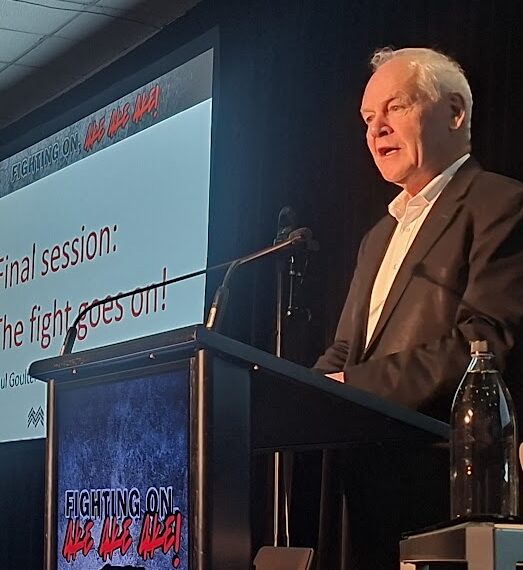
“Do we accept a society, an economy that’s based on greed, individualism, division, self-interest — a society absolutely destructive to the values we hold? Or, we fight. We fight for a society, an economy, a health system, a political system where wealth makes no difference and we all stand equal.”
Earlier, NZNO president Anne Daniels said members speaking up had made health one of the most pressing concerns as the Election approached.
“We are running on empty. We work on our days off, we work overtime, we work without breaks, we work when we are exhausted and know we could make mistakes . . . because we care.”
It was time to say “no more” — and nurses were saying it, doing it, through strike action and speaking up — at Tauranga, North Shore, Muriwai ward and Middlemore hospitals, she said.
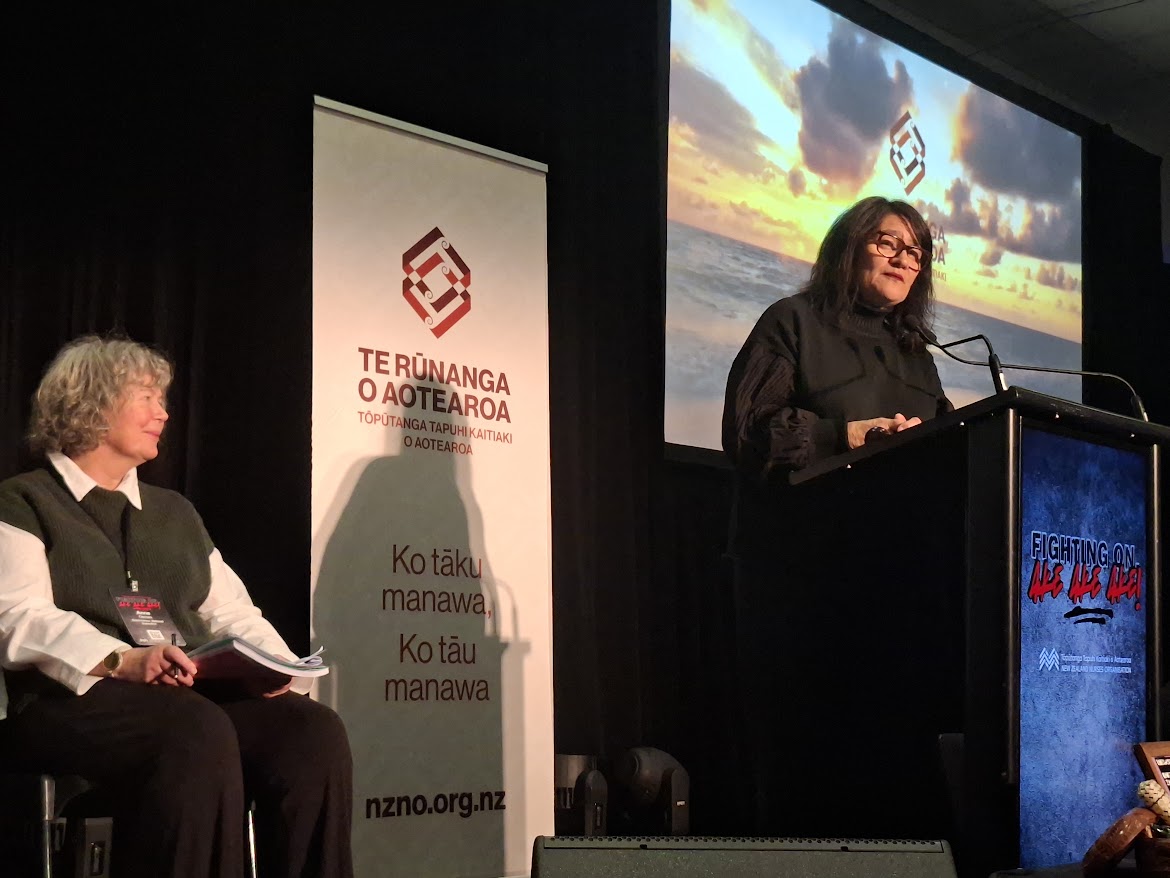
At the AGM, member groups also voted to accept new NZNO policies to support and strengthen a sustainable HCA and midwifery workforce.

NZNO kaiwhakahaere Kerri Nuku also revealed NZNO would be hosting the 2028 International Council of Nurses (ICN) nurse practitioners and advanced nurses conference, which would be attended by hundreds of nurses from around the world.
–– Our coverage of the NZNO conference will continue over the next few days.