


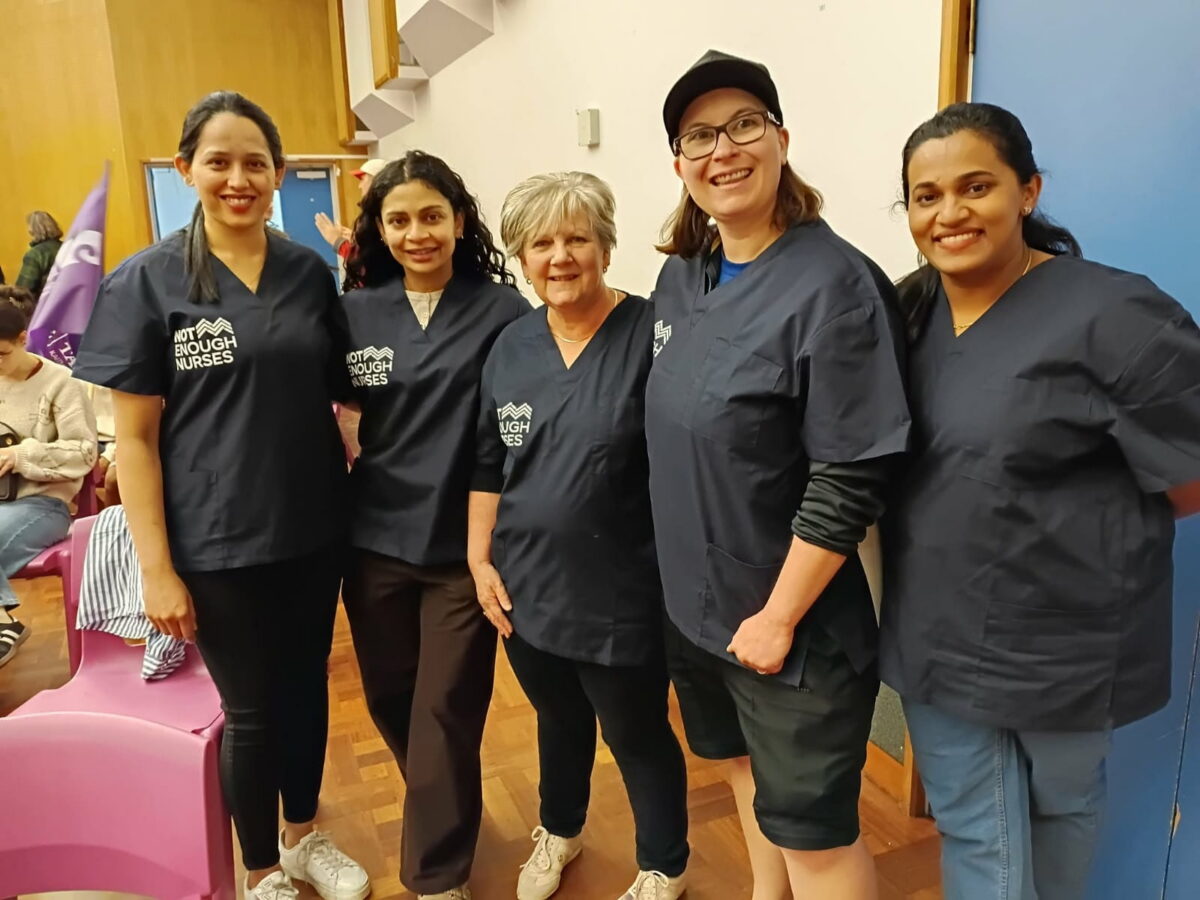
As NZNO delegate Adriana Carlucci-Hercun explains, staffing levels go down over the night — dropping at 11pm, and again at 3am, eventually leaving 12 nurses and one charge nurse to cope with “50, 60, 70” patients and a 30-bed capacity.
Against this backdrop of nursing burn-out and patient risk, NZNO members have scored a remarkable victory against understaffing at the hospital’s ED.
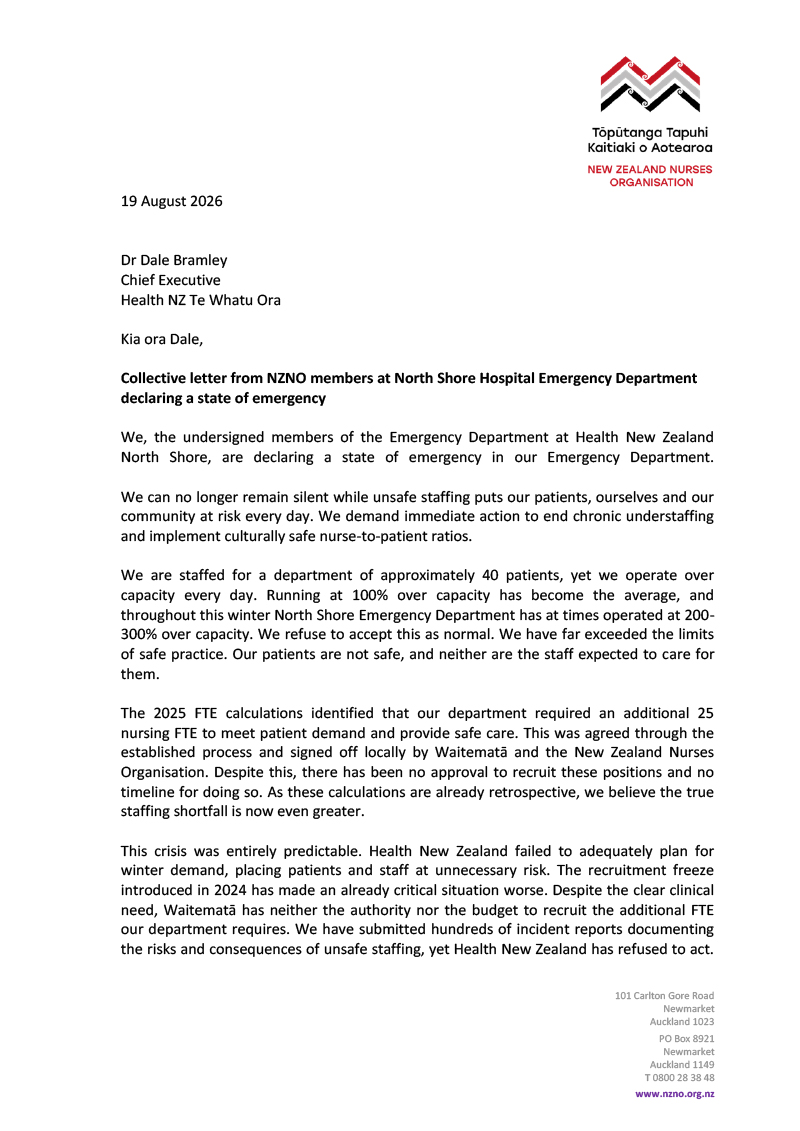
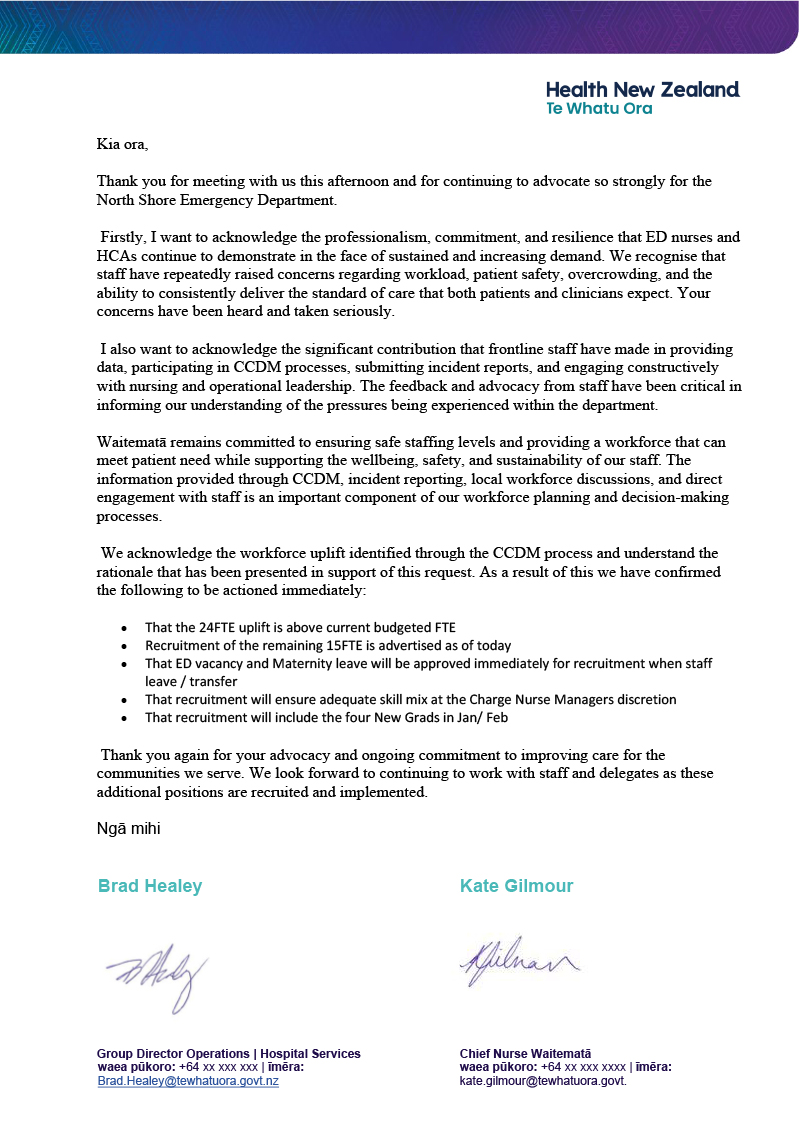
Just days ahead of a planned ED strike, Te Whatu Ora-Health NZ (HNZ) agreed to the claims — approving the till-then undelivered 25 nursing FTE (including watches and leave) members were demanding.
Now delegates have shared the secrets with Kaitiaki of how to win big: unity, communication, and a reminder that nurses should no longer be satisfied with crumbs.
Carlucci-Hercun said the battle for safe staffing had been going on “forever” — but this really was the time for change. “The winter was extraordinarily horrendous, and our numbers were ridiculous, and it just wasn’t safe for our patients anymore and we knew it. So we needed to do something.”

The likes of the decreasing night-shift numbers left nurses “holding on for dear life”, she said — a kind of pressure that left them absolutely exhausted at home because they gave everything at work. It wasn’t uncommon for ED nurses — and probably nurses in general — to return from a hectic shift and realise they hadn’t peed for the last 12 hours, she said.
Having the whole member team onboard was key to winning the victory. Communication between delegates and members was the gamechanger too, Carlucci-Hercun said. Plus they had the data showing that they were unsafe.
‘It’s a camaraderie but I think it just shows we’re not going to accept the crumbs off the table anymore.’
“This is for the nurses, but it’s for the New Zealand public, we need to make them safe. It’s not just the nurses burning out, the public need more nurses in their hospitals.”
Delegate and clinical coach Jean Moor said she’d never seen the department and the staff so unified. “It’s a camaraderie but I think it just shows we’re not going to accept the crumbs off the table anymore. We’re going to fight for what’s right – and this is what happens if you stand firm.”
Moor said that common goal kept members pushing for what they needed — despite the likes of an initial staffing increase of nine FTE — less than half the number identified by CCDM (care capacity demand management).
“In the past nurses have accepted what they’ve been given, but I think now we’ve actually found a voice, and we’re speaking out more for our patients and going ‘no, enough is enough’.”
Moor said the 25-FTE CCDM was based on last year’s figures anyway — this year’s demands would be even higher.
And how does she know? Moor completed an evening shift the previous day, and it felt like a “tsunami” coming through the doors.
The flu peak was on the wane, she said, but it was till extremely busy. “We’ve still got them all in the corridors, but we want to be able to give the best care we can to those patients, but you can’t when you’re running from one patient to the next.”
Moor has worked in the North Shore ED through various iterations since 2001, with only a 10-month maternity break. Over that time the population has only grown bigger and older; along with increased patient acuity (“people are just getting sicker”) and more services at the hospital.
Now she feels burnt out — especially after a night like the one before.
“It’s like a rock that’s slowly eroded. You think it’s immovable, but over time the waves erode that rock — and that’s how it feels. You’re just constantly under pressure and you just can’t sustain it.”
If there was a lesson from the win, Moor said it was that members needed to be unified in their beliefs. “Standing together, you will prevail. You just have to keep the faith and go forward.”
After all, nurses weren’t just fighting for themselves — they were fighting for their patients, she said.
|
|
|
Last week, after sustained NZNO action in North Shore and around the country, national chief nurse Nadine Gray announced that HNZ would be recruiting an additional 380 full-time equivalent (FTE) frontline workers, including nurses, midwives and HCAs by mid-2027.
‘It’s like a rock that’s slowly eroded. You think it’s immovable, but over time the waves erode that rock — and that’s how it feels.’
She made the announcement at North Shore Hospital, which would gain 25 of that FTE for its ED.
By the numbers
- In the campaign there were nine delegates representing different sections of the ED nursing workforce such as IQNs, senior nurses, educators, and floor nurses.
- Ninety per cent of NZNO members signed the collective letter
- There was 100 per cent turn-out on the indicative strike ballot. And there was then 94 per cent turn-out in the formal strike ballot.
- The department now has 96 per cent union membership.
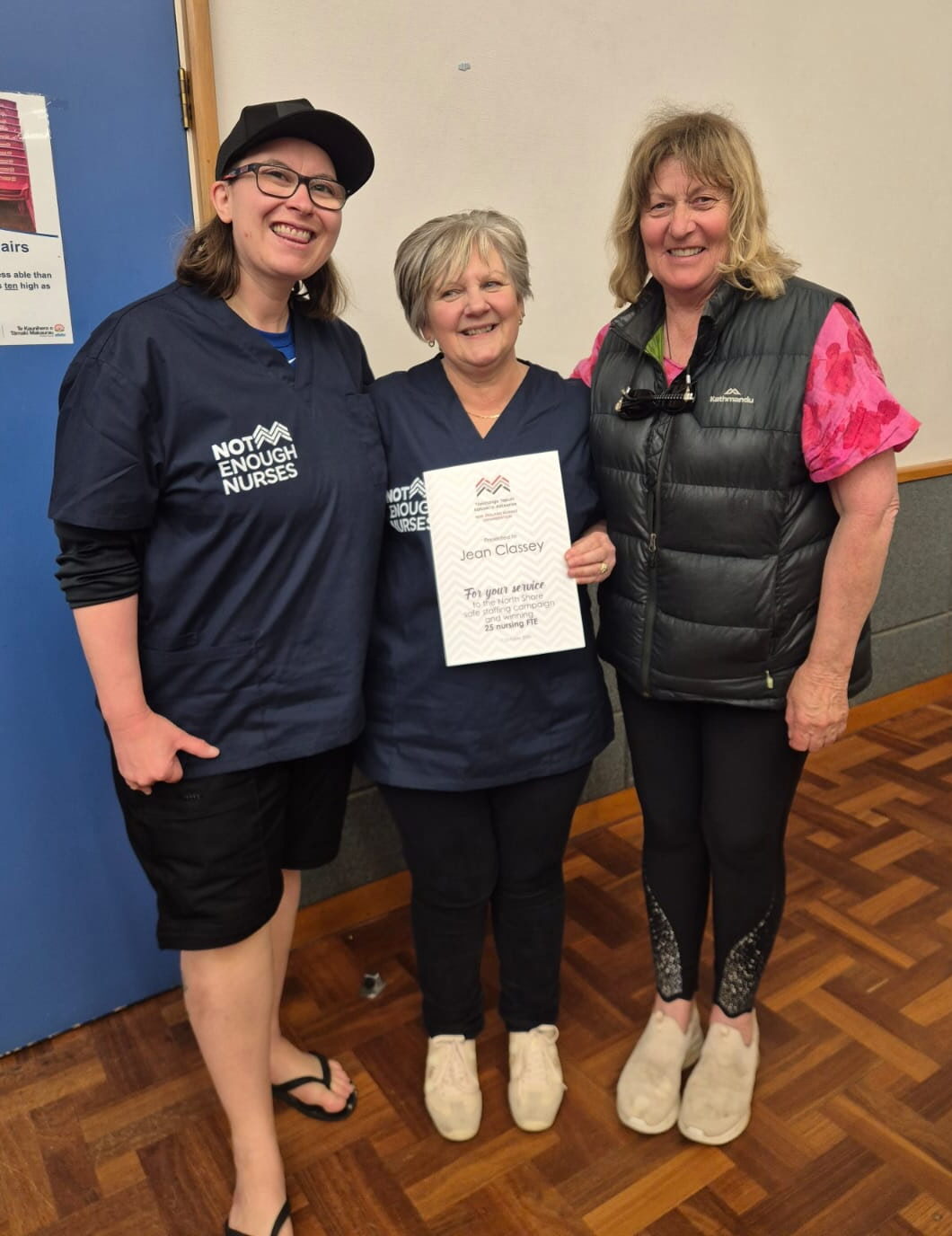
News of the victory still hadn’t quite sunk in, even days after the announcement, for associate clinical charge nurse Jean Classey.
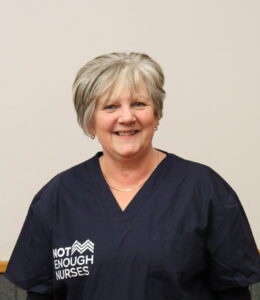
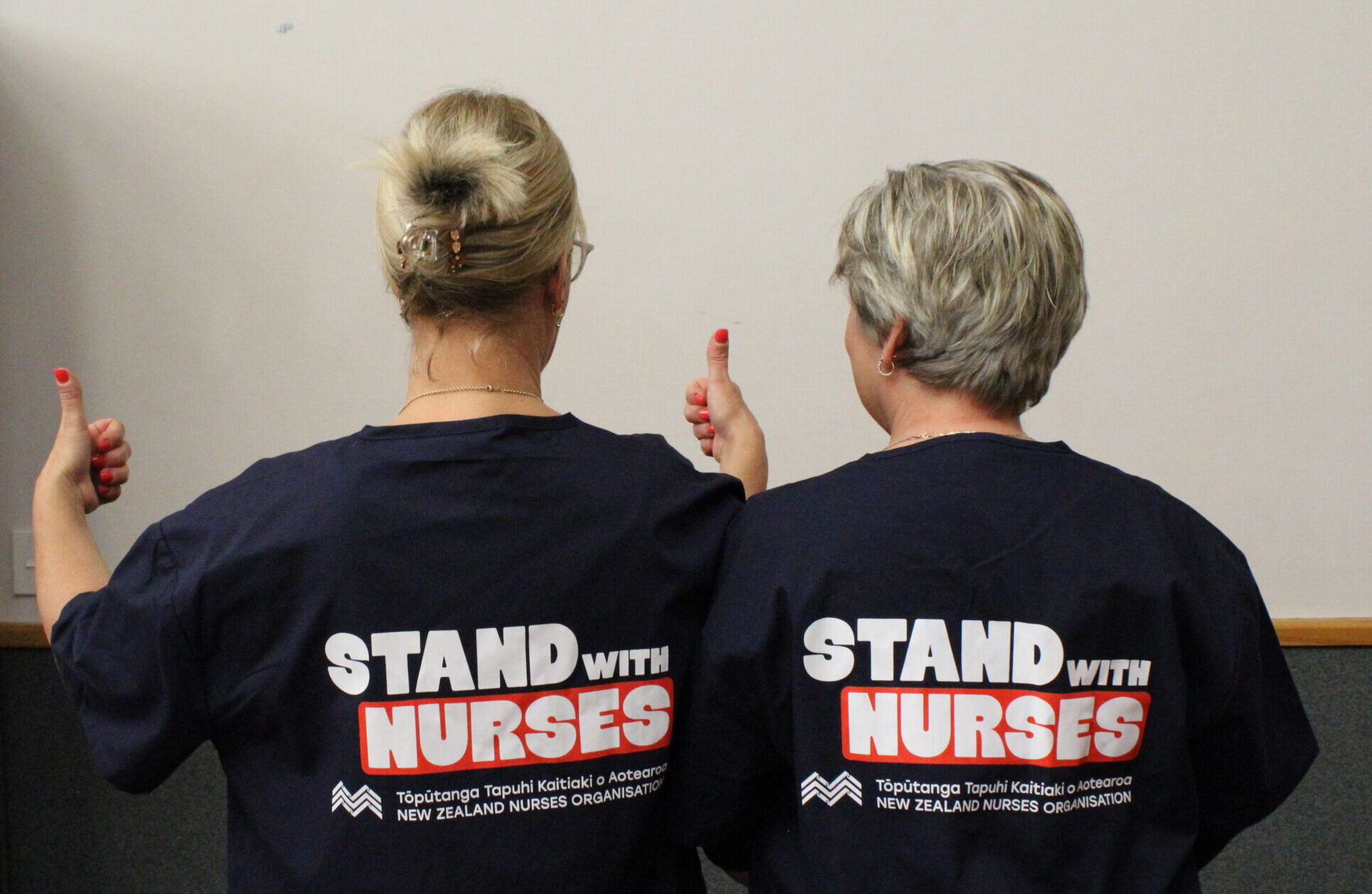
Classey is one of the ‘double Jeans’ of North Shore ED. She and Jean Moor were two very important delegates in the fight, Kaitiaki has been told.
She said nurses spent a year filling in the information needed for CCDM on the promise that they would get the staff they needed. So when the results came out but nurses still didn’t get the necessary FTE, “it was completely demoralising for them, they’d just completely had enough”.
ED nurses come on the shift to 50-odd patients: half of the inpatients are medical patients who should have been moved on. Then, as well as looking after ward patients, the nurses are having to look after the acute, undiagnosed patients too, she said.
“It’s got to a stage for them that they’re just completely burnt out and no longer enjoying the job and no longer able to give the care those patients deserve.”
After a fight, backed up by “pillars of strength” NZNO organising staff, the ED got offered the nine FTE, said Classey. But with an about two-year recruiting lag the ED would barely break even. So the members kept battling — and last Friday got the confirmation of the FTE they had demanded and needed.
Classey has been a delegate for 17 years now, sometimes feeling like as a bit of a “Lone Ranger”, but this safe-staffing battle has boosted delegate numbers by six.
Now she doesn’t feel so alone — the victory was amazing she said, and members were elated. “None of this would have happened if we haven’t have sent that letter, threatened to go out on strike . . . I think they [HNZ] got a bit nervous to be honest.”
The win wasn’t just about the ED — it was about every other hospital in New Zealand. Members needed to know that they could stand up, Classey said.
Her bosses were busy advertising and interviewing for more staff, which would make “such a difference”. “That’s why I don’t want it to die a death. Because not every hospital’s going to get an uplift, and I think they’re all struggling.”

Classey said she’d love to see other areas around the country standing up. “The more that do it, the more pressure they apply — then they can win too, they can get that staff.”
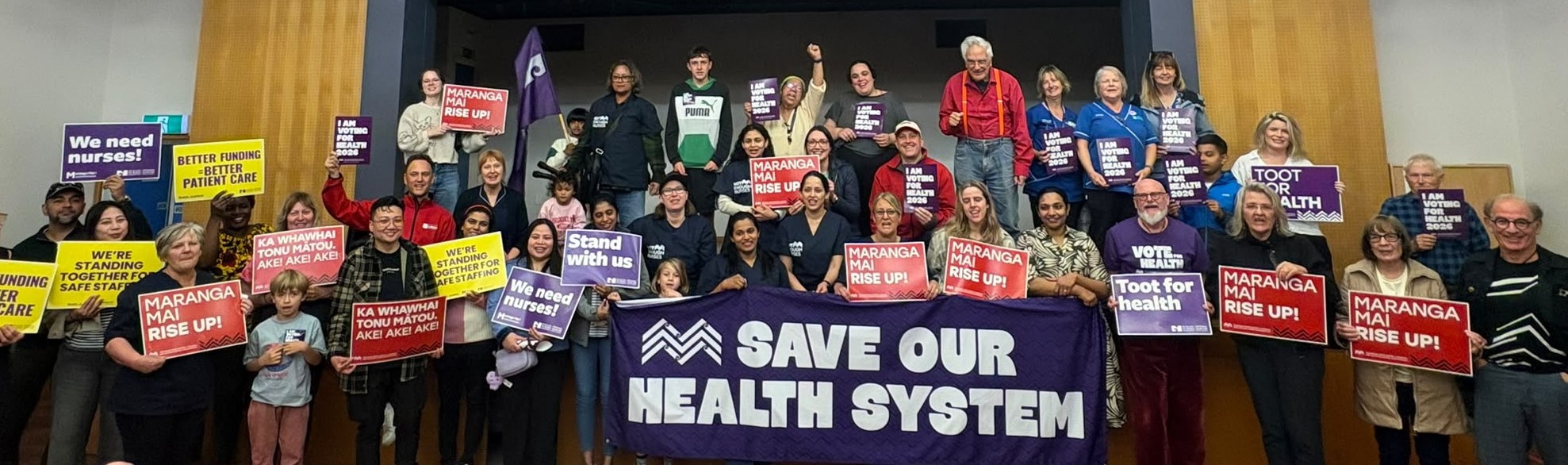
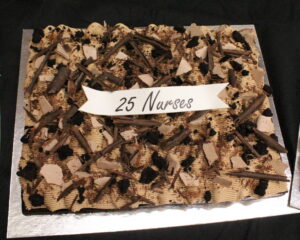
- Members celebrated the win with a rally at Takapuna Memorial Hall for speeches and cake during the hour set aside for the cancelled strike on October 1.
Timeline of action
- In April CCDM results identified 25 FTE needed for safe staffing
- With no recruitment to meet safe staffing by late July, and after NZNO meetings and communication with HNZ, planning started on the campaign. This included six new delegates coming onboard.
- On August 20 the collective letter declaring a state of emergency was sent to HNZ; delegates started speaking to the media about their concerns.
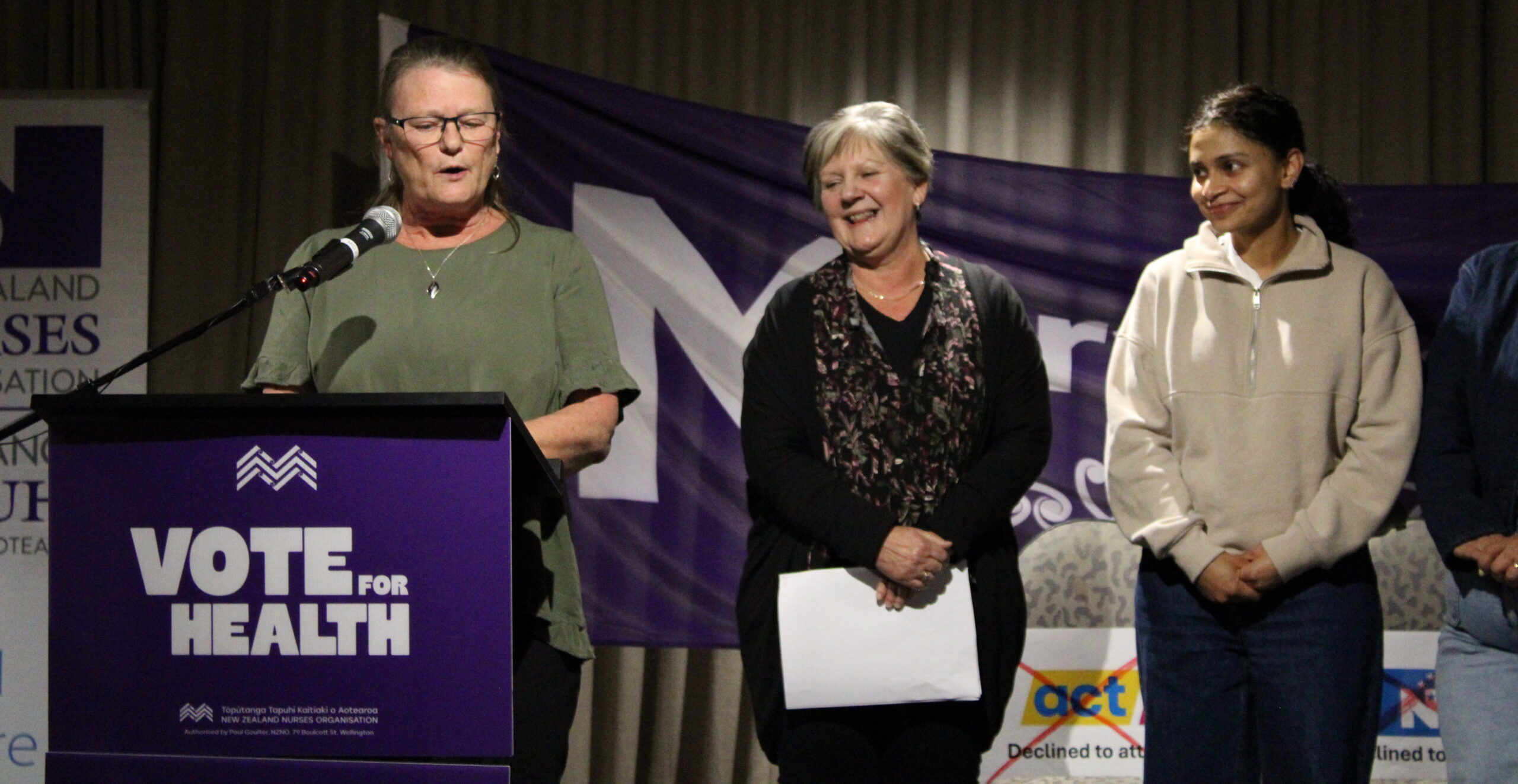
- On September 3, ED members spoke at the Vote for Health public meeting organised with the Northern LOC. Three hundred people attended.
- On September 16 a strike notice was issued.
- On September 25 HNZ announced the staffing uplift.