


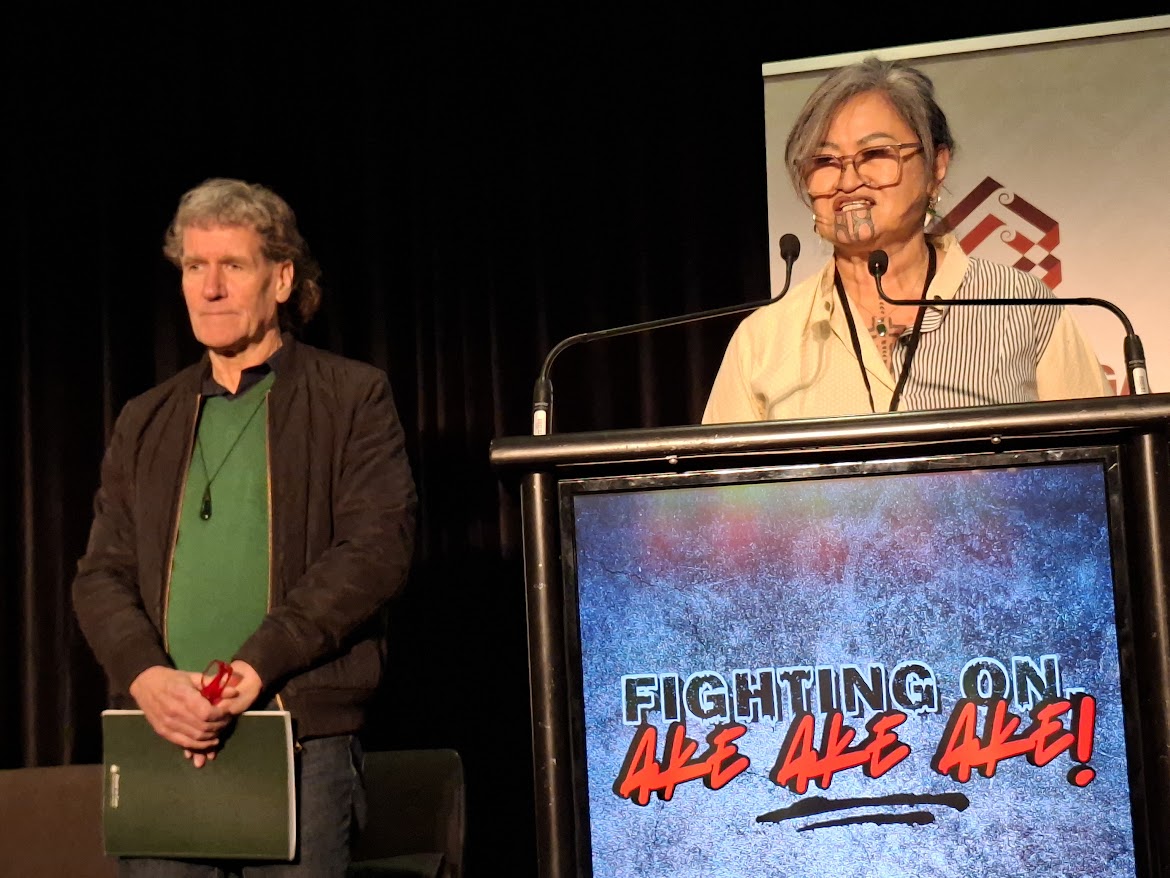
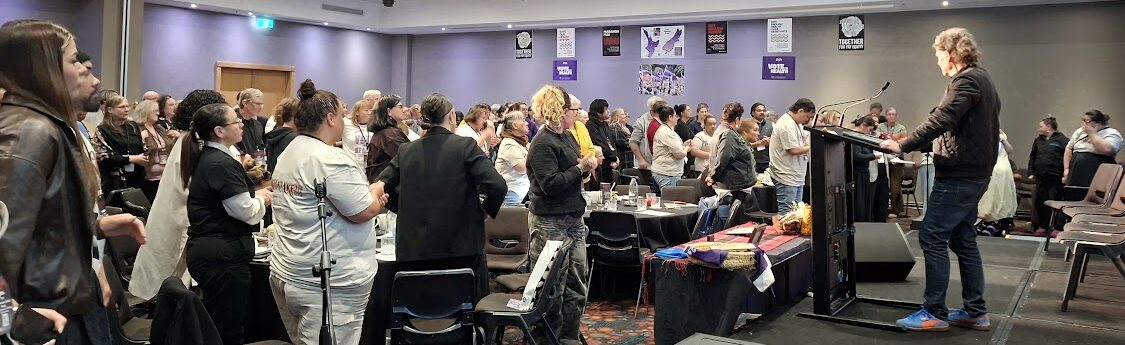
A room full of nurses, health-care assistants (HCAs) and midwives, all likely to have witnessed plenty of trauma, had no words — just tears.
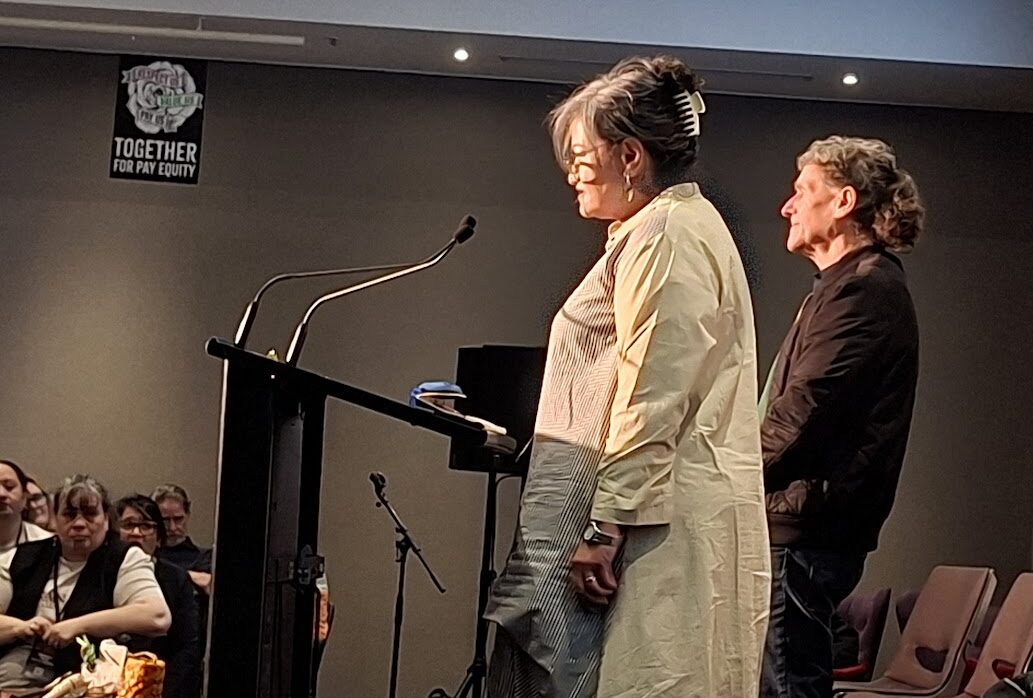
Kerepeti and fellow survivor Keith Wiffin shared their experiences with members — thanking NZNO for its sincere and “heartfelt” apology in March for the failings of nurses in not only turning a blind eye to abuse but participating.
Kerepeti said it was vital that nurses and health professionals speak up when abuse was suspected: “This is a direct call to nurses and clinicians as frontline witnesses, not bystanders.”
In its apology, NZNO committed to:
- Embed trauma-informed and culturally-safe practice in nursing education and professional development.
- Advocate for a robust redress scheme that meets survivors needs.
- Protect whistleblowers and enforce transparency.
- Work with the Nursing Council to strengthen the nursing code of conduct to ensure the safety of children in care.
See NZNO’s full apology video here.
“We were very moved — it meant a hell of a lot to us” Wiffin told members at the conference. “You set the tone and set the example.”
The support “means so much to us as this, at times, has been a lonely fight”.
In contrast, he said, the Government’s attitude seemed to be about minimising liability. “As it stands, at the moment, we are still very much in the dark. Moving to the light has proved very difficult.”
‘We feel, at the moment, an overwhelming sense of betrayal.’
Launching 2018’s Royal Commission of Inquiry on abuse in care had been a “brave and bold” move by Jacinda Ardern’s Labour-led Government which faced much resistance from senior officials, said Wiffin.
“But they stood their ground — stayed loyal to their commitment to survivors.”
After hearing from nearly 3000 survivors, the final report Whanaketia — Through pain and trauma, from darkness to light Whakairihia ki te tihi o Maungārongo, released in 2024, found up to 200,000 children had been abused in state care between 1950 to 1999, some enduring torture, sterilisation and electric shock therapy. It made 233 recommendations, including 207 for the Crown.
‘That home I was in 50 years ago is still there — and is still experiencing horror stories.’
But two years on, only a third had been accepted, some only partially — and even fewer honoured, said Wiffin — who, with Kerepeti, fronts the Human Right Commission’s Honour the Promise initiative.
“We feel, at the moment, an overwhelming sense of betrayal,” said Wiffin, who went into care after his father died suddenly when he was just 11. There, he received electric shock treatment.
He said Prime Minister Christopher Luxon’s official 2024 apology “meant nothing” without the changes. Abuse of children in care would continue — and was continuing today — at “appalling” rates.
“That home I was in 50 years ago is still there — and is still experiencing horror stories.”
‘Punitive’ policies
Meanwhile the Government, with its “ignorant, punitive attitude” was bringing in military-style boot camps and fostering racism with its stripping of Te Tiriti obligations — despite Māori experiencing some of the worst abuse in care.
Kerepeti said Māori and Pacific survivors experienced higher rates of abuse in a structurally-racist system which flowed into addiction, homelessness and incarceration.
Health and disability settings had been major abuse sites, causing lifelong harm to children. The institutions and the health professionals failed to protect those in their care, did not believe survivor reports of harm and handled complaints poorly — including professional bodies like the nursing and medical councils.
Read also Neta Kerepeti’s poem: White Man, White Coat, and Stethoscope (Warning – contains sexual abuse references).
What now?
Kerepeti laid out a clear path to a safer system of care:
- A national care safety strategy with oversight and checking of all care facilities.
- Mandatory reporting of abuse.
- Culturally-safe care, with investment in whānau, iwi and hapū to support them to care for their people, as part of a genuinely Tiriti-led approach.
- A requirement to believe and respond to abuse disclosure.
She thanked NZNO for its apology, which allowed healing to “take root and grow”.
“To you whaea Kerri [Nuku], and to the mothers, grandmothers, fathers, grandfathers among you, the nurses, I say thank you.”
Wiffin said after Scotland “flipped” its punitive approach to crime to make it a public health issue, the notoriously violent city of Glasgow’s murder rate dropped from 148 a year to 38 — something New Zealand could learn from.
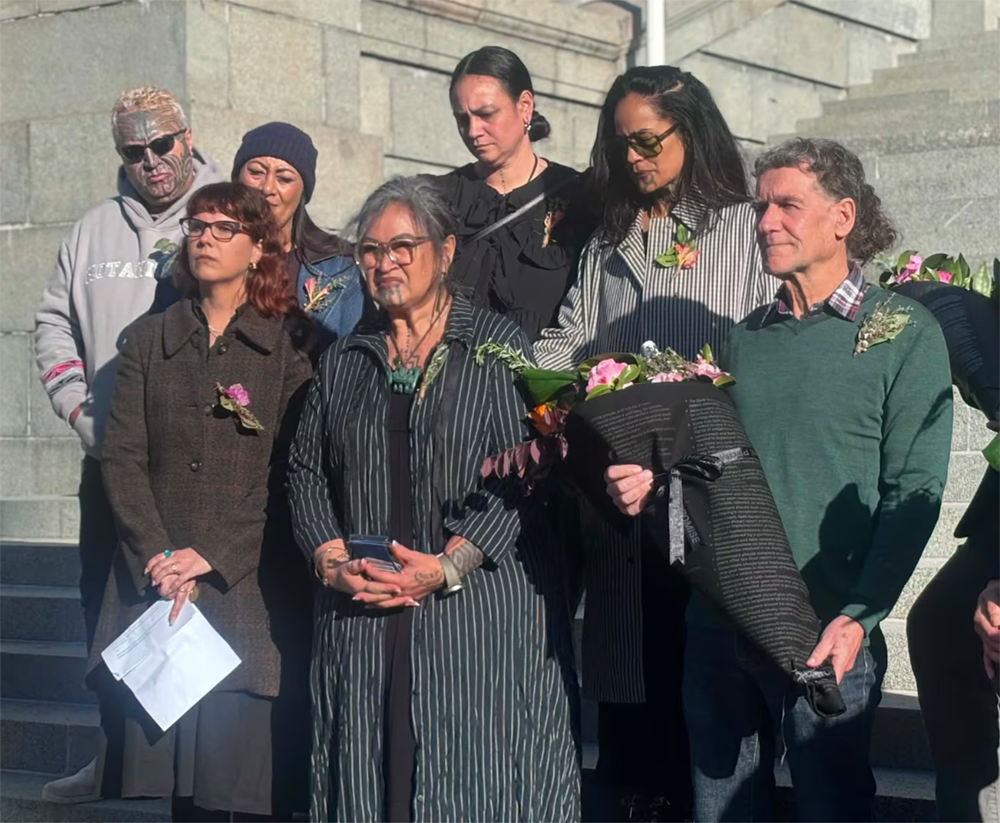
Nuku responded by saying there was much work to do to ensure there were strong reporting systems for nurses and health workers.
“This is something real, that’s happening now, so we take your challenge as an organisation and continue to progress our commitment to survivors of state-based abuse.”
Background
The Royal Commission’s website confirms 19 recommendations have so far been accepted, such as financial redress for former Lake Alice child patients; while “the intent” of another 38 have been accepted. Another 28 have been “partially” accepted — such as a puretumu torowhānui (holistic redress) system to compensate for cultural, racial and spiritual abuse as well as physical, mental and sexual.
Others — such as clemency for survivors convicted of crimes resulting from their abuse; or a police unit dedicated to investigating state care abuse — have been declined; while a complete overhaul of the care system is still being considered.