


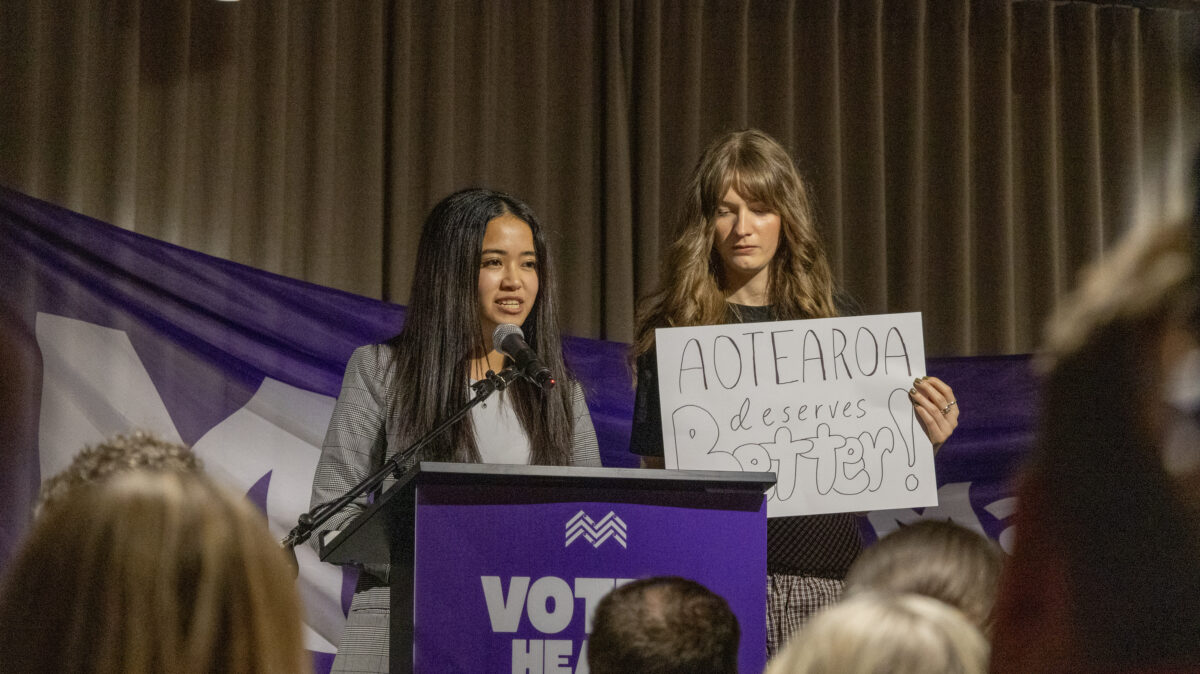
North Shore Hospital nurse Sophie Tomes said she loved nursing but the workload was “crushing”.
After three years in nursing, recently she experienced the worst shift of her life in her medical-gastro ward, with multiple critically-ill patients and four nurses short.
‘Despite these lows and the truly horrifying conditions we are facing at the moment, I still show up.’
The next day, despite experiencing stomach pain, she went to work so as not to let her colleagues down — before ending up in ED herself with appendicitis.
“Despite these lows and the truly horrifying conditions we are facing at the moment, I still show up, as do my colleagues, because we care,” said Tomes, an NZNO delegate who urged people to “vote with health in mind”.

North Shore emergency nurse Jean Classey said the ED was short by 25 full-time nurses, overcrowded and and under “enormous pressure” as patients waited for ages and in corridors.
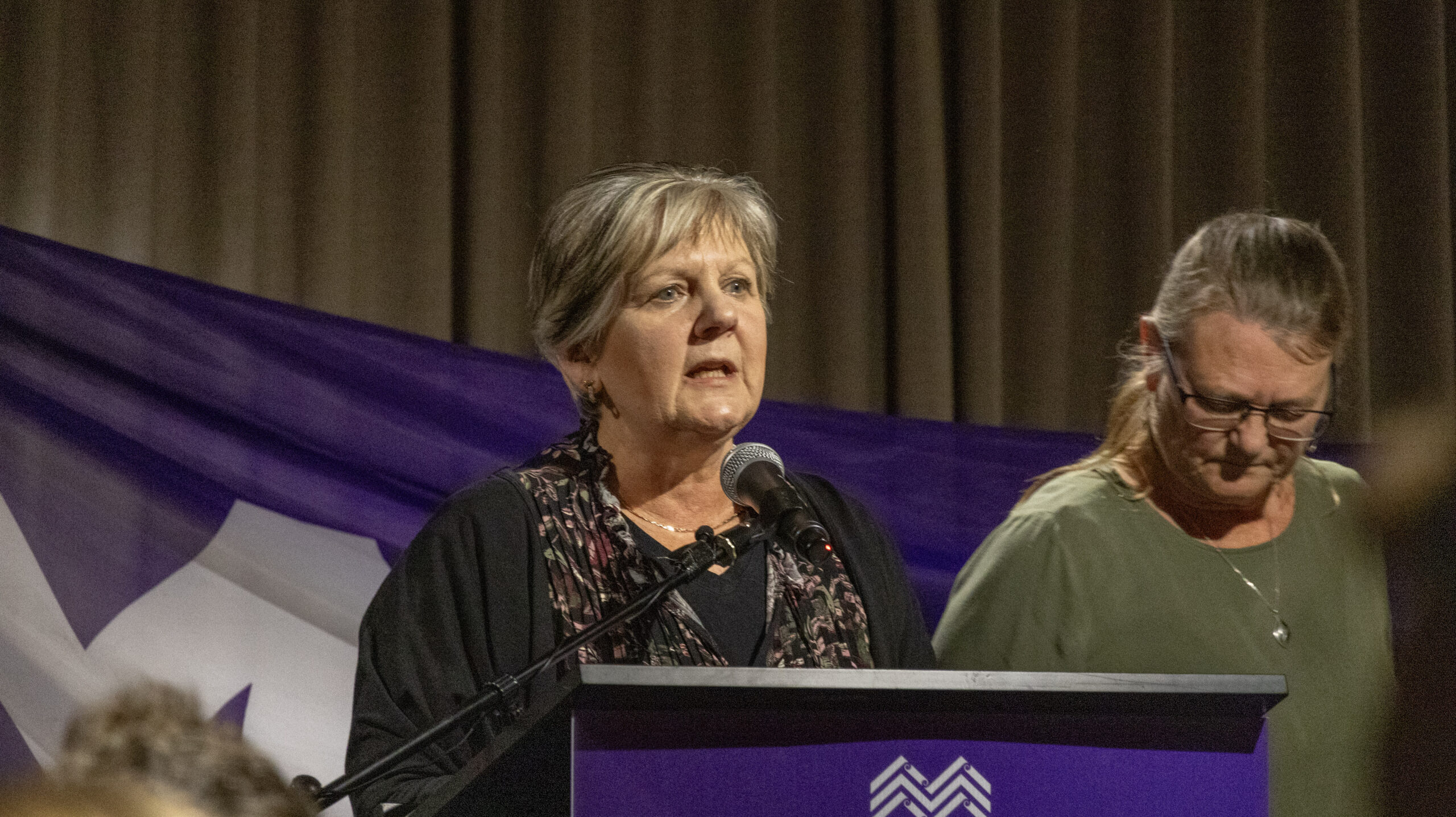
That meant nurses had to choose who to care for, which was incredibly stressful — and frightening for patients.
“Nurses are often the ones who have to face that frustration, even though they are working as hard as they possibly can,” said Classey, an NZNO delegate.
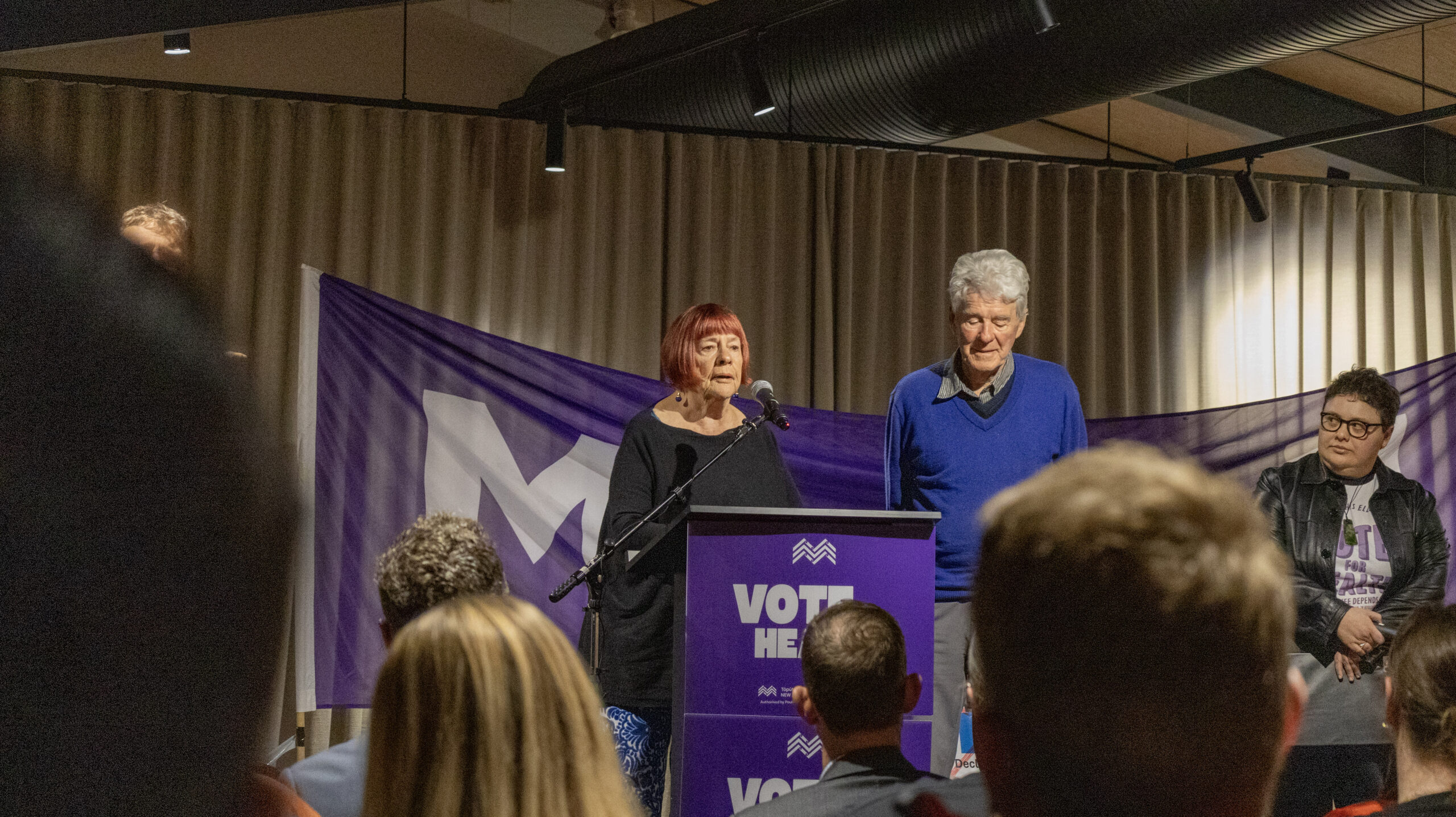
North Shore Hospital nurse educator Amanda Robinson, also a delegate, said senior nurses were struggling to see a future in New Zealand, currently, with huge workloads and inadequate pay.
“One educator or clinical nurse specialist, tries to do the work of three, at times . . . why would an expert nurse want to take on extra responsibilities and a pay cut?”
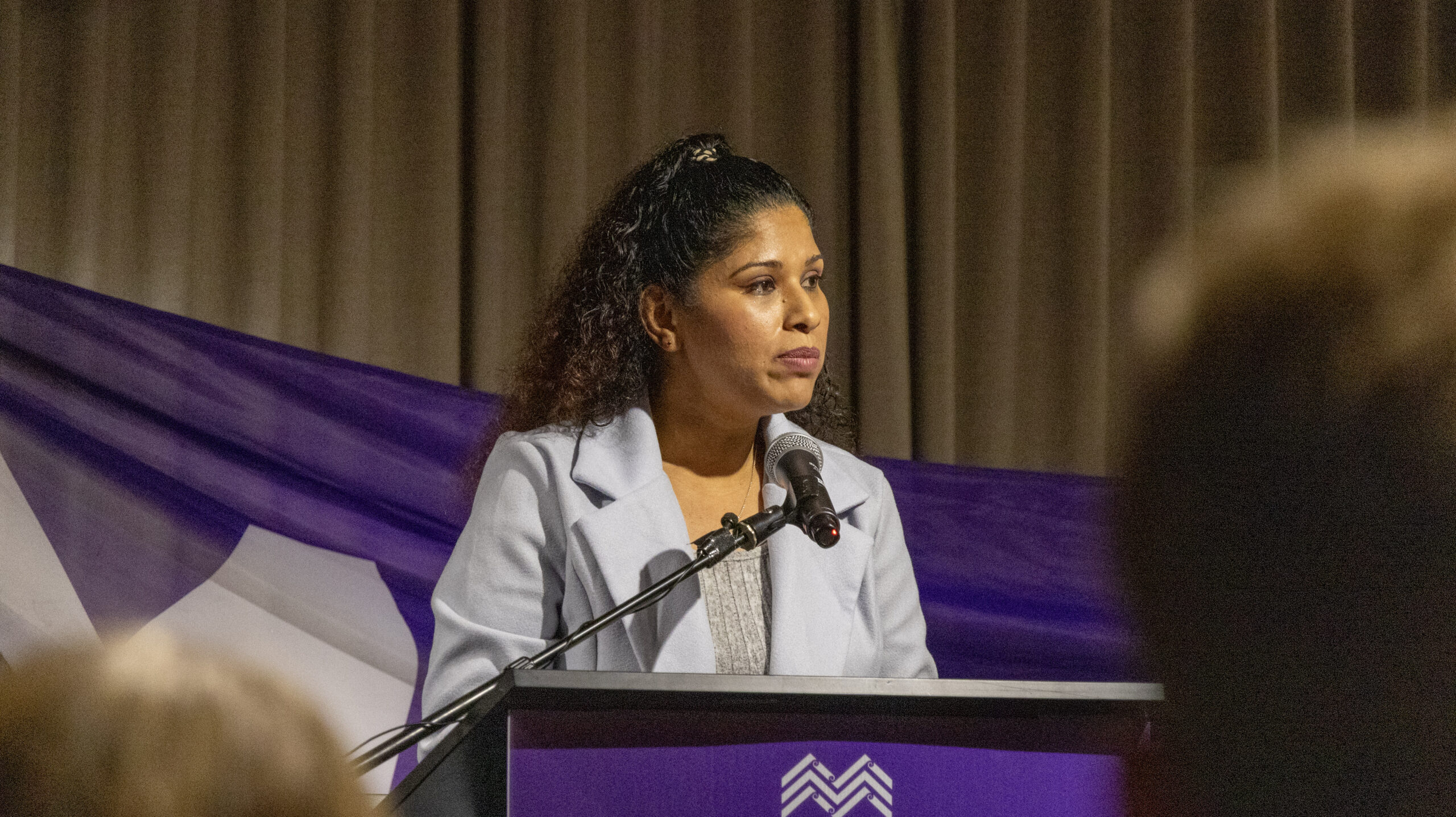
Aged-care nurse and delegate Rajni Lata said nurses were often responsible for up to 21 residents across rest home and hospital-level care — and up to 77 some nights. That had forced her into ethical dilemmas about who to help first.
“No health-care professional should have to make those decisions when caring for someone’s parent, grandparent or loved-one.”
‘I basically had to beg someone to take me to the toilet after hours of waiting and trying to ask for help.’
As well as being unsafe for residents, it caused stress, fatigue and burnout for staff, she said.
District nurse Lesley Pook called on the community to stand with nurses and fight for a fully-funded public health system.

Over the past month, district nurses had to defer nearly 1000 patients because there were not enough nurses — yet they were the ones who kept patients out of hospital, she said.
Now, every time a nurse left it was a battle to replace them — and managers said they would just have to lower their standards of care.
“We didn’t do three years of training . . . just to leave our patients suffering with less care than they need.”
As a result, many district nurses were heading to Australia, other nursing roles — or leaving the profession altogether.
Nursing student Shimee Araguas, who recently spent time in North Shore Hospital as a patient, said she spent 15 “horrible” hours waiting in a corridor for treatment — and nine hours to get food.
“I basically had to beg someone to take me to the toilet after hours of waiting and trying to ask for help.”
The public hui aimed to raise awareness in the community of the pressures on nurses and the health-care system, after a “state of emergency” was declared by North Shore Hospital’s emergency nurses last week as winter pressures bore down on understaffed wards.
About 200 people turned out to the meeting in Northcote on Thursday, including faith leaders and Labour’s Shanan Halbert, the Greens’ Hūhana Lyndon, Opportunity’s Daniel Eb and New Zealand First’s Daryl Harbraken.