


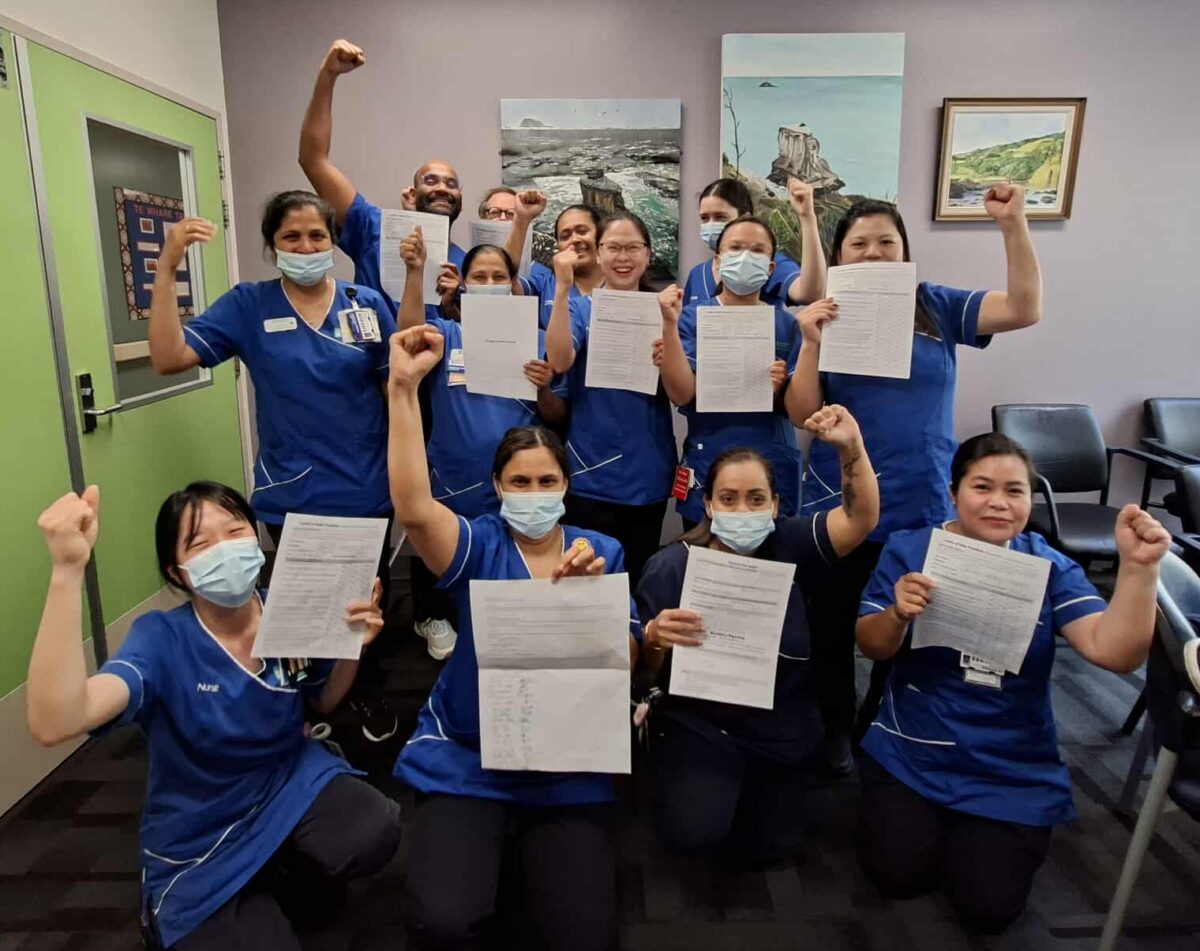
Hospital managers met staff on May 15, after 40 wrote to Te Whatu Ora-Health NZ (HNZ) chief executive Dale Bramley over severe and chronic understaffing on the 41-bed stroke and rehabilitation ward.
The letter called for minimum ratios of 1:4 nurse-to-patients in the mornings (plus four HCAs); 1:5 in the afternoons (plus three HCAs); and 1:8 patients overnight (plus two HCAs). Nurses went public with the complaint, which was front page news in the NZ Herald this month — and put pressure on managers to front up.
‘They don’t see the staff crying at the end of their shifts. They don’t see the abuse and impact that takes on you psychologically.’
NZNO delegate and registered nurse (RN) Gemma Bethell told Kaitiaki that managers listened to staff at the hui, but did not agree to hire more nurses. However, they did agree to hire more HCAs, so staff would wait to see if things improved before a follow-up meeting in early June.
Bethell told Kaitiaki nurses were worn out from unsustainable nursing workloads. Some nights, a single nurse was responsible for up to 11 patients, which compromised both staff and patient safety.

While HCAs were a valued part of the nursing team and could help with moving patients and personal cares, they could not carry out nurse duties like assessing patients, taking vital signs, wound care or administering medications for often-complex patients, she said
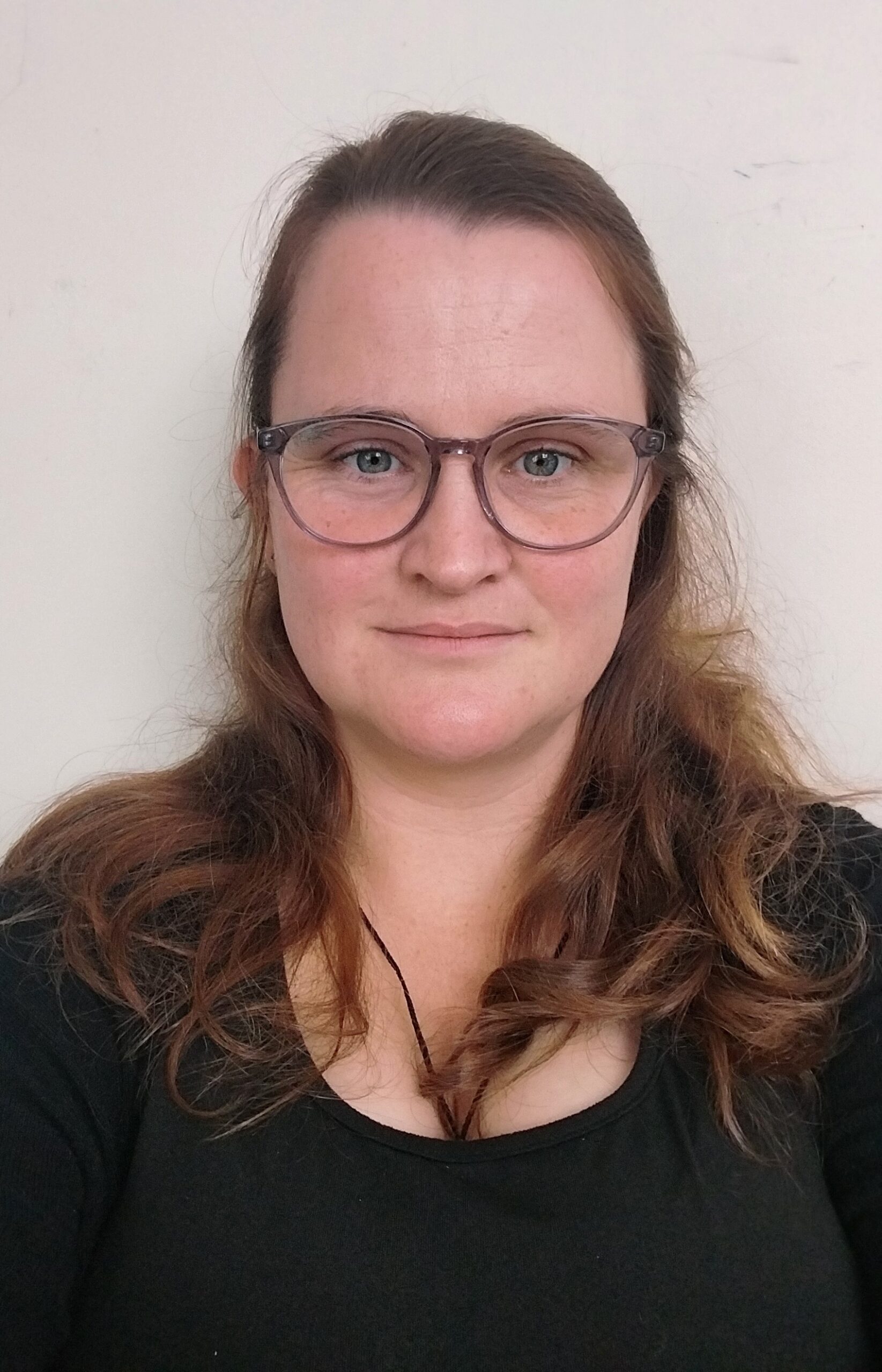
“The burnout is real,” Bethell told Kaitiaki.
“They don’t see the staff crying at the end of their shifts. They don’t see the abuse and impact that takes on you psychologically. They’re not seeing the personal impacts. All they’re seeing is numbers on a computer system and that’s what their focus is on.”
‘At the moment, we are short every single day.’
Managers also offered to better train staff on how to use staffing tool TrendCare and invited Bethell to a safe staffing system CCDM (care capacity demand demand management) meeting to see how their calculations were made.
Bethell said she would go along — but did not feel reassured by the response.
“They think that the staffing they have and the systems we’re using prove we don’t need more staff. They’re admitting they need to hire more HCAs but they don’t see a problem with nurse-to-patient ratios.”
Management seemed most concerned about the bottom line, she said.
“We just want to make a difference for patients and their families.”
HCAs injured by unsafe work
Muriwai ward HCA Shayal Singh said HCAs were often forced to move heavy or stiff stroke patients without enough assistance. This was dangerous both to patients and HCAs — several of whom were currently on ACC leave with workplace injuries.
“We have some people who need a three-person assist, but one or two of us have to do it,” she told Kaitiaki. “It really breaks our backs.”
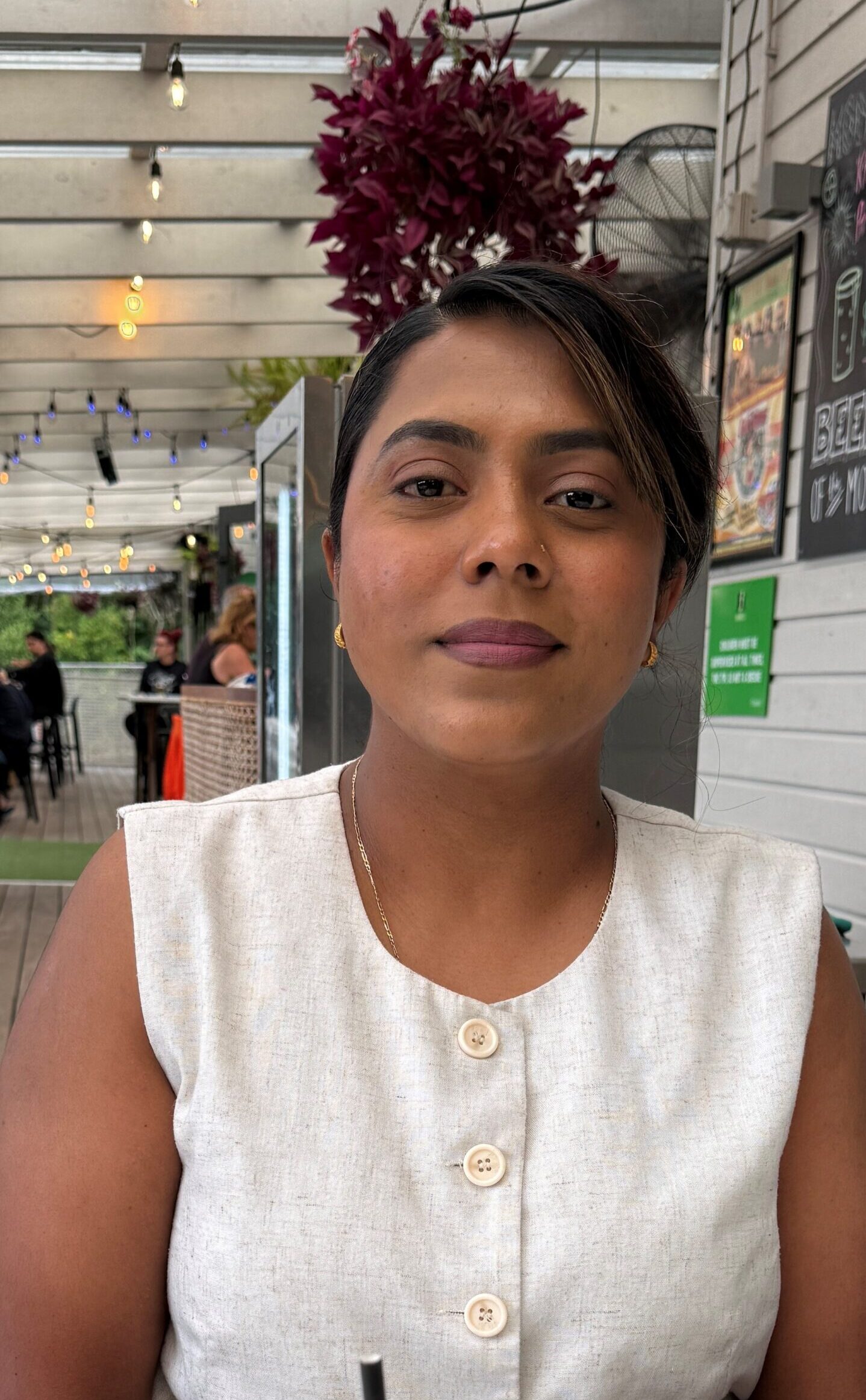
Management had promised for “months” to hire more HCAs.
Instead temporary/bureau HCAs were called on — but often did not turn up.
“They don’t like coming to our ward, they call in sick and say it’s too heavy.”
The ward was frequently understaffed, meaning patients didn’t get to the toilet, changed or turned often enough.
‘We don’t want our grandparents to lie on the bed, soaking wet.’
“We want our own staff, our own resource,” she said. “At the moment, we are short every single day,” she said.
“It’s impossible for one or two HCAs to cover 41 beds. We try to manage but we just can’t get to everyone in time,” she said. “We don’t want our grandparents to lie on the bed, soaking wet — that’s not fair on them.”
Singh said it was important the voice of HCAs was heard alongside nurses.
“We do a lot of work . . . but sometimes we feel like we are not counted.”
Another meeting is being held in early June. Bethell said health & safety strike action was not off the table.
“We don’t want to go there if we don’t have to but I’m fairly certain that’s what’s going to be discussed if we don’t have any change.”
HNZ ‘exploring skill mix’
HNZ was recruiting more health-care assistants (HCAs), increasing its pool of bureau staff and “exploring what skill mix would work best” on Muriwai ward, after the complaint, group director of operations Waitematā Brad Healey told Kaitiaki.
A prompt investigation had shown April staffing was generally at expected levels according to its CCDM [safe staffing tool care capacity demand management] calculations — but filling leave at short notice was challenging.
Of 84 requests to cover unplanned leave in April, 75 were filled by bureau staff and most night shifts were covered, he said.
HNZ expected to recruit more HCAs within coming months, Healey said.