


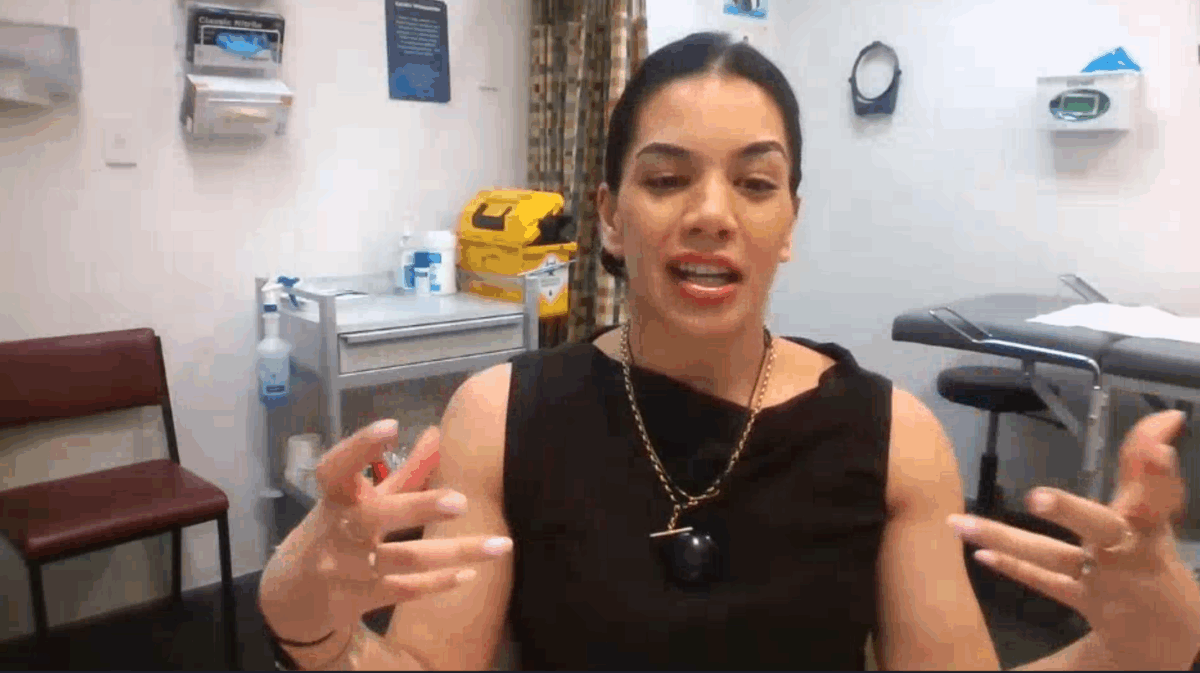
Tiahn Beuth-Pukepuke, like many other sexual health nurses throughout the motu, has her mahi cut out for her following the recent launch of a campaign to push for more syphilis screening.

The increase in cases has led Te Whatu Ora — Health New Zealand to launch the Syphilis Ain’t It campaign, which urges people aged 16 to 44, who are sexually active, to get tested for syphilis as part of their routine health check.
Syphilis is a serious sexually transmitted infection (STI) which can be transmitted through sex and intimate contact, or through the placenta during pregnancy and if untreated can cause babies to die or become seriously unwell.
Beuth-Pukepuke (Ngāti Hine, Ngāpuhi, Tuhoe) works at multiple Health NZ sexual health clinics throughout Auckland and she is mustering all her knowledge of te ao Māori, te reo Māori and tikanga Māori to get that message to tangata whenua in Auckland, where the infection rate is highest.
There were 774 cases of infectious syphilis last year — a 45 per cent increase from 2022, according to the Sexually Transmitted Infections in New Zealand: Supplementary Annual Surveillance Report 2024. This saw case numbers return to pre-pandemic, 2019 rates.

More women of reproductive age, especially wāhine Māori, are being affected, the report found.
It’s about ‘self-care – mana motuhake’
“I was raised in te ao Māori, in Auckland west and attended Te Kura Kaupapa Māori o Hoani Waititi Marae, so I’m applying all the mātauranga [knowledge] I gained from those spaces, and in my clinical training, to make Māori patients feel more comfortable about coming into our clinics to get tested,” she said.
While mana motuhake was a concept associated with Māori self-government, Beuth-Pukepuke said it was also about self-care and self-determination of individuals and whānau.
“This loud and proud campaign calls on everyone who is having sex, pregnant, or planning to get pregnant to ask for a quick syphilis test as part of regular STI or prenatal checks, make testing part of their health routine and encourage partners and friends to get tested too,” Beuth-Pukepuke said.
“Regular screening keeps you healthy, confident and more empowered to take charge of your sexual health. It’s an act of self-care.
“We want to keep whakapapa alive. Do it for yourself, do it for your mokopuna. Everyone should be testing.”

In response to being called the “syphilis cop” Beuth-Pukepuke said she preferred to empower patients rather than lecture them.
“I take a mana-enhancing approach, try to make sure that when patients leave the clinic that they have nothing to be whakamā or embarrassed about and that they are empowered.”
Beuth-Pukepuke laughed when asked why she accepted to be the face of the campaign.
“No one else put their hand up, so I had no choice. Actually, I don’t mind being the face for this kaupapa. It’s a good cause and I am passionate about whakapapa, whare tangata and health.”
Capacity challenges
While many sexual health nurses Kaitiaki talked with supported the campaign, some nurses did have concerns about capacity and process.
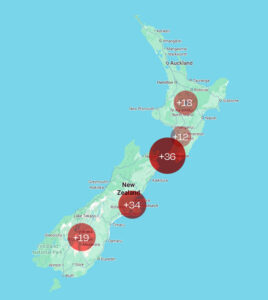
The 2024 surveillance report found that while Auckland had the most cases, the districts with the largest increases were Capital and Coast, Canterbury, Southern, Lakes and Midcentral, but noted that could be because there was more testing in those areas than other places.
“The message is great, but there may be some capacity issues in smaller towns like in Manawatū-Whanganui region where there has been a significant increase in the infection,” said a sexual health nurse, who did not want to be named.
Another sexual health nurse in Capital and Coast, who also did not want to be named, said “red tape, not capacity” was the main challenge for Wellington, Hutt Valley and Porirua.
“We have a few free services throughout this region, but the problem is that checking for syphilis and HIV is more intense than for other STIs.
“For syphilis, you need to book an appointment, then sit down and talk with a nurse who is then required to talk with a doctor who will determine whether or not you are given a form to take to the blood lab to do the actual test,” she said.
Those who were given that form, would then be able to go to a blood laboratory to complete the process, at no cost to them.
Eight services commissioned to expand innovative testing

Te Whatu Ora — Health New Zealand told Kaitiaki that it has just commissioned eight services to expand innovative testing for syphilis, HIV and other STIs to priority populations. The new service providers were:
- Aotearoa Drug Information Outreach Trust (Northland, Taranaki, Waikato, Lakes, Bay of Plenty and Tairāwhiti districts)
- Body Positive (Auckland)
- Drug Injecting Services in Canterbury Trust (Te Waipounamu)
- Huria Trust (Tauranga)
- Positive Women in collaboration with Toitū Te Ao (rural North Island areas)
- Rākau Ora Mental Wellness Services (Northland)
- Taiohi Tūrama – Rotorua Centre for Youth (Rotorua)
- Sexual Wellbeing Aotearoa (free online national service)
Testing is the only way to know

Dr Rose Forster, clinical advisor for sexually transmitted and bloodborne infections for Te Whatu Ora — Health New Zealand, said the campaign seeks to remove stigma around STIs and empower people to get tested.
“Syphilis is in our community and we need more testing to bring the numbers down.
“Many people with syphilis don’t have symptoms in the early stages, but it can still affect partners, unborn babies, and cause serious long term health issues if not treated. Getting tested is the only way to know.”
Most STIs, including syphilis, are easy to treat, she said.