


Nursing leaders respond
The college of emergency nurses New Zealand, representing ED nurses nationwide, extends our heartfelt condolences and prayers to the patient and whānau involved in the incident at the Waikato ED.
This should not happen in our country.
Also, we extend our prayers and thoughts to all emergency staff and to all the staff at Waikato Hospital who will return and carry on, because they are professionals who care for the communities we live in.
Recently, we have had senior clinicians from the Australasian College for Emergency Medicine and senior nurses from Waikato ED talk about the increased workloads that are placing patients and staff at risk.
This is not new; the variance response management tool, has captured ED pressures relating to hospital pressures/inpatient beds at an hourly rate, depending on demand and patient acuity.

What is lacking is a proper response and meaningful actions to alleviate workload pressures within EDs and across the entire hospital system, so these incidents do not happen again.
–College of emergency nurses New Zealand co-chairs Natasha Hemopo and Wendy Sundgren.
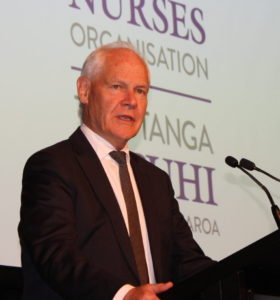
NZNO chief executive Paul Goulter said the organisation’s thoughts and condolences were with the man’s whānau.
“Te Whatu Ora’s Midland executive regional director Cath Cronin refused to say this morning whether the ED was understaffed on Monday night. The public deserve better than obfuscation.”
After 20 months of members having short-staffing concerns brushed off in collective bargaining, they had little confidence in Te Whatu-Ora-Health NZ (HNZ) reviewing its own processes, he said.
Goulter said New Zealanders needed to know whether their EDs had enough staff — the inquiry should also examine whether Waikato Hospital had enough funding to staff its ED.
The man died after a reported nine-hour wait in the ED — found unresponsive in the toilets of a crowded waiting room shortly after 1am, overnight Monday.
Staff performed chest compressions on the man while on a gurney being taken from the waiting room.
It came the day after media reported that the Waikato Hospital ED had recently received more than 300 patients in a single day — June 8.
Meanwhile NZNO emergency nursing leaders have called out a nationwide problem of short-staffing, dangerously long waiting times and inpatient gridlocks.
NZNO president Anne Daniels said nobody should have to wait nine hours for help and blamed a “totally unethical” approach to health care that put budget before patient safety.

“We have a system called CCDM that tells us how many nurses, doctors and wider team members we need to actually support triage category timely see and treat – but we’re not recruiting to that, because we’re working under a budget which has been set by the Minister of Health,” she said.
“This is why the review has to be broader than just this one incident because people are dying in EDs all around the country.”
Waikato ED was under significant pressure – but so was the entire health system, she told Kaitiaki.
“These are system failures that are actually being set up by the decisions made by Government and enacted by employers. And, sorry – it’s totally unethical.”
She called for an independent review that looked at all the contributing factors to not only this death, but other ED deaths in recent years – including primary health care backlogs which meant people were forced to turn to ED for help.
Last year coroner Ian Telford slammed the “conscious decision” to understaff Taranaki Base Hospital’s ED — leading to the 2020 death from head injuries of Len Collett.