


Relief Tiriti claims intact after ‘whiplash’ talks
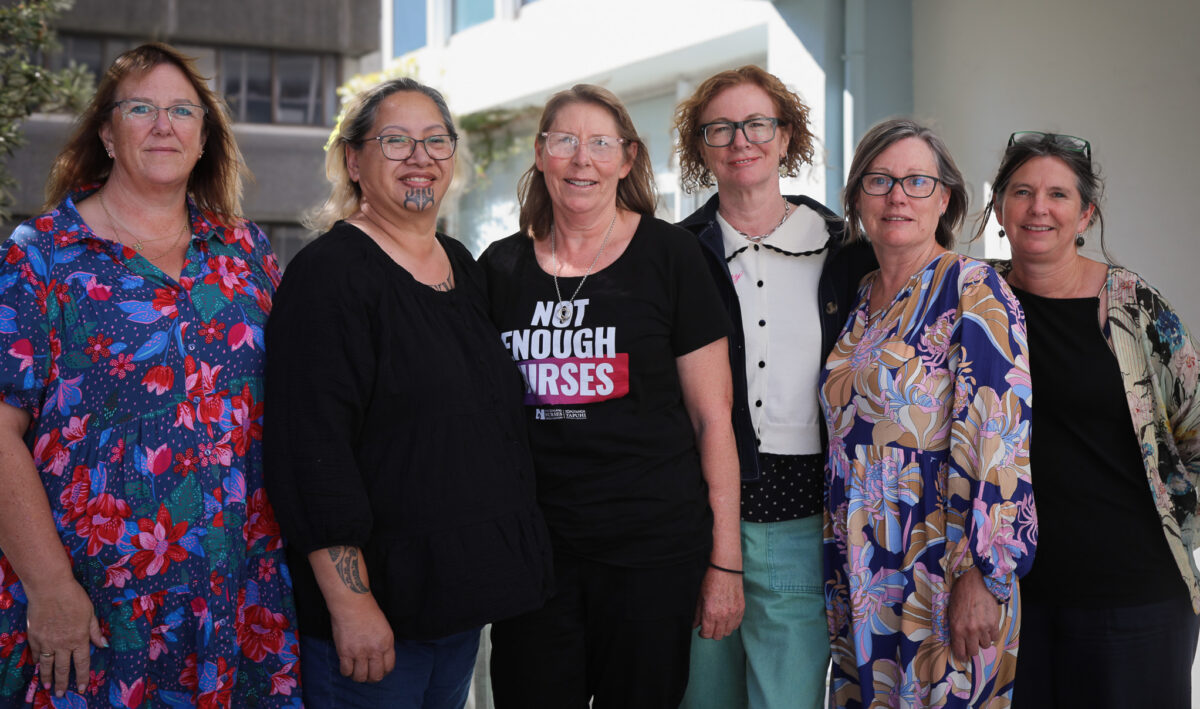
Waikato registered nurse (RN) Maria Tutahi said she was happy that NZNO’s Te Tiriti claims for tikanga Māori pūtea allowance and kaupapa Māori dispute policy were part of the new agreement.
“We’re so happy that it got on there — it was on and off, it would give you whiplash!” said Tutahi, also in the bargaining team. “I’m really happy we’re going to be able to shape these two kaupapa and we are going to have input into it, on behalf of Māori nurses.”

Tikanga Māori pūtea was a financial acknowledgement of the cultural expectations which often fell on staff with pūkenga (expertise) Māori.
“I’m really happy that we can look forward to something that works for us and we have input in the creation of. It could have been something else — non-Māori telling us what we should do in this space, but it’s not. It’s us. That’s what I’m happy about.”
Both were being worked on by NZNO’s Māori governance arm Te Poari and HNZ, but were expected to be in place by early 2027.

Tutahi said the 20 month bargaining had been gruelling, costing her 80 days away from her whānau. “It was so much. It was hard on them — but it was really hard on me.”
However, it also had up sides — strong relationships with the team, more knowledge and deeper appreciation of previous teams.
“It opened my eyes to a lot of things I just took for granted. I wasn’t as familiar as I am now with everything in the collective. I have more knowledge — and more consideration of what previous teams have put into negotiations.”
And while her team all had their own, often strong, opinions, there was no “bad blood”, Tutahi said.
“We would just disagree — that’s it. We were very professional. I couldn’t have been with a better team.”
Tōpūtanga Tapuhi Kaitiaki o Aotearoa-NZNO HNZ members voted in mid-May to accept a 4.5 per cent pay rise over two years — 2.5 per cent from March 2, 2026, then another 2 per cent from March 2, 2027. Enrolled nurses also get a $2000 increase to their step five rate in recognition of their expanded scope; and nurse practitioners an annual $6000 professional development allowance, both from March 2, 2026.

But six weeks later by late June, they had still not kicked in.
HNZ has now confirmed to Kaitiaki the first payments will start this month, July, and be completed “in stages” by September.
All will be backdated to March 2.
Bargaining team member Rachel Thorn, a Whangārei emergency nurse, welcomed the news. She said it had been frustrating after such drawn-out bargaining to face yet more delays.
Thanking staff for their patience, acting people and culture director Deborah Kent told Kaitiaki HNZ was working through a large number of collective agreements that covered about 64,680 employees.
A $1000 lump sum (or $1300 for designated senior nurses/midwives) was also on track to be paid by mid-August — within three months of the new agreement’s signing — as agreed, Thorn said.
Safe staffing ‘wins’

Auckland RN Dawn Barrett, also on the bargaining team, said two key safe staffing changes agreed in the new collective were almost settled: More transparency around vacancies and recruitment and better reporting pathways for floor staff experiencing unsafe staffing.
“They are essentially giving staff licence to raise consistently unresolved issues, especially with patient or staff safety — and HNZ will act,” Barrett said.
“Previously, the incident reporting system went into some ether and never got replied to . . . so people didn’t feel that, even if they raised the issue and did the datex form, that anything happened, or they didn’t feel listened to — or it just disappeared.”
Barrett said she expected news of an updated safe staffing escalation system and vacancy reporting within a month.
Pay equity
Rachel Thorn said since 2025 Equal Pay amendments removed regular pay equity reviews, bargaining was the only means HNZ members could keep up with male-dominated workforces. Yet the current deal fell well short of that.
“The sad thing is about the pay is we’ve allowed them to erode our pay equity which we only gained a few years ago. Now there’s no mechanism to review it, the only way to prove our pay gap and keep up with inflation is to go into bargaining — and we know how great that is.”
HNZ members received a $4 billion pay equity settlement in 2023 — but cannot now review it’s still keeping up with similar male-dominated workforces until 2033.
The close vote to accept the offer followed 20 months of bargaining, multiple strikes — from picketing to uniform or redeployment — and mediation.
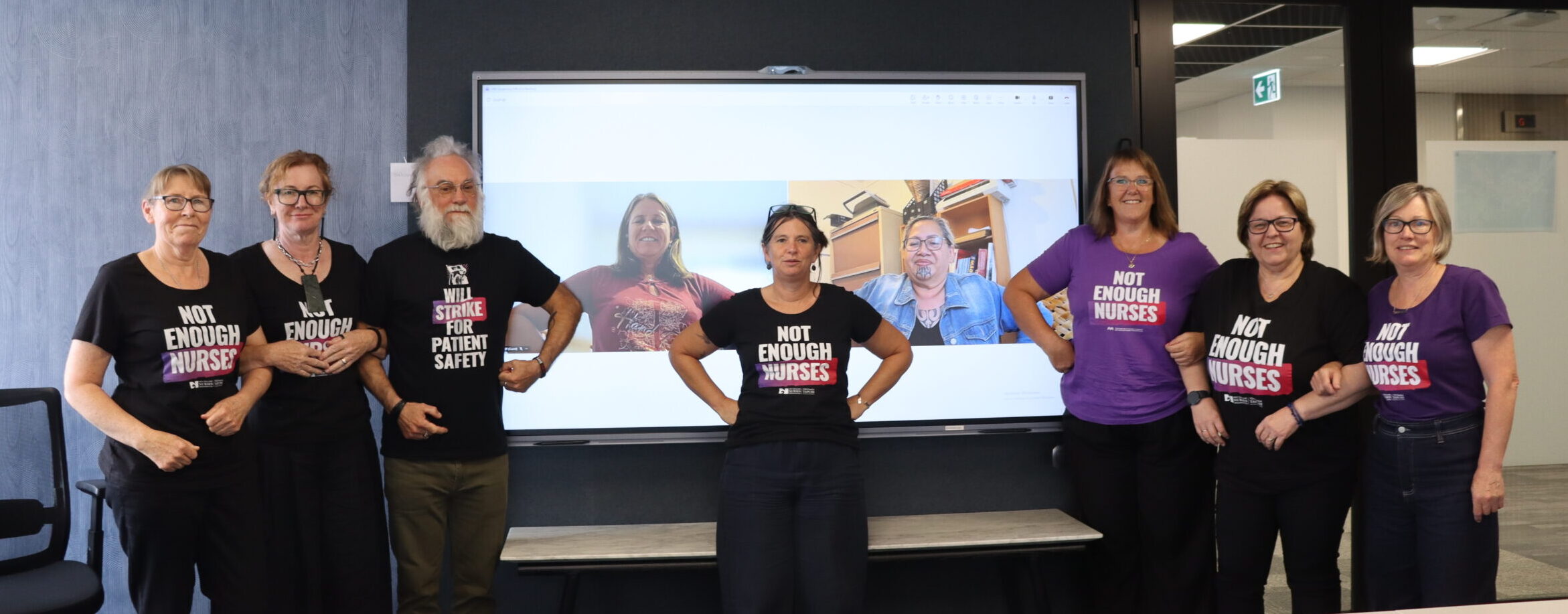
Preparation for the next round of bargaining has already begun ahead of the current collective’s expiry in October 2027.
- Bargaining also began this month for a separate collective for members in very senior roles excluded from the main HNZ-NZNO-collective agreement.
Next steps
- Research into culturally appropriate nurse-to-patient ratios: NZNO and HNZ are currently discussing how to approach their joint research into legally-enforceable ratios, where they have been implemented overseas in places like Queensland, Victoria, California, Oregon and British Columbia. Due to begin mid-July and be finished by mid-April 2027 — but further work may be needed.
- Graduate recruitment to be prioritised with up to 1800 new registered nurses (RNs) employed on an average of 0.8FTE.
- Safe staffing work programme to be completed within 18 months.
- Mental health nurse workforce plan for safer staffing, better managing violence and aggression and recruit to vacancies.
- Enrolled nurse workforce plan.
- Health-care assistant role and professional development review.
- Designated senior nurses/midwives pay scale to be reviewed.
The 2026/27 collective agreement can be found in full here.