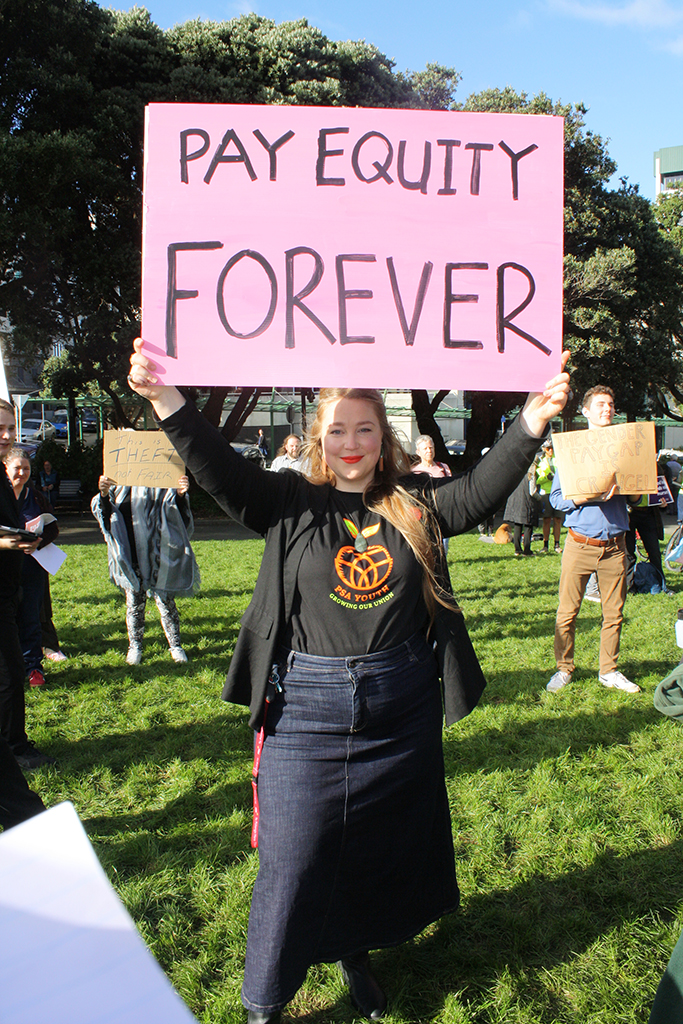


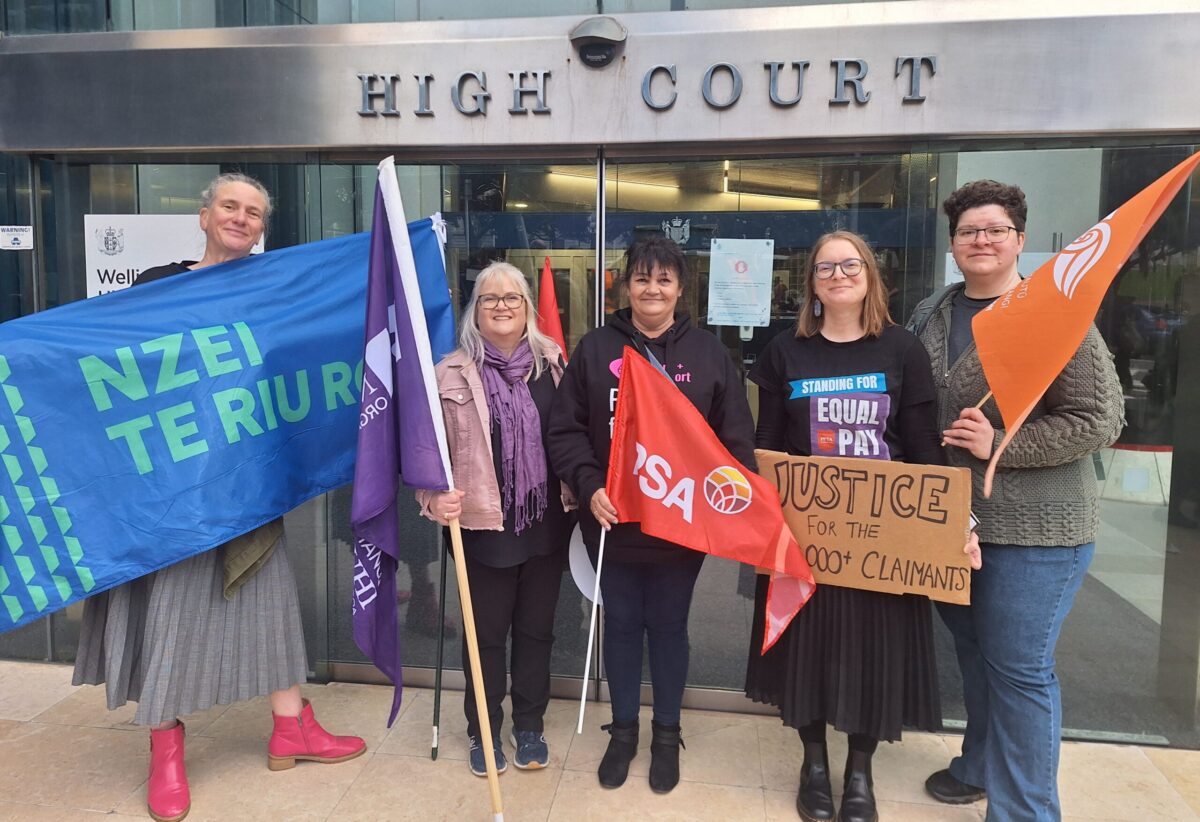
Women workers and unions are calling for pay equity to be restored within the first 100 days by the new Government — whoever that may be — after a huge legal win today.
The High Court today released its ruling that 2025 pay equity changes that saw 33 claims cancelled and set impassable thresholds for new ones breached the New Zealand Bill of Rights Act.

High Court Justice Radich found the 2025 Equal Pay Amendment Act discriminated against women, was solely driven by financial imperatives and “cannot be . . . justified in a free and democratic society”.
‘ Put right what was wrong — just put the money up’.
The ruling follows legal action from five unions representing women-led workforces, including NZNO, PSA and three education unions representing primary, post-primary and tertiary teachers.
Wellington aged-care support worker Lisa Marriner — who was at the High Court hearing — described the news as “vindication” for the 180,000 women estimated to have affected by the changes.
But pay equity should never have been stolen by the Government in the first place — and must be restored under urgency, she told Kaitiaki.
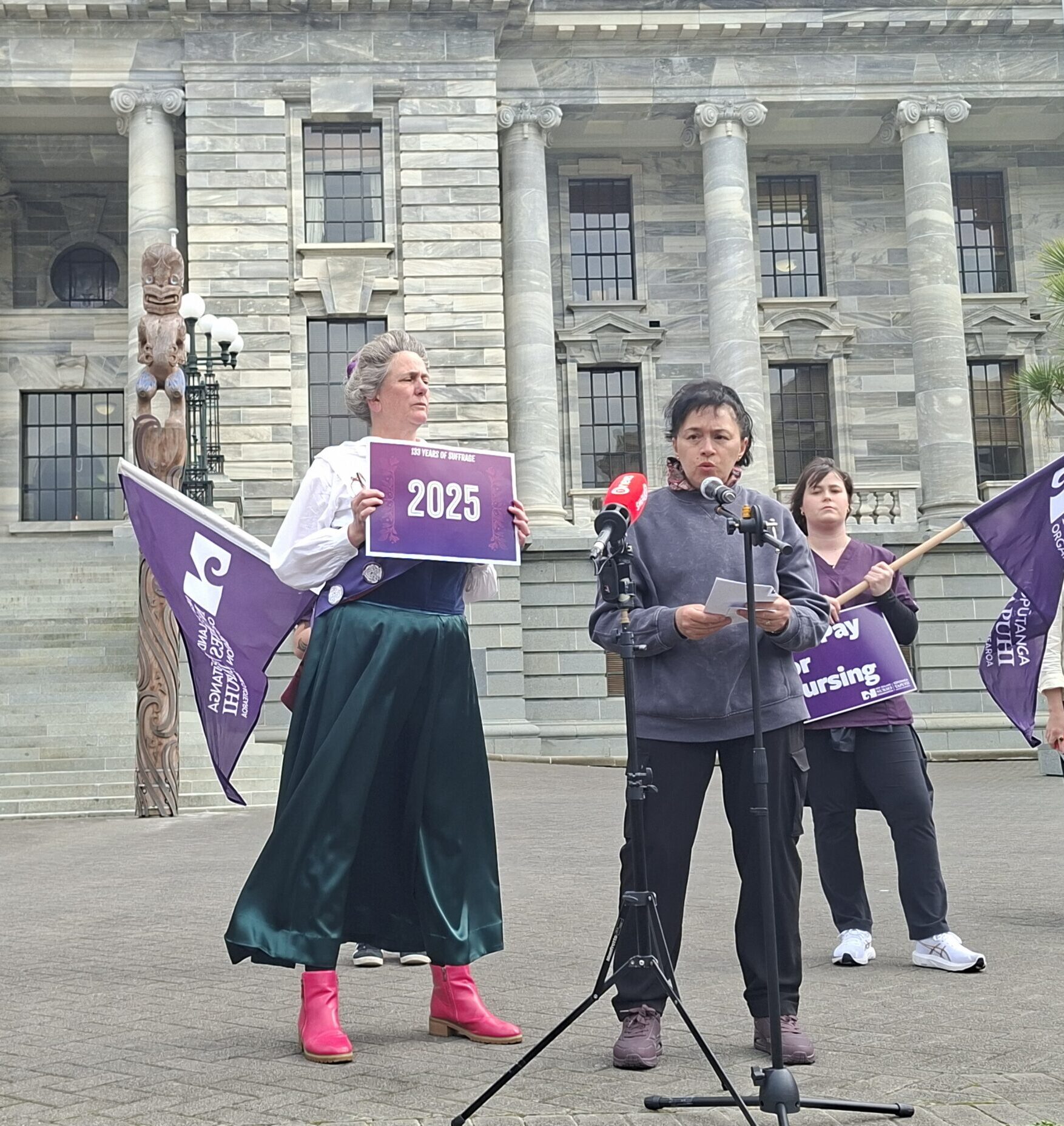
“Irrespective of who the next Government is, they need to restore pay equity legislation as it was and recognise how much we have been impacted by the squashing of pay equity.”
This needed to happen within the first 100 days of Government with a clear timeline and cash commitment, as had been promised by Labour and the Greens.
Marriner urged the next government to “put right what was wrong . . . just put the money up”.
See also: How will (or won’t) our politicians fix pay equity
Fight ‘worth it’
Hospice nurse Anna Garton said the ruling was a “celebration that our legal processes do work” after a bruising battle.
“This just justifies the absolute furore that came out afterwards — all the work was worth it,” she said.
“It was really clear, it was obviously going to impact on our predominantly female workforces.”

Garton said the move had been secretive and “incredibly short-sighted” by a potentially one-term Government that would have ripples for years to come.
“But this just shows, all the work was worth it.”
Plunket nurse and NZNO delegate Hannah Cooke said the sheer challenges of filing new claims showed the Government had taken out a world-leading system and replaced it with a “sham scheme”.
“Now the new Government has to put this right.”
Background
The shock 2025 move devastated women-led professions such as nursing, caregiving, libraries and teaching, who instantly lost their claims — some just weeks away from completion. At that point, 14 claims had been settled, and 33 were still underway — including 12 from NZNO members.
The changes saved the Government $12.8 billion for Budget 2025.
NZNO tried to refile pay equity claims for Hospice, Plunket and some aged-care members under the new law but hit a brick wall when Te Whatu Ora-Health NZ (HNZ) refused to release its comparator pay rates for similar workforces required under the new law.
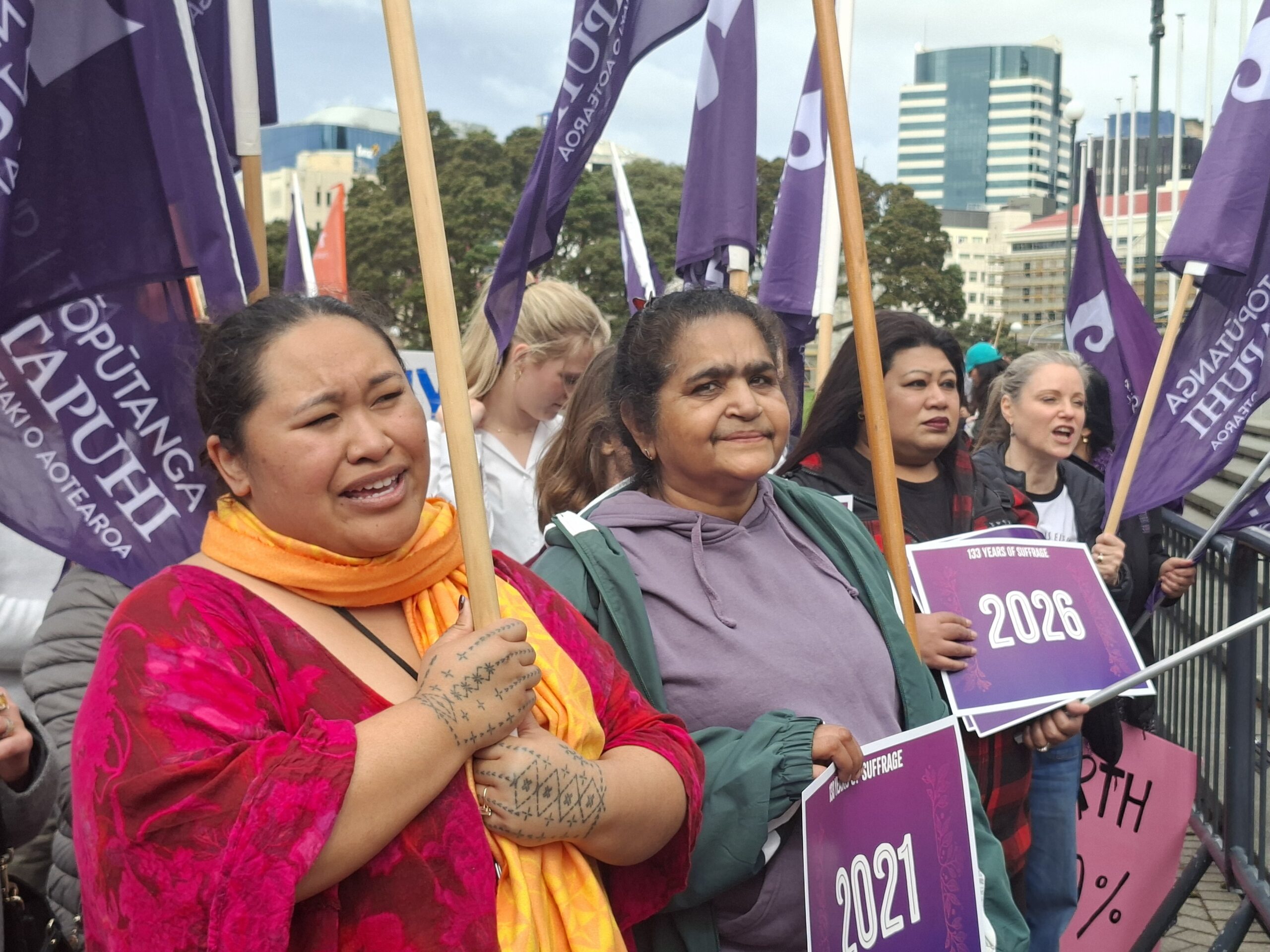
This sparked claims of “deliberate sabotage” from hospice nurses.
Marriner said creating a “fake” law with no pathway to equity was infuriating and unethical.
Crown to ‘carefully consider’ findings — van Velden
Caretaker Minister for Workplace Relations and Safety Brooke van Velden said the decision would be “carefully considered” as the Crown decided whether to appeal.
The Government was committed to a well-functioning pay equity regime and did not believe the previous law “got the settings right”, she said.
For now, pay equity claims could continue to be identified and addressed under the new law.

Given further legal action and the caretaker status of the Government, she would not be commenting further.
A formal Parliamentary response to the decision is required within six months, depending whether the Crown appeals.
At a glance: High Court findings
The High Court declared that the Equal Pay Act 1972, as amended by the Equal Amendment Act 2025, is inconsistent with the right to be free from discrimination on the grounds of sex under the New Zealand Bill of Rights Act.
After reviewing Cabinet papers, Treasury advice and Ministry of Business, Innovation and Economics (MBIE) documents, the Court found that “the main driver was fiscal”.
Justice Radich found there was “nothing tangible” showing the previous system was not working as intended. Although the changes may mean Budget savings, they were “not proportionate to the stated objectives”.
The unions’ claim that the Government’s lack of consultation passing the amendment under urgency breached women’s right to natural justice was rejected by the Court.

In its ruling, the High Court noted that the 2025 amendment cancelled all existing claims; raised the threshold for female-dominated from 60 to 70 per cent; prevented pay equity reviews for 10 years after a settlement; prevented the use of comparators outside claimants’ sector and gave employers the power to halt claims with no reason.