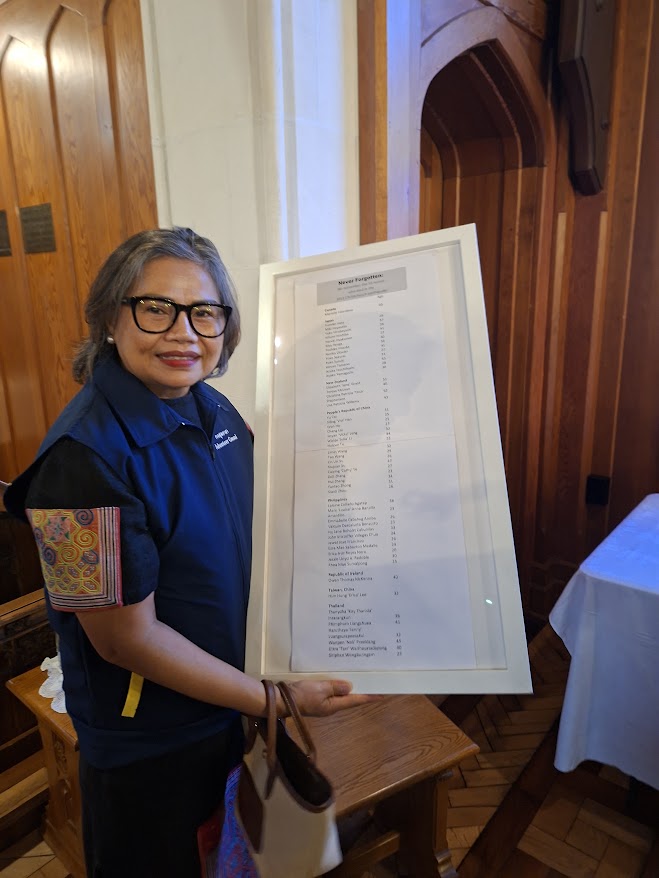


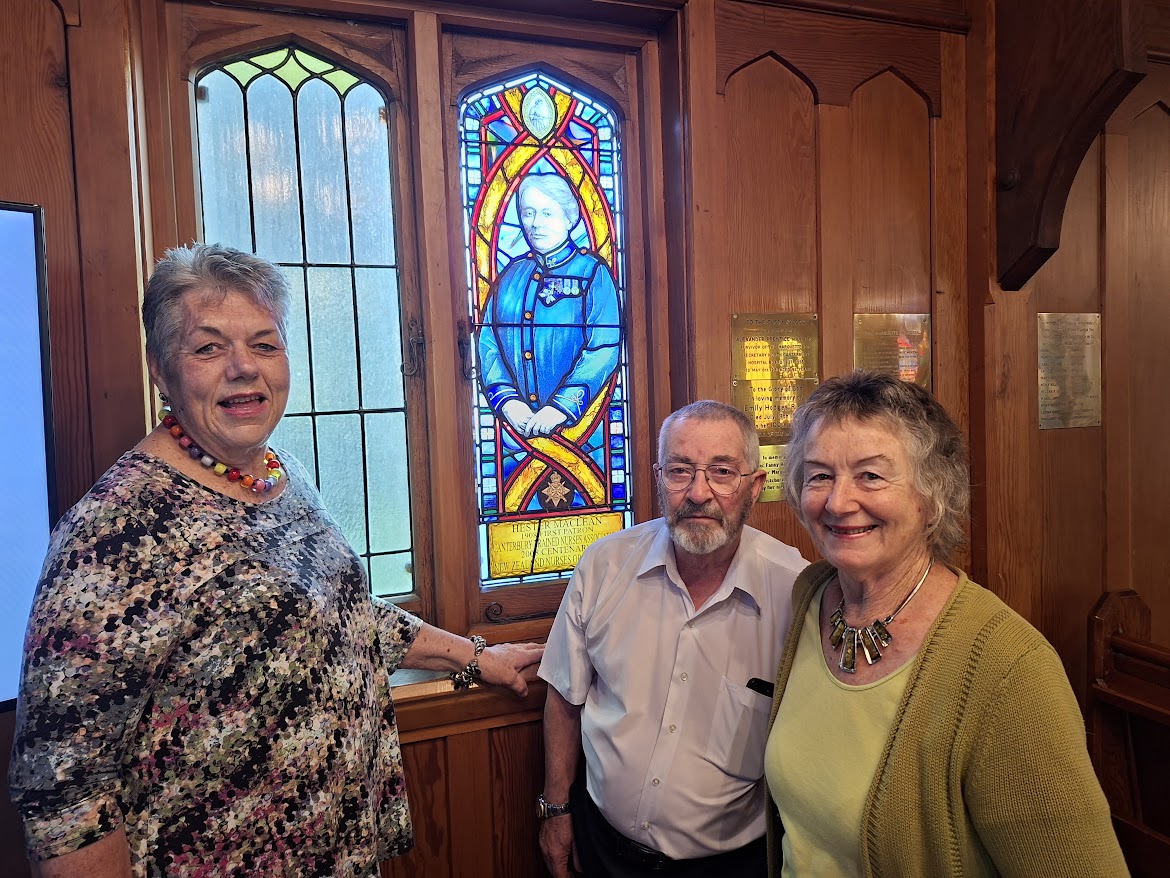
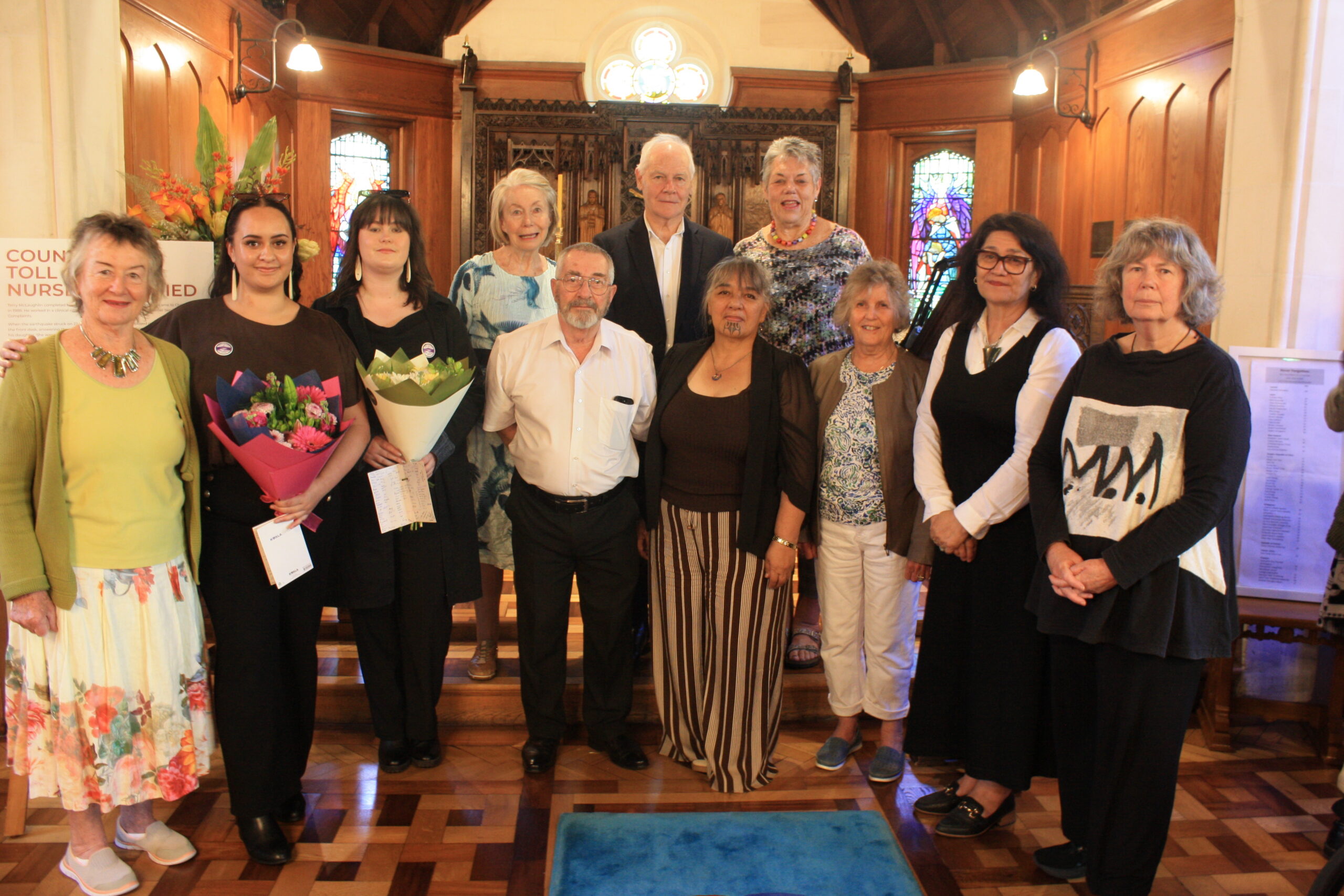
Families, community groups and dignitaries gathered at the Nurses’ Memorial Chapel, by Christchurch Hospital, to remember the nurses, many of whom were studying English in the CTV building as they prepared to work in New Zealand.
‘It’s because I’ve spent so much time with nurses, who helped me, so I wanted to pay tribute to them.’
The 53 nurses came from eight countries: 16 from China, 13 from Japan, 11 from the Phillipines, six from Thailand, four from New Zealand and one each from Canada, Ireland and Taiwan. Fifty died after the six-storey building collapsed; two were visitors, who died in the streets — and one, Eoin (Owen) McKenna, a Christchurch Hospital duty nurse manager, when his car was crushed. Their photos and life stories are on display at the chapel until October 25.
One exhibit attendee was Kate Barron, who survived being crushed for five hours when the Pyne Gould Corporation building she worked in collapsed. Eventually, she was rescued but in a critical condition. Later, in hospital, she had both legs amputated.
Barron, a member of the Quake Families Trust, told Kaitiaki she came out of respect for nurses, who cared for her and supported her recovery during 10 months in hospital, much of it in the Burwood spinal unit.

“It’s because I’ve spent so much time with nurses, who helped me, so I wanted to pay tribute to them.”
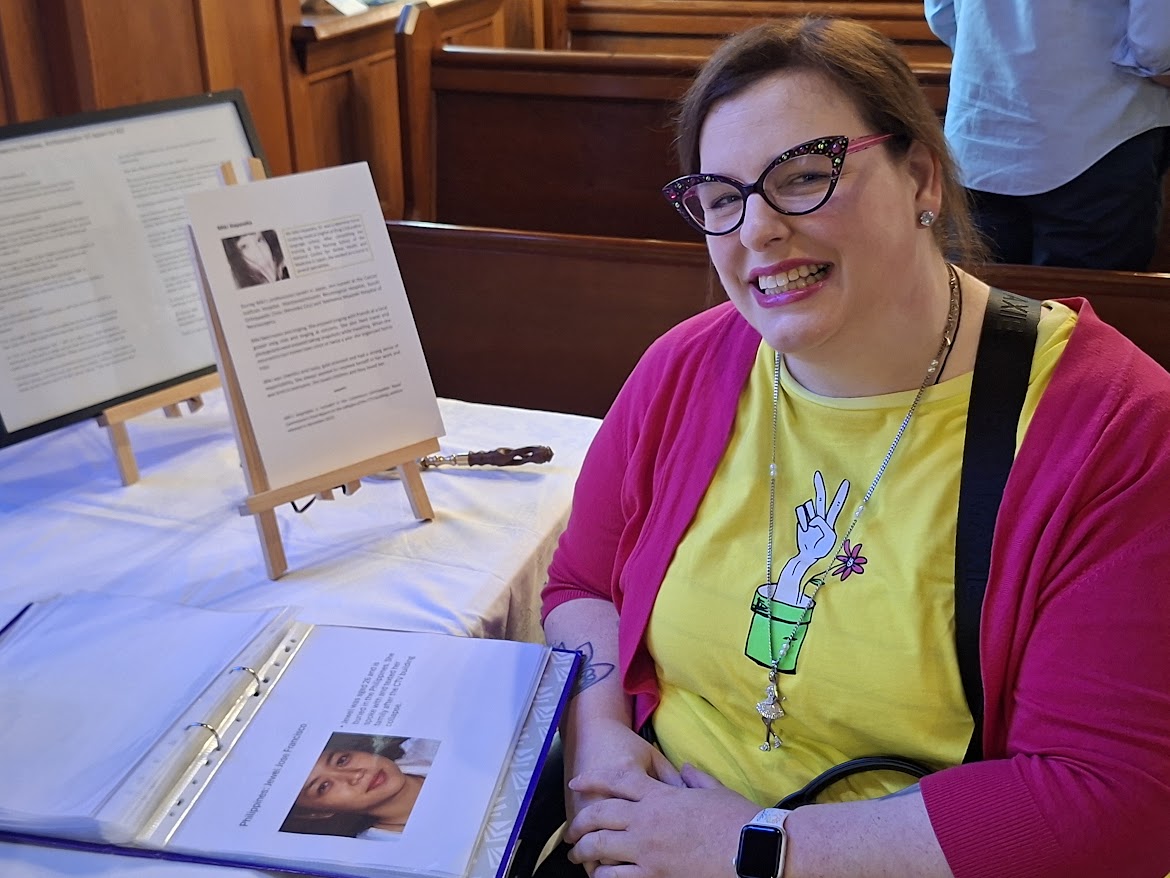
Speaking at the opening, Christchurch Hospital chief nurse Becky Hickmott — who worked through the quake — said it was an “awful situation that so many nurses lost their lives in one fell swoop.
“The enduring legacy we are left with now is to ensure we always remember and carry those people in our hearts.”
Hickmott paid tribute all nurses for their contribution, including internationally-qualified nurses (IQNs).
“We have a significant reliance on overseas nurses to make our health system run — and we had a number of people who were representatives of overseas countries during that day in the CTV building.”
Nursing was tireless, often thankless and tough going at times “but we also know it’s one of the most meaningful jobs”.
‘Without his time and energy we would never have known the number of nurses we lost that day.’
Nurses Memorial Chapel Trust chair Robyn Bisset said the chapel had been built in 1927, in memory of three Christchurch nurses who lost their lives when the British ship, Marquette, was torpedoed in 1915. Altogether, 10 South Island nurses were lost in the Marquette attack.
“They, too, were a long way from home,” she said.
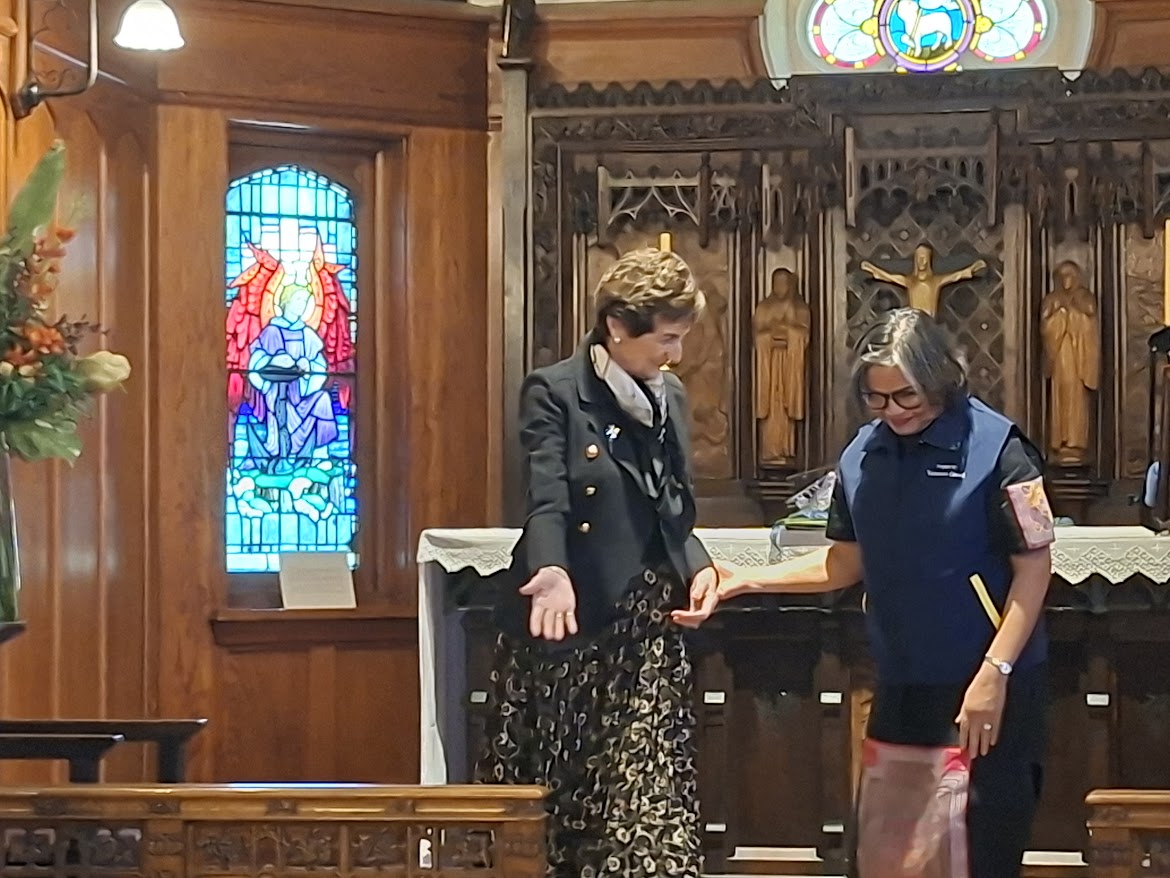
“This chapel is a refuge, a sanctuary, a place of calm and quiet that welcomes you in to rest a while.”
Bisset also paid tribute to chapel convenor Nanette Ainge, who spent “many hours” preparing the exhibition after reading about long-time NZNO member and delegate Janine Randle who makes and lays a wreath for the nurses who died in the quake every year.
Bisset also acknowledged registered nurse (RN) Terry McLaughlin, who received calls from families overseas seeking news of their loved ones while working in an administrative role at the hospital due to an injury. He went on to work out 53 nurses had died — a quarter of the 185 who died in the quake.
“Without his time and energy we would never have known the number of nurses we lost that day.”
Christchurch mayor Phil Mauger said the community would now carry on the memory of the nurses who had died, and their commitment to caring for others.
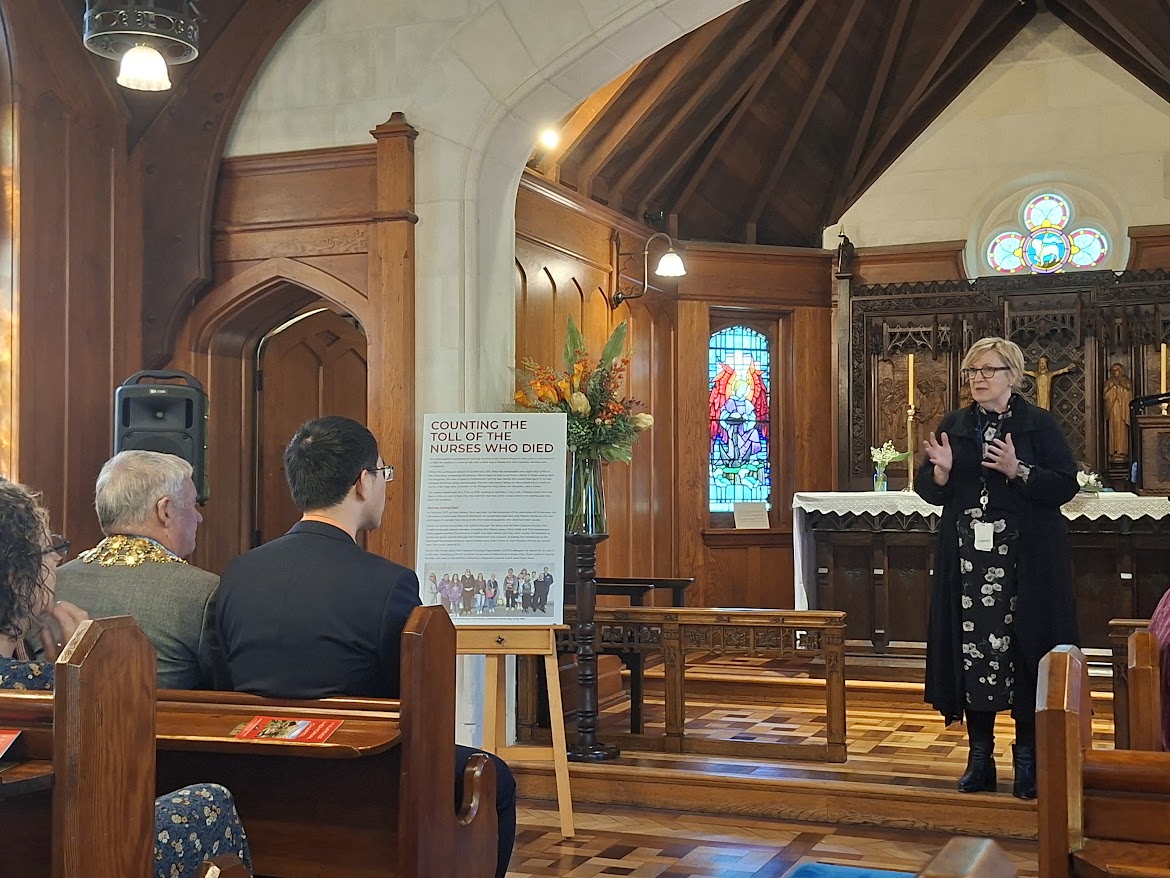
Thai consul Wantana Royds said it was important to remember those who had died.
President of the Nurses Memorial Chapel friends society, Stephanie Cooke, read a letter from the Japanese Government acknowledging the memorial and shared experience of devastating earthquakes.
Representatives of local mana whenua, Ngāi Tūāhuriri, opened the exhibit, welcoming survivors and families.
The exhibition, Never Forgotten, opened on October 21 and runs daily from 12-4pm until October 25.

A full list of names of those who died can be found here.