



Our two-week partial strike of refusing to plug staffing gaps outside our normal workplace or shifts is nearly over, and I’m interested to know how it’s been going nationally.
In Whangārei Hospital we are getting into the swing of NOT picking up shifts and NOT being redeployed.
It has definitely highlighted some significant gaps where management was relying on redeploying staff instead of properly recruiting to base rosters as indicated by safe staffing calculation tool, care capacity demand management (CCDM).
There’s only nothing to see if nurses and HCAs and midwives tuck it all away in their own incredible ability to manage, to care, to cope.
In areas like orthopaedics, emergency, neonatal and perioperative, it has been really difficult.

There have been some very clear risks exposed — gaps in acute theatre staffing which until now relied on nurses coming in early even if they’re not on call.
Our orthopaedic ward is so understaffed that it constantly relies on redeployment of other nurses who don’t have the specialist orthopaedic skills needed to manage the heavier, more complicated patients.
This puts further strain on the already stressed staff, who are managing their own heavy loads and supporting the staff who come to help. During this strike the numerous roster gaps every day have clearly shown that the orthopaedic base roster can barely provide half the nurses they need.
In ED, during a code red shift on Tuesday, we were 98 hours in deficit for the morning shift and 108 hours in deficit on the afternoon shift according to Trendcare. This is the equivalent of 12 nurses and 13.5 nurses that we DIDN’T have to manage the acuity and volume.
So the cracks are showing — refusing to redeploy outside of life-preservation has highlighted some very dangerous staffing practices involving moving nurses around like chess pieces.
Management are finding creative ways to manage the shortfalls without redeployment and without the usual pressure on members to come off their rest days and “help”.
The operations team which covers gaps are doing their best, but without enough staff, there is only so much they can do. That meant beds had to be closed — up to five some days in orthopaedics — and elective surgeries delayed.
‘A collective sigh of relief’
For most of us, it has felt like a collective sigh of relief — a pause in the constant pressure to find staff, whether as a manager or a floor nurse. A rest from constant texts, WhatsApp messages, Facebook posts or even phone calls about the next sick leave gap that needs covering.
This is a daily stress and intrusion on our downtime and as a manager, a daily issue which takes more and more time, as we feel the pressure to cover our rostered gaps – gaps which are mainly caused by the intentional short staffing of Te Whatu Ora.
And that’s before managing unplanned leave! We are in a downward spiral of short staffing, burnout and stress, causing more sick calls which cause more stress and more burnout — and it has to stop.
It is now 18 months since the Government first decided to pause recruitment.
Since then, in bargaining we have heard: “There was no pause”. “There might have been a pause”. “There was a pause while we re-set CCDM due to inconsistencies nationally with data collection”. “We have a plan, and the plan will be in motion in January 2025 . . . February . . . March . . . May . . . July . . . September . . . in November . . . ” And we are still waiting.
A journalist told me that it sounded like all the responsibility for patient safety that should sit with the employer was sitting squarely and heavily on nurses’ shoulders.
As far as we know, the full-time equivalent (FTE) calculations — now re-calculated over six months ago — are still in limbo, waiting for Te Whatu Ora’s executive team to approve the funding so that the recruitment process can start for those lucky enough to be approved “in this financial landscape/if it is within our budget/as we can/hopefully by the New Year”.

It is starting to feel like a working group – such good intentions but no actual outcome.
I’m reminding you of this, as we need to keep sight of the bigger picture. Everything we do as a team — in bargaining, in striking, in putting our feet down about supporting their intentional short staffing to save money and reduce services — is about that.
We are doing this — and have been doing this for the last 14 months — because we refuse to back down and allow this government to push hard-working health-care assistants (HCAs), nurses and midwives into working in an unsafe, unsatisfactory, unfulfilling and unmanageable working environment.
‘Moral injury’ to nurses
We are the ones suffering from lack of staff, we are the ones without the time to care the way we used to, we are the ones breaking from long hours, too many patients, too much to do, not enough support, a lack of respect for our deep cultural roots and ongoing moral injury.
Nurses are naturally kind and want to help and feel bad if they can’t. Just advertise the shifts and give staff a neutral way to say yes or no.
Moral injury is “psychological harm resulting from a perceived violation of deeply held moral beliefs, often caused by perpetrating, witnessing, or failing to prevent acts that go against one’s conscience”, according to the International Centre for Moral Injury.
It sounds extreme but when Whangarei ED went through our own hell of short staffing a few years ago, that phrase suddenly made perfect sense.
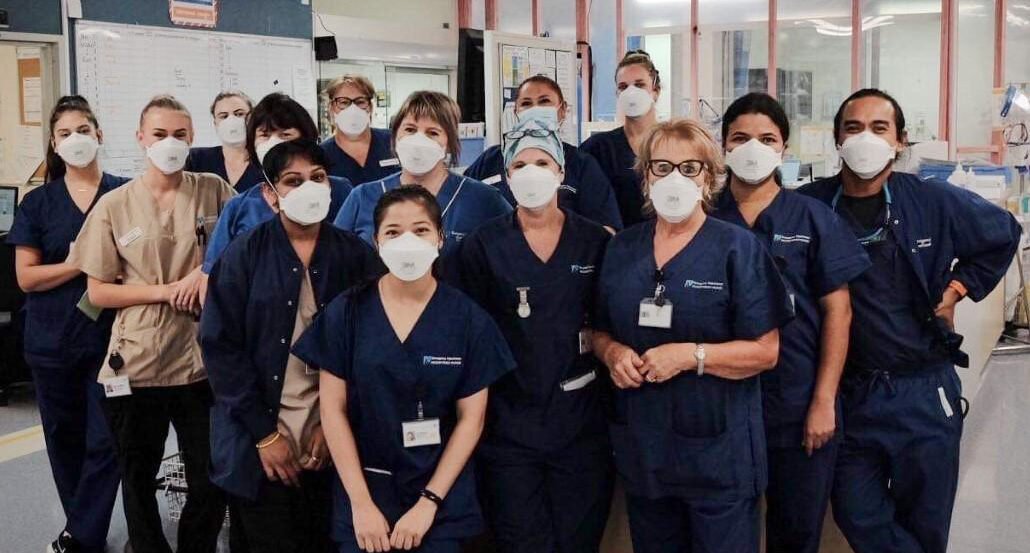
A journalist told me that it sounded like all the responsibility for patient safety that should sit with the employer was sitting squarely and heavily on nurses’ shoulders and we were breaking as result.
It was. We were. It made me cry. We were under incredible strain and moral injury was at the root. The part where you go home and don’t feel like you have done your best, you didn’t get time to really care, you missed a medication, you snapped at a colleague, older people were cared for in a corridor or a cupboard and you had a really close shave with someone’s life — purely due to overload.
You find yourself wondering whether it is worth it. You are say the caring words, but your ability to actually care is worn out.
‘Difficult’ for nurses to say no
Three years ago, we realised we had to push that responsibility uphill and make the managers feel it. By not picking up shifts for two weeks, we highlighted the enormous extra work we were doing and gave ourselves a break from that responsibility.
It was so painful and so difficult to say no, but as a team we did it and we got results. It was the re-set we needed to save ourselves. Since then it has been easier to say no to an extra shift if we don’t want it, and look after our physical and mental health.
As managers we have been really careful about how and when we ask staff to do more. I really hope this national two-week strike is a re-set for everyone, and enables more people to say no to shifts they don’t want and makes managers think carefully about how they ask staff for support.
It is up to Te Whatu Ora to have enough fat in the system to cope with shortfalls, sick calls and other unplanned leave.
We don’t always realise how much pressure we are putting on staff and how exhausting it is to get texts, messages, phone calls, expectations of “help” every day you are not at work. We feel the need to ask because we are told there isn’t enough support.
That is not our fault and definitely not the fault of our HCAs, nurses or midwives.
It is up to Te Whatu Ora to have enough fat in the system to cope with shortfalls, sick calls and other unplanned leave – these are not new issues.
We need to be careful about the language we use and avoid emotional coercion like “please help”, “we are desperate” or “can anyone kind come in?”
Nurses are naturally kind and want to help and feel bad if they can’t. Just advertise the shifts and give staff a neutral way to say yes or no. If you can’t fill the shift, push uphill to management.
Overall, whether in a strike or not, remember that the responsibility for patient and staff safety is ultimately not yours but Te Whatu Ora’s as the employer.
If we hide the gaps, we are just helping them cover up the intentional short staffing and allowing them to continue to put that heavy load on us.
Collect your shortfall data
I hope you are all collecting data about your shortfalls this fortnight, so we can use that data to push back at their claims that: “Everything is ok”, “there are enough nurses” and “there’s nothing to see here”.
There’s only nothing to see if nurses and HCAs and midwives tuck it all away in their own incredible ability to manage, to care, to cope.

Who knows when recruitment to their own, re-calculated, re-examined, gold-standard FTE calcs will start again? I hope it’s this week. But for now, stand strong.
– Whangārei clinical nurse coordinator Rachel Thorn is an NZNO delegate, member of the Te Whatu Ora-NZNO bargaining team and newly-elected member of the NZNO national executive.