


To most of us, a supermarket is just a place that we visit far too often and where we spend too much money. It can also be the site of everyday angst — wonky trolleys, forgotten bags and “what the hell are we going to have for dinner” thoughts.
To some of us, however, it is more than that. We find ourselves avoiding aisles, staring blankly at ice-cream flavours and contemplating the few, paltry items in our trolley. It’s getting halfway through the shopping and wanting to walk out, it’s remembering what shopping used to look like, it’s remembering what life used to look like.
Supermarkets are an intersection between life-sustaining food, eating-related distress (ERD) and grief. Using extracts from my journal, this article will explore that intersection.

Sunday 2nd April
“On Friday Karl arrived home with a bag full of meat from the butchery. He has been hanging out for schnitzel … but there was also lamb chops, pork, etc. So, he cooked up his schnitzel that night but could only eat a few bites … it just wouldn’t pass. I find it heartbreaking, but he is quite pragmatic really. After a while he had a bowl of Special K.”
My darling partner, Karl, died five weeks after this entry. He was 59 years old and had inoperable oesophageal cancer — a cancer not widely spoken of or heard about in the media. However, it is a significant cause of cancer-related deaths worldwide.
This cancer has an aggressive nature, with early spread, rapid tumor recurrence and poor prognosis.1,2 And Karl had the “rare” type.
It had been a 15-month journey and — amongst the pain and uncertainty, chemotherapy, radiotherapy, myriads of appointments and within a bubble of surrealness — food and all that it meant became something else to weigh heavily on our spirits.
The effects of this are ongoing for me.
Food and eating are fundamental aspects of human life. While for some, eating is merely a necessary process to provide nutrients to keep healthy and sustain energy, for most it is also a pleasure, a social and cultural activity and central to life.3,4
Cooking and sharing food are ways to demonstrate love. Consider your bank statement and see how much money (and consequently time) is devoted to buying food (and drinks), cooking and sharing with others. Consider your social media feeds on Facebook, Instagram, TikTok and television which are devoted to food and eating.
It is a social phenomenon – more, for most of us, than the intake of nutrients.
Mealtimes become fraught and unpredictable and there can be patient-carer conflict. People can feel coerced to eat or feel guilty if they don’t eat or can’t eat the food that has been lovingly prepared for them.
When people have advanced illness, eating and appetite is also associated with life itself, and if people aren’t eating and are losing weight, it is a visible reminder of deterioration and the imminence of death.1,4,5,6,7
Mealtimes become fraught and unpredictable and there can be patient-carer conflict.4,5,8 People can feel coerced to eat, or feel guilty if they don’t eat or can’t eat the food that has been lovingly prepared for them.
This creates more anxiety and stress.
Eating-related distress (ERD) encompasses all the negative emotions surrounding food for both advanced cancer patients and their carers/family.
After Karl died, there was a time when I had no appetite and no interest in food and eating. In normal circumstances, this is impossible for me to imagine but having that experience has been a comfort to me.
I have a better understanding how having no interest in eating is not distressing to the patient. They don’t feel like they are “missing out”.
For the family though, that urge to show love through food, or to keep things as normal as possible as long as possible, is STRONG! Even when you have a nursing, palliative care background.
The heart in these situations is stronger than the head.
The giving and receiving of food demonstrates caring, in both the person who is ill and the caregiver doing their best.6
Monday 3rd April
“In an attempt to eat something other than Special K, Karl tried pizza. He had three pieces and enjoyed it but then spent an hour over the toilet, dry retching, hiccoughing and spitting up a whole lot of saliva. What caused that? Poor man looked white and was freezing cold. I am pleased to say though that eventually he came right enough to have a bowl of ice cream and chocolate flakes.”
 Cachexia (loss of muscle tissue and weight), anorexia, ERD and dysphagia (difficulty swallowing) are not just effects of end-stage cancer, but can also occur in other life-threatening long-term conditions such as dementia.
Many conditions cause symptoms such as shortness of breath, nausea, fatigue, dry mouth and anxiety which can all affect food intake.
Adding to the complexity of food intake are other influencing factors such as functional deterioration, carer-patient dynamics, medications, cognitive impairment, cultural and religious beliefs, psychological factors and financial constraints.
In our case, I assume Karl’s oseophageal tumour, recent chemotherapy, anxiety and pain all contributed to his dysphagia and anorexia, especially in that time between “active” palliative care and end of life.
Experts describe this as a liminal space; a state of transition.4 They describe it as a “non-place, where people are separated from their social structure and or identity and thus left in limbo”.
He was a sausages and steak for breakfast boy as he grew up. Taking himself to a butcher shop and buying meat is Karl.
This description really resonates with me. Karl was 6ft 3 and 110kg before his diagnosis, and the son of a butcher.
He was a sausages and steak for breakfast boy as he grew up. Taking himself to a butcher shop and buying meat is Karl. It was normal. It made him feel normal in a situation that was definitely not normal and was taking everything away from him.
ERD is not limited to the imminently dying. Studies have shown that anorexia can be more troubling for patients than pain or tiredness, but also may affect the family and caregivers more than the patients themselves.
I think Karl had some distress in regard to his inability to eat, but in hindsight I was probably more psychologically affected than him. I do however think he used his weight loss as a measure of how well he was doing. Much to a hospice doctor’s chagrin, he wanted his weight measured while in hospice.
Wednesday 15th April
“He copes much better with the whole eating thing than I do …. he doesn’t feel hungry much and he’s pretty pragmatic about what he can eat and can’t eat. He even copes with the time over the toilet bowl retching and bringing up copious amounts of saliva.”
No-one tells you about these symptoms. No warnings, no advice, nothing. It never becomes “normalised” but does get assimilated into daily life. The only time the whole “eating thing” was addressed in a way to include me was at an appointment with a surgeon three weeks before Karl died.
Around this time, we had been told his prognosis was about three to nine months.
I knew from my cancer nursing experience that forcing people to eat when they didn’t have an appetite or weren’t interested was futile and could be distressing for all of us.
Karl was mainly only tolerating fluids at this stage. The surgeon lightly touched on the fact that Karl wouldn’t have an appetite or be able to tolerate much in the way of food and how this often affected the partner and family more than the person with cancer.
I knew from my cancer nursing experience that forcing people to eat when they didn’t have an appetite, or weren’t interested, was futile and could be distressing for all of us.
Despite this, that small acknowledgement from someone else still brought tears to my eyes.
Thursday 16th April
“… Karl will see the dietitian on Tuesday so I may have to up my game … more high calorie, high protein stuff. We’ll see what he thinks …”
Before Karl needed an oesophageal stent, and before his appetite diminished completely, we did try to find foods he enjoyed, even if he just tolerated a little.
 The grocery shop became a measure of his disease process.
Before cancer, our groceries were a trolley of food for two, including meat and bread. After his diagnosis, it was anything he fancied. During chemotherapy and radiotherapy, it was anything high calorie and “nutritious” but basically anything he fancied. Then, anything he could eat — KFC potato and gravy anyone? Then, anything he could drink … soup, milkshakes, ice-cream.
Two and a half years later, I still avoid the Up & Go cereal and banana milkshake aisle at Pak’nSave.
There are facets to grieving that I had no conception of before (to be honest I had no idea about profound grief at all).
As a nurse, I feel a bit ashamed about this.
The fact that I am writing about ERD, and reflecting on our suffering in regards to food, is one example of something I had not expected. An article I read in a nutrition science journal talked about a “beloved grandmother and mother who taught us, in the end of her life, about how nutritional issues are very important in the total pain concept”.9
The “total pain” concept originated from the work of Cicely Saunders and highlights the interconnectedness of physical, psychological, social and spiritual suffering at the end of life.10
After extensive reading about grief, I know now that I am not the only grieving person that has an aversion to supermarkets or thinks back to the harrowing experience of food and eating when a loved one has a terminal illness.
When I look back at my journal, I probably wrote as much about Karl’s food intake as his physical pain. But then there was some control over his pain, through giving him analgesia.
There is a helplessness in the situation for all – the patient, families and health professionals.
In one study of RNs caring for people with eating deficiencies in palliative care, it was concluded that RNs were well prepared to provide practical support and less prepared to encounter the existential, psychological and social issues they faced.
There is a helplessness in the situation for all – the patient, families and health professionals.
The main care given to Karl and me for his anorexia and weight loss was the prescription of oral nutritional supplements. This is consistent with the literature that indicates nutrition-related strategies are the mainstay for addressing ERD.
The everyday ordinary activity of eating and mealtimes becomes another source of suffering for people with life-threatening illness. Nurses in many areas of practice will come across people requiring support for this.
Karl (and I) passed through the hands of surgical nurses, ED nurses, palliative care nurses, oncology nurses and nurse navigators. Nurses in aged care, medical wards and in community settings will see many patients with ERD.
It is also important to consider the needs of the carer and family — the person doing the shopping, preparing the meals, adapting to changing needs of their loved one among all the other care-giving duties that are required.
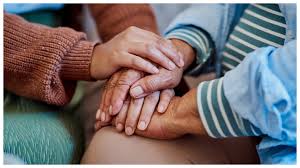 A more holistic approach to care concerning food and eating practices at the end-of-life may make it possible to reduce the emotional suffering of patients and families.11,12 This does, however, require thoughtful conversations with acknowledgement of prognosis and impending end-of-life.
This brings us back to the approach of addressing total pain and recognising the value of meeting the psycho-social spiritual needs of patients and their loved ones.
In the midst of caring for a person with a terminal illness, most of us go day by day, juggling the demands of everyday life with this grenade that has been lobbed at us.
It is a constant balance of maintaining life as we know it, maintaining hope and adapting to the multitude of changes, all while doing our best to tiptoe around that quietly menacing time-bomb.
If our person does die, we attempt to carry on amidst the fall-out from that grenade. Lives are smashed up, and in trying to make sense of it all, we recall the suffering, and we continue to suffer. Even on trips to the supermarket.
Linda Christian, RN, MN, is a senior nursing lecturer at NorthTec in Northland.
References
- Missel & Bergenholtz (2021). The understanding of dignity among in-hospital patients living with incurable esophageal cancer. Cancer Nursing, 44 (6).
- Pichel, R. C., Araújo A., Domingues, V. D. S., Santos, J. N., Freire, E., Mendes, A. S., Romão, R., & Araújo, A. (2022). Best Supportive Care of the Patient with Oesophageal Cancer. Cancers (Basel), 14(24), 6268.
- Hopkinson, J. B. (2016). Food connections: A qualitative exploratory study of weight- and eating-related distress in families affected by advanced cancer. European Journal of Oncology Nursing, 20, 87-96.
- Wallin, V., Mattsson, E., Omerov, P., & Klarare, A. (2022). Caring for patients with eating deficiencies in palliative care — Registered nurses’ experiences: A qualitative study. Journal of Clinical Nursing 31(21/22), 3165–3177.
- Day, T. (2017). Managing the nutritional needs of palliative care patients. British Journal of Nursing, 26, (21), 1151-1159.
- Johnston Taylor, E. (2016). Eating-related distress among New Zealand hospice patients and family carers. Journal of Hospice & Palliative Nursing, 18(2), 160-166.
- Perkins, S. (2024). Nutrition and hydration: best practice towards the end of life. Nursing Times [online], 120(10).
- Amano, K., Maeda, I., Morita, T., Okajima, Y., Hama, T., Aoyama, M., Kizawa, Y., Tsuneto, S., Shima, Y., & Miyashita, M. (2016). Eating-related distress and need for nutritional support of families of advanced cancer patients: a nationwide survey of bereaved family members. Journal of Cachexia, Sarcopenia and Muscle, 7(5), 527–534.
- Pinho-Reis, C., Pinho, F. & Reis, A.M. (2022). Food and nutrition as part of the total pain concept in palliative care. Acta Portuguesa de Nutrição, 28.
- Corman, M., Dambrun, M., Ginzac, A., & Ménard, K. (2025). Exploring the concept of Total Pain in contemporary oncology palliative care: a qualitative study on patients’ resources. BMC Palliative Care, 24(1), 85.
- Amano, K., Baracos, V. E., & Hopkinson, J. B. (2019). Integration of palliative, supportive, and nutritional care to alleviate eating-related distress among advanced cancer patients with cachexia and their family members. Critical Reviews in Oncology / Haematology, 143, 117-123.
- Holdoway, A. (2022). Nutrition in palliative care: issues, perceptions and opportunities to improve care for patients. British Journal of Nursing, 31(21) (Nutrition Supplement).